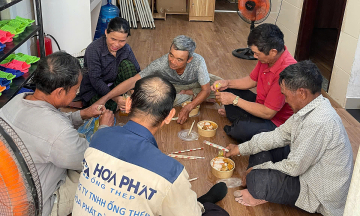
At an apartment residents' meeting in Dong Ngac ward, Hanoi, at the end of march, all attention focused on questions from Quang Thang, a floor manager, regarding electric vehicle management.
The apartment complex has 260 electric motorbikes, with a parking fee of 60,000 VND per month. Thang calculated that each vehicle consumes about 50,000 VND in electricity costs per month. This drains the building's management and operation fund by over 150 million VND annually. "Who pays for this amount?" Thang asked.
Concerns like Thang's reflect a common reality for many apartment buildings where infrastructure has not kept pace with the rapid increase in electric vehicles. A VnExpress survey of several apartment complexes in Hanoi identified three new issues: electricity charging costs, safe parking space, and responsibility for infrastructure investment.
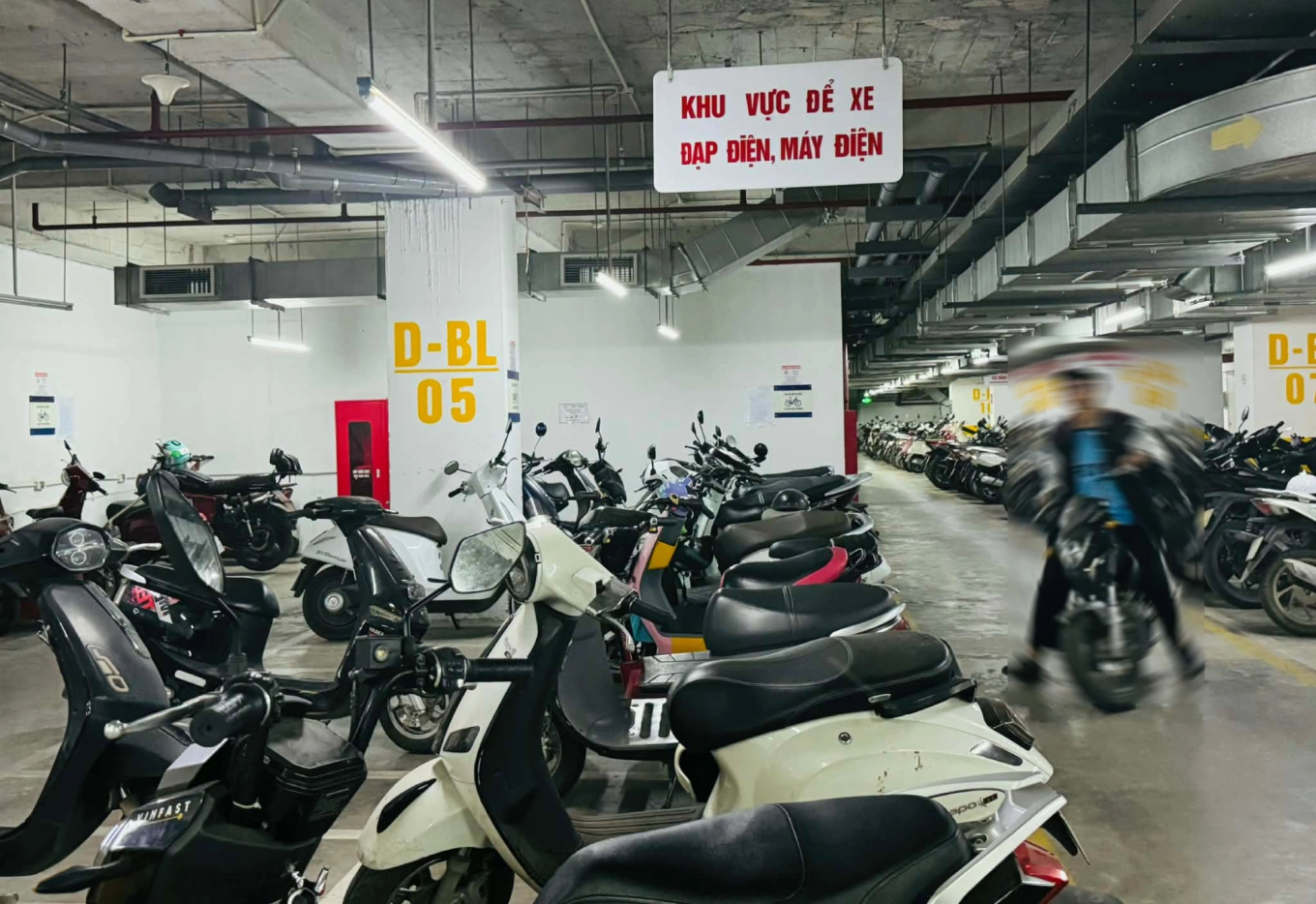 |
The electric vehicle parking area at an apartment complex in Nhan Chinh ward, Hanoi, had its charging sockets removed at the end of 2025. Photo: Pham Nga |
The electric vehicle parking area at an apartment complex in Nhan Chinh ward, Hanoi, had its charging sockets removed at the end of 2025. Photo: Pham Nga
Who pays for electric vehicle charging?
Manh Hai, a member of the management board at an apartment complex in Dong Ngac ward, stated that electric vehicle charging costs are currently covered by the management and operation fund. The building was constructed before electric vehicles became popular, so it lacks a dedicated charging station. Residents plug their vehicles into the common electrical system.
"When the number of vehicles was small, the deficit was negligible. However, in less than one year, the number of vehicles increased fivefold, creating significant pressure on the fund," Hai said. The management board proposed increasing the electric vehicle parking fee to 90,000 VND per month, but this has not yet been approved.
A similar situation of revenue not covering expenses is occurring at a twin-tower complex in Van Quan ward, Hanoi. Pham Xuan Diep, head of the management board, reported that the number of electric vehicles increased from 30 in 2024 to 80. The total monthly revenue of 4,8 million VND from parking fees barely covers the electricity bill. The building lacks funds to hire staff to supervise fire safety in the charging area.
This reality creates a sense of comparison among resident groups. Many gasoline vehicle owners believe they are subsidizing a portion of the electric vehicle electricity bill through their monthly service fees.
 |
A makeshift electric vehicle charging point at an apartment complex in Van Quan, Ha Dong, after charging was banned in the basement. Photo: Quynh Nguyen |
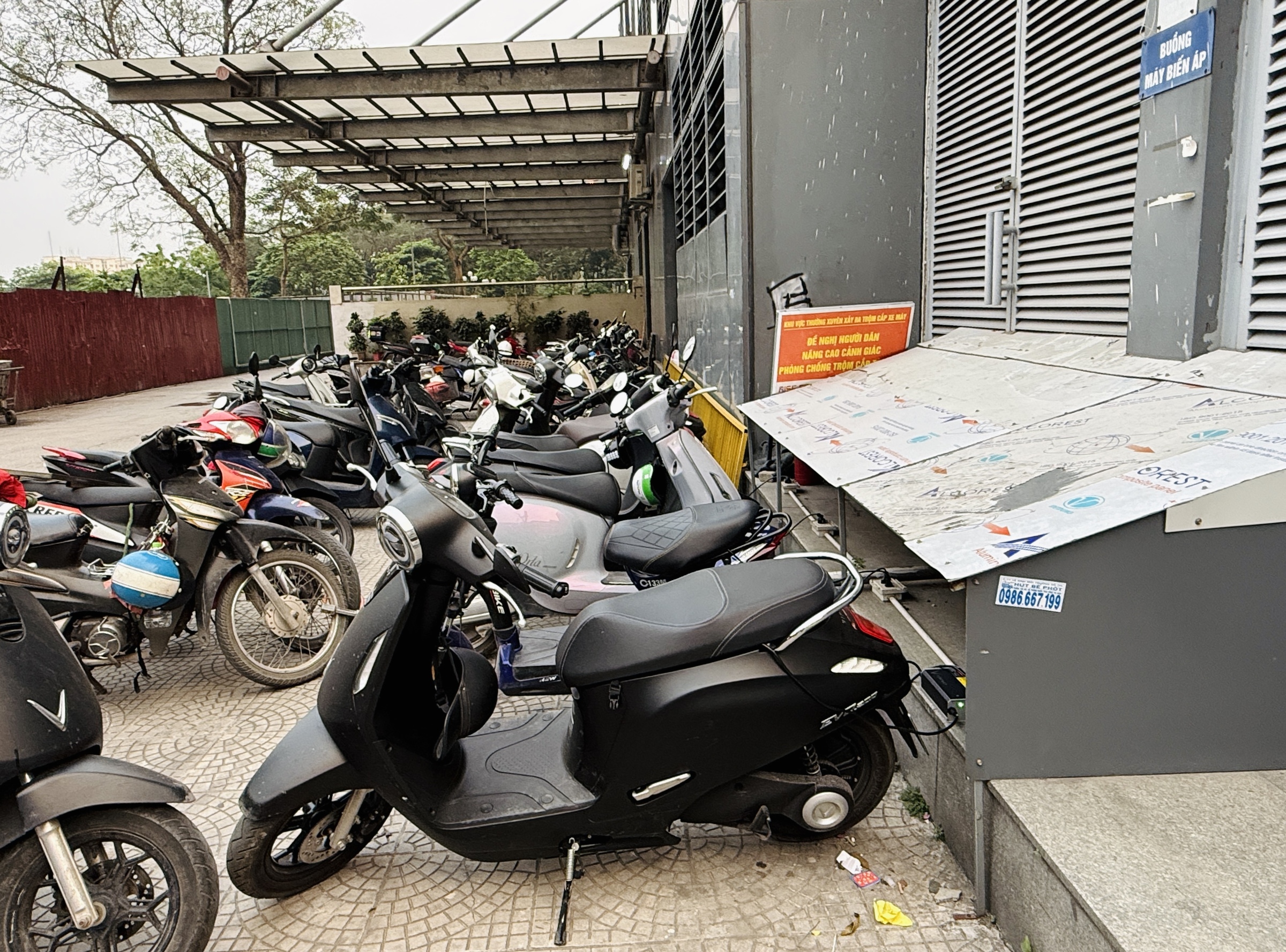
A makeshift electric vehicle charging point at an apartment complex in Van Quan, Ha Dong, after charging was banned in the basement. Photo: Quynh Nguyen
To ban or allow electric vehicles in basements?
Beyond cost issues, the fear of electric vehicle batteries is igniting extreme decisions in many parking basements, from removing sockets to refusing parking services.
In July 2024, the management of Diep's apartment complex cut power to all charging areas in the basement. Previously, the management board had designated a separate charging area, installed automatic circuit breakers, and limited charging hours. To address commuting needs, the management board later set up a temporary charging area on the apartment complex's communal yard and invited the Fire Prevention and Fighting (PCCC) force for inspection.
However, outdoor charging exposes property to risks of theft or weather damage. Some residents secretly bring batteries or vehicles into elevators to their apartments for charging. "The risk of fire and explosion is thus pushed from the basement to the living spaces of apartments. We must constantly check cameras to identify those bringing batteries into their homes," Diep said.
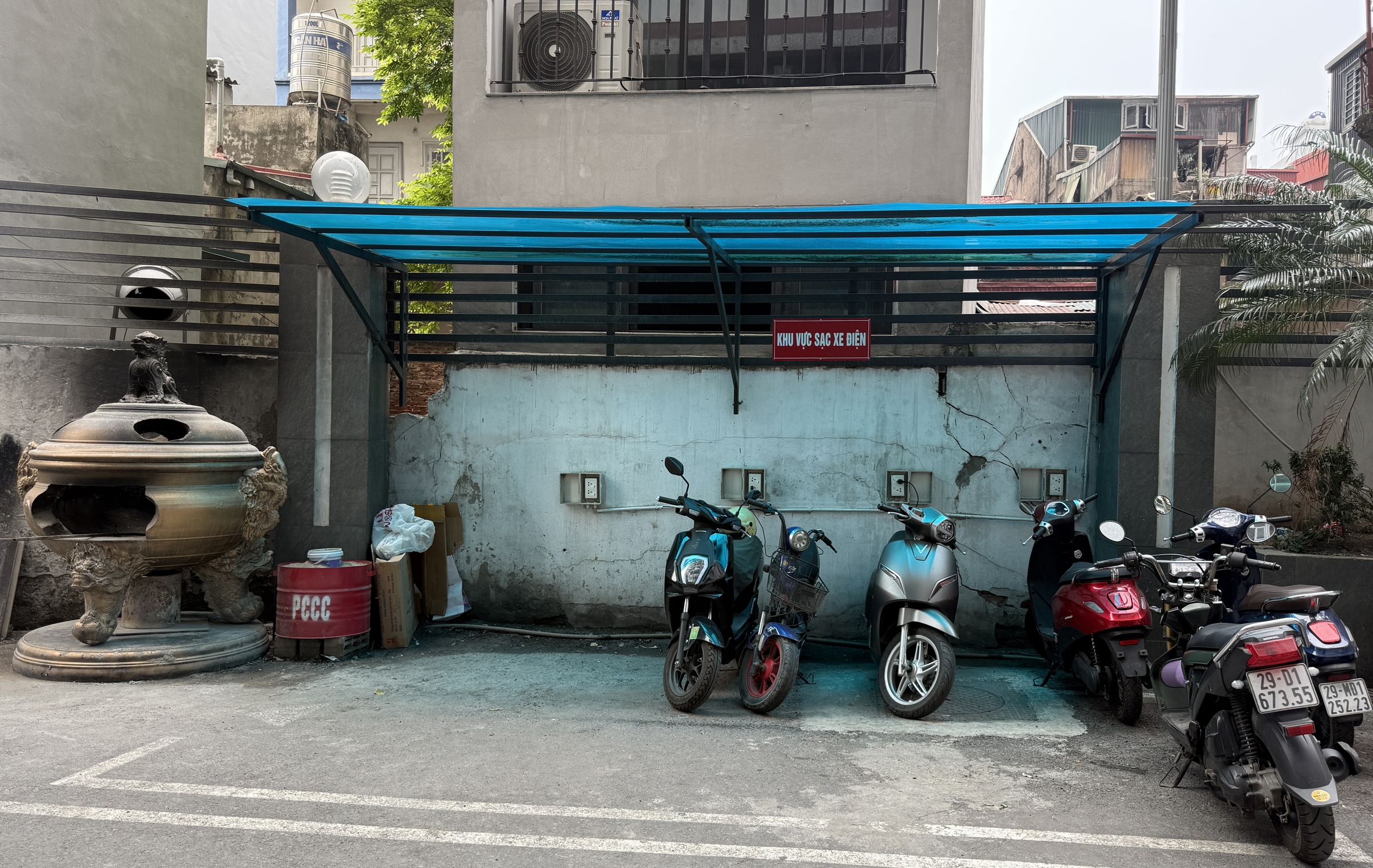
Safety pressure also forced an apartment complex in Ngoc Lam ward to move 50 electric vehicles from the basement to the building's yard in mid-2025. Due to limited space, temporary charging sockets had to be placed near the area for burning offerings and out of the security guard's sight. "We worry about fires in the basement, and on the ground, we face other anxieties. There is no perfect solution," said Duong Thang Loi, head of the apartment complex's management board.
An apartment complex in Yen Hoa ward even stopped accepting electric vehicles for parking from early 2026, citing inadequate fire prevention and fighting infrastructure. Many residents must park their vehicles at external lots or postpone plans to switch vehicles.
The situation of banning or restricting electric vehicles is occurring in many other residential areas in Hanoi and Ho Chi Minh City. Tran Khanh, Chairman of the Hanoi Building Management Club, believes this conflict will intensify, especially as Hanoi begins piloting a low-emission zone on July 1, forcing residents to accelerate their vehicle conversion plans.
 |
An electric vehicle charging point near the offering burner at an apartment complex in Ngoc Lam, Long Bien, Hanoi, on April 7. Photo: Quynh Nguyen |
An electric vehicle charging point near the offering burner at an apartment complex in Ngoc Lam, Long Bien, Hanoi, on April 7. Photo: Quynh Nguyen
Who is responsible for building charging stations?
The biggest current challenge is charging infrastructure, as apartment complexes lack both capital and technical basis. The 2% maintenance fund is not permitted for installing new charging stations.
Many management boards intend to invite external businesses to invest in stations but face regulatory hurdles. "Many partners cannot provide specific fire prevention and fighting safety parameters for basement areas. Since there are no specific national standards yet, we dare not approve them," Diep stated.
The most significant deadlock lies in basement ownership rights. If the basement is common property, the management board requires the consent of the majority of residents for renovations, a scenario that is not simple if residents are numerous and have conflicting interests. Conversely, if the basement is owned by the developer, the company is often unwilling to invest in a project that has already been handed over. The legal "blind spot" in basement ownership is causing a buck-passing situation.
Tran Khanh, Chairman of the Hanoi Building Management Club, said that existing apartment basement infrastructure will be overloaded if the number of electric vehicles increases to hundreds. He proposed that authorities promptly clarify the boundaries of common and private ownership areas in basements and issue fire prevention and fighting standards for charging areas.
Nguyen Duy Thanh, Vice Chairman of the Ho Chi Minh City Apartment Building Management and Operation Association, said that operation units can only deploy charging stations with resident consensus and permits from authorities.
In reality, some apartment complexes like Comatce Tower (Hanoi) and My Phuc (Ho Chi Minh City) have successfully mobilized socialized capital. The management board invites a third party to invest in charging equipment and operate fee collection. "When there is transparency in benefits and proactive action, electric vehicle charging stations will be an amenity that increases building value," Thanh said.
This bottleneck is showing signs of being resolved. On March 31, the Prime Minister issued Official Dispatch 27, requiring the completion of national technical standards and promoting charging station infrastructure in apartment complexes, creating a legal basis for buildings to implement solutions.
While waiting for these issues to be resolved, Phuong Thuy, 43 years old, living in Hoang Liet ward, Hanoi, has postponed her plan to switch from a gasoline motorbike to an electric one.
Her apartment basement does not accept electric vehicles. She researched private parking lots near her home, costing 300,000 - 350,000 VND per month, but these lots lack roofs and do not offer charging. "High parking costs and long commutes ruined my family's plan," Thuy explained.
* Some character names have been changed.
Quynh Duong