The new features, launched on 18/11, integrate several tools designed to help users proactively manage their time.
"Time and Well-being" is an expanded feature that replaces the previous "Screen Time Management" page. It includes a "Positive Journal" section, which records content with suitable life messages for users. According to TikTok, over 120 "positive cards" are available for download or sharing.
Next is the "Calming Sounds" tool, for those who wish to listen to rain, ocean waves, or white noise for relaxation. A survey indicates that TikTok users are 14% more likely to listen to these sounds compared to non-users. Additionally, "Breathing Exercises" help regulate breathing and reduce stress.
This new space also integrates instructional videos from TikTok content creators, including: louislevanti, thepsychdoctormd, oh.henrys, quenwilliamss, juicybodygoddess. These videos help users understand how to set time limits, adjust their "For You" feed content, and utilize the "Family Pairing" feature. TikTok states it will expand collaborations with more global creators in the coming time.
To use the features, users can access "Time and Well-being" directly within their account settings. TikTok will also automatically suggest opening this space when participants reach their daily time limit or when the "Sleep Reminders" mission is activated. Furthermore, videos on the "Rest" theme will display additional reminders for easier user recognition.
Alongside the launch of the new features, TikTok also introduced four "mental well-being missions". These activities are developed based on research from the Digital Wellness Lab, aiming for more conscious social media use.
These missions include "Sleep Management", which encourages users to limit platform use at night or dedicate time to meditation for rest. The "Daily Time Limit" mission helps users set and maintain daily app usage goals.
The "Weekly Screen Time Tracking" mission supports users in reviewing their total usage time, enabling them to adjust their habits. Additionally, there is a "Well-being Ambassador" mission, which recognizes those who invite friends to participate in these activities.
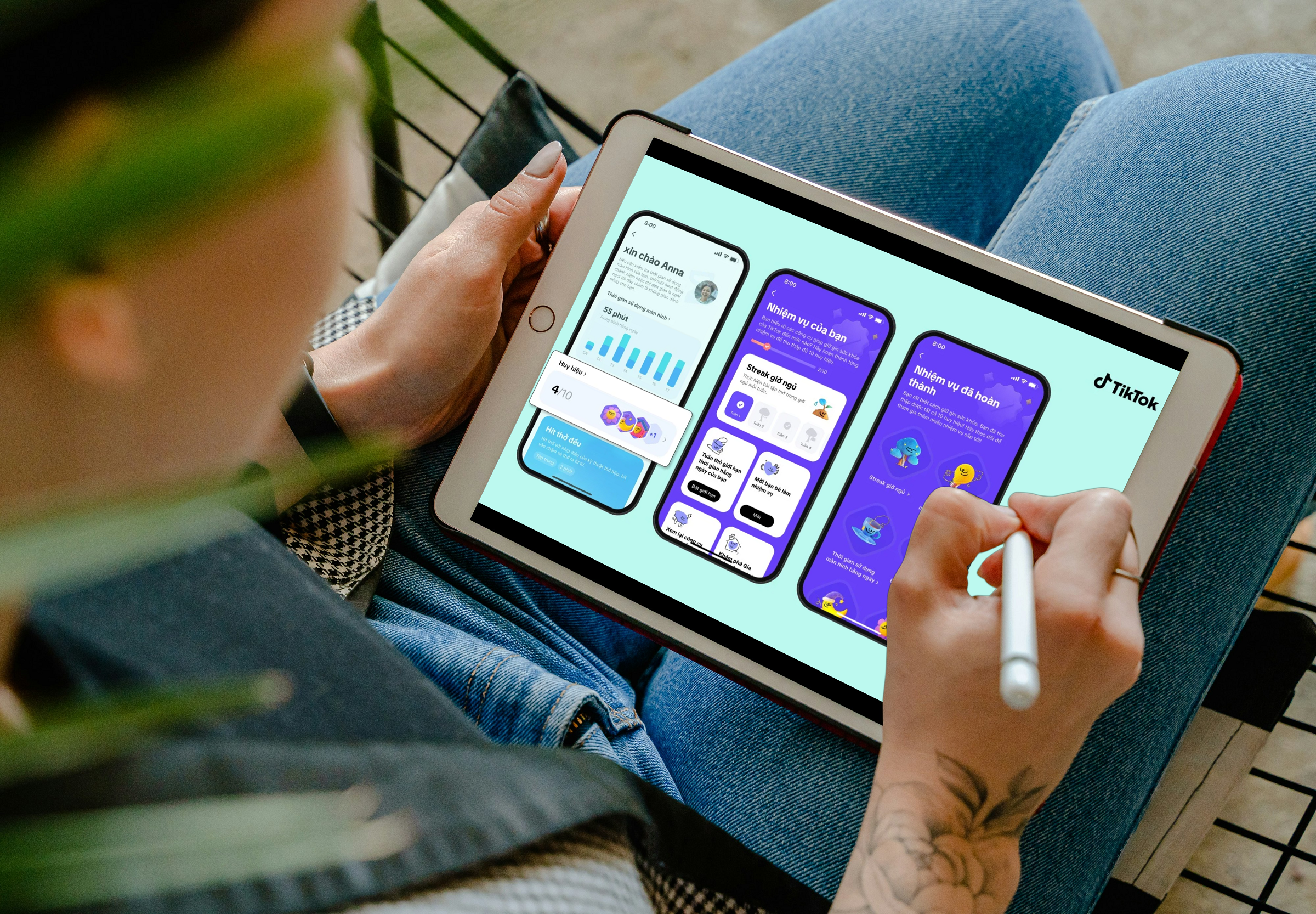 |
TikTok introduces well-being features to users. Photo: TikTok
Upon completing each mission, users will receive badges to acknowledge their effort and encourage them to continue maintaining healthy habits. Initial trials show that users returned to the "Time and Well-being" feature more often compared to the previous settings page. Among these, the "Positive Journal" is the most favored section.
The "mental well-being missions" also aim to encourage users to form more positive social media habits, while expanding the Mental Well-being Education Fund to 22 countries. Furthermore, the platform continues to enhance the "Family Pairing" feature, allowing parents more proactive management of their children's accounts. One of the new additions is "Screen Break Time" - a feature that allows parents to pause their children's TikTok access when needed.
In addition, TikTok has added a meditation feature, which automatically activates at 10 p.m. to encourage users to relax before sleep. This feature was initially applied to teenage users, later expanded to the entire community, and has attracted tens of millions of uses.
Representing the youth group who contributed ideas for this feature is Tomas Cermak, 19, a member of the TikTok Youth Council. Tomas stated that in today's digital landscape, mental well-being needs to be prioritized. He expressed joy that the idea was implemented and brought a useful experience to millions of users. "I hope this feature will help everyone, especially teenagers, achieve greater balance when using social media," Tomas said.
The feature has also been highly praised by many experts. According to Dr. Eva Trujillo, Executive Director of Comenzar de Nuevo, this is a significant step in designing a more balanced and healthy digital environment. She believes that when platforms combine scientific elements and social responsibility, users will build a more positive relationship with technology.
Dr. Vicki Harrison, Program Director at the Center for Youth Mental Health and Well-being at Stanford University, commended TikTok for listening to feedback from the Youth Council and developing tools that help manage time, placing mental well-being at the core of the user experience.
By 2026, TikTok plans to contribute USD 100,000 to the Tech Coalition SafeOnline Research Fund (online safety research fund of the Technology Coalition) to support independent research on adolescent mental well-being and technology use behavior.
Thai Anh