


"Around my house, there are dozens of markets, big and small, including wholesale markets, but I do not feel at ease," said the 43-year-old woman from Tam Binh ward.
For five years now, the food for Phung's five-member family has mainly come from two sources: a self-cultivated farm in Cu Chi or the Green Market in Xuan Hoa ward. The market meets every saturday and sunday morning, gathering about 40 stalls selling agricultural products such as pumpkin, gourd, luffa, sweet potato, vegetables, along with pork, chicken, fish, and fermented fish paste from farmers in the Mekong Delta and southeastern provinces.
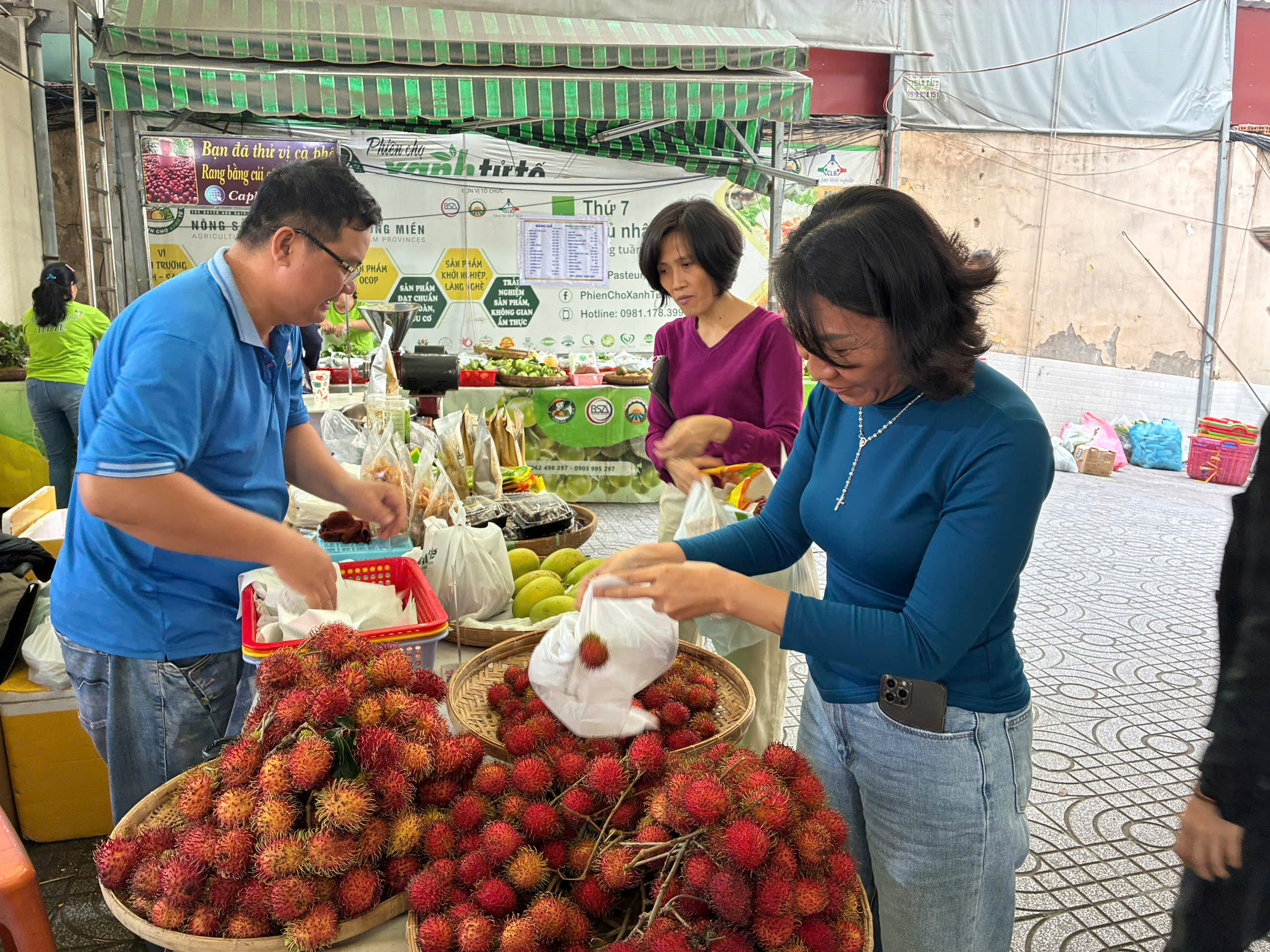 |
Kim Phung (in blue shirt) selects rambutans at the green market in Xuan Hoa ward, TP HCM, on 11/1. *Photo: Ngoc Ngan* |
Previously, Phung maintained the habit of going to traditional markets near her home, prioritizing purchases from elderly vendors selling vegetables "cut and brought up from the countryside". Each type had only a small quantity, so she believed it was genuine.
That trust shattered when, by chance, she caught those very vendors taking vegetables from a wholesale market and repackaging them for individual sale. Since then, she boycotted sellers at nearby markets, buying only from countryside markets. "I accept traveling further and spending more to know exactly what I am consuming," she said. Each week, her family spends approximately 1,5 million dong on vegetables and fruits at this market.
Phung represents a growing segment of urban consumers who are becoming more stringent about their food. Amid numerous food poisoning incidents, farmers' market, green market, and "farm-to-table" models are thriving in TP HCM. In addition to the Green Market in Xuan Hoa ward, TP HCM also features similar models, such as the TP HCM Safe Agricultural Products Market held on weekends at Le Thi Rieng Park, Binh Phu Park, An Suong residential area; the Transparent Food Market (AFT); the Organic Agricultural Products Market (Organic Town) - Phu My Hung; and Saigon Farmers Market (Thao Dien).
These markets are organized by vegetable-growing communities, the TP HCM Farmers' Association, or the Business Research and Enterprise Support Center (BSA), ensuring product quality.
The markets typically convene on weekends, bi-weekly, or even monthly, primarily promoted through social media. They sell a diverse range of agricultural products, fresh vegetables, meat, fish, and other specialty items, all sold directly by the producers. Unlike traditional markets, each item here is available in small quantities, has clear origins, and usually involves no intermediaries.
A survey at the market in Xuan Hoa ward on the morning of 11/1 revealed that the market welcomed approximately 500 people within four hours. One vendor stated that 70% of them are weekly customers. At another countryside market in Phu Nhuan ward, stalls selling malabar spinach and bok choy frequently "sold out" just two hours after opening.
What attracts urban residents is not just the vegetables and fish, but the transparency. Thanh Thuy, manager of the Green - Integrity Market, stated that the model has been developing for 10 years, but customer numbers have recently increased significantly. A key differentiator of these markets is that participating farmers must register and have product certification. Once every three months, the management board randomly selects and inspects each batch of goods.
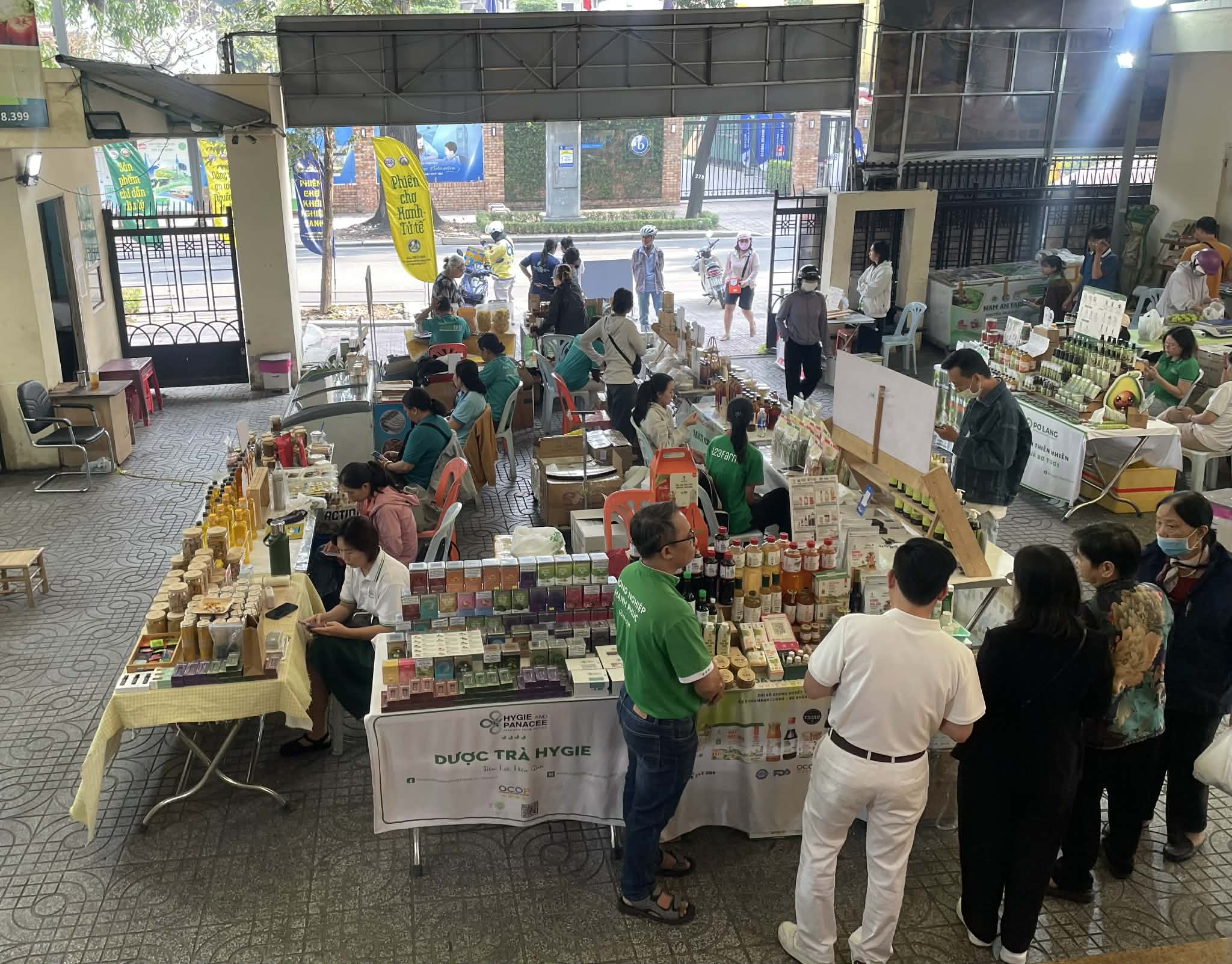 |
The "green" market in Xuan Hoa ward, TP HCM, on the morning of 11/1. *Photo: Ngoc Ngan* |
This strictness creates pressure but also opportunities for conscientious producers. Thanh Viet, from Vinh Long, mentioned he has been selling at the weekend market for five years. Every weekend, he transports vegetables and rice crackers to TP HCM. "Customers here do not bargain; they only care about quality," Viet shared.
However, the biggest barriers to this model are price and convenience. Kim Trang, 40, from An Khanh ward, admitted that vegetable prices at green markets are often two to three times higher than traditional markets and comparable to premium supermarkets. "In return, there is peace of mind for elderly parents and young children," Trang stated, after experiencing food poisoning twice from regular market vegetables.
According to Vu Kim Anh, Deputy Director of the Business Research and Enterprise Support Center (BSA), this trend extends beyond TP HCM. "Consumers are 'thirsty' for transparency. When trust in traditional markets wavers, they seek places with strict control and supervision processes, even if it means traveling further or paying higher prices," she observed.
Ngoc Ngan





