Transparency in product origin and quality is becoming a key factor for parents choosing nutrition for their children, driven by the critical importance of early development. The early years are foundational for a child's physical, cognitive, and immune system development. Organizations like UNICEF advise parents to carefully read ingredient lists and check claims on packaging. The FDA emphasizes that information on formula labels must be accurate, not misleading, and scientifically based.
This demand for transparency is evident in parents' shopping habits, who actively seek verifiable information before making purchases. Ut Hoa (31, from Vuon Lai ward, TP HCM) often spends considerable time in stores, meticulously reading packaging details for each brand. She then researches further on her phone, comparing multiple sources. "Only when I personally verify the origin and quality of a milk can do I feel confident letting my child use it," she explained. Similarly, My Ha (29, from Da Nang) believes that having additional information makes it easier for mothers to choose good nutritional products. The Hung (37, from Thanh Hoa) agrees, stating parents need peace of mind from transparent, verifiable information, not just nutritional formulas. "I always thoroughly read the ingredient list, research the company and production site before making a purchase decision," Hung said.
Experts and retailers confirm this growing consumer need for accessible and verifiable product data. Le Quang Dang, Chief of Staff of the Vietnam Consumer Protection Association, stated that "Origin transparency through accessible methods like electronic data systems can help consumers feel secure when shopping." Nguyen Thi Nguyet Hong, Director of the Mother and Baby category at AVAKids, noted that most parents prioritize origin, quality, production processes, and relevant certifications over advertising. She added, "Brands that provide sufficient, accessible, and verifiable information often build better trust with customers."
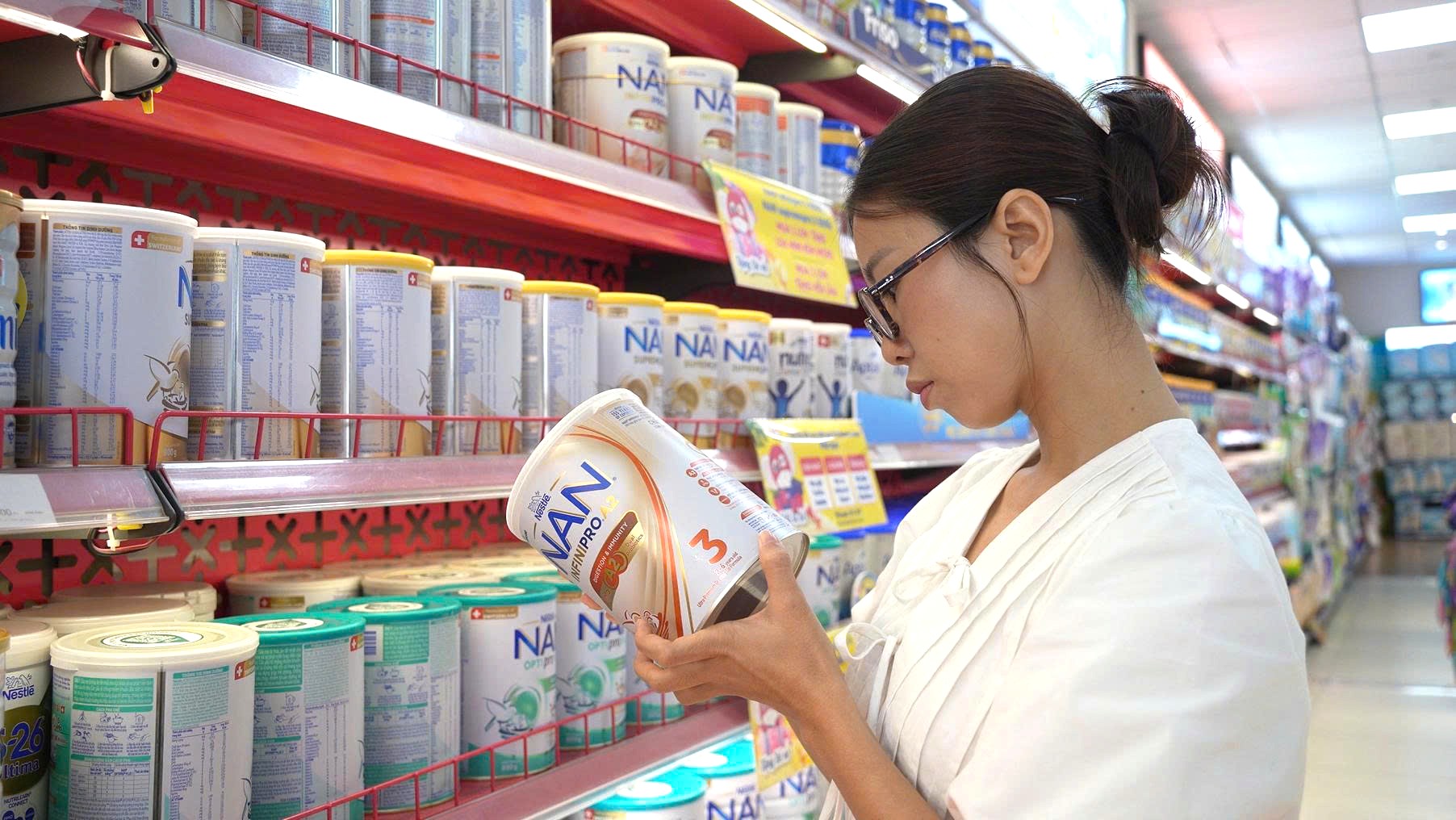 |
Many parents carefully read information when choosing milk for their children. Photo: Nestle
In response to this demand, businesses are increasingly leveraging data digitization technology to provide transparent product information. Nestle is a leader in this area, investing in origin transparency solutions. Their QR code system, found on the bottom of product cans, allows users to access comprehensive details in under 5 seconds. Scanning the code reveals the product's name, image, factory, origin, batch number, production date, expiration date, and authentication status.
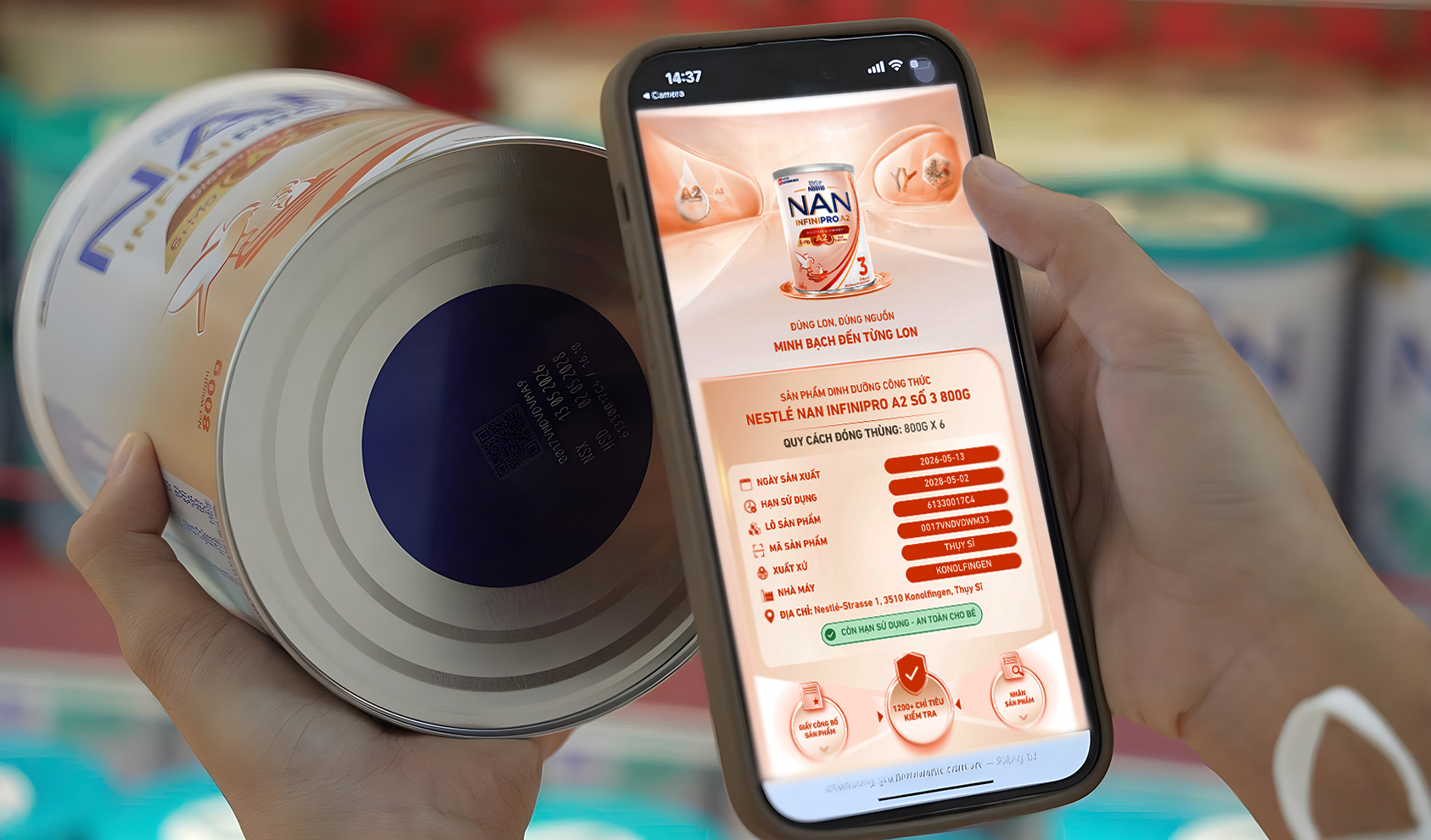 |
Parents can easily scan QR codes to verify product information. Photo: Nestle
Beyond basic product identification, Nestle's QR codes offer detailed insights into product standards and rigorous quality control measures. The QR code also lists certifications such as FSSC 22000 (food safety management system) and ISO 9001:2015. Information about the production facility is integrated, eliminating the need for users to search multiple sources. According to a Nestle representative, quality control is continuous, from formula research and raw material selection to production and delivery. The corporation employs a multi-layered control system, with each product batch undergoing a minimum of over 1,200 quality checks before leaving the factory.
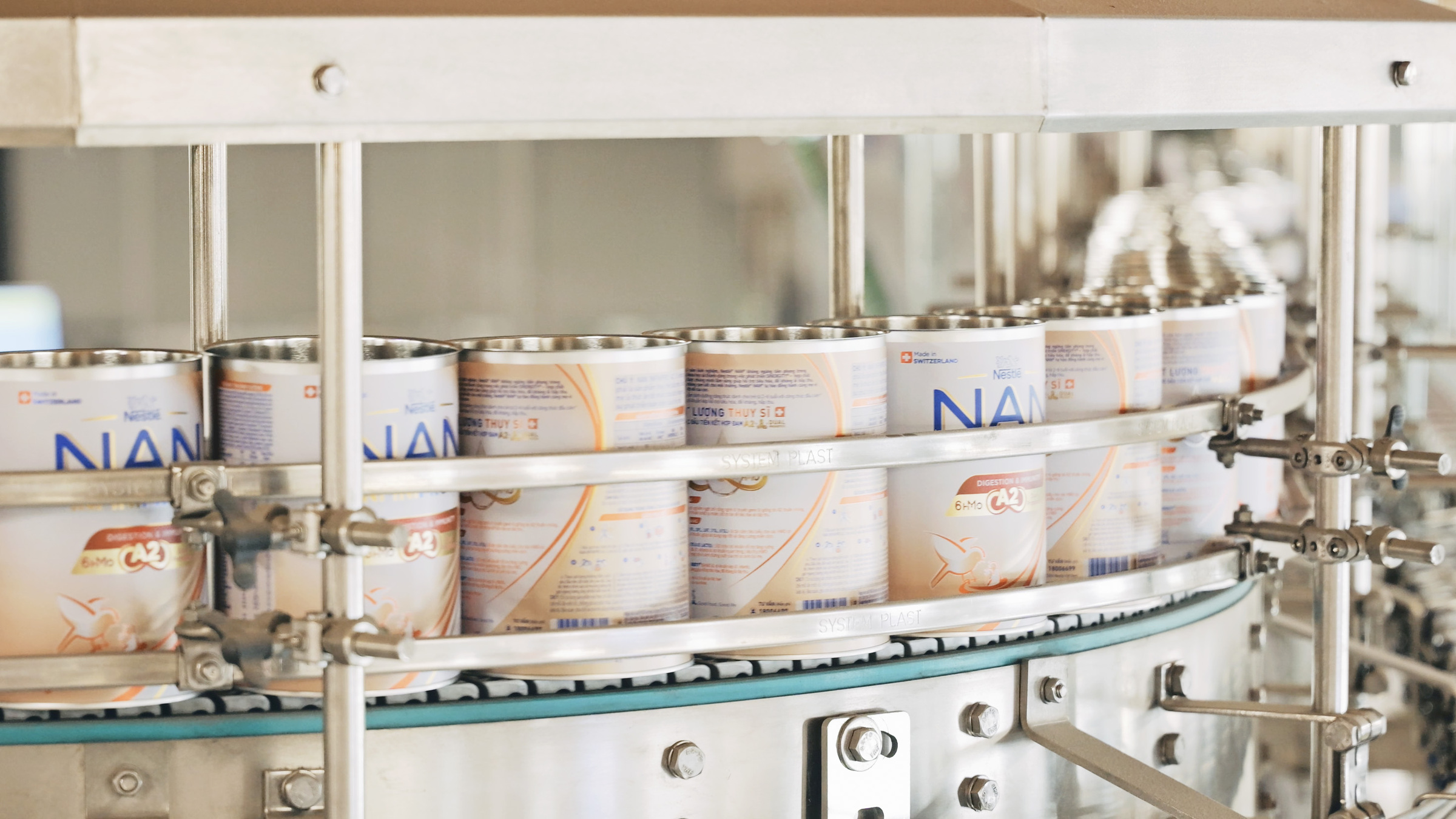 |
Nestle's closed production system at its factory, where all processes are closely monitored. Photo: Nestle
This shift towards transparency benefits both consumers and businesses in the evolving market. With technological advancements and changing consumer behavior, product origin and quality are increasingly vital in purchasing decisions. For businesses, origin transparency empowers consumers to verify information, fostering brand trust. For parents, clear data simplifies product research and provides a stronger basis for informed nutritional choices for their children.
By Hieu Chau