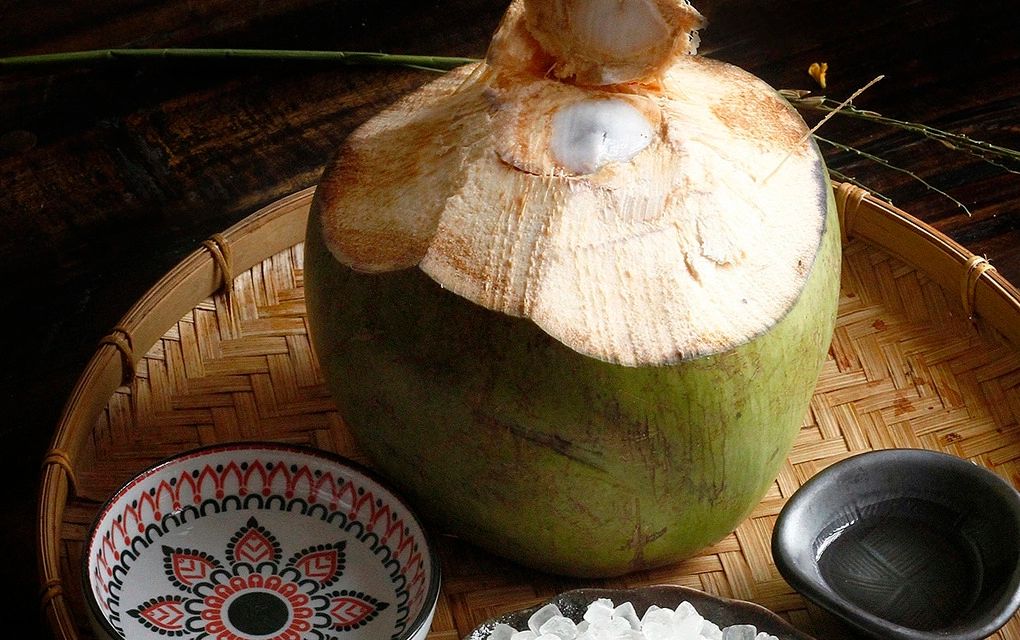
Chef Vu Nhat Thong of Eric Cooking Class in TP HCM emphasizes that each of these ingredients plays a unique role and has an optimal moment to be added during cooking.
Tamarind: Creating the base sour flavor
Tamarind is often considered the heart of Southern sour soup. Its primary sourness, derived from tartaric acid, resists heat degradation. This allows cooks to simmer it for extended periods, enabling the flavor to meld deeply into the broth and establish a foundational sour note.
To use, mash ripe, seedless tamarind paste with a small amount of boiling water. Strain the mixture to extract the concentrate, discarding any seeds and pulp. Add this concentrate to the broth at the initial stage of cooking. Avoid adding whole tamarind pulp, which can lead to a cloudy broth.
For a pot containing 1,5 to 2 liters of water, use approximately 30 to 50 grams of tamarind paste, adjusting to personal taste. Excessive tamarind can result in a dark-colored soup with an overwhelming sourness that masks other flavors.
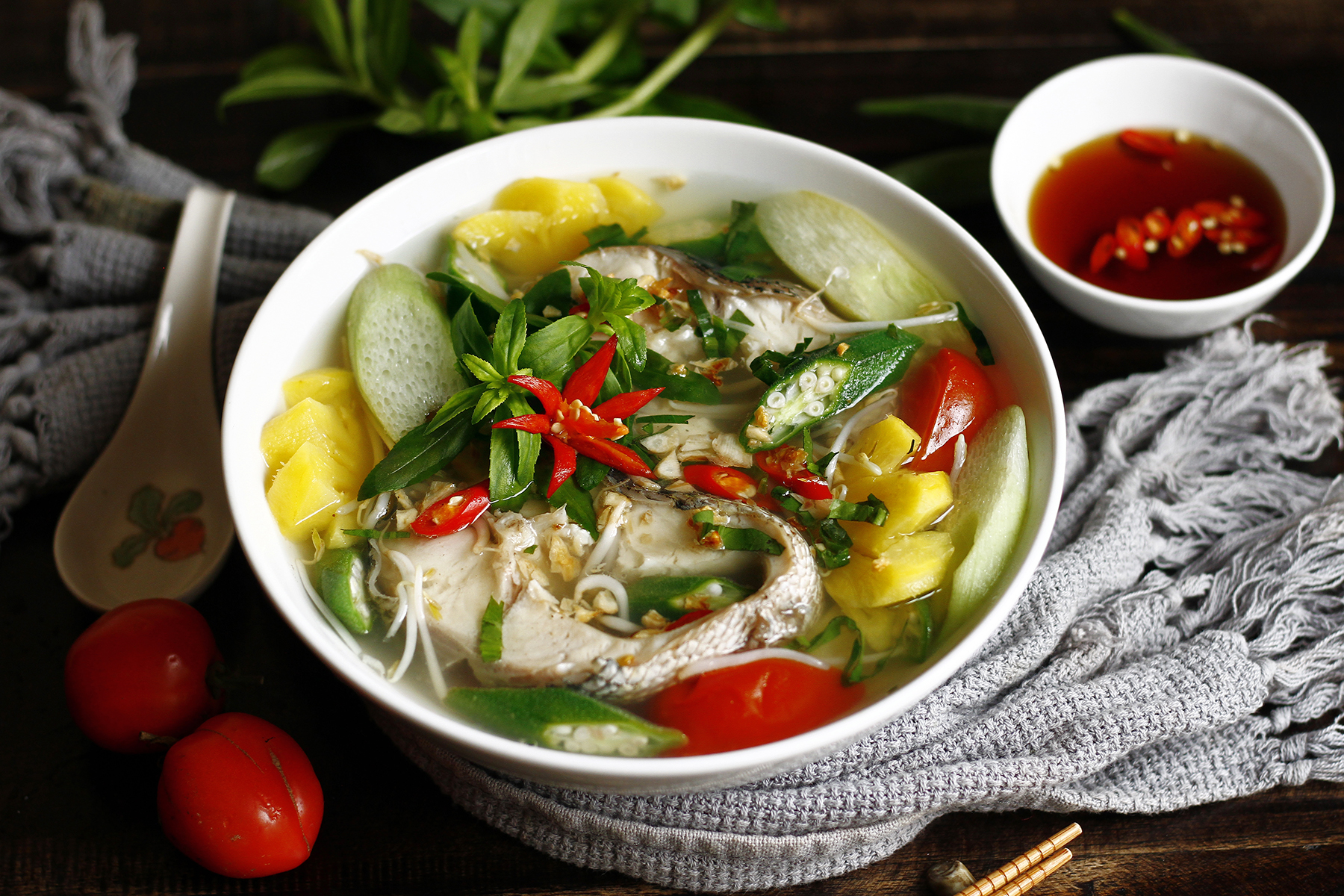 |
Southern-style snakehead fish sour soup. Photo: Bui Thuy
Pineapple: Balancing sweet and sour flavors
While tamarind forms the soup's core, pineapple adds richness. It introduces a natural, subtle sweetness and a distinctive aroma, tempering the sharpness of other acidic components.
Pineapple contains malic and citric acids, natural sugars, and the enzyme bromelain, which helps tenderize proteins in fish and meat within the soup.
Slice pineapple thinly and add it to the broth once it (already containing the tamarind concentrate) comes to a boil. Simmer for an additional 5 to 10 minutes to allow the pineapple to release its sweet and sour notes.
For 1,5 to 2 liters of water, use approximately one-fourth to one-third of a ripe pineapple. Overly green pineapple will result in a harsh sourness, while overripe pineapple can make the soup bland and its pieces mushy.
Tomato: Adding color and umami flavor
Tomatoes serve beyond mere garnish, boosting the broth's visual appeal and sweet depth. They contain citric and malic acids for a mild sourness, but their key contributions are glutamic acid, which provides natural umami, and lycopene, which imparts a vibrant red color.
Cut tomatoes into wedges. As lycopene dissolves effectively in fat, sauteing garlic in cooking oil before briefly stir-frying the tomatoes for 1 to 2 minutes—prior to adding water—maximizes color extraction.
Use two to three medium-ripe tomatoes. Avoid adding raw tomatoes directly to boiling water, as this will prevent them from developing a desirable color and full flavor.
Lime and Kumquat: A refreshing final touch
Lime and kumquat offer a delicate, refreshing sourness and a captivating essential oil aroma, delivering a final flavor boost to the soup.
Both ingredients contain citric acid and volatile essential oils in their peels, which are highly sensitive to heat. Extended cooking causes the sourness to fade, the aroma to dissipate, and the flavor to become bitter.
Once the soup is fully cooked and seasoned, turn off the heat completely. Squeeze the juice of half a lime or two to three kumquats into the pot. Add fresh herbs such as sawtooth coriander and rice paddy herb, stir gently, and serve.
Always taste and add lime or kumquat juice gradually, as their sourness is potent. A common error leading to bitter soup is adding these ingredients while the heat is still on or the broth is boiling.
Preparing canh chua can be likened to orchestrating a symphony: sauteing garlic and tomatoes for a vibrant color base; introducing tamarind concentrate as the main melody; adding pineapple for balanced harmony; cooking the primary ingredients; and culminating with the bright notes of lime and kumquat juice, alongside fresh herbs, added only after the heat is off. A thorough understanding of these 5 ingredients ensures a consistently high-quality traditional sour soup.
Bao Nhien