Sugar balances flavors
The human tongue perceives five basic tastes: salty, sweet, sour, bitter, and umami. When a dish is too salty or too sour, a small amount of sugar can mellow these flavors, creating a more harmonious overall taste.
For instance, in Southern Vietnamese sour soups or tomato sauces, just a small amount of sugar reduces harshness, making the dish more palatable.
Enhances umami taste
Sugar not only provides sweetness but also highlights umami, the natural "savory depth" found in broths, meats, and fish. When used correctly, sugar gives dishes a deeper, longer-lasting aftertaste without needing excessive salt or fish sauce.
This is why many braised dishes, stews, and restaurant broths often have a well-rounded flavor.
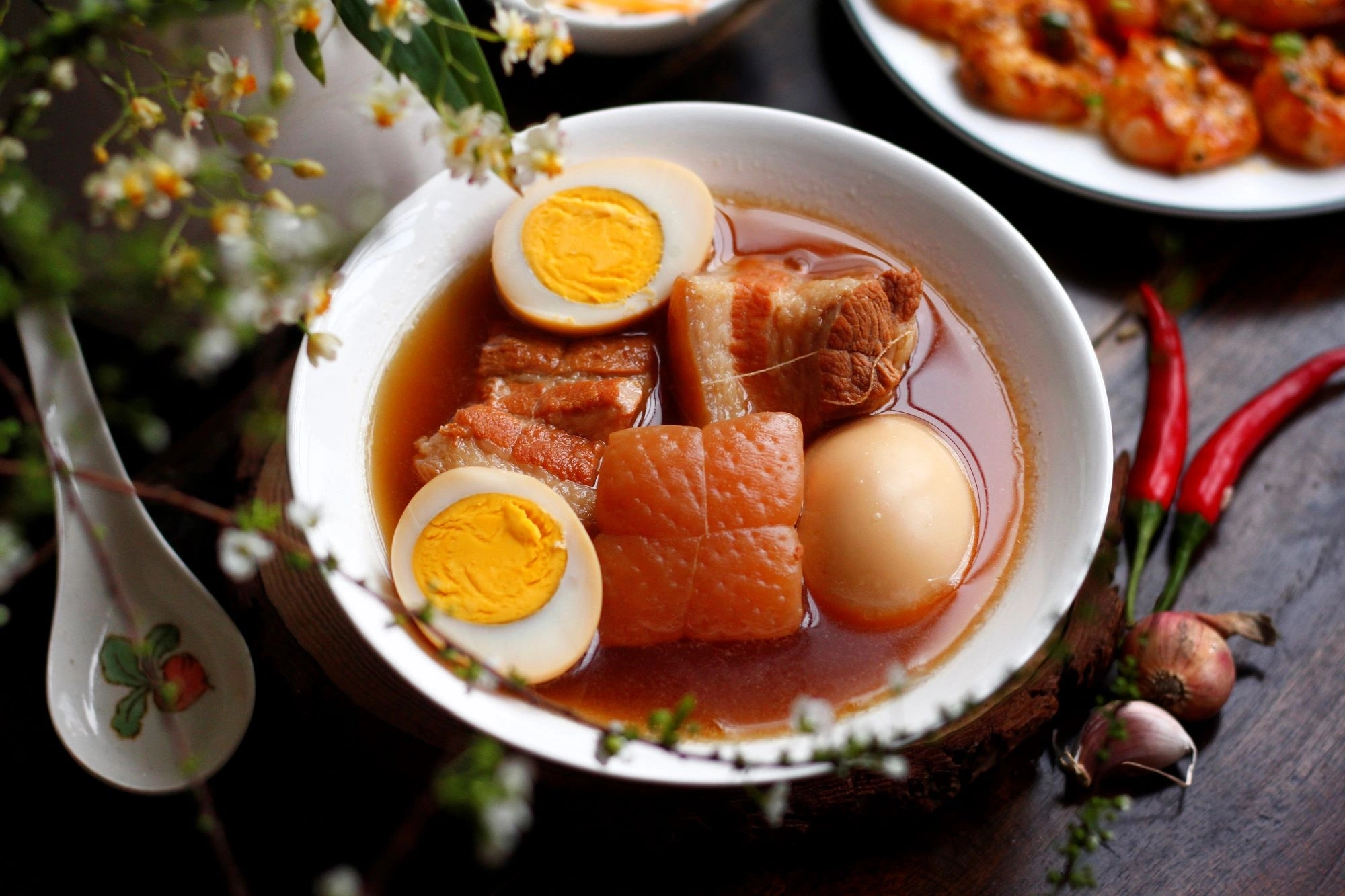 |
Southern Vietnamese braised pork with eggs. *Photo: Bui Thuy* |
Aids in color and aroma
When heated, sugar participates in chemical reactions like caramelization and the Maillard reaction, creating a golden-brown color and distinct aroma, as seen in braised, stir-fried, and grilled dishes.
Marinating grilled meat or making caramel for braised fish with a little sugar produces a beautiful, natural amber color and an appealing flavor that no other seasoning can replicate.
How to use sugar correctly
Despite its many benefits, sugar should be used in very small quantities in savory dishes. For soups, use about one-fourth to one-half teaspoon. For braised or stewed dishes, use about one to two teaspoons, depending on the amount of ingredients. For dipping sauces, add it gradually to balance flavors. Crucially, the sweetness should not be prominent; sugar should act as a "base" to enhance other flavors.
When not to use sugar
While effective, sugar is not suitable for all dishes. For those that require their original natural freshness, such as boiled vegetable broth, winter melon soup, or boiled seafood, avoid adding sugar. Adding sugar in these instances would compromise the natural freshness and make the broth taste unpleasantly sweet and salty.
Bui Thuy