India has one of the lowest rates of dishwasher usage globally. Reports from Statista and Euromonitor International indicate that only 0.7–0.9% of households own this appliance. Even in major metropolitan areas like Delhi, Mumbai, and Bengaluru, the figure for families with dishwashers stands at 3–5%. Grand View Research places India among the least developed markets in this segment, alongside Nigeria and Bangladesh, despite its 1.4 billion population and rapidly expanding middle class.
This paradox fueled a lively debate on the social media platform X in mid-November, when New Delhi user Chirag Barjatya expressed surprise that dishwashers – common in the US and UK for over 30 years – were conspicuously absent in his homeland. His post garnered over 1.1 million views, suggesting that Indians are overlooking an appliance that offers "cleaner dishes than handwashing, no holidays, and fewer family arguments."
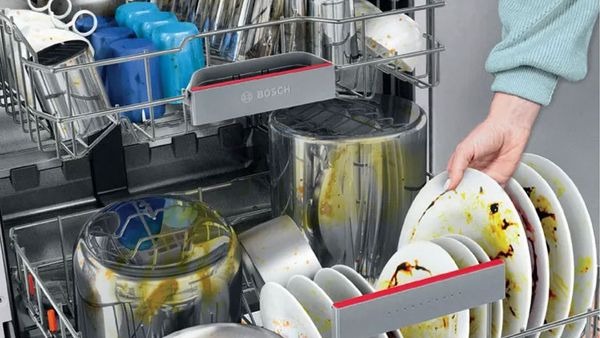 |
Culinary traditions that use a lot of oil and spices are believed to be a reason why dishwashers are less useful in Indian homes. Photo illustration: IndiaMart |
Experts and market data point to three primary barriers hindering dishwasher adoption in the populous nation.
Culinary habits and technological skepticism are significant factors. Rajeev Singh, Director of Consumer Research at GfK India, identifies the country's culinary culture as the biggest hurdle. Indian dishes typically use considerable amounts of oil and complex spices like turmeric and masala. According to Euromonitor, each dish here uses an average of two to three tablespoons of oil, double the Asian average.
This poses a challenge for dishwashers, which are primarily designed for simpler Western eating habits. A GfK survey revealed that 62% of users were disappointed by lingering stains after washing, compelling them to rinse or pre-scrub by hand. Priya Sharma, a homemaker in Mumbai, shared, "The machine only cleans about 70%; I still have to manually handle the rest." She sold her USD 545 dishwasher at a loss after just three months because pots and pans remained oily. This reality makes using a dishwasher seem ineffective, reducing effort by only half of what was expected.
The economic equation concerning domestic helpers also plays a crucial role. In India, hiring domestic help is a widespread practice due to low labor costs. A household in Mumbai or Delhi can employ a helper for approximately USD 145-240 per month.
While this cost exceeds the monthly electricity and water expenses for a dishwasher (USD 6-10), domestic helpers provide comprehensive value: they not only wash dishes but also clean the house, cook, and flexibly handle all types of burnt pots and pans that machines cannot. For many families, investing a substantial sum of USD 300-700 to purchase a machine (not to mention the risk of malfunctions) is less appealing than paying a monthly salary to someone who can perform multiple tasks.
Infrastructure limitations present another obstacle. Living spaces in major cities often feature modest kitchen sizes, averaging only 4-6 square meters. After accommodating a refrigerator, gas stove, and sink, finding room for a bulky dishwasher becomes a luxury.
Furthermore, hard water sources and an unstable power grid in many regions significantly impact the appliance's lifespan and efficiency. Bosch India reports that approximately 35% of dishwashers are abandoned by users within six months of purchase due to these inconveniences.
Ngoc Ngan (According to Hindustan Times, Onmanorama)