"Everyone wears black, white, or gray", said Isabel Smith, a 32-year-old American. Accustomed to bold makeup and vibrant clothing in the US, she suddenly felt out of place in the Seoul crowd. Students often complimented her outfits but always added, "They don't suit you". Even when she tried to buy orange earrings from a major brand, a staff member informed her that the style was not sold in South Korea due to "no demand".
Smith's experience accurately reflects the reality in South Korea. According to CJ Logistics' Everyday Life Report, based on delivery data, black clothing accounts for 38%, white 15%, and gray 9%. In total, monochromatic attire makes up 62% of shipped goods.
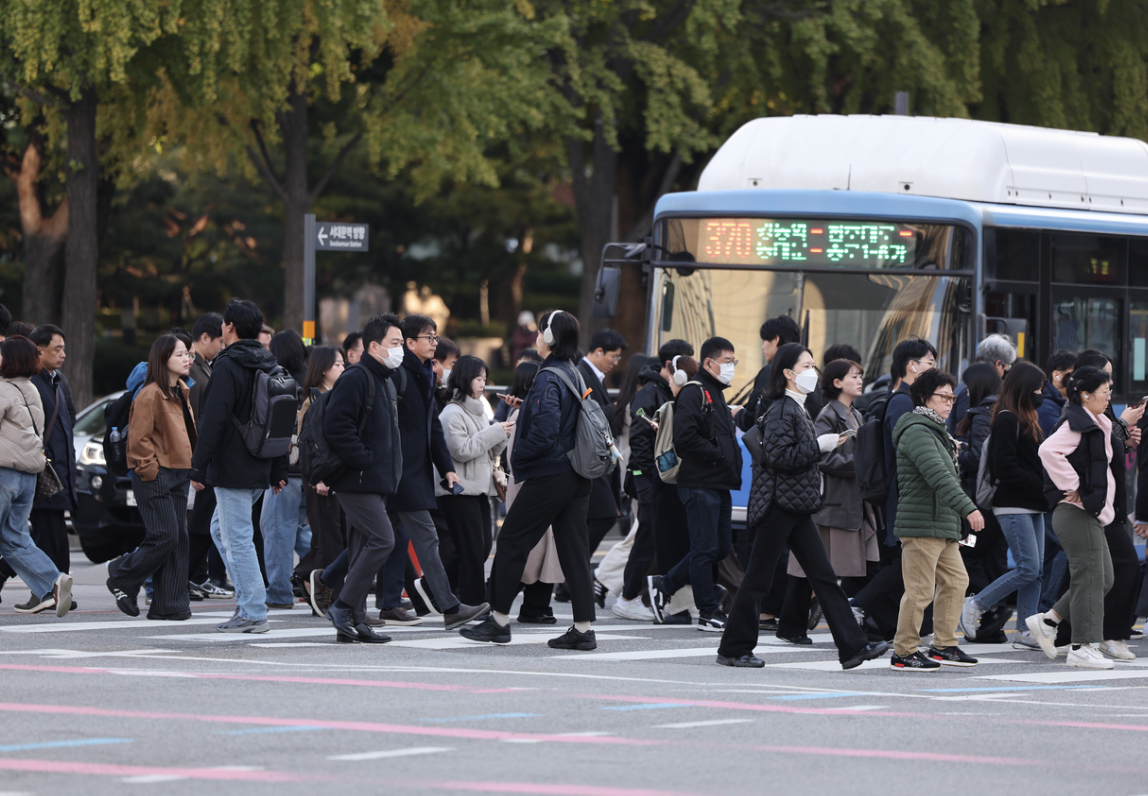 |
South Koreans cross a street near Gwanghwamun square, central Seoul, South Korea. Photo: Yonhap |
Experts suggest this preference reflects both cultural pressure and practical aspects of South Korean life.
Kwon Eun-ji, 34, stated her wardrobe primarily consists of white, black, and navy. Although she once liked a red striped polo shirt, she chose navy out of fear of standing out too much.
Once, when Kwon wore a yellow cardigan to work, she received numerous comments from colleagues that made her uncomfortable. "I don't like being noticed for my clothes. I just want to blend in with the crowd", she said.
According to Professor Lee Ji-kyung of Kyungsung University, neutral colors represent modesty and harmony - core values of Korean culture. "Koreans were once known as the 'white-clad people' due to their tradition of wearing white hanbok. Today, this preference extends to black and gray tones, representing sophistication and calmness", she explained.
In a survey of students, 41% stated they chose neutral colors to avoid drawing attention. In a society that highly values community, dressing too distinctively can sometimes create invisible pressure on others.
Beyond cultural factors, the demands of modern life also drive this trend. Park Nam-jin, 33, an office worker, shared: "Neutral clothes are easy to coordinate, saving me time each morning while maintaining a presentable appearance".
Fashion design lecturer Lee Jee-hyun of Yonsei University noted that practicality is a major driving force. Neutral colors easily combine with various materials and styles, reducing the risk of going out of fashion. "That's why black and white t-shirts are always best-sellers", she said.
Especially in winter, Seoul streets are filled with black puffer coats (long padding). The simple reason is that winter coats are often expensive, rarely changed, and black helps conceal stains best.
"Here, color isn't in the clothes, but in harmony", Lee concluded regarding the South Korean fashion philosophy.
Ngoc Ngan (According to Korea Herald)