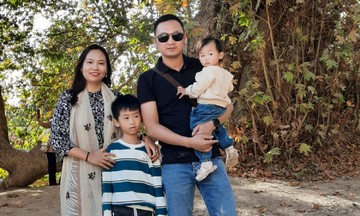
On the afternoon of 24/12, employees at Ngoc Dung's company in Giang Vo ward, Hanoi, were buzzing about the Ministry of Internal Affairs' holiday proposal. "Most were not enthusiastic about this longer break", Dung said. "At year-end, there is a lot of work to resolve, and a long break will cause disruption and backlogs".
As a sales employee, whose income is affected by the challenging economy, Dung had planned to work on Friday (2/1) to maintain her salary and save costs. However, the "unexpected" holiday schedule has put the 27-year-old in a difficult position.
"I'm stuck in the capital with high living costs and nothing to do during the long break because bus tickets home are sold out", Dung stated. After spending the entire afternoon unsuccessfully trying to find last-minute tickets, Dung booked a round-trip train ticket for nearly 1,8 million VND, which is 600,000 VND higher than usual. She considers this an "utterly wasteful expense" given the upcoming Lunar New Year holiday.
The Ministry of Internal Affairs' proposal suggests swapping the workday on Friday (2/1/2026) to be made up on the following Saturday, 10/1/2026. If approved, the 2026 new year holiday would extend from Thursday to Sunday, specifically from 1 to 4/1/2026. The Lunar New Year holiday would then take place approximately 1,5 months later, starting on 14/2/2026.
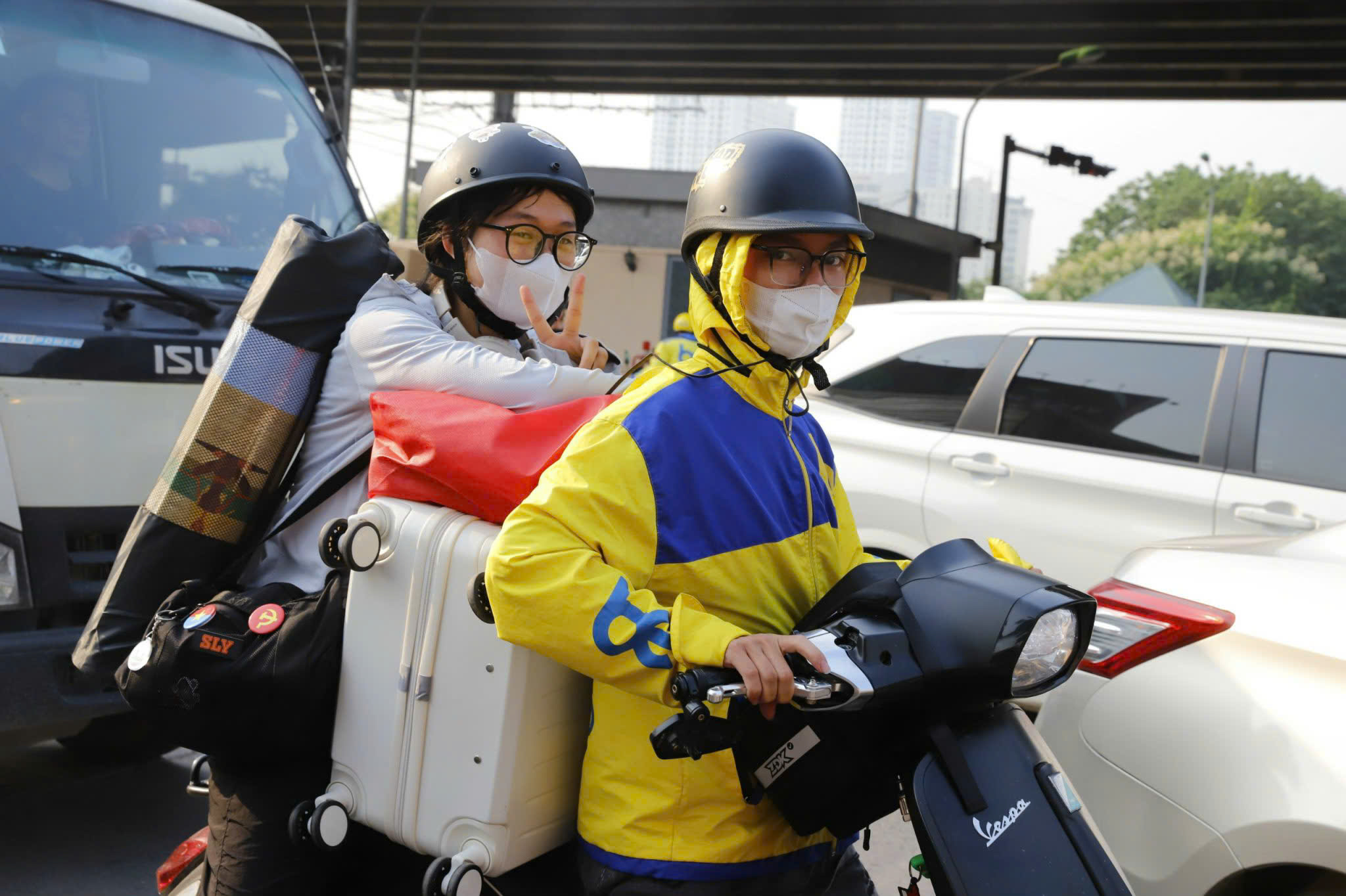 |
A female student from Hanoi at Nuoc Ngam bus station heading home for the new year holiday, 31/12/2024. Photo: Nga Thanh |
Pham Hung, 32, from Nam Tu Liem ward, and his family also find themselves in a dilemma. As soon as he heard about the potential extended holiday, he urged his wife to pack for a visit to their grandparents in Nghe An. However, his wife, Thu Huong, immediately dismissed the idea. Working at an import-export company, December is a peak month for orders, making it impossible for her to leave her computer even for a day.
The swapped holiday also creates a significant gap in childcare. "With the kindergarten closed, I have to juggle work on my laptop while looking after two active children. This type of holiday is more tiring than going to work", Huong complained.
She believes a sudden long holiday is only beneficial for those with financial means and those working in the administrative and public service sectors. For employees in business, manufacturing, or private sectors, such a last-minute change leaves them little time to adapt.
In contrast to this anxiety, Thanh Liem, 30, from TP HCM, strongly supports the idea. Hailing from Dak Lak, Liem often lacks time during short holidays. He sees the four-day break as a golden opportunity to renovate his home and shop for the Lunar New Year. "Utilizing this time to visit relatives helps reduce the pressure that builds up in the final days of the lunar year", Liem explained.
The divergence in employee opinions is evident in recent surveys. A VnExpress survey of 36,000 readers showed that 80% supported the holiday swap. Conversely, a survey by the Vietnam General Confederation of Labor reported that 38% of employees preferred to keep the one-day holiday to avoid production disruptions and the need for makeup workdays.
On social media forums, opposition to the proposal centers on three main reasons: The proposal was made too close to the holiday, preventing people from booking transport tickets; private enterprises have already planned their operations, and changes cause staffing difficulties; and working a makeup day on a Saturday often results in low productivity due to fatigue after a long break.
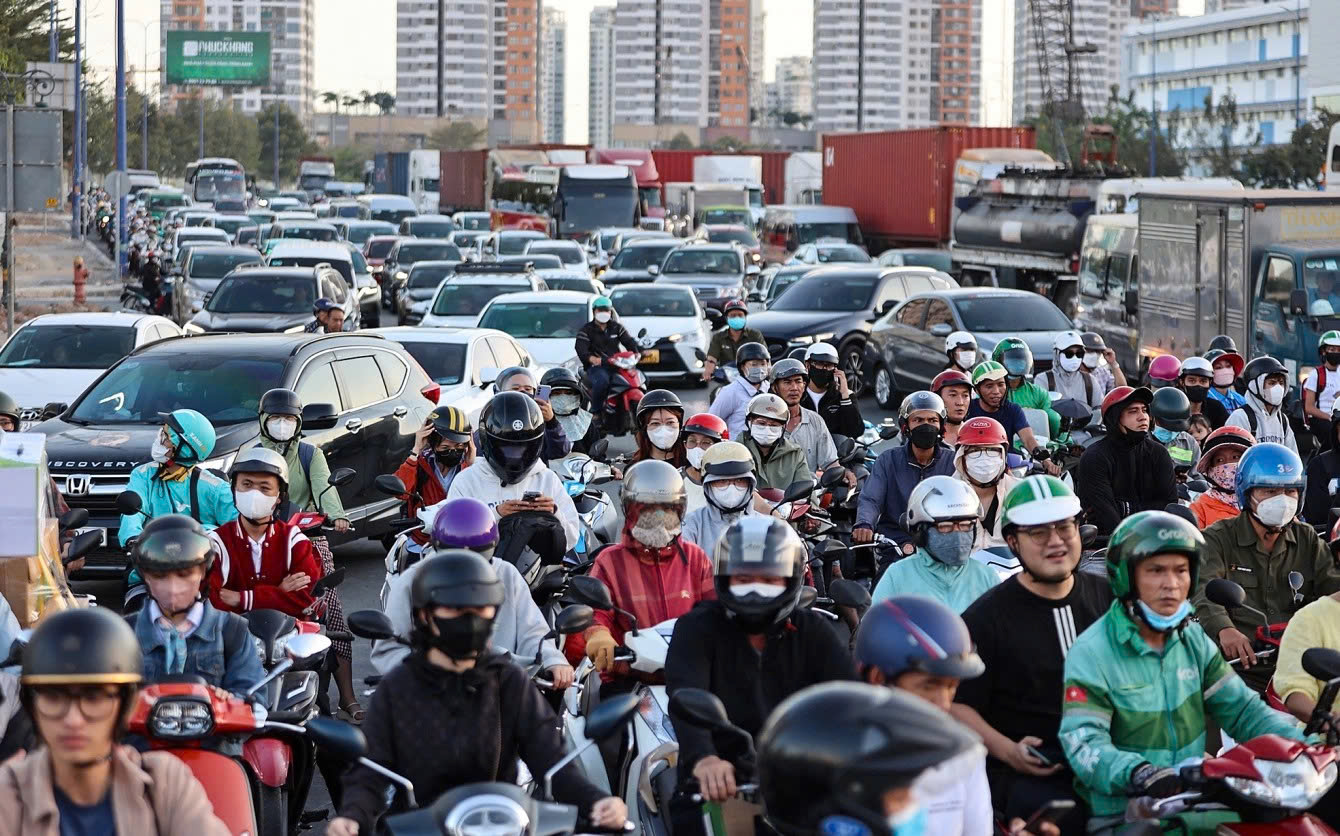 |
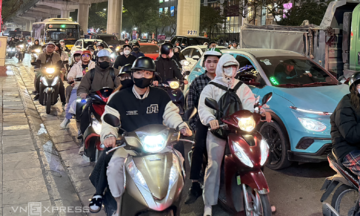
An Phu intersection, Thu Duc city, TP HCM, busy with vehicles traveling home for the 30/4-1/5 holiday, causing localized congestion. Photo: Quynh Tran |
Psychologist Trinh Trung Hoa attributes this polarized reaction to a conflict between the need for rest and the need for stability. Some employees experience "stress due to sudden changes" when their financial plans or childcare arrangements are disrupted. Conversely, the group supporting the proposal has a "compensatory holiday" mindset, wanting to seize every opportunity to relieve year-end pressure.
Hoa noted that this disruption causes a strong polarization of public sentiment, depending on each individual's circumstances.
Associate Professor, Doctor Pham Ngoc Trung, former Head of the Department of Culture and Development (Academy of Journalism and Communication), believes that swapping workdays is suitable for civil servants and helps stimulate tourism, a model effectively adopted by Japan and South Korea. However, he highlighted the disadvantages for the private sector and low-income workers. During the critical year-end period, many businesses need to maintain continuous production to recover capital and pay salaries and bonuses, making interruptions to the work schedule a significant challenge.
"The economy has not fully recovered, and during the year-end rush, many prioritize income over holidays", Trung stated, emphasizing that an optimal holiday policy must ensure harmony and avoid passive planning.
The most immediate consequence is traffic pressure. A representative from An Phu Quy bus company (specializing in the Hanoi - Nghe An route) reported that tickets for 31/12 and returning on 4/1 were "completely sold out", even though the company operates 9 passenger buses with 30-40 seats. "Specifically, on the afternoon of 24/12, the number of customers calling to book tickets surged, but we had to turn them down due to no availability", the representative said.
Train stations for routes to the central region reported a similar situation.
To reconcile these issues, experts recommend that business owners be flexible with employee preferences. For those wishing to maintain their income, companies should arrange overtime to ensure both work progress and reduce financial pressure on employees.
Song Nga - Quynh Nguyen