


Modern science reveals an intriguing link between noise aversion and creativity. Researchers at Northwestern University, United States, discovered that highly creative individuals often have a reduced "sensory information filtering ability". In other words, their brains possess an overly thin "filter", allowing external sounds to penetrate easily. However, this "leakage" helps the brain absorb ideas outside its primary focus, fostering unique associative thinking. But if the information entering is merely meaningless noise, the brain can become overloaded and paralyzed.
Medically, extreme sensitivity to sound is known as misophonia (sound hatred syndrome) or sensory processing sensitivity. Individuals with this condition often react negatively to small, repetitive environmental sounds. Doctor Neel Burton of Oxford University, England, asserts that there is no greater happiness than a mind operating freely without interruption. Conversely, those who fear thinking often use noise to fill and numb their minds.
This phenomenon is not new, as evidenced by historical figures. In August 1821, in Berlin, Germany, the 33-year-old philosopher Arthur Schopenhauer became embroiled in a lawsuit that partially altered his life. Angered by the loud conversation of three women outside his room, he demanded they leave. The dispute escalated into a physical altercation.
A seamstress named Caroline Louise Marquet accused Schopenhauer of assault, claiming it left her partially paralyzed and unable to work. After six years of litigation, the court ruled that the philosopher must pay her medical expenses and a significant annual allowance for the rest of her life.
For Schopenhauer, noise was not merely an annoyance; it was an enemy of thought. Similarly, Immanuel Kant, another philosophical giant, also required absolute quiet to work. He once had to move house due to crowing roosters and wrote letters complaining about the singing of prisoners in a nearby jail.
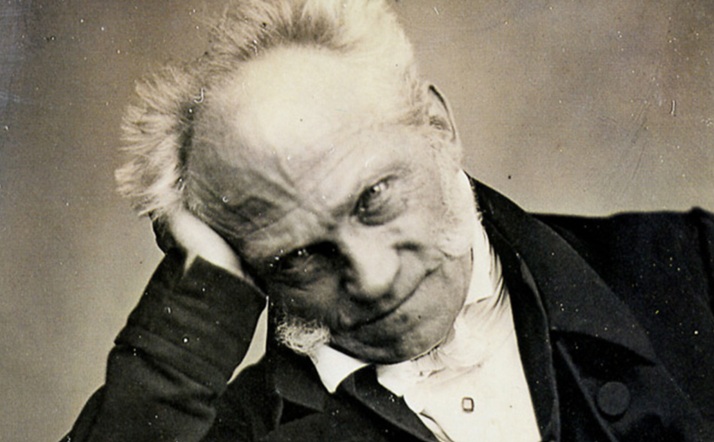 |
Philosopher Arthur Schopenhauer around 1852. Photo: Wikimedia Commons
In his 1851 essay, "On noise and clamor", Schopenhauer vehemently criticized the sound of whips cracking on the streets of his time, which he equated to today's revving car engines. He called it "the killer of thought".
He believed a genius mind was like a diamond – if shattered by distraction, it would lose its value. The ability to focus intensely on a single point, he argued, distinguished a superior intellect from an ordinary person. He even declared that those insensitive to noise were often equally insensitive to art and profound thinking.
Schopenhauer's story is not just about a grumpy philosopher. It serves as a reminder of the value of silence. In a world full of chaotic sounds, protecting quiet space is not selfishness, but a way to safeguard our cognitive abilities and creativity.
Nhat Minh (According to Psychology Today)


