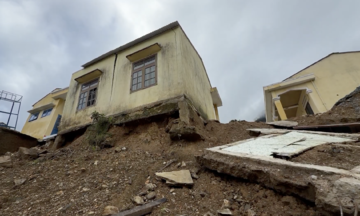
The coins were found about a week ago in a plot of land in Lang Che village, Son Kim 2 commune, a mountainous area bordering the frontier. When brought to the surface, the coins showed significant corrosion from time, with some clusters firmly adhered and difficult to separate.
Following the discovery, the group of scrap metal scavengers divided the coins and stored them in their homes in Dong Loc commune. Upon receiving the information, the Ha Tinh Provincial Museum dispatched officials to the residents' homes to inspect the artifacts for research purposes.
Initially, experts identified these as round metal coins, approximately 2,4 cm in diameter, with a square hole about 0,6 cm on each side in the center. The obverse of each coin features two Chinese characters, "Ngu Thu", while the reverse is plain with a thin, even rim, characteristic of ancient East Asian metal currency.
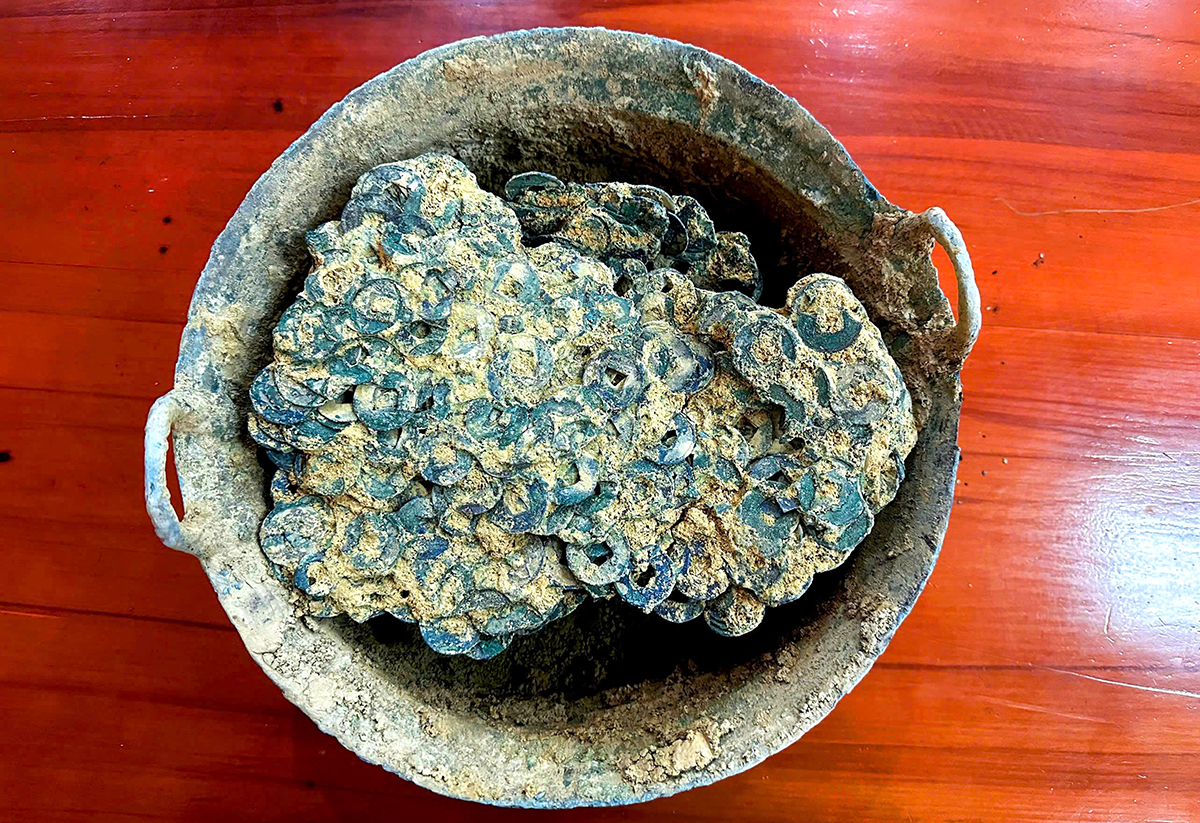 |
Ancient coins unearthed by scrap metal scavengers in Son Kim 2 commune. Photo: Phi Cong |
Tran Phi Cong, Deputy Director of the Ha Tinh Provincial Museum, stated that these are Ngu Thu coins, a type of currency that appeared early and circulated extensively throughout Chinese and East Asian history. The coins were minted during the Western Han dynasty, around the 2nd century BC, and remained in circulation for many centuries, including during the period of Chinese domination in Vietnam, before being replaced by Kaiyuan Tongbao coins of the Tang dynasty.
According to Mr. Phi Cong, this marks the largest discovery of Ngu Thu coins to date in Ha Tinh, and it represents the earliest dated ancient currency ever recorded in the locality. This finding provides valuable research material on the history of settlement, economic, and cultural exchange in the western mountainous region during the early centuries AD.
Currently, authorities are continuing to verify the origin, organize the preservation, and research the ancient coins, while also working to prevent the risk of loss or illegal trade of these artifacts.
Son Kim 2 commune is a border region with rugged terrain. During feudal times, it was primarily dense forest with a sparse population.
Duc Hung