 |
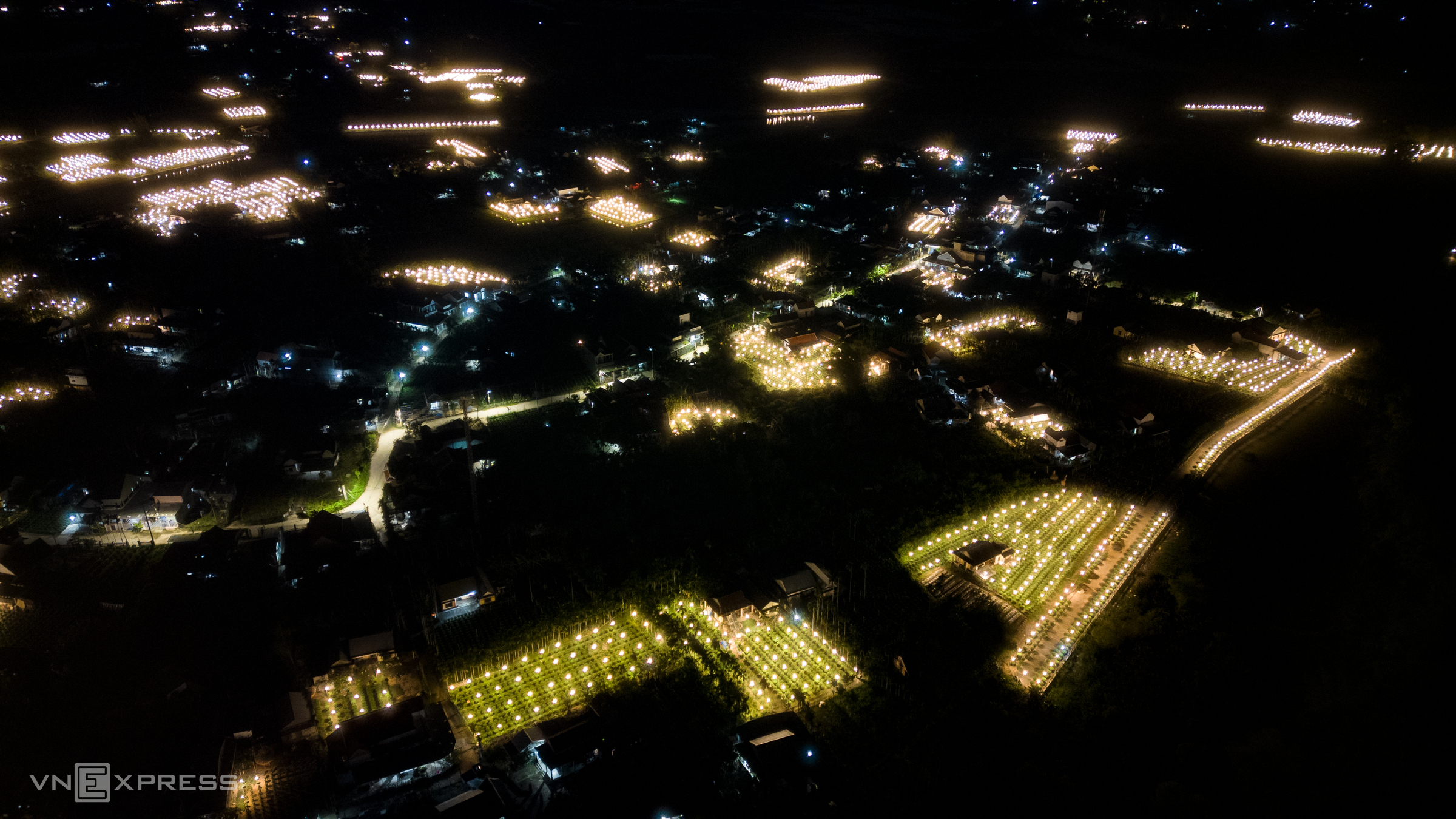
The flower garden of Ba Tran Thi Nhung, 46, in Dong My hamlet, is lit up. |
 |
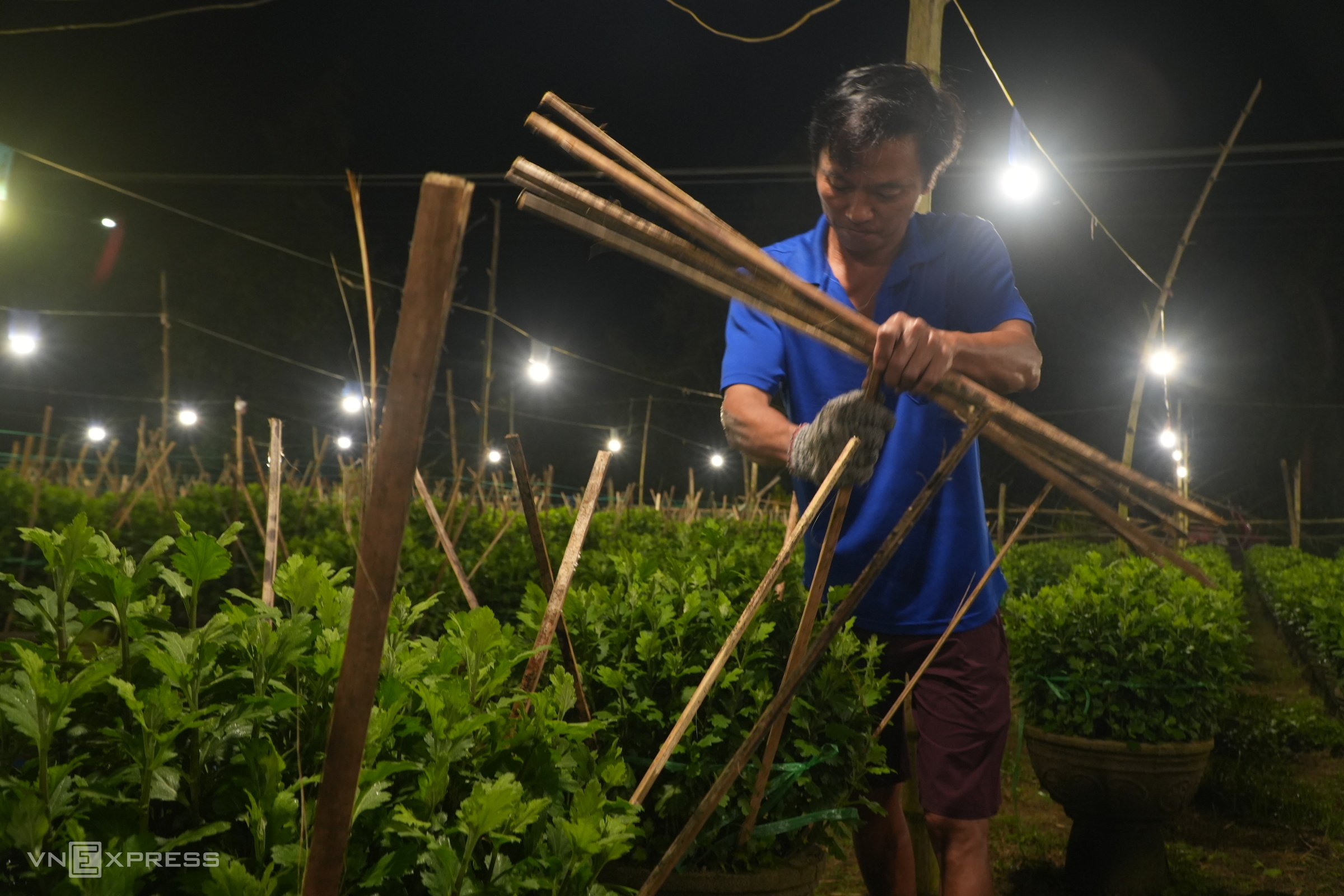
Ong Le Van Lam, 50, inserts sharpened bamboo stakes into chrysanthemum pots to support the plants as they grow taller. Ong Lam states that for each flower season, he buys about 1,000 bamboo stakes, which are machine-sharpened by workshops in the village. |
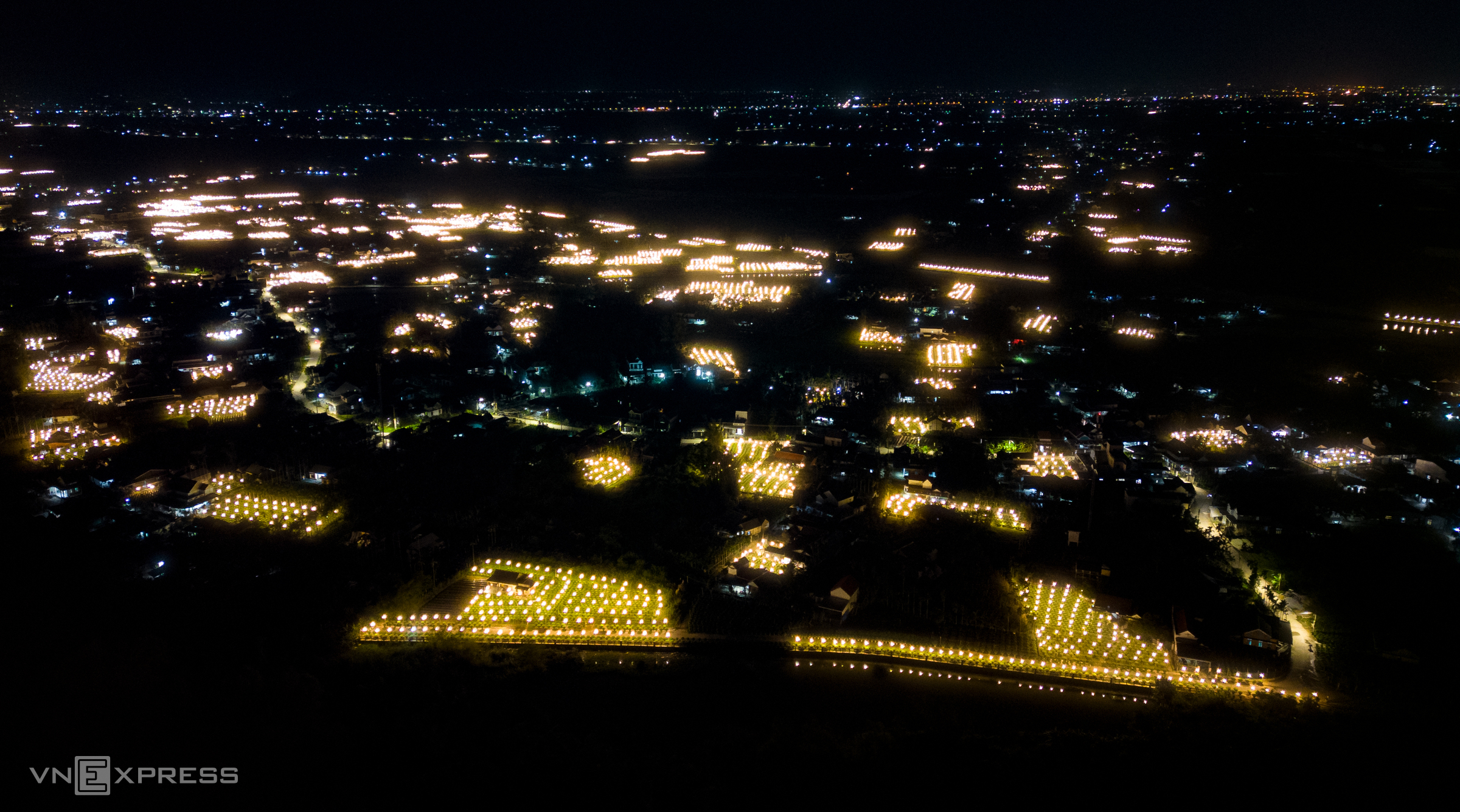
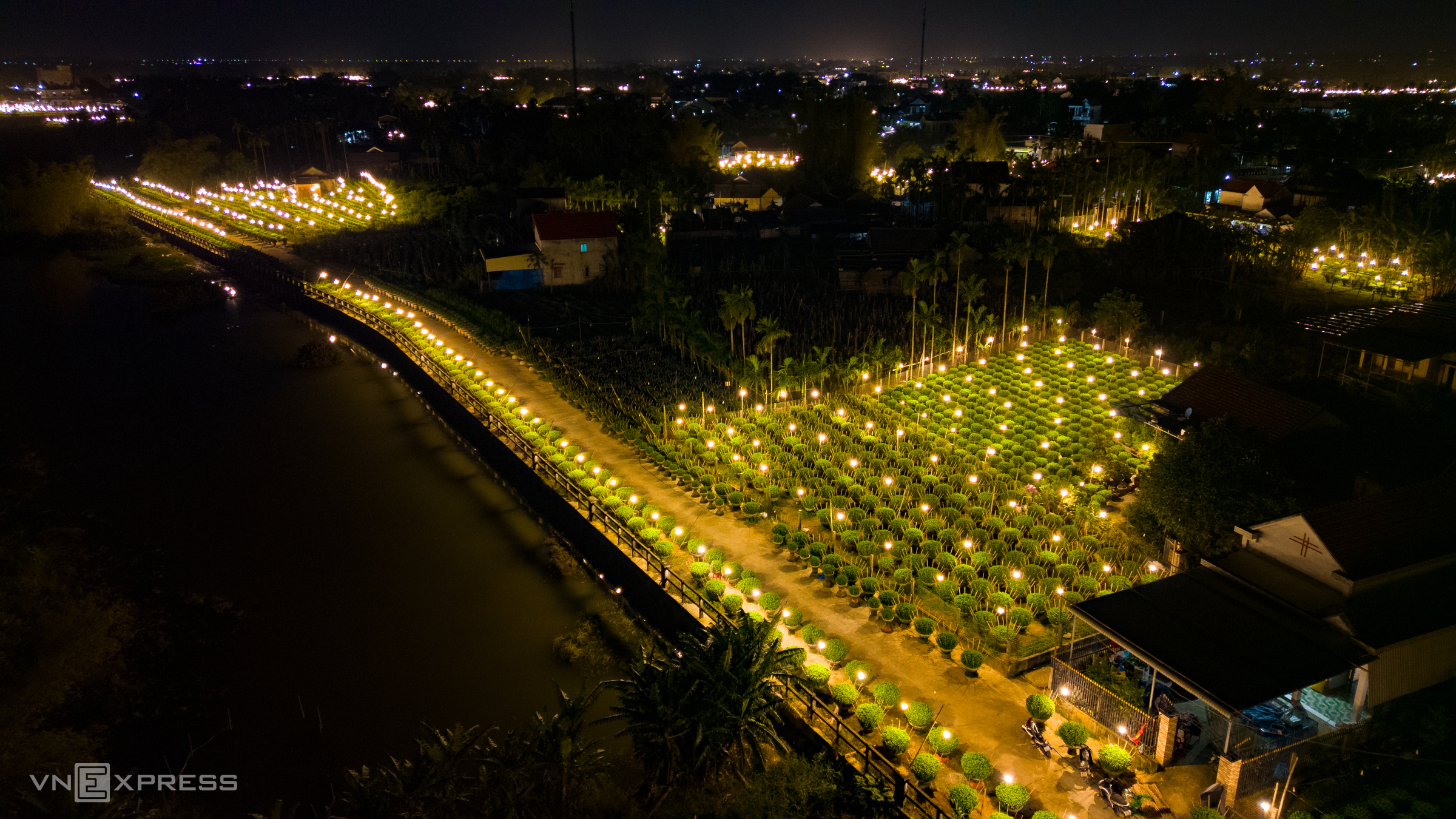
Located in the lower reaches of the Ve River, the former Nghia Hiep commune (now part of Ve Giang commune) is Quang Ngai's largest chrysanthemum hub, spanning approximately 30 hectares. In early December, the village becomes a bustling hub of activity, with over 500 gardens illuminated.
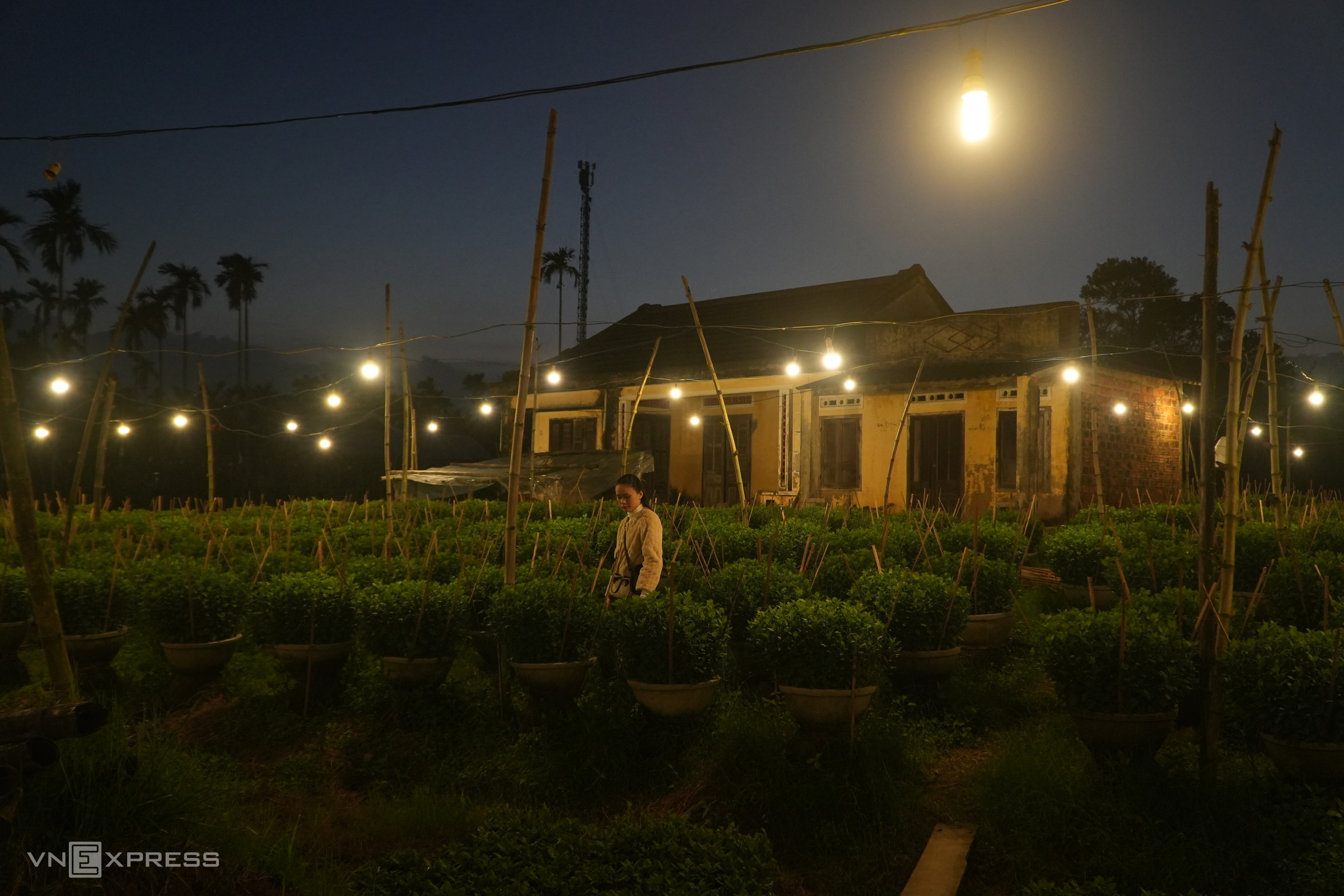
Around 5 PM each day, Hai Mon hamlet quiets down. By 6 PM, as darkness falls, garden owners head to their fields to turn on the lights for their flowers.
 |
Many rural plots are uninhabited because their owners have settled in TP HCM and have entrusted the land to relatives for care and Tet chrysanthemum cultivation. |
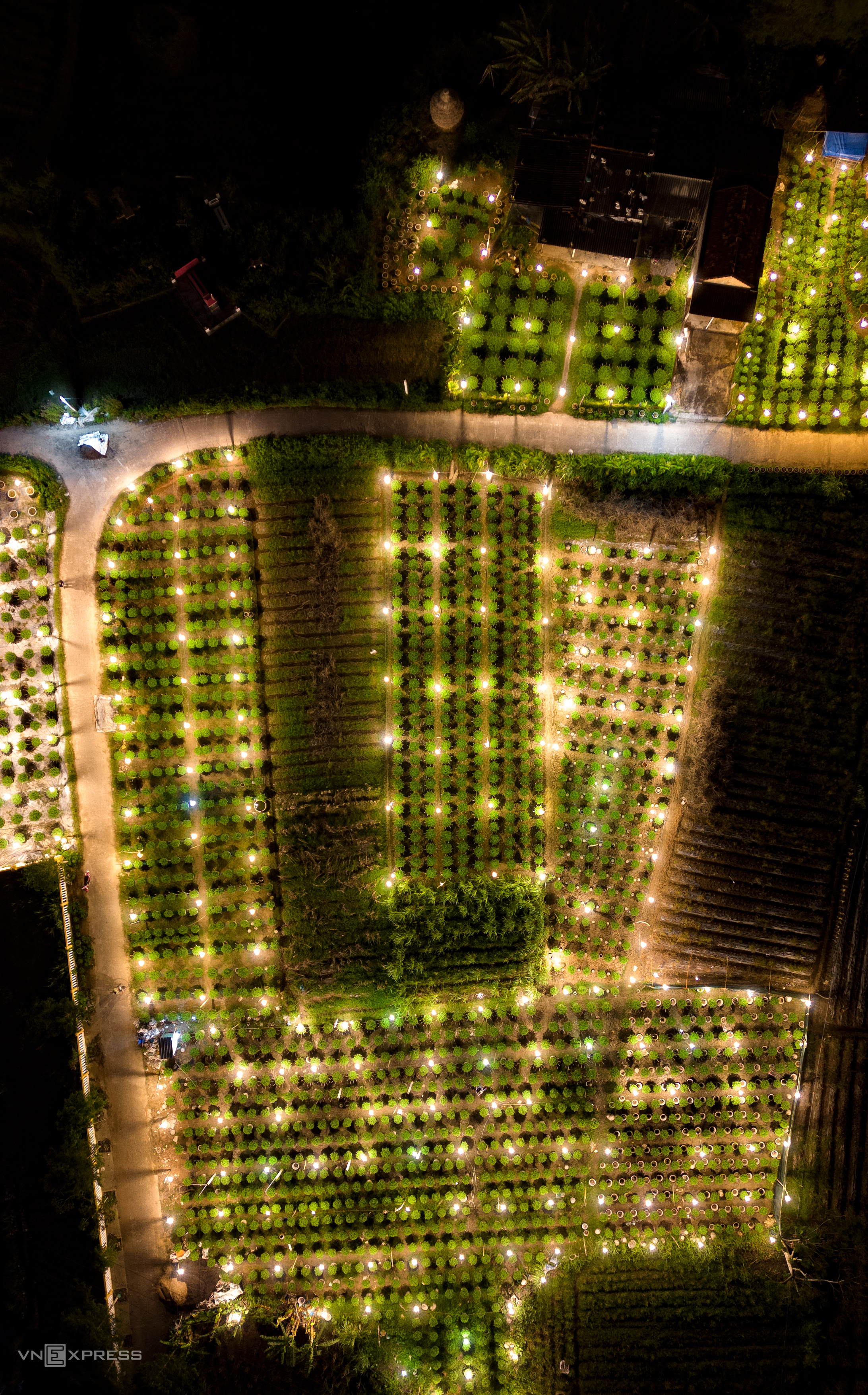
Chrysanthemum gardens are seen from above. Chrysanthemum cultivation in Nghia Hiep began 50 years ago when some residents brought flower varieties from Da Lat to cultivate. After their initial success, many households followed suit, expanding the practice.
Currently, about 500 households cultivate chrysanthemums in the village. Each household typically grows 500 to 1,000 pots in gardens ranging from 500 to 2,000 square meters, located near their homes.
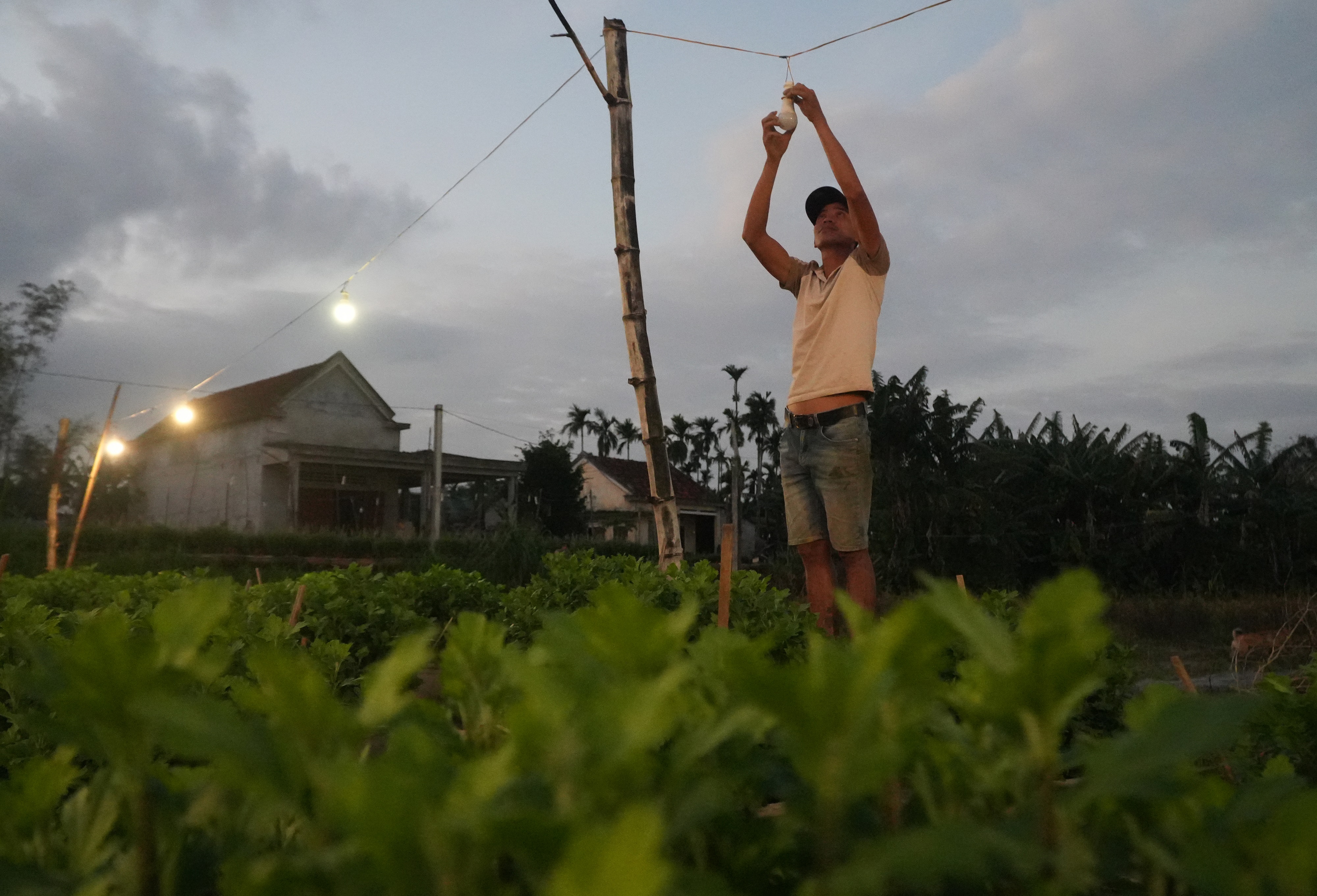 |
Anh Dong, 33, from Hai Mon hamlet, adjusts the light bulbs for even light distribution. He explains that growers use 12W bulbs, hung on bamboo poles, with electrical wires running from their homes to the gardens.
A 500 square meter garden uses about 42 light bulbs. With a total area of 30 hectares, the commune estimates growers need a total of approximately 27,000 bulbs.
Anh Dong stands in his chrysanthemum garden, where the soil remains muddy due to recent flooding. However, by raising the chrysanthemum pots, the plants were not significantly affected.
When the chrysanthemum plants reach about 0,5 meter in height, garden owners insert bamboo stakes into the pots to support the plant canopy. Seen from above, the potted chrysanthemums resemble spiky balls.
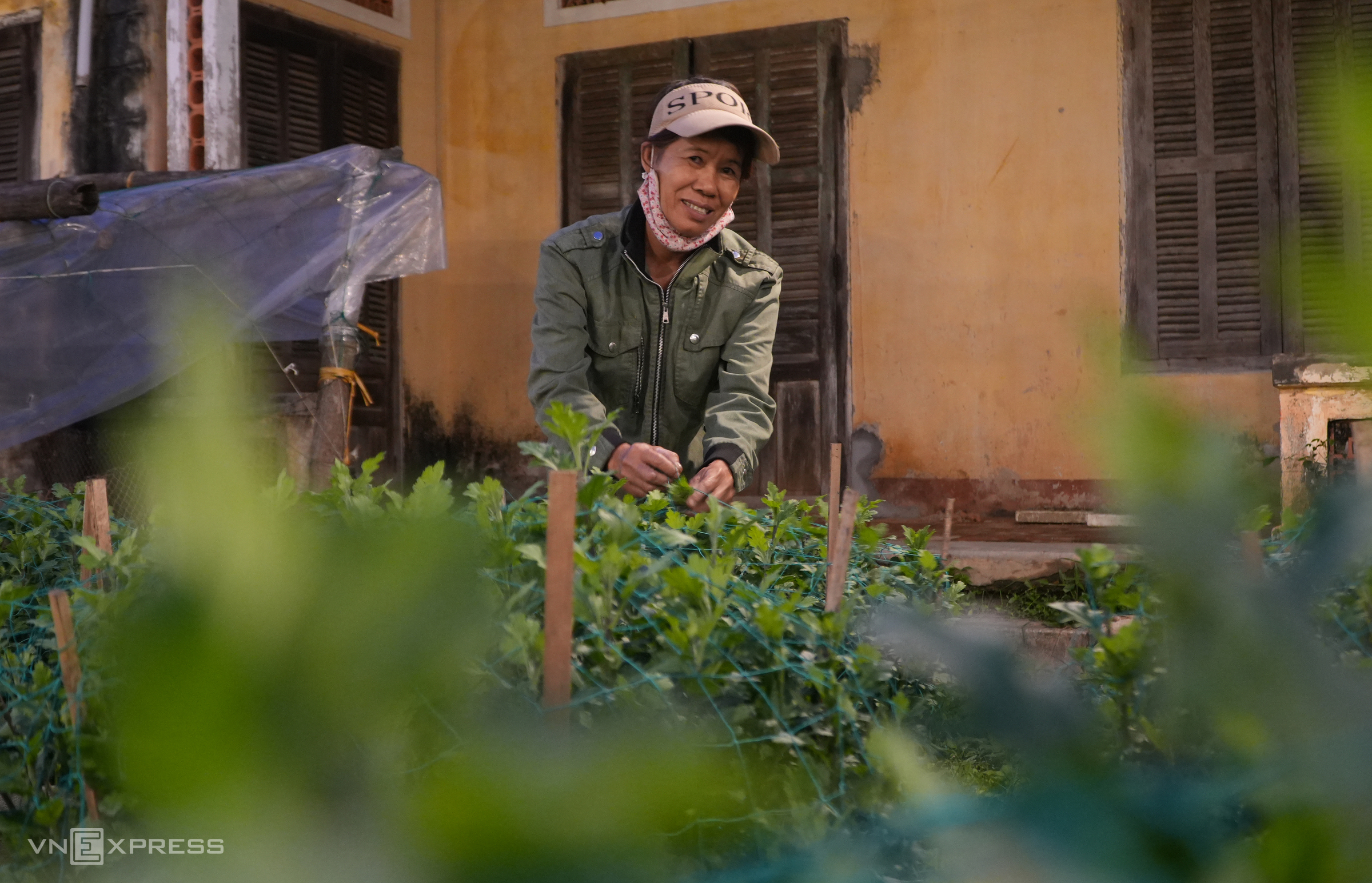 |
Ba Le Thi Ny, who owns 500 flower pots along the river, prunes the branches to concentrate nutrients into the main buds, helping the flowers bloom large and uniformly.
This year, prolonged cold rain occurred, but Quang Ngai did not experience major floods, so the flowers are growing well, with beautiful branches and leaves. She hopes the weather from now on will be favorable, ensuring good quality flowers and favorable prices. Each month, her family spends about one million dong on electricity for household use and flower cultivation.
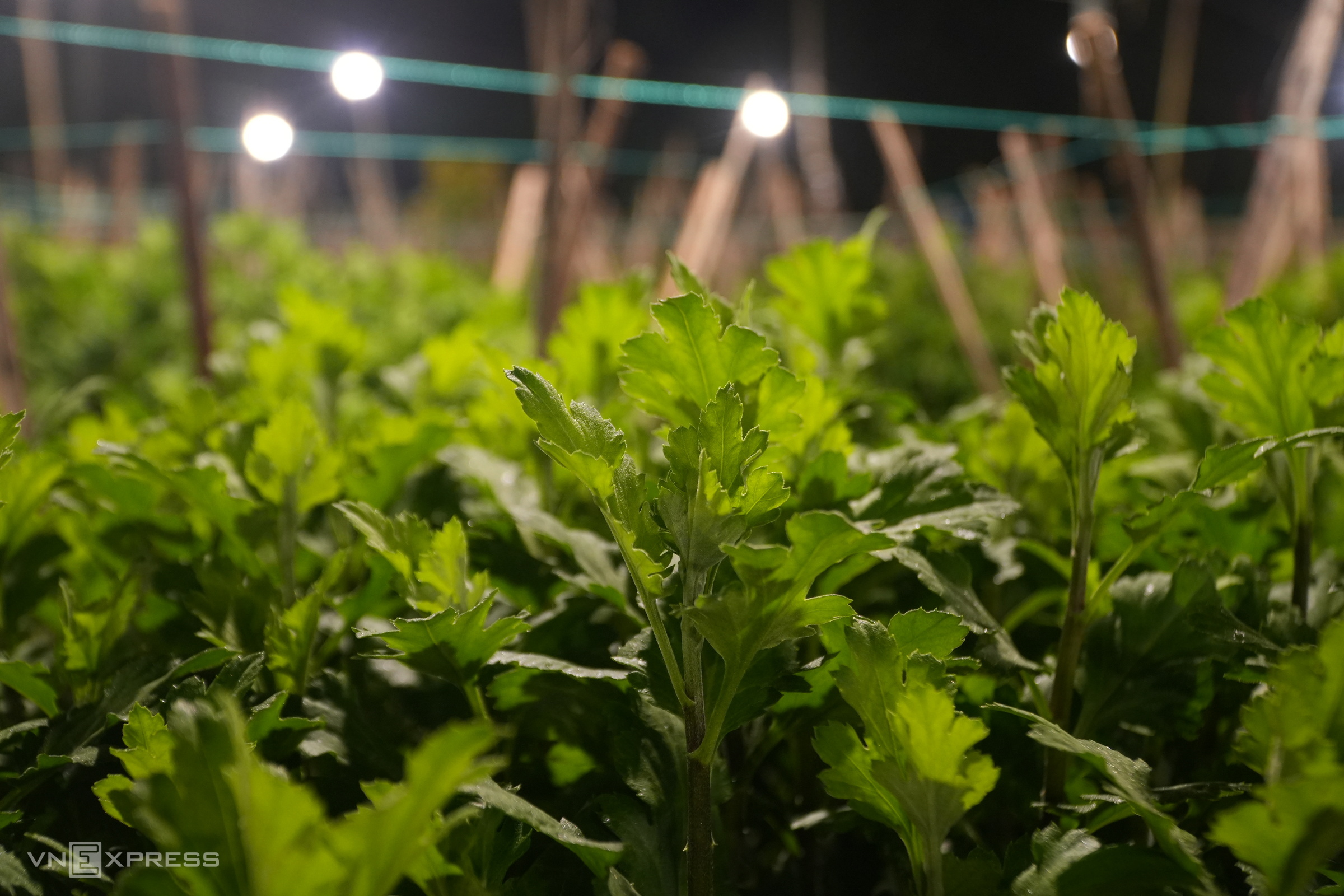 |
According to the flower growers, chrysanthemums are planted from August. When the plants are about 10 days old, owners begin to turn on the lights.
The light 'tricks' the chrysanthemum plants into not budding according to their normal biological cycle. Instead, they focus on developing stems and leaves, resulting in tall, large, and uniform plants.
By mid-December, when the stems are sufficiently long, growers simultaneously turn off the lights, allowing the plants to return to their natural cycle, develop buds, and bloom precisely for Tet 2026.
 |
 |
 |
 |
Each year, Nghia Hiep flower village sells approximately 250,000 flower pots to various provinces and cities, generating a revenue of about 30 billion dong.
In early 2023, the Intellectual Property Office under the Ministry of Science and Technology, recognized the "Hoa Nghia Hiep" brand. This makes it the first flower village in Quang Ngai to receive such recognition.
Pham Linh