The Ho Chi Minh City (TP HCM) government faces five significant challenges during its 2026-2031 term. These include achieving ambitious double-digit growth targets and tackling persistent urban issues like traffic congestion, flooding, and environmental pollution. The city's newly consolidated Standing Committee of the People's Committee (UBND) is now tasked with navigating these complexities.
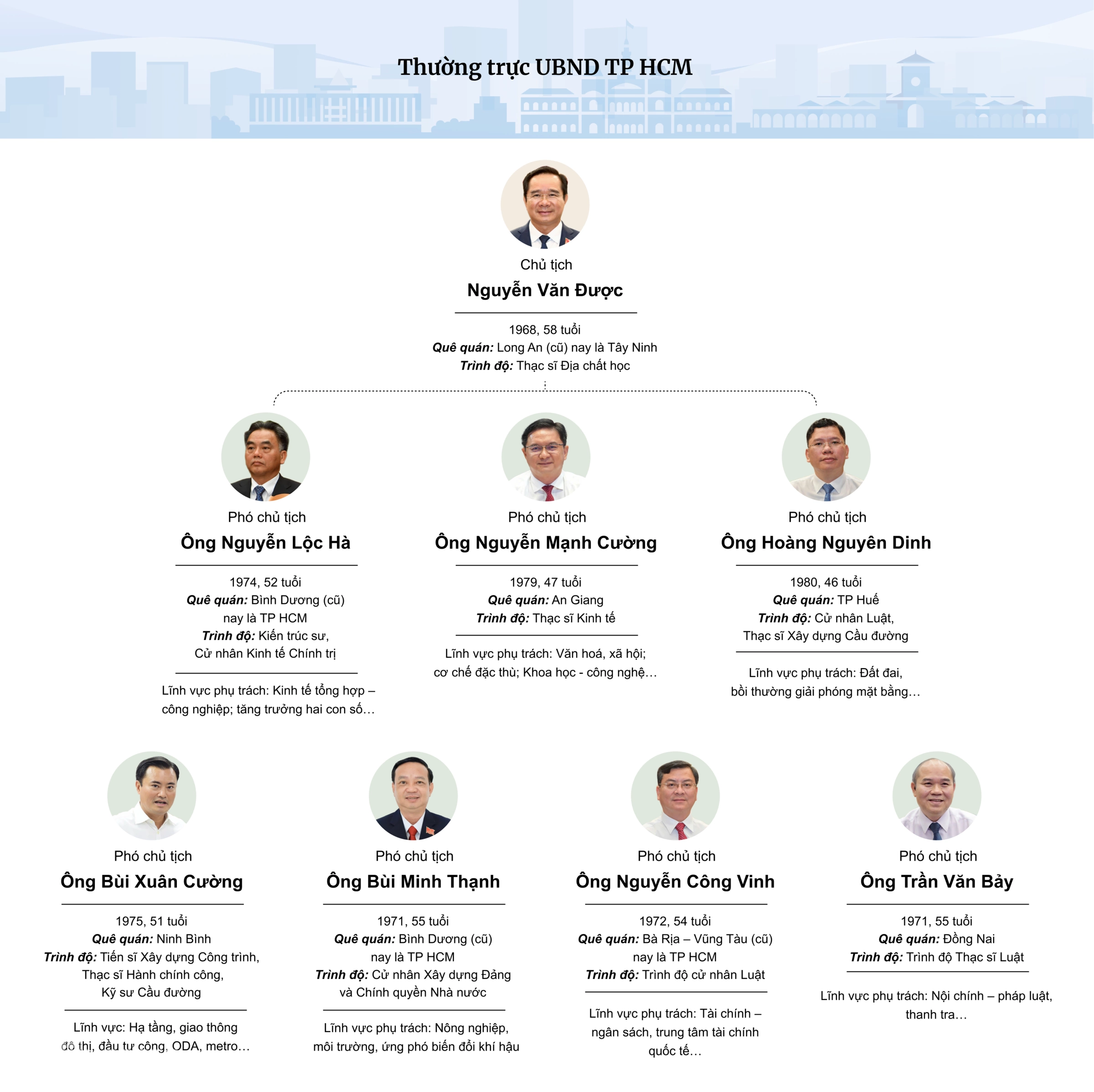
The Standing Committee of the TP HCM People's Committee has recently been strengthened with 8 members, two more than before the merger with Binh Duong and Ba Ria - Vung Tau. There is potential for an additional deputy. Leading the City People's Committee is Chairman Nguyen Van Duoc, 58, who has over 30 years of experience in Long An (formerly), serving as Provincial Party Secretary before his relocation to TP HCM in early 2025. When the Politburo assigned Mr. Duoc as Deputy Secretary of the City Party Committee and nominated him for election as Chairman of the City People's Committee, he was recognized for his practical experience and deep understanding of land management, natural resources, and environmental issues – a complex area in TP HCM.
Supporting Chairman Duoc in the new term are 7 vice chairmen, aged 46-55, specializing in infrastructure, economics, and law; most hold postgraduate degrees. This structure enhances specialized expertise but also demands strong coordination amidst a substantial workload.
 |
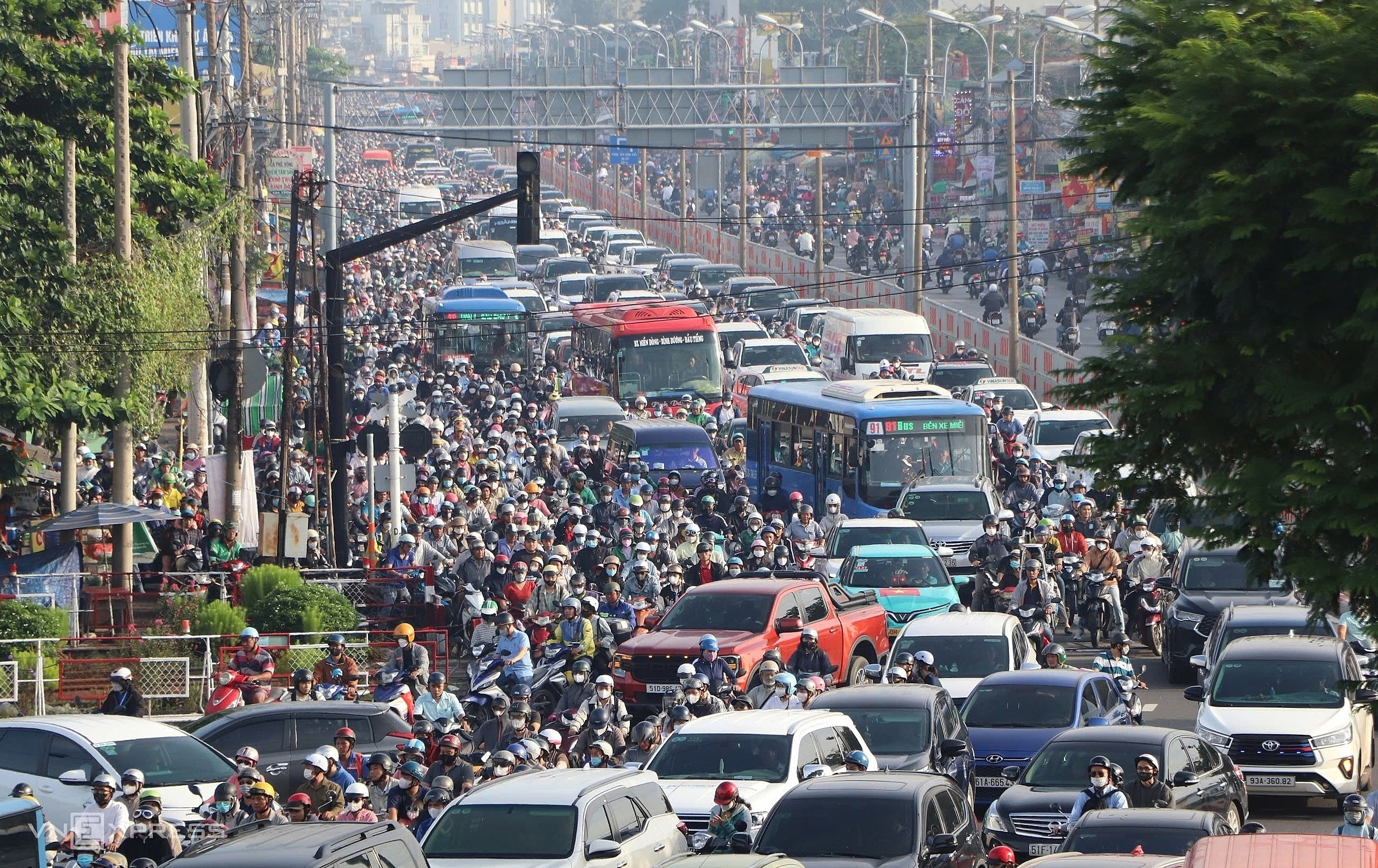
National Route 13 - Ho Chi Minh City's eastern gateway, the section from Binh Trieu Bridge to Vinh Binh Bridge, experiences frequent congestion during peak hours and flooding during rain and high tides. Photo: Quynh Tran |
Prolonged traffic congestion and flooding continue to plague TP HCM. The city currently identifies 22 high-risk congestion points, primarily along major routes such as Nguyen Tat Thanh, Xo Viet Nghe Tinh, Dinh Bo Linh, and the Nga tu Bon Xa area. This pressure largely stems from the rapid increase in personal vehicles and delays in numerous infrastructure projects. For instance, the approximately 64 km Ring Road 2, crucial for traffic diversion, remains incomplete after nearly 20 years, forcing traffic into the inner city and exacerbating congestion and logistics costs.
In flood control, the city still contends with 159 locations prone to flooding from rain and high tides. A tidal control project, valued at nearly 10,000 billion VND, was expected to protect over 6,5 million residents in the Saigon River's right bank area and the city center. However, it remains unfinished more than a decade after its initiation.
Vice Chairman of the TP HCM People's Committee, Bui Xuan Cuong, oversees these two critical areas. Holding a doctorate in Civil Engineering, he previously served as Director of the Department of Transport, Head of the Urban Railway Management Board, and was involved in resolving issues for the Ben Thanh - Suoi Tien metro project. Beyond transportation, he also manages public investment, official development assistance projects, urban railways, architecture, and urban development. His professional background aligns with the Standing Committee's principle of "the right person for the right job." However, solving traffic congestion and flooding requires addressing three bottlenecks: capital, land clearance, and implementation mechanisms.
 |
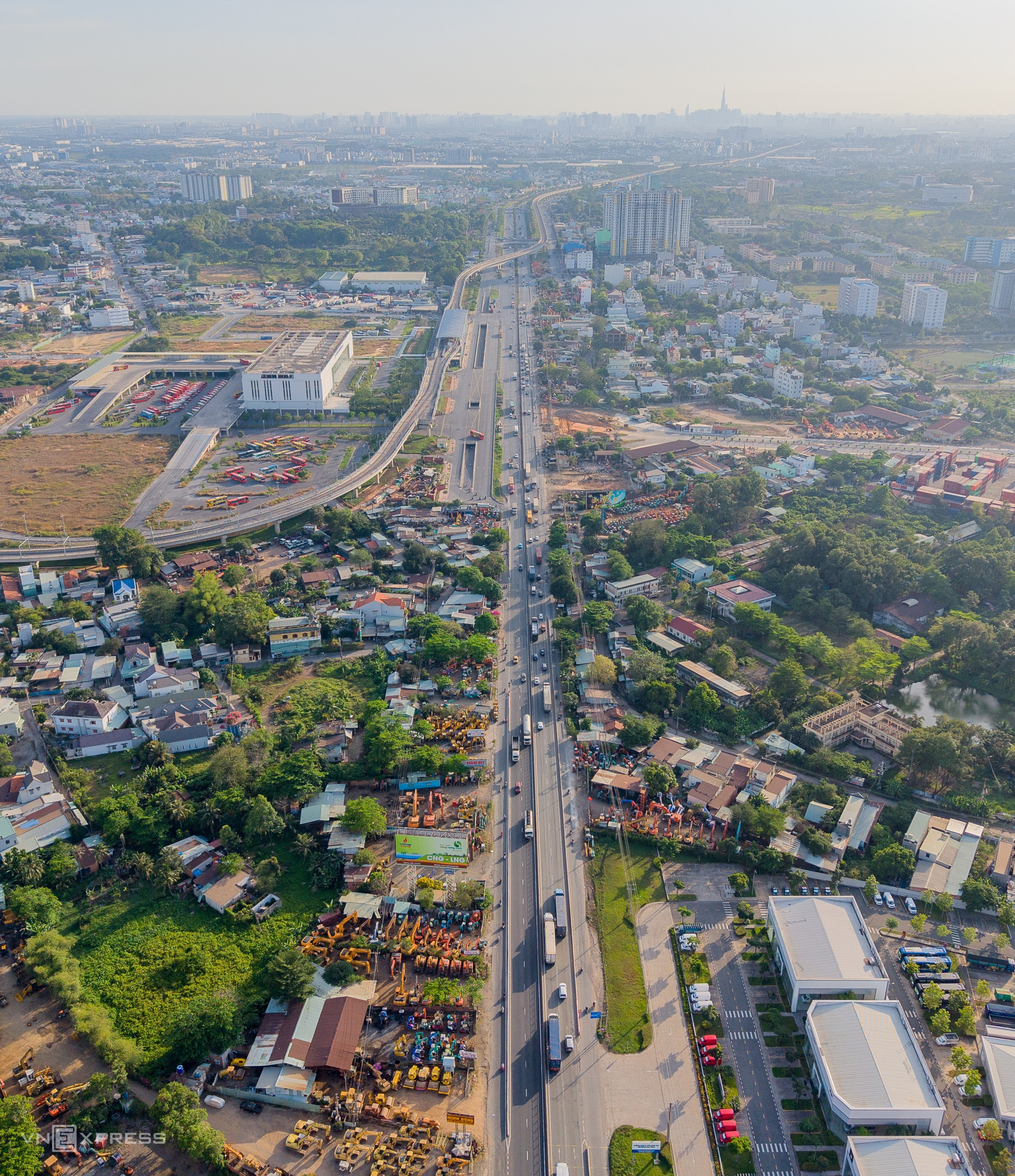
The section of Hanoi Highway, from the new Mien Dong Bus Station to the Tan Van interchange, has been stalled for years, creating a "bottleneck" right at the underpass exit. Photo: Quynh Tran |
National Route 13 - Ho Chi Minh City's eastern gateway, the section from Binh Trieu Bridge to Vinh Binh Bridge, experiences frequent congestion during peak hours and flooding during rain and high tides. Photo: Quynh Tran
Over the next five years, TP HCM plans to invest approximately 1,700 trillion VND in 77 transportation projects and over 348,000 billion VND in 157 flood control projects. Additionally, the city aims to expand its metro lines, increasing the total length to 187 km. This substantial workload depends heavily on the progress of capital allocation, land clearance, and implementation mechanisms.
Environmental pressure and rapid urbanization present another significant challenge. TP HCM generates about 13,000-14,000 tons of waste daily, increasing by 6-8% annually; approximately 85% is still disposed of by landfill, placing immense pressure on land resources and the environment. According to the 2025 environmental quality, water resources, and emission monitoring program, the city's air quality is declining, primarily due to fine dust and traffic noise. Pollution is concentrated along major transport axes, industrial zones, industrial clusters, seaports, and mineral extraction areas. The city is also among the world's fastest-sinking urban areas, with subsidence exceeding 10 cm per decade, mainly due to groundwater extraction and rapid urbanization.
Over the next five years, TP HCM aims to control pollution, tighten emission standards, and promote green transportation. Vice Chairman of the TP HCM People's Committee, Bui Minh Thanh, is responsible for environmental issues, climate change, and flood prevention. Mr. Thanh, 55, holds a bachelor's degree in Party Building and State Administration, having advanced through the local government system in Binh Duong. He previously held positions such as Ward People's Committee Chairman, Provincial Party Committee Office Chief, Provincial People's Committee Vice Chairman, and District Party Secretary before assuming his current role.
Land clearance remains a persistent bottleneck for many projects. Compensation and land clearance continue to be a major obstacle in TP HCM. Many projects face fragmented progress due to simultaneous construction and clearance efforts. For example, numerous infrastructure projects have been delayed for years due to land clearance issues, including the expansion of Hanoi Highway, National Route 1 from Tram 2 to Tan Van, and the My Thuy interchange (formerly Thu Duc City). Slow land clearance also contributes to increased total investment costs.
 |
The section of Hanoi Highway, from the new Mien Dong Bus Station to the Tan Van interchange, has been stalled for years, creating a "bottleneck" right at the underpass exit. Photo: Quynh Tran
For this term, Vice Chairman of the TP HCM People's Committee, Hoang Nguyen Dinh, is tasked with land, compensation, and resettlement – areas that frequently generate complaints. Mr. Dinh, 46, possesses a combined background in civil engineering and law, giving him an advantage in handling legal issues. His experience in infrastructure project management and his tenure in Ba Ria - Vung Tau also provide a distinct benefit. However, the significant challenge lies in resolving long-standing issues and legal overlaps. In 2026, TP HCM expects to spend over 35,000 billion VND on land clearance for 166 projects, indicating immense pressure on resources and disbursement timelines.
Healthcare and education face considerable pressure from the city's population size. With nearly 14 million residents, TP HCM grapples with prolonged hospital overcrowding, school shortages, and uneven quality of public services. These issues directly impact the daily lives of citizens. For the 2026-2031 term, Vice Chairman of the TP HCM People's Committee, Nguyen Manh Cuong, is responsible for healthcare, education, and social welfare. He also oversees the implementation of Central Resolutions 24 and 31, and National Assembly Resolution 98.
Mr. Cuong, 47, holds a master's degree in Economics and rose through youth union work. He served as City Youth Union Secretary, District Party Secretary, and City Party Committee Office Chief. His organizational and coordination experience is considered a strength. However, simultaneously managing multiple specialized fields demands the ability to mobilize experts and make effective decisions amidst growing population pressure. Regarding special mechanisms, the city was previously granted Resolution 54 (2017), followed by Resolution 98 (2023). Nevertheless, implementation results have not met expectations. After the merger, Resolution 98 was amended to Resolution 260, imposing new requirements for speed and flexibility in administration to foster breakthroughs and overcome administrative barriers.
Achieving double-digit growth amidst numerous fluctuations is the fifth challenge. TP HCM aims for 10-11% growth in a volatile global economic climate. With a gross regional domestic product (GRDP) of approximately 3,030 trillion VND, every 1% growth translates to over 30,000 billion VND – an amount equivalent to the annual budget of some provinces. Vice Chairman of the Standing Committee of the TP HCM People's Committee, Nguyen Loc Ha, oversees general economic affairs. Mr. Ha, 52, is an architect and holds a bachelor's degree in Political Economy, with previous experience in industrial, commercial, service, and foreign affairs management in Binh Duong. However, TP HCM's scale and complexity demand a more flexible approach.
Experts suggest the city faces numerous challenges, including global economic fluctuations, rising production costs, and supply chain disruptions. The target for the digital economy to account for 30% of GRDP also places high demands on technology infrastructure and human resources. Vice Chairman of the TP HCM People's Committee, Nguyen Cong Vinh, is responsible for finance and budget. Mr. Vinh, 54, a bachelor of Law, held various positions in Ba Ria - Vung Tau, then served as Director of the Department of Planning and Investment, and later Vice Chairman of the Provincial People's Committee. Following the merger, he became Director of the TP HCM Department of Finance.
Meanwhile, Vice Chairman of the TP HCM People's Committee, Tran Van Bay, manages administration, justice, anti-corruption, and citizen reception. Mr. Bay, 55, holds a master's degree in Law, previously lectured at the TP HCM University of Law, held many positions at the Department of Justice, served as District People's Committee Chairman, and most recently as City Chief Inspector. These areas directly impact the investment environment and public trust, particularly concerning administrative procedures, prolonged complaints, and urban order.
According to a former city leader, the major challenge lies not with individuals but with the capacity for inter-agency coordination and the speed of work processing. Many areas, such as flood control, involve multiple departments and sectors; a lack of synchronization will reduce effectiveness. TP HCM now has additional special mechanisms to mobilize resources and implement large projects. However, their effectiveness depends on the organization of implementation, the proactivity of the apparatus, and the ability to resolve long-standing issues. "The key factor remains the working environment, which emphasizes responsibility, reduces hesitancy, and streamlines processing procedures. Only then can new policies be implemented more quickly and effectively," he stated.
Le Tuyet - Giang Anh