 |
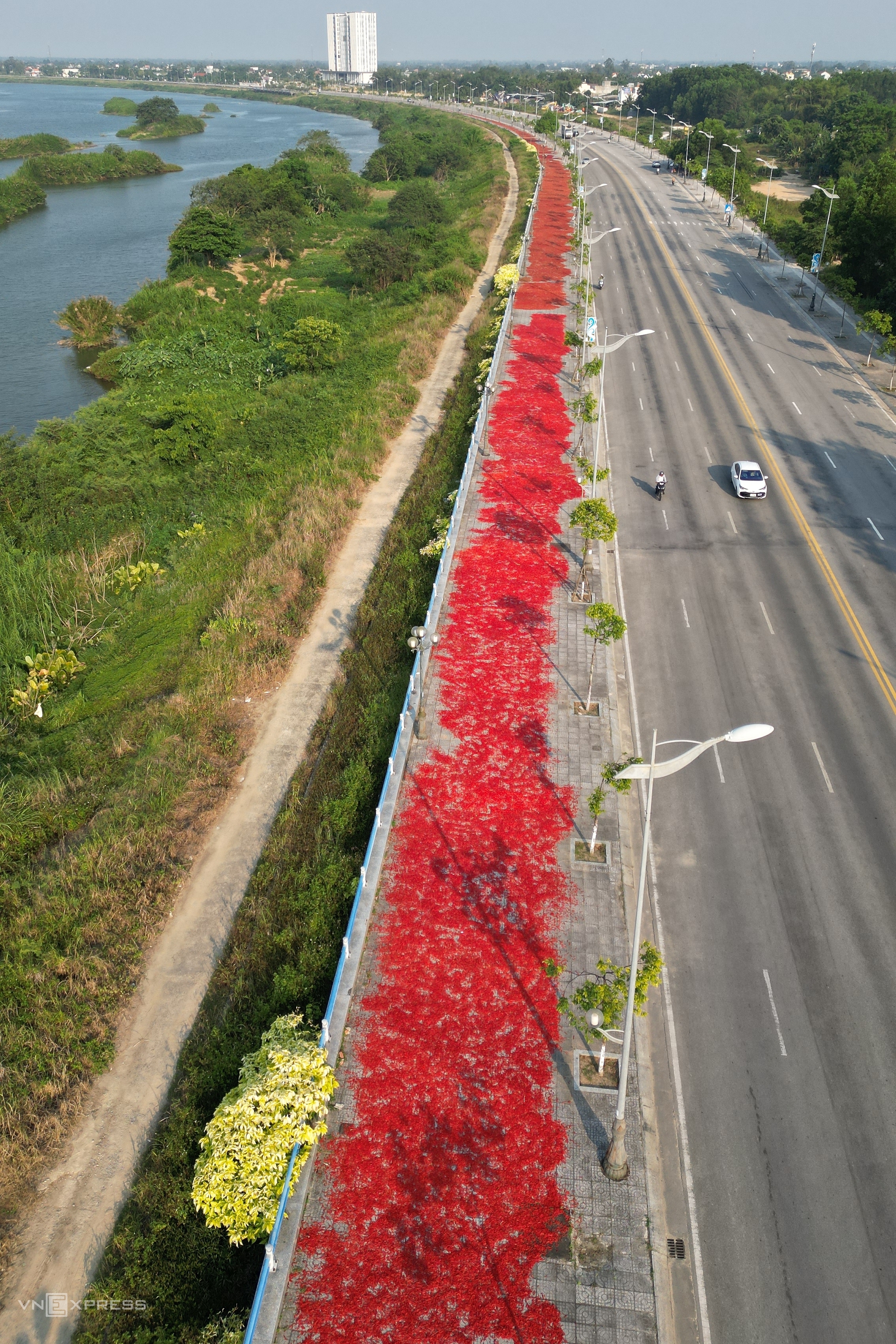
In April, Truong Sa road, located on the south bank of Tra Khuc river in Quang Ngai, turns vibrant red during the chili drying season. This nearly 9 km long, 36 m wide road, considered the province's most beautiful, sees about three-quarters of its length covered with chili as residents of An Phu commune utilize the sidewalks for drying. This year, the price of fresh chili has plummeted, now only about one-tenth of last year's value.
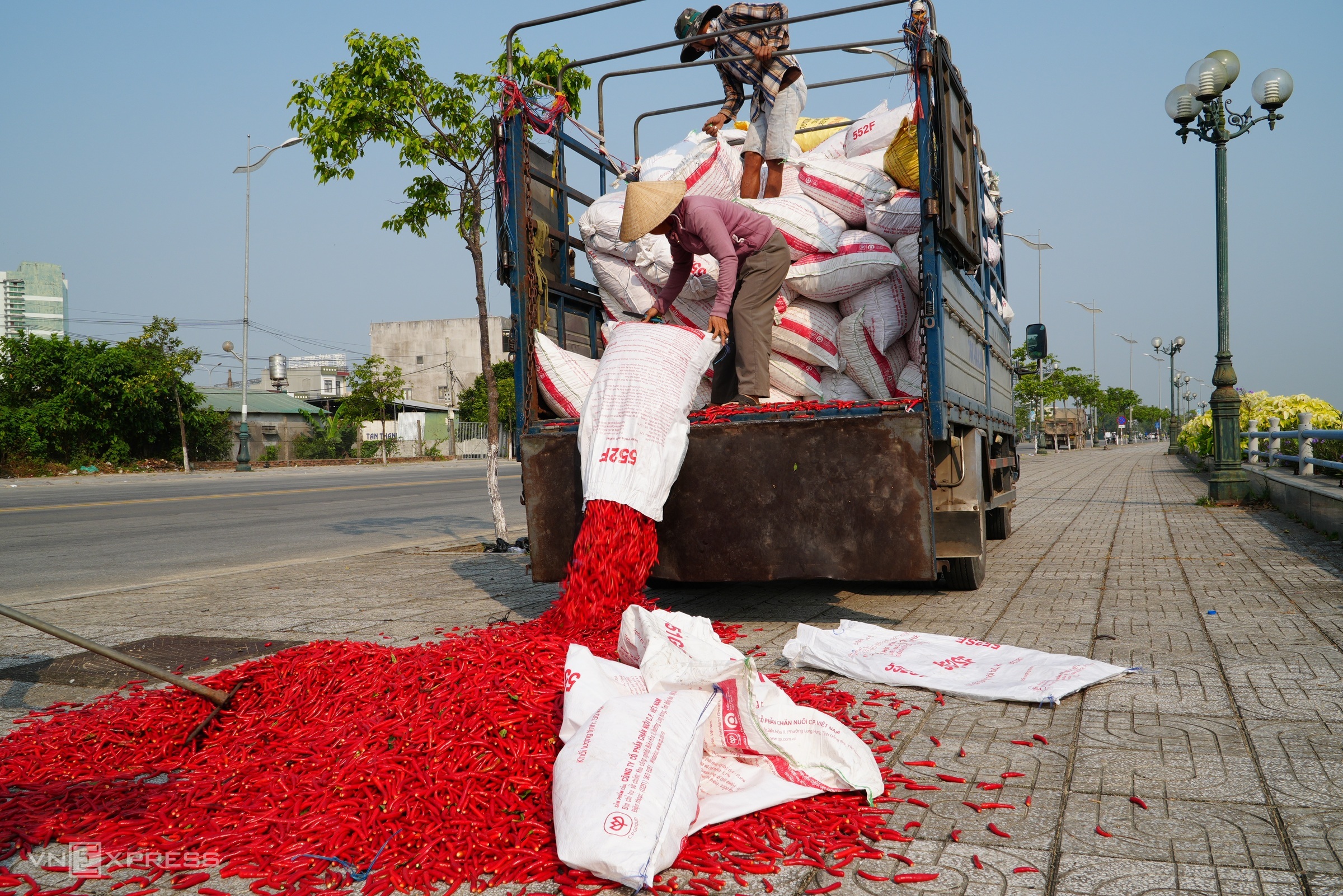 |
Each morning, small trucks transport fresh chili to the sidewalks of Truong Sa road for drying. While fresh chili is primarily exported unofficially to Trung Quoc, this year's reduced demand and increased transportation costs have driven prices down to 5,000-7,000 VND per kg. Consequently, farmers are drying significantly more chili than in previous years.
Under the 35°C sun, women use rakes to spread chili evenly on the sidewalks of Truong Sa road to accelerate the drying process. Workers earn approximately 300,000 VND daily for this task. Vo Thi Loan, a resident of An Phu commune, explained that despite the low fresh chili prices, wholesalers continue to purchase the crop. However, selling fresh chili barely covers the production costs for farmers.
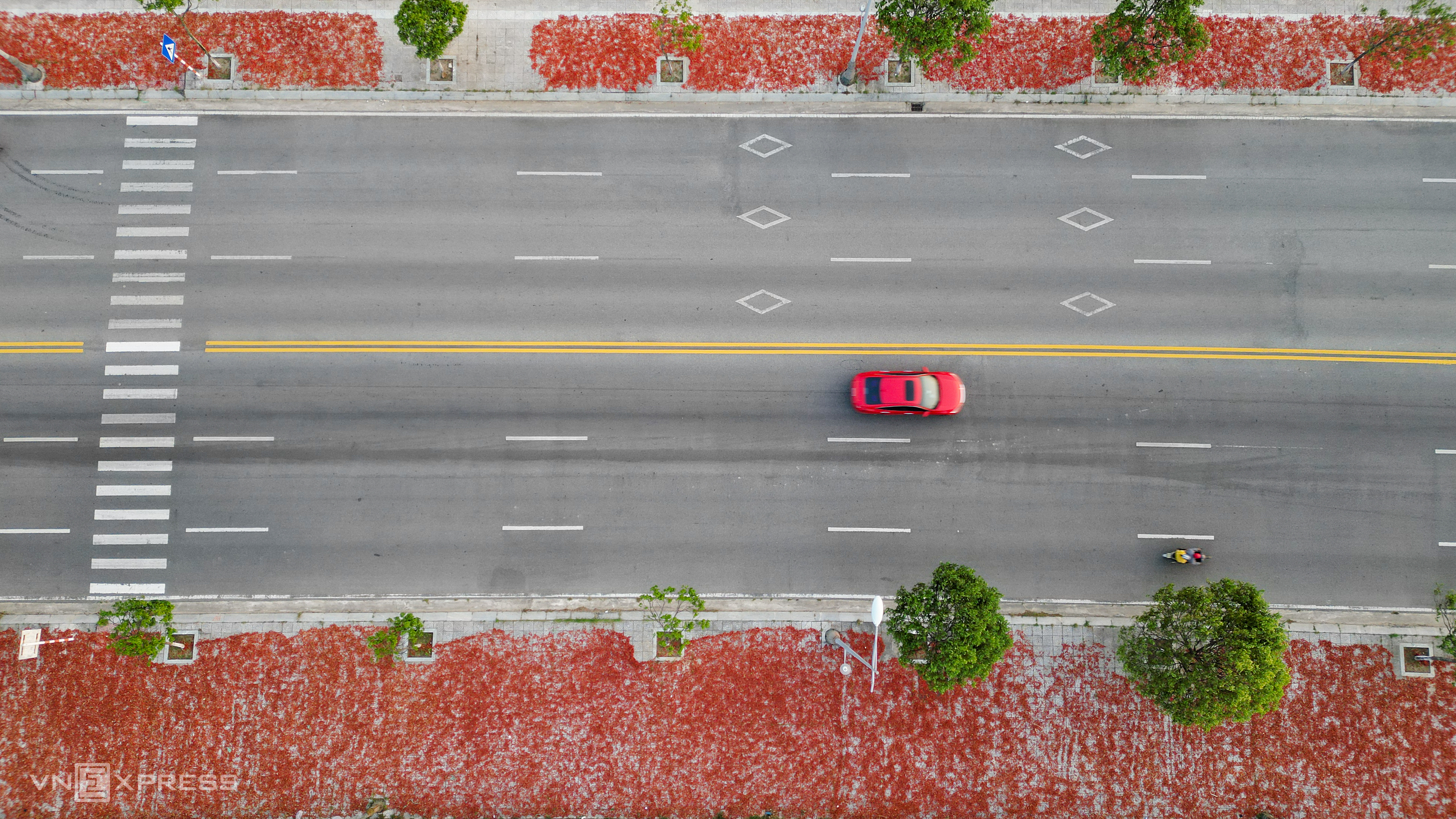
Truong Sa road, running alongside Tra Khuc river in Quang Ngai, features a 22 m wide carriageway. With sparse traffic, drying chili on the sidewalks has minimal impact on vehicle movement.
An Phu commune leaders acknowledged that while drying chili on sidewalks does not comply with regulations, residents resort to this practice due to the high cost of mechanical drying, especially with the current low chili prices. Local authorities have advised farmers to dry chili only in sections that least affect pedestrian traffic and for limited durations.
 |
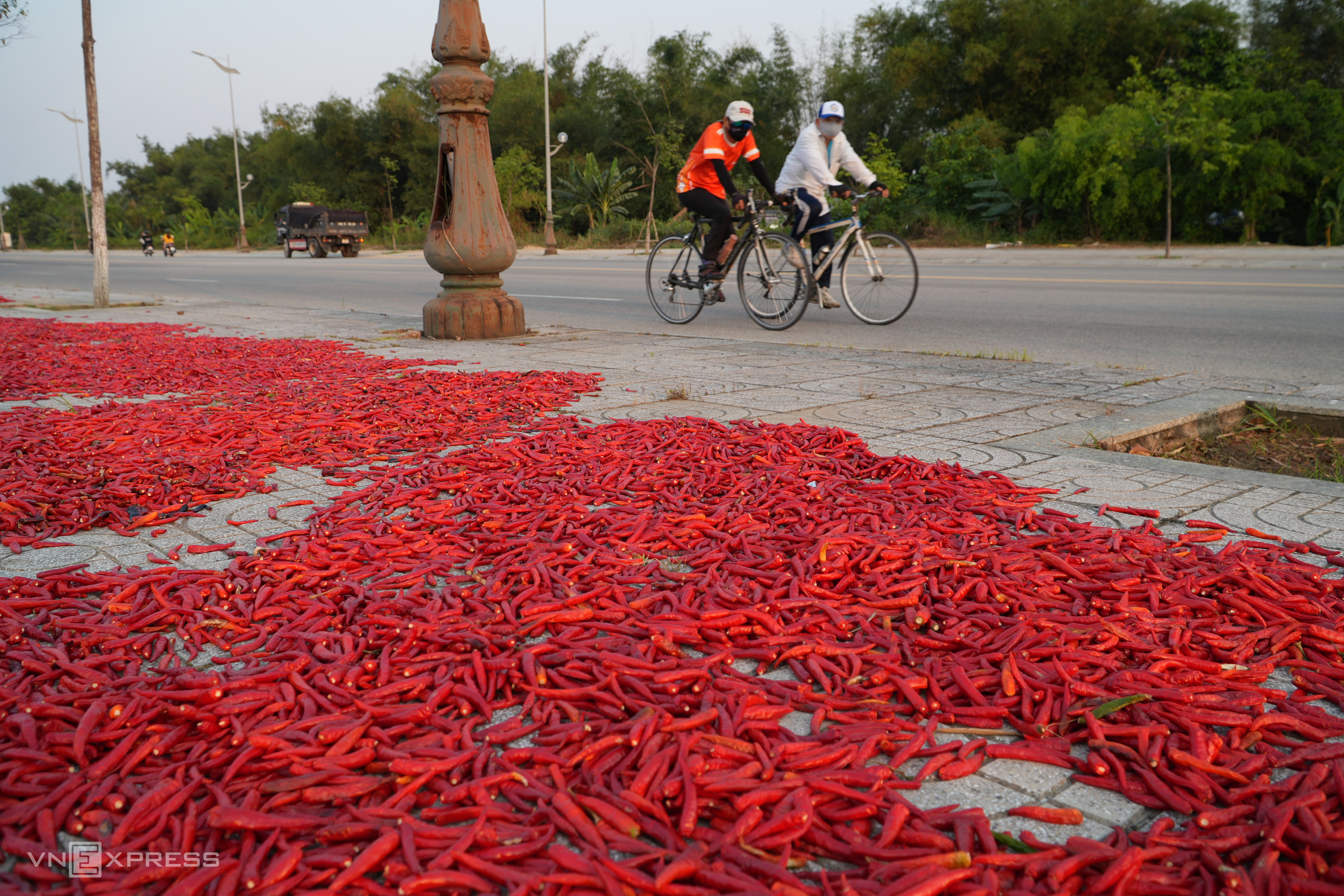
At the end of the day, locals use rakes to gather the dried chili into piles and then bag it on the sidewalks of Truong Sa road. According to farmers, chili requires continuous drying for about 5 days to achieve optimal crispness.
Residents cycle for exercise along the "chili road" on Truong Sa road. Hung Anh commented, "The red road is beautiful, but it's a beauty born from the sweat and tears of farmers.”
 |
Although the volume of fresh chili transported by trucks has decreased compared to last year, some trucks still park along Truong Sa road to collect enough produce for shipment to northern border gates. The chili is tightly packaged and transshipped from smaller trucks into containers.
Along Truong Sa road, residents of An Phu commune practice crop rotation and intercropping chili with other vegetables. This strategy helps them adapt to seasonal changes and mitigate agricultural risks.
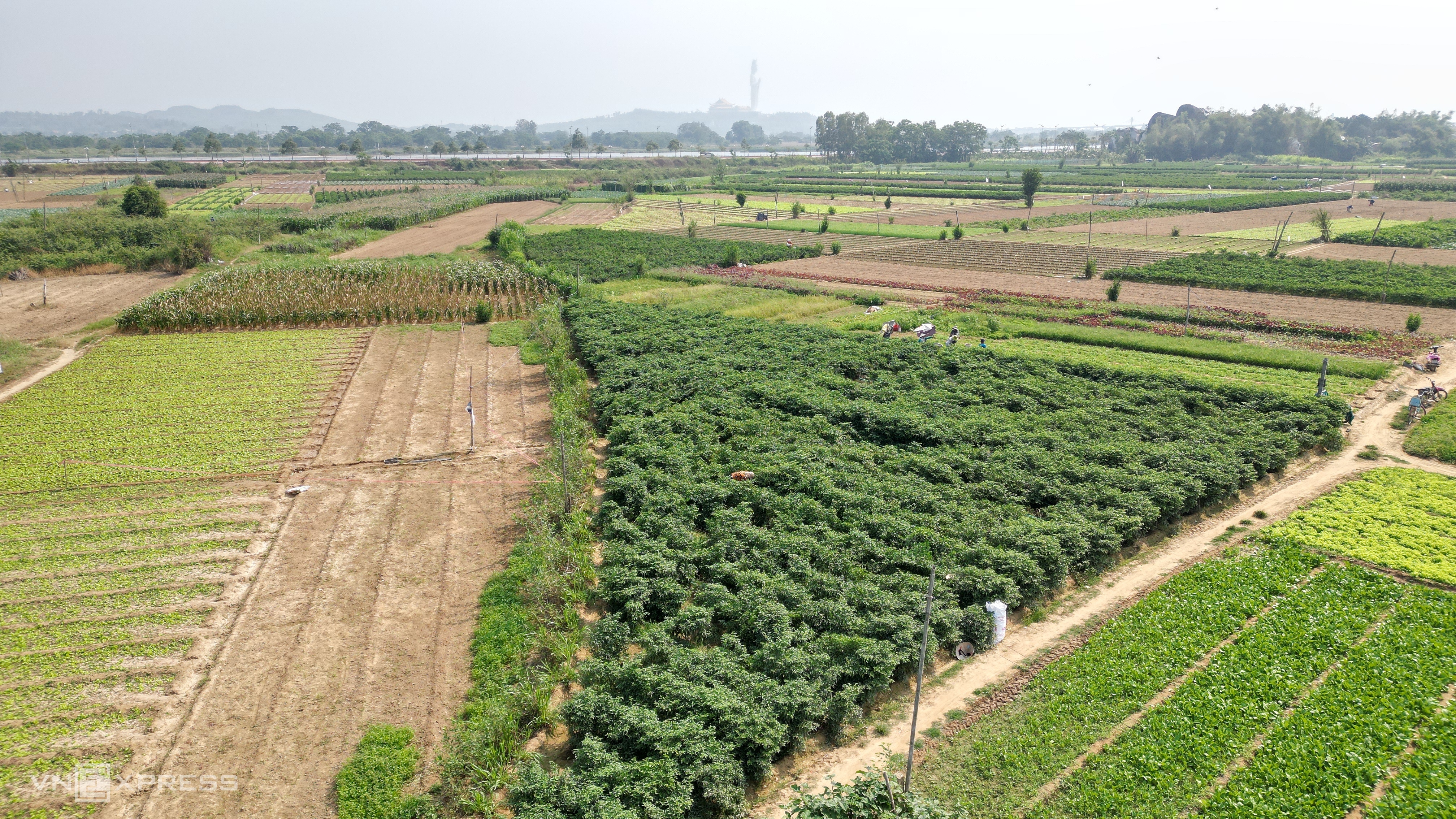 |
Dang Thi Xi harvests her 750 m2 chili field. Due to low prices, she enlists neighbors to help with the harvest and pays them wages to reduce her overall costs.
 |
After harvesting, chili is transported to collection points in Quang Ngai to have its stems removed before drying. The province cultivates approximately 1,000 hectares of chili during the Winter-Spring crop. Historically, the market for this produce depended heavily on Trung Quoc. To mitigate price risks, the Department of Crop Production and Plant Protection has proposed developing concentrated production areas, enhancing connections with businesses, and establishing integrated value chains.
Pham Linh