


Vietnam's new Decree 94/2026, set to take effect on 1/7/2026, brings significant changes to driver training and testing. This legislation aims to reduce administrative burdens, relax business conditions for training facilities, and promote digital transformation across the sector. The decree replaces document 160/2024 and introduces five key updates to enhance efficiency and transparency.
New regulations for training vehicles and documents
The decree now permits the use of trucks with a gross vehicle weight over 7,5 tons, licensed before 1/1/2025, for class C1 driver training in designated practice areas. This allowance is valid for a maximum of five years from the decree's effective date, provided it does not exceed the vehicle's service life. A key condition is that the instructor must hold appropriate certification for the specific vehicle type.
Additionally, the decree mandates the inclusion of "documents proving legal right of use" for training vehicles not owned by the training facility. This documentation is required when applying for or re-issuing training vehicle licenses, ensuring clear legal ownership or usage rights.
Mandatory data connection and electronic identification for students
For the first time, the government requires all driver training facilities and testing centers to implement electronic identification and authentication systems. These systems must connect to national digital platforms to ensure accurate student identification, authentication, and the provision of electronic documents. The goal of this digitalization, from the initial registration phase, is to ensure the entire process—from enrollment and training to testing—is fully digitized. This measure is designed to combat fraud, improve the integrity of driver's license data, and lay the groundwork for comprehensive digital management.
Training and testing units are required to complete the investment in the necessary systems to comply with this regulation by 1/1/2027.
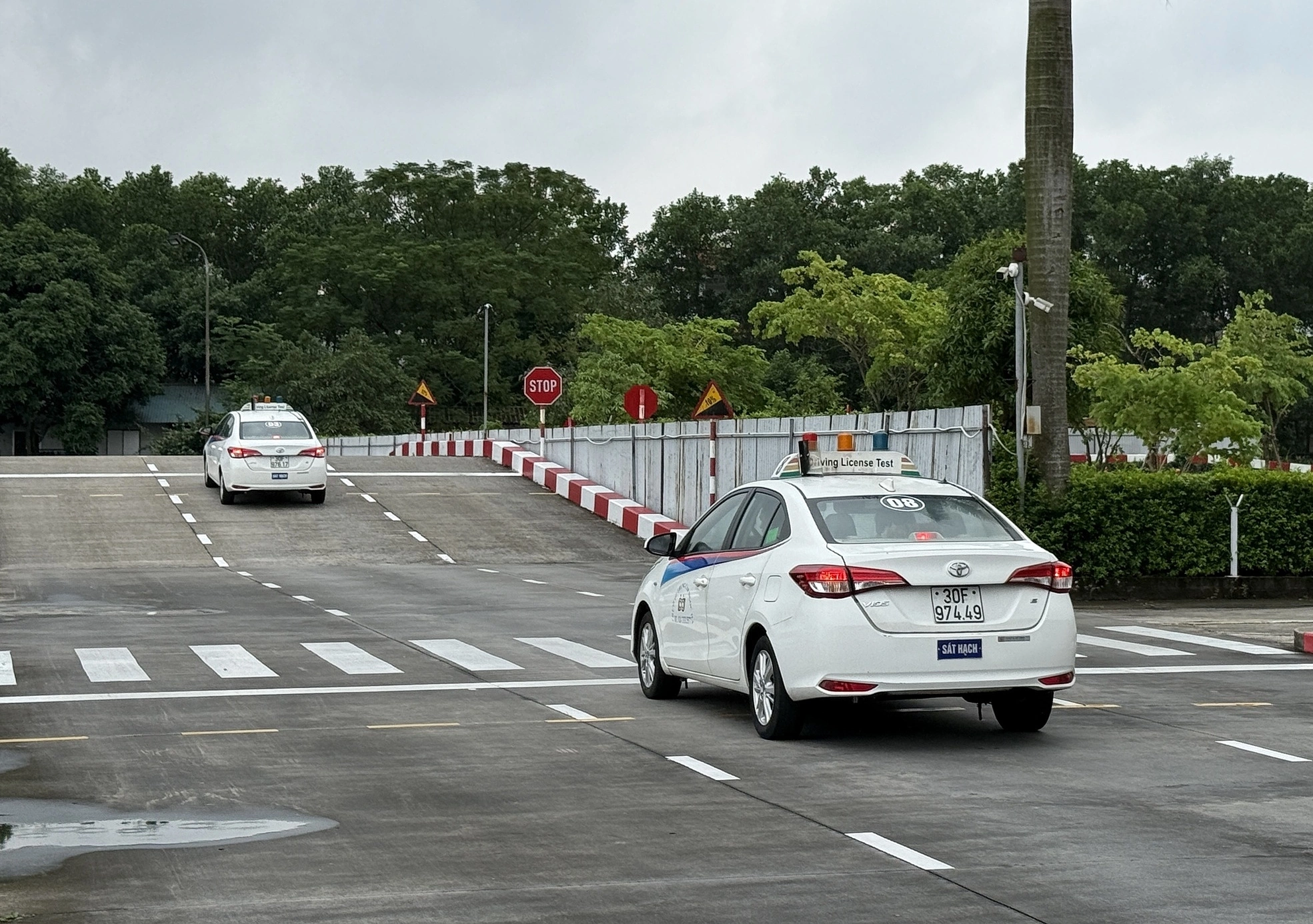 |
Driver testing at Ngoc Ha ground, Me Linh, Hanoi. Photo: Viet Tuan |
Relaxed conditions for using testing vehicles for practice
The new regulations allow facilities that offer both training and testing services to use testing vehicles more flexibly. Previously, the use of testing vehicles for practical training was limited to 50% of the total testing fleet. Now, these vehicles can be utilized as practice vehicles during periods when they are not designated for official testing or review sessions. Furthermore, testing grounds can also serve as practice areas when not in use for testing or review.
This change means the number of practice vehicles is no longer subject to a rigid limit but depends on actual usage time, thereby increasing asset utilization efficiency for training centers.
30% reduction in business conditions
The decree significantly cuts administrative requirements for driver training businesses by removing several conditions. These include specific requirements for the qualifications and standards of the head of a training facility, the minimum area of 1,000 square meters for training grounds, detailed classroom area regulations, specific requirements for training vehicles and practice areas, teacher experience periods, and certain standards related to the technical instructor's license.
This reduction aims to lower market entry barriers and create a more favorable environment for new and existing entities to provide driver training services.
Simplified procedures, reduced time and costs
A key objective of the decree is to reduce administrative processing time and compliance costs by 30%. To achieve this, the legislation enables online submission for numerous procedures, including the issuance of driver training licenses and training vehicle licenses.
Moreover, the decree grants electronic documents and results the same legal value as paper copies for various administrative processes. These include issuing driver training instructor certificates, granting driver training licenses, issuing training vehicle licenses, re-issuing oto driver training licenses when adjusting the training vehicle class, and re-issuing oto driver training licenses due to loss, damage, or changes in the training facility's name. The implementation time for these administrative procedures, such as issuing driver training instructor certificates, supplementing, re-issuing training vehicle licenses, and issuing driver training licenses, will also be reduced.
According to the Vietnam Road Administration, these amendments in Decree 94/2026, focusing on administrative procedures and increased technology application for management, are expected to reduce costs for businesses, enhance transparency, and ensure synchronization in driver's license issuance.
The decree will take effect on 1/7/2026, replacing document 160/2024.
Doan Loan


