


Hanoi Police officially launched an AI camera system on 13/12/2025, deploying approximately 1,837 cameras across 195 key intersections. These areas are identified as high-risk for traffic safety and urban order violations. With the new system, the total number of cameras currently operated by the city's police command and control centers is approximately 3,000. Additionally, there are camera systems at commune and ward police monitoring centers.
After one month of deployment, the AI camera system recorded, reviewed, and verified images of 6,351 cases, providing sufficient evidence to issue automated fine notices.
The most common offense was running red lights, accounting for 4,215 cases (66,36% of total violations), including 1,962 automobiles and 2,253 motorcycles. Not wearing helmets was the second most frequent violation, with 2,053 cases (32,32%). Other infractions included stopping or parking in prohibited areas and not wearing seatbelts.
According to the Hanoi Traffic Police Department, AI cameras significantly contribute to improving compliance with traffic laws.
Previously, violations at some intersections decreased when officers were present but recurred once supervision was absent. The continuous, consistent monitoring by the camera system, regardless of time or weather, helps maintain effective management, encouraging a shift from reactive compliance to voluntary compliance.
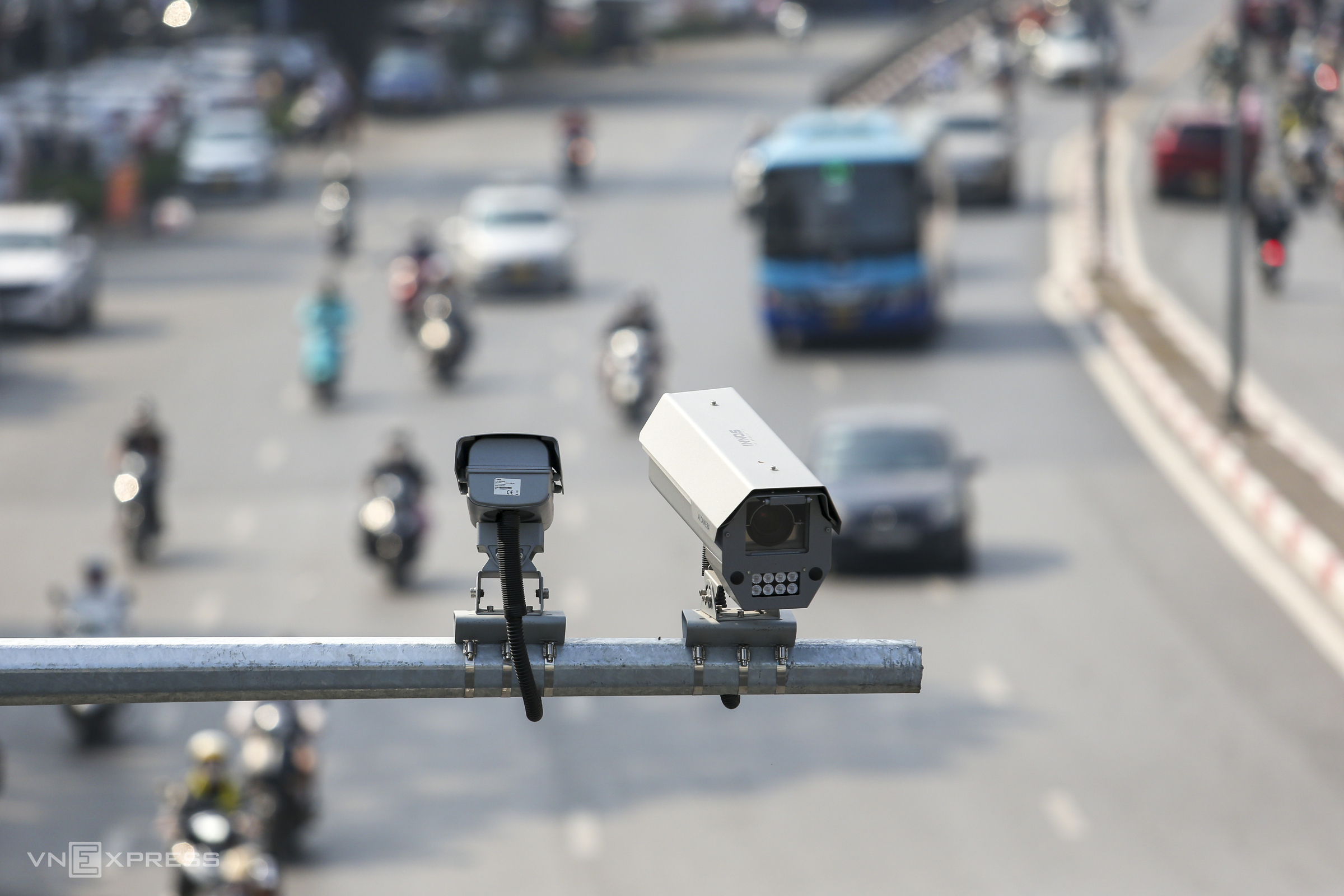 |
An AI camera cluster on Tran Khat Chan street. Photo: Viet An
In addition to operating the AI camera system, the city has also begun implementing smart traffic signal control on several central thoroughfares.
The application of smart traffic signal solutions at intersections equipped with AI cameras has led to clear improvements in traffic conditions. These systems have increased travel speed on one-way roads and reduced travel time by 31% - 36,8%, while increasing vehicle throughput at intersections by 13% - 18,8%. On two-way roads with heavy traffic and closely spaced intersections, smart signals have reduced average travel time by 20% - 25% and increased vehicle throughput by 8% - 15%.
In 2026, the city plans to install an additional 2,460 cameras at major intersections, main arterial roads, river bridges, hospitals, and bus stations. The objective is not only to operate the automated fine system for traffic safety violations but also to expand its scope to include urban order and environmental sanitation violations.
Viet An


