Archaeologists have unearthed ancient coins, two swords, an urn, and terracotta lamp stands during ongoing excavations of a brick tomb in Kim Lien commune, Nghe An province. Experts believe the tomb dates from the 3rd to 7th centuries, offering valuable insights into the region's history.
Over the past two days, the Nghe An - Xo Viet Nghe Tinh Museum, in collaboration with the University of Social Sciences and Humanities, Vietnam National University, Hanoi, has conducted excavations at the site. Experts are currently clarifying the tomb's structure, age, and value, along with the discovered artifacts. The excavation is expected to last about 40 days.
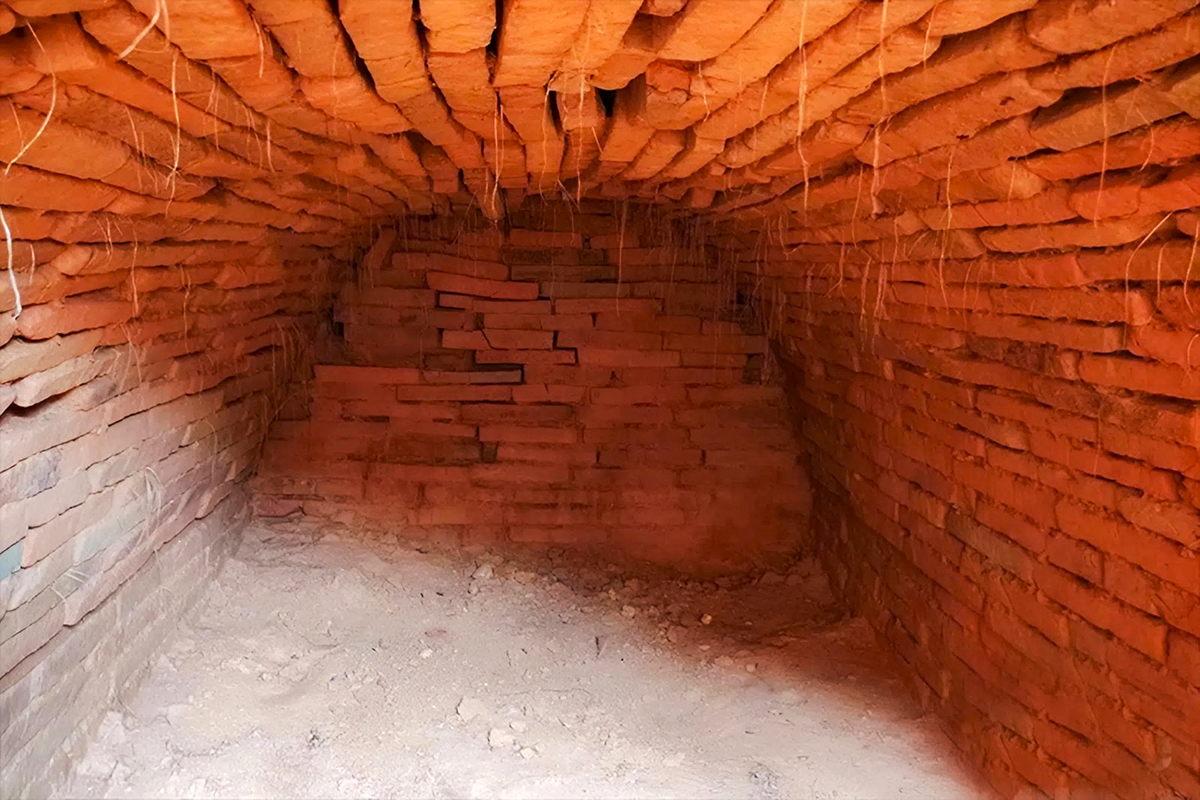 |
The ancient brick tomb in Kim Lien commune. Photo: Hung Le |
Ho Manh Ha, Deputy Head of the Cultural Heritage Management Department, Nghe An Department of Culture, Sports and Tourism, stated that the discovery of the brick tomb and its artifacts holds significant value for archaeological research. It helps enrich documentation on the daily life, burial customs, and trade activities of residents in Nghe An from the 3rd to 7th centuries.
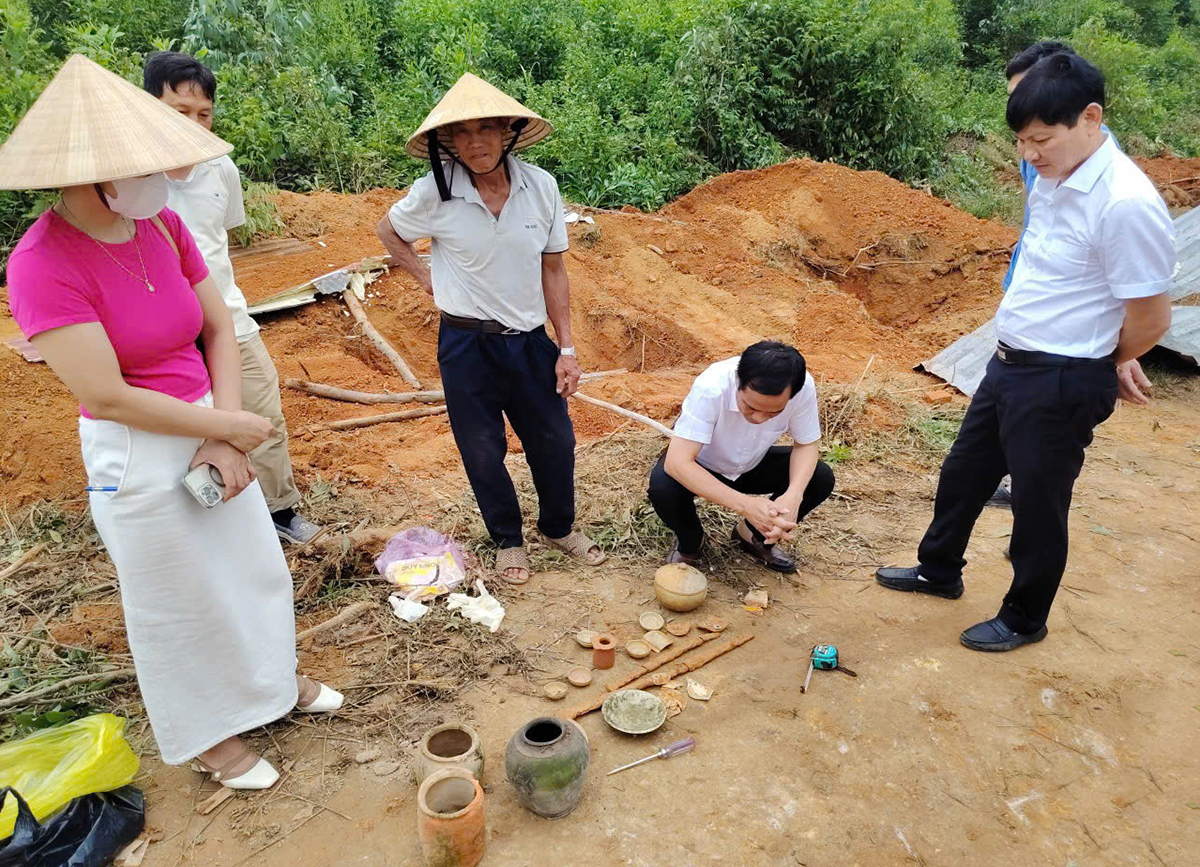 |
Other artifacts discovered during the excavation. Photo: Hung Le |
The discovery began over two months ago when a resident of the former Nam Giang commune, now Kim Lien commune, was digging to build a fence. They uncovered rows of bricks at a depth of about 50-70 cm. Suspecting an archaeological structure lay beneath, the individual reported the find to local authorities. Following a site survey, experts identified the structure as an ancient brick tomb, measuring 3,1 meters long, 1,15 meters wide, and 1,05 meters high.
Brick tombs are a common type of burial structure found throughout ancient historical periods in Vietnam. These tombs are constructed with bricks, featuring surrounding walls, a base, and a vaulted roof; some are divided into multiple chambers. The bricks used for construction might be decorated with patterns such as: coin shapes, lozenges, or herringbone designs. Inside the tombs, grave goods typically include ceramics, terracotta items, metal objects, ancient coins, and other artifacts.
Duc Hung