On 14/4, Hoang Viet Trung, Director of Hue Monuments Conservation Center, chaired a meeting with cultural researchers and the restoration unit for Emperor Tu Duc's tomb. The meeting addressed the repair and restoration of the ceiling decorations, wooden partitions, and doors of the Minh Khiem Duong theater.
Recently, concerns arose that sealing the two doors in the east wing of Minh Khiem Duong was inconsistent with the structure's condition before its dismantling for restoration. Additionally, some decorative patterns on the theater's ceiling were deemed incorrect.
Ho Huu Hanh, Director of Hue Monuments Restoration Joint Stock Company, explained the decision to seal the two doors in the east wing with wooden partitions. Hanh stated that during Emperor Tu Duc's reign, this area did not feature two large doors.
"Comparing images and materials, the two sets of 4-panel hinged doors, tall and wide, in the east wing were installed later due to changes in function", Hanh said.
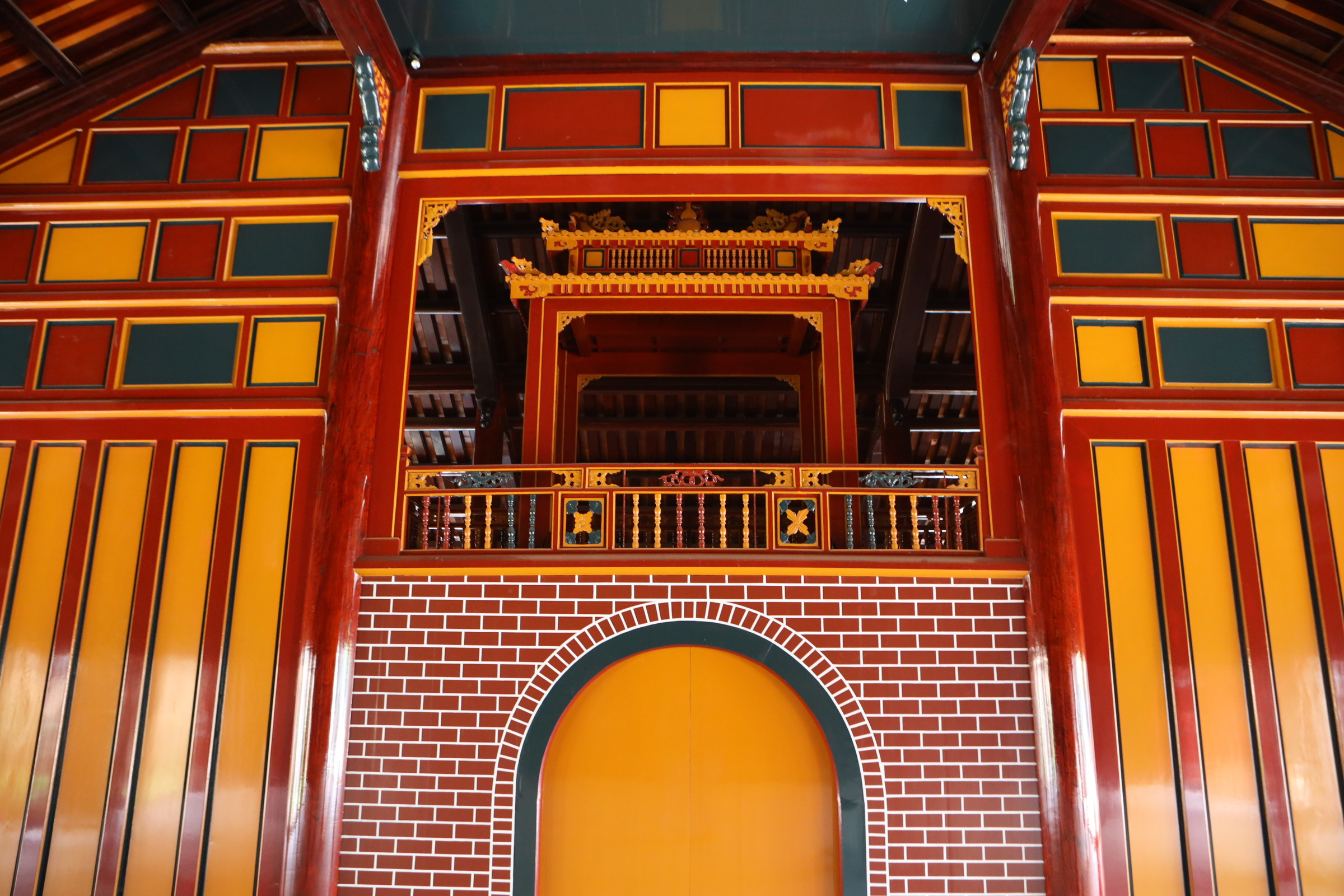 |
The Minh Khiem Duong theater area is currently undergoing restoration. *Van An*.
Hanh also contended that the elevated area in the east wing was where the emperor sat to watch performances, not a stage for actors. This spot was high and narrow, unsuitable as a performance area.
Conversely, cultural researcher Nguyen Xuan Hoa, former Director of Thua Thien Hue Department of Culture, Sports and Tourism, argued that the east wing (Long Dinh area) was too small for the emperor to sit and watch classical opera (tuong) performances. If the emperor sat there, he would only see the actors' heads, not the overall performance.
"Therefore, the hypothesis that Long Dinh was where the emperor sat to watch tuong is inappropriate", Hoa said. He suggested the emperor's viewing area in Minh Khiem Duong was the west wing, beneath the building's horizontal lacquered board. The two sealed doors were, in fact, the entrance and exit for actors before and after performances.
Furthermore, Hoa recommended re-examining the star constellations decorated on the newly restored theater ceiling to ensure they align with descriptions in Nguyen Dynasty records.
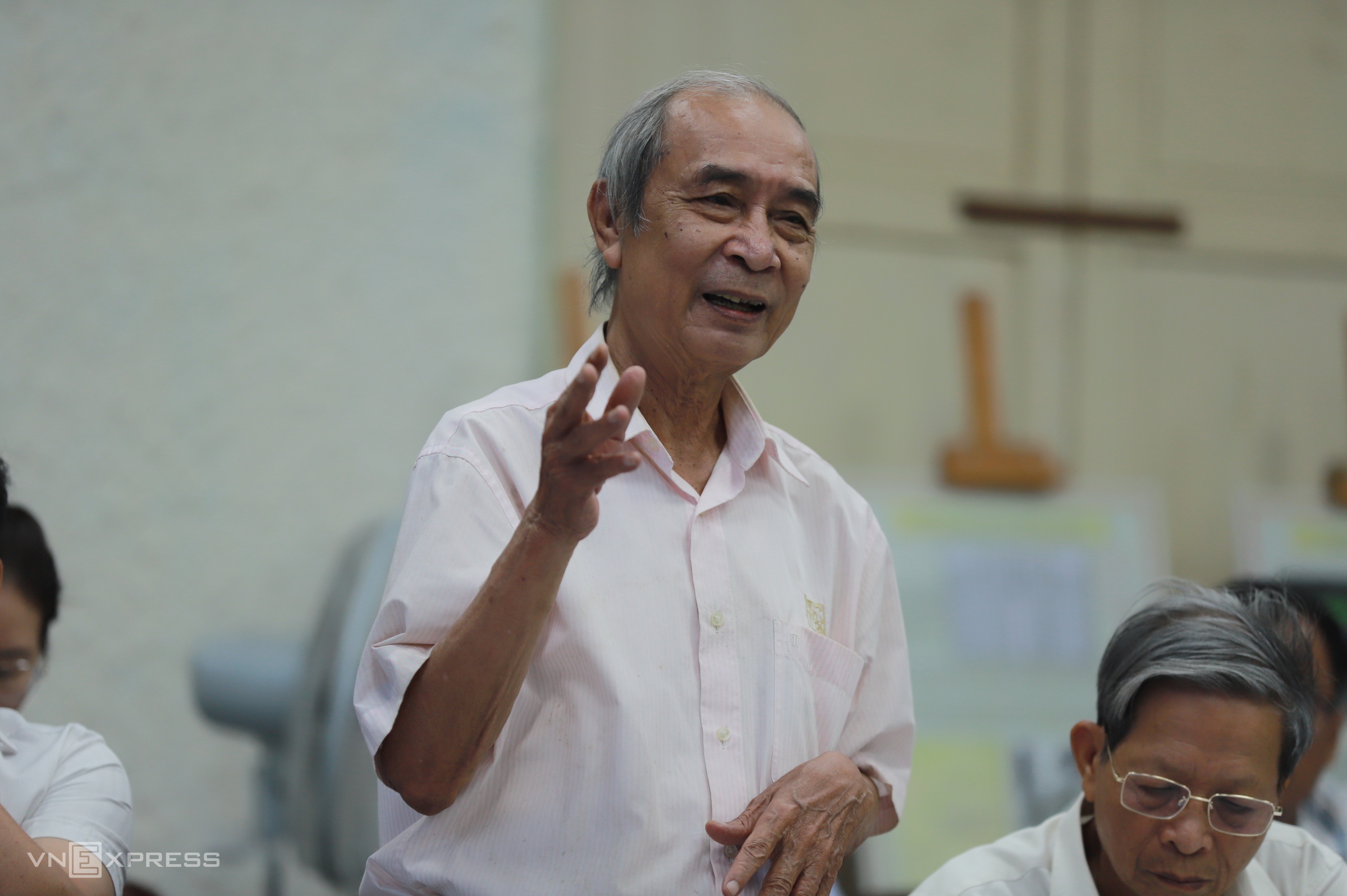 |
Cultural researcher Nguyen Xuan Hoa presents his opinion on the two doors in Minh Khiem Duong theater. *Vo Thanh*.
Nguyen Phuoc Hai Trung, Deputy Director of Hue Monuments Conservation Center, also believed the two doors in Minh Khiem Duong's east wing served as entrances and exits for actors. Trung asserted that the central area of Minh Khiem Duong was the performance stage.
Given that tuong actors wear bulky costumes, the two large doors on either side of the east wing were essential for their movement. In tuong performances, actors often enter and exit through two different doors, symbolizing the "gate of life" and the "gate of death", Trung explained.
"Sealing the two large doors in the east wing of Minh Khiem Duong, compared to its state before dismantling, is inappropriate. The construction unit acted unilaterally without reporting to the Center's leadership", Trung stated.
After receiving feedback from the cultural researchers, Hoang Viet Trung, Director of Hue Monuments Conservation Center, instructed the Hue Monuments Project Management Board and Hue Monuments Restoration Joint Stock Company to adjust and reinstall the two large doors in the east wing of Minh Khiem Duong to their original state before dismantling.
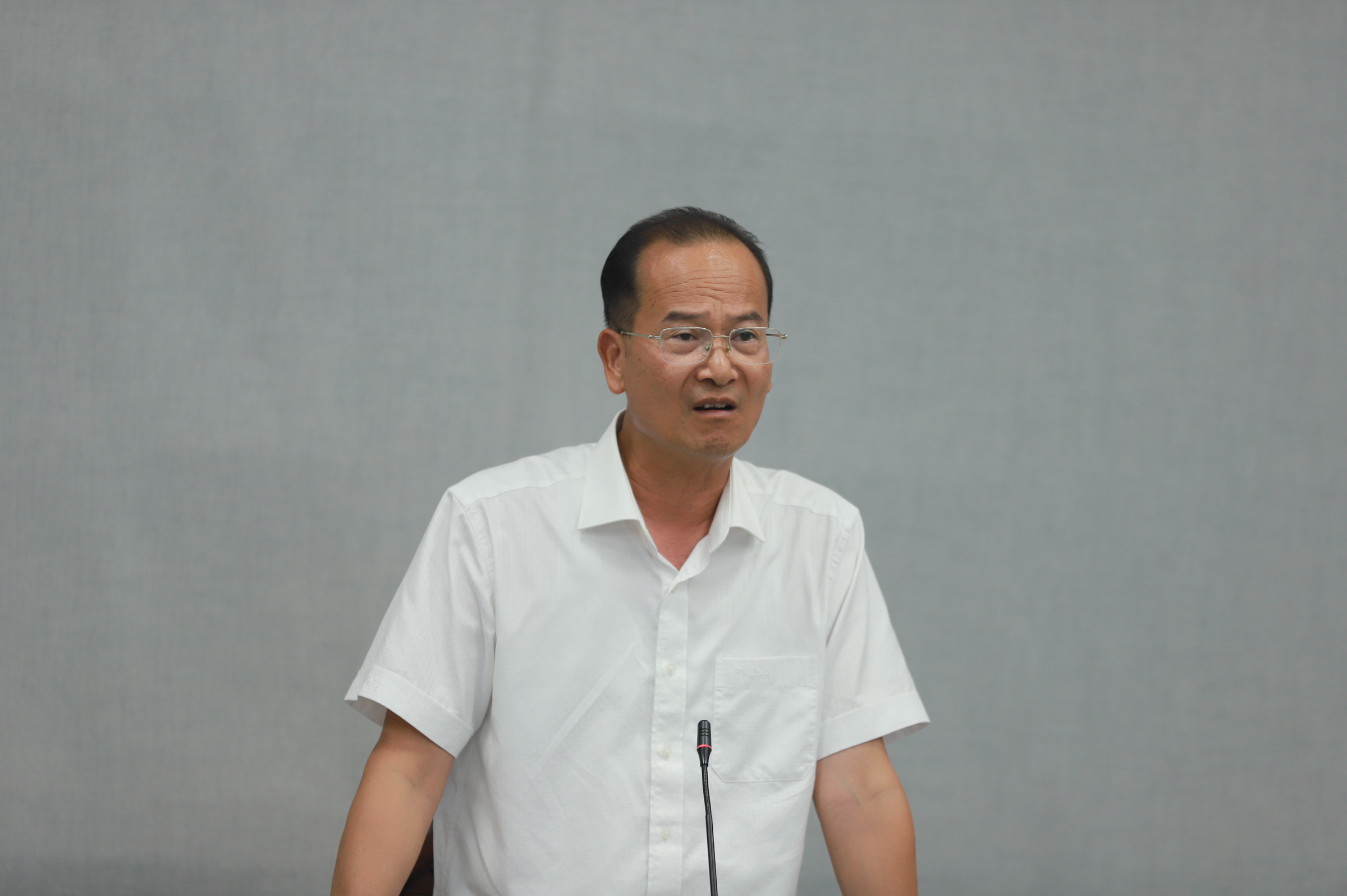 |
Hoang Viet Trung, Director of Hue Monuments Conservation Center. *Vo Thanh*.
Trung also requested adjustments to the star decorations on the Minh Khiem Duong ceiling, but the representative from Hue Monuments Restoration Joint Stock Company, the construction unit, refused. The company director stated that during the dismantling of the structure, neither the ceiling nor archival photos revealed glass stars encased in copper, making restoration difficult.
Trung assigned the Hue Monuments Project Management Board the task of completing the design and construction of the star decorations on the Minh Khiem Duong ceiling.
The Hue Monuments Restoration Joint Stock Company began restoring Hoa Khiem Palace, Minh Khiem Duong, and On Khiem Duong within Emperor Tu Duc's tomb complex in 6/2024. The total cost for this project exceeds 99 billion VND. Minh Khiem Duong, one of Vietnam's oldest theaters, is nearing the completion of its restoration.
Vo Thanh