 |
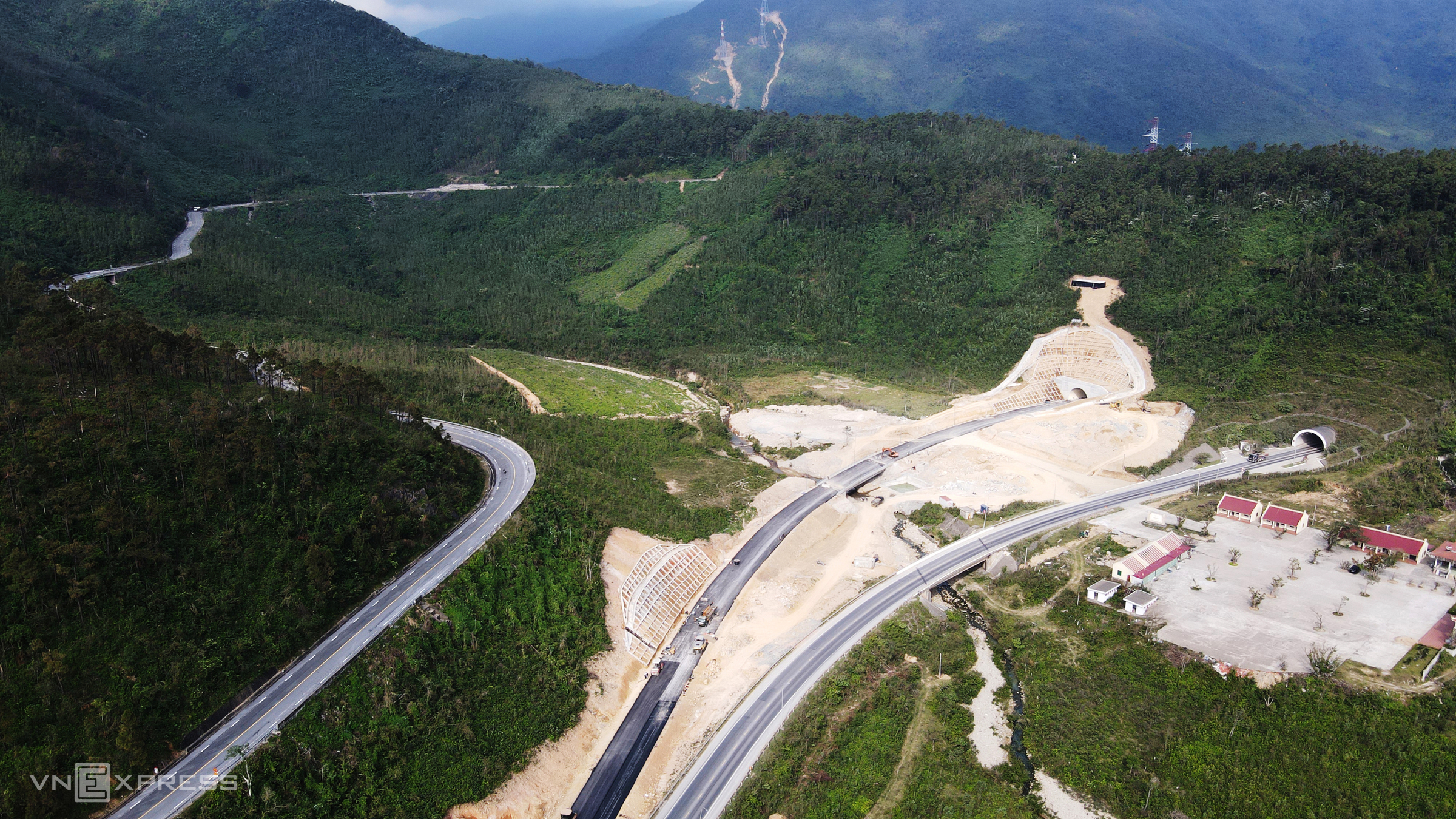
The new tunnel runs parallel to the left of the old tunnel, in the south-north direction, constructed by Song Da 10. |
The expanded Deo Ngang tunnel, located on National Route 1, commenced construction in January 2025. The Railway Project Management Board (Ministry of Construction) is the investor, with a joint venture of Song Da 10 - Long Hung - Huy Hoan as the contractor.
From right to left: the old tunnel, the new tunnel, and the road over Deo Ngang. Before the tunnel, crossing the Hoanh Son mountain range by road required navigating the winding 6 km Deo Ngang Pass.
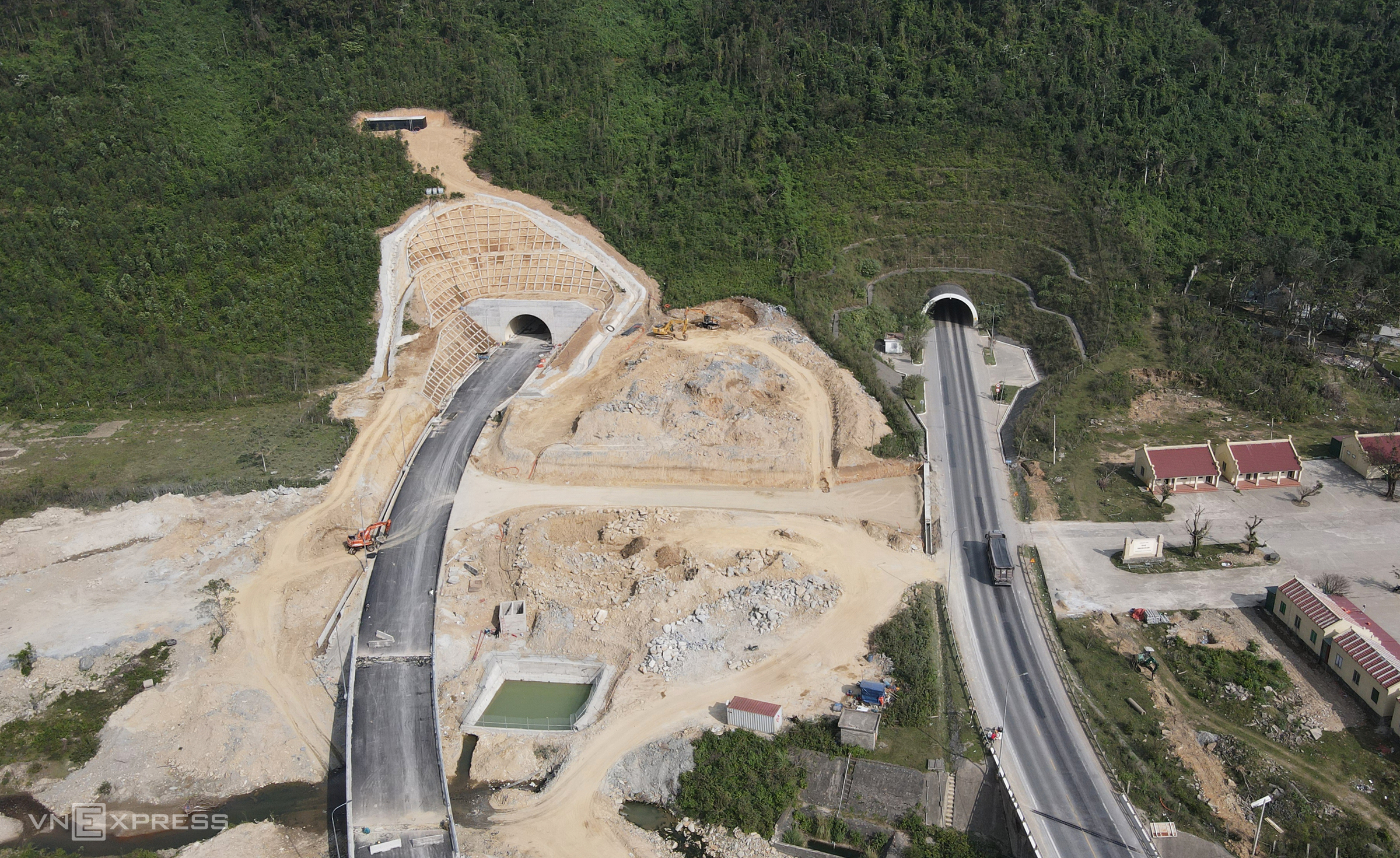 |
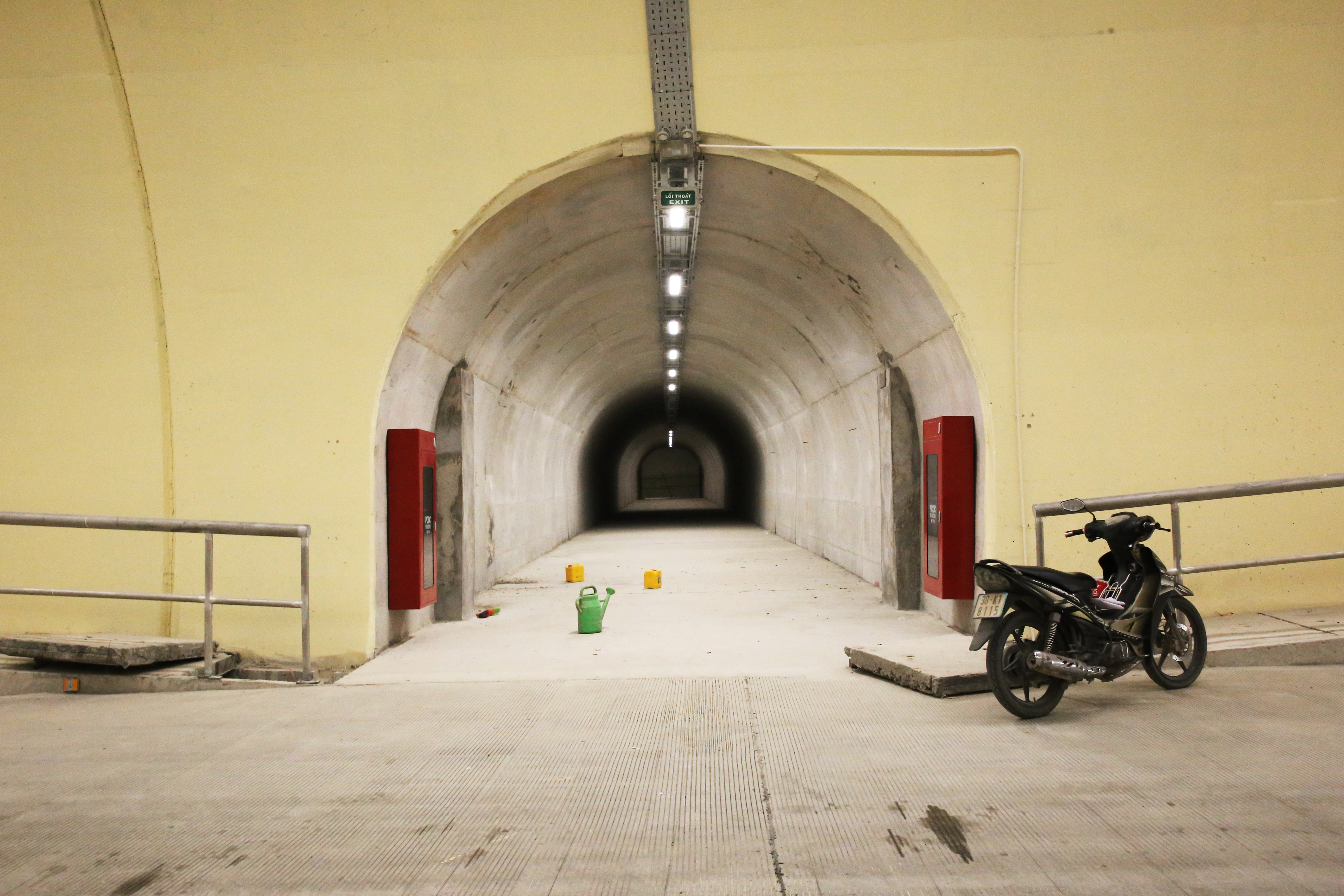
The new tunnel is approximately 90 m from the old tunnel. A 5 m wide cross-passage tunnel connects the two, facilitating emergency escape, rescue, and relief in case of incidents. |
The expanded Deo Ngang tunnel traverses the Hoanh Son mountain range. Its southern end is in Phu Trach commune, Quang Tri province, and its northern end is in Hoanh Son ward, Ha Tinh province. The total length is 2.9 km, with the tunnel section measuring 550 m. The remaining sections consist of bridges and access roads, with a construction and installation investment exceeding 315 billion dong. The tunnel tube features a permanent design with a reinforced concrete lining, measuring 10.5 m wide and 7.5 m high. It accommodates two lanes of traffic with a design speed of 80 km/h. Approximately 600 LED lights are installed, with automatic light adjustment. A representative of the investor stated that placing explosives for tunnel excavation was challenging due to nearby structures, including 500 kV power lines overhead, the existing old tunnel, and the Mau Lieu Hanh temple. Before the main blast, the construction unit conducted three months of trial blasts to assess vibration levels and their impact on surrounding structures. Additionally, prolonged site clearance and two consecutive months of rain in 2025 affected the construction schedule.
 |
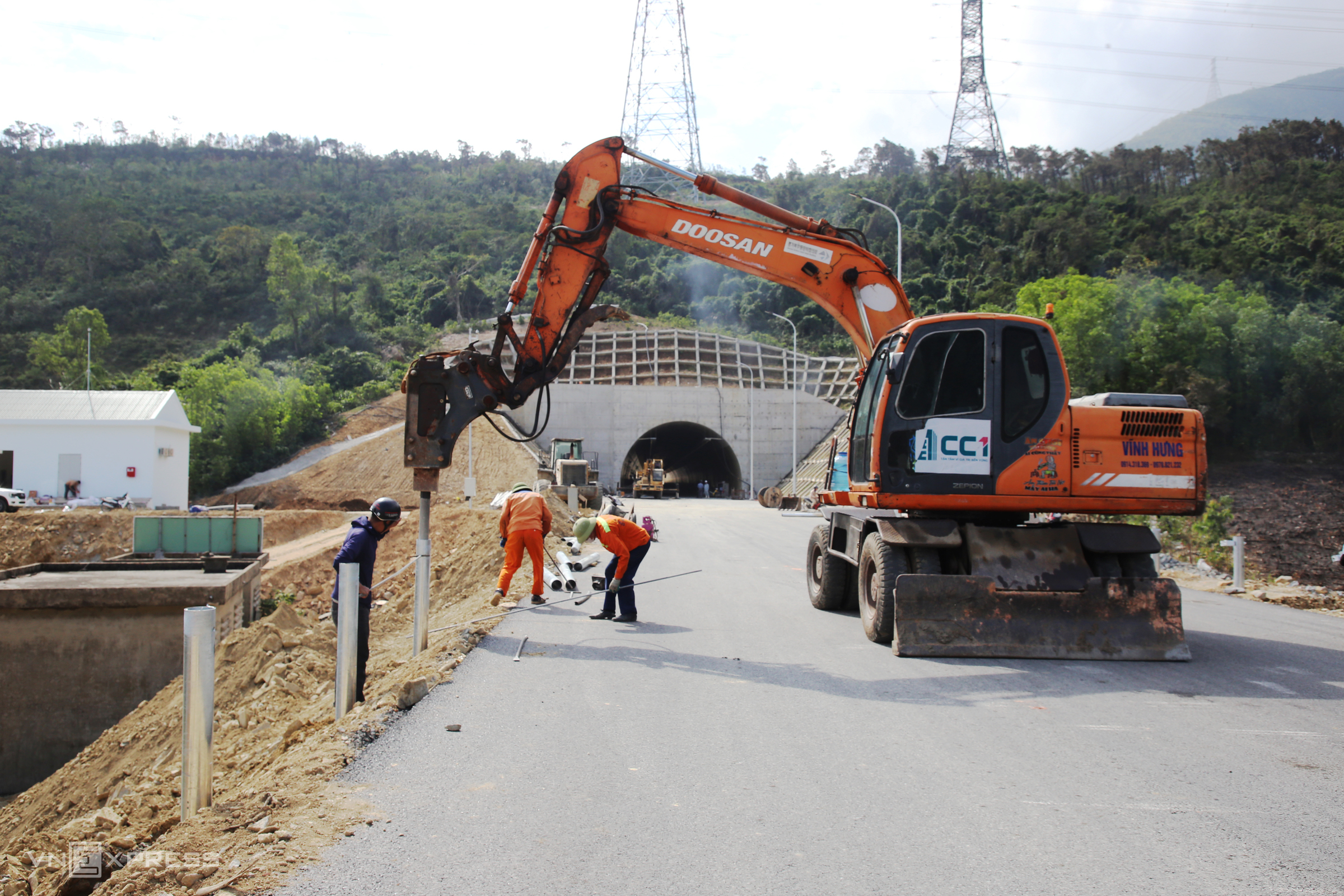
The asphalt pavement is being equipped with signs, guide markings, and guardrails by the construction unit. The access road component was constructed by Long Hung. |
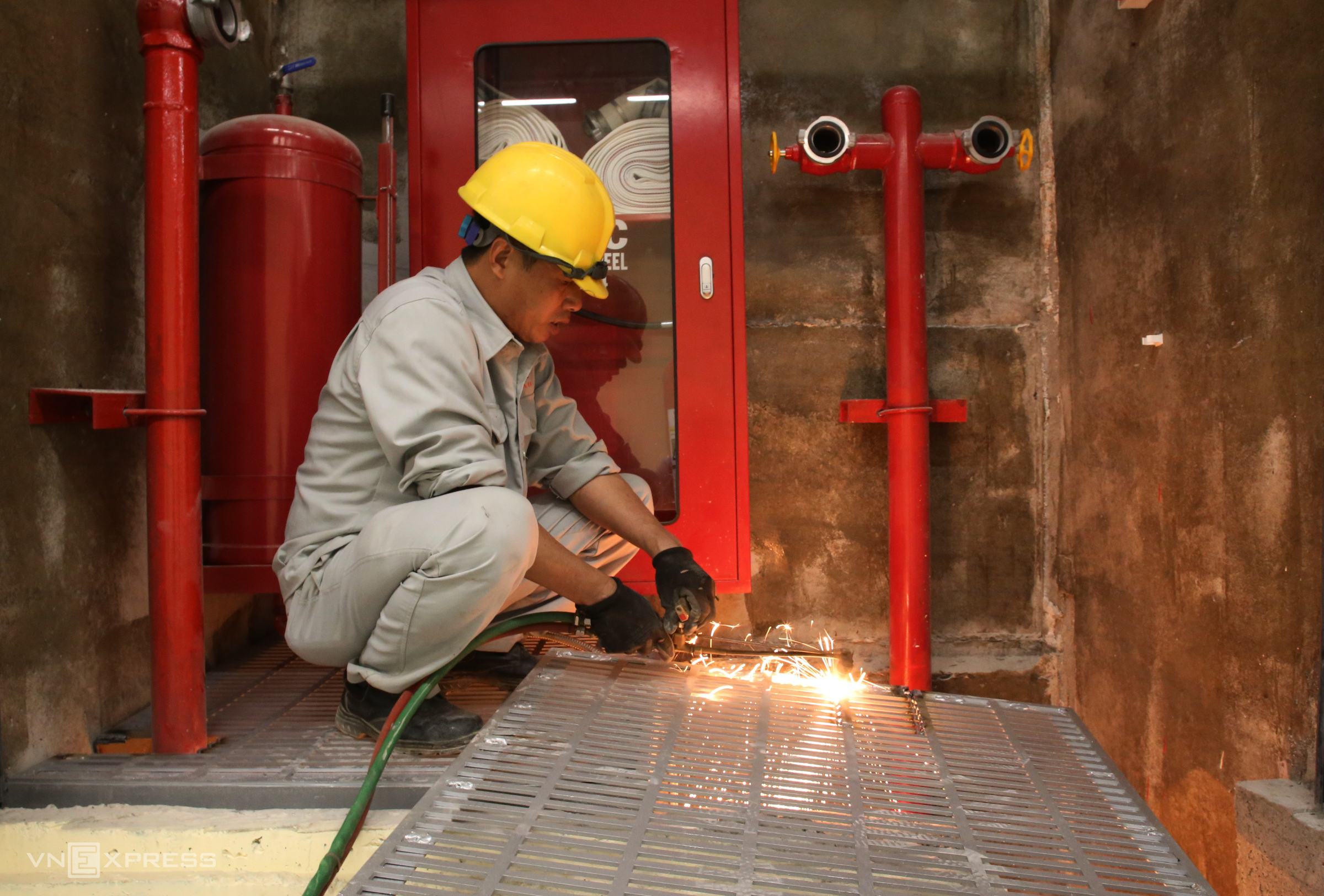
Workers are installing the fire suppression system inside the tunnel, the final component before completion.
The old Deo Ngang tunnel, operational since 2004, is 495 m long, 11.5 m wide, and 7.5 m high, with two lanes, each 3.5 m wide. It was designed for vehicles to reach a maximum speed of 60 km/h but has become overloaded.
In June 2024, the Ministry of Transport (now the Ministry of Construction) approved a project to upgrade and expand several bridges and tunnels on National Route 1. This included the Xuong Giang bridge over the Thuong River in Bac Ninh province, the Gianh and Quan Hau bridges in Quang Tri province, and the Deo Ngang road tunnel connecting Ha Tinh with Quang Tri. The total investment for these projects is nearly 2,000 billion dong.
 |
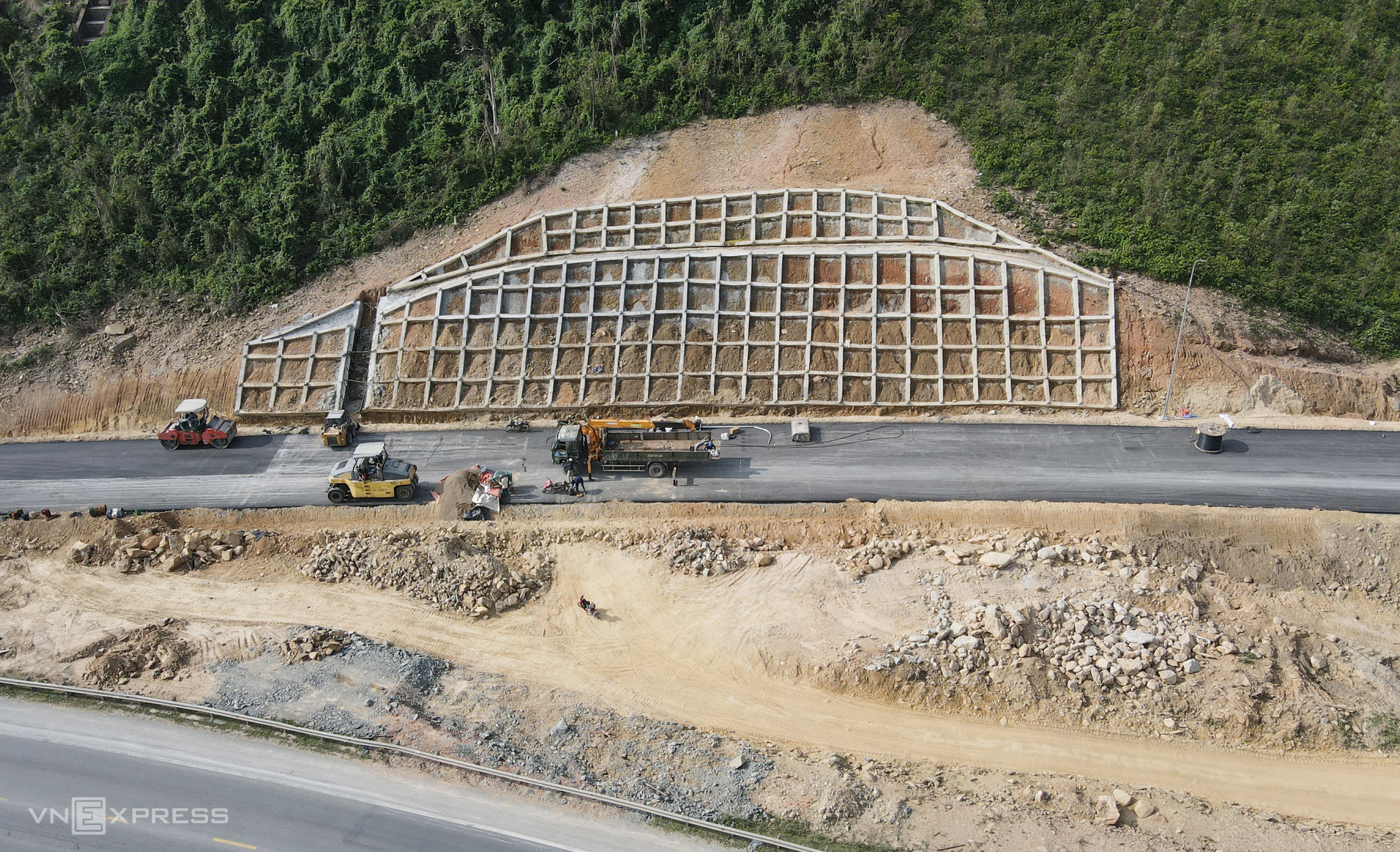
The southern side of the tunnel passes through hilly terrain, where earth and rock have been cut to form a slope to prevent landslides. |
 |
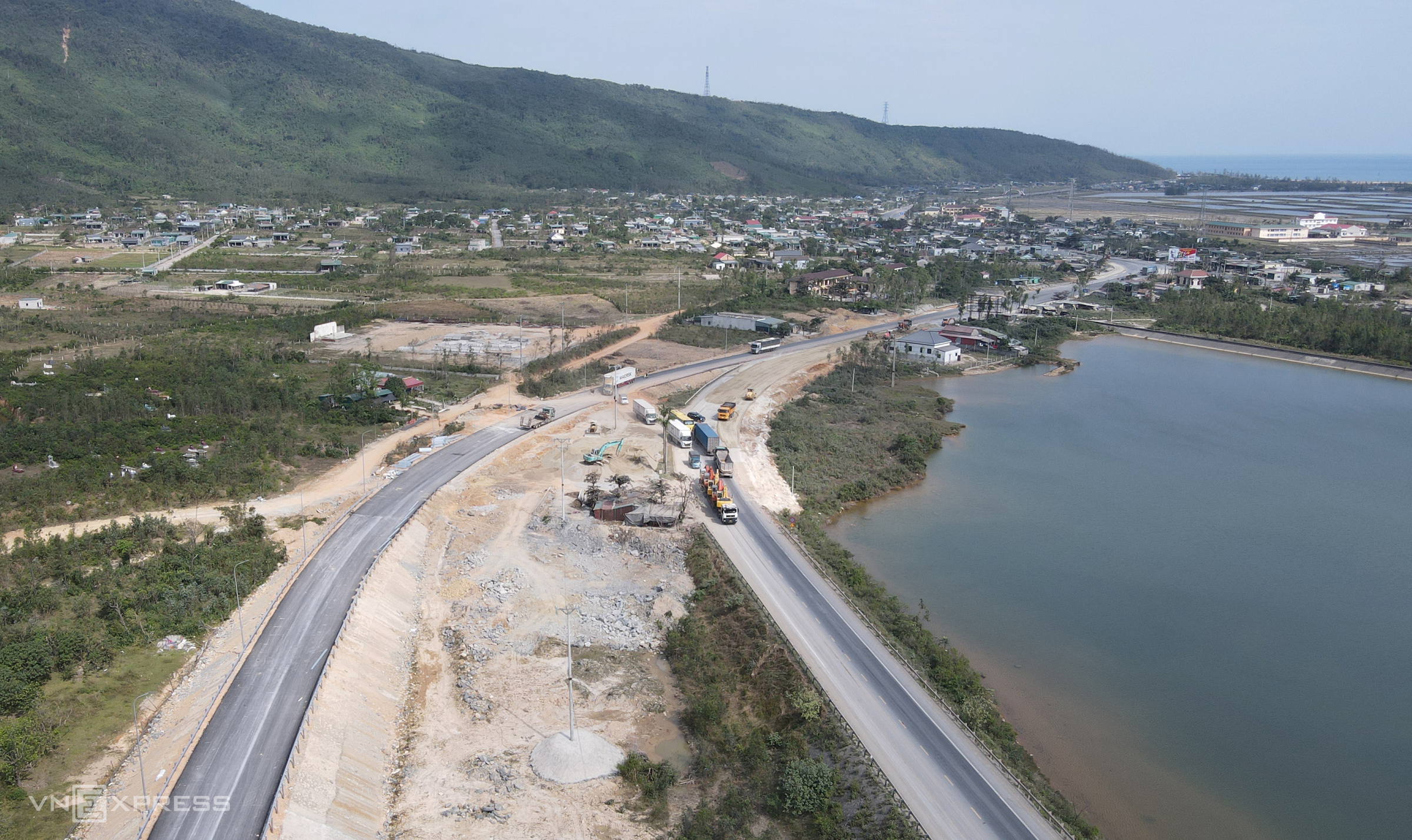
The access road connects to National Route 1 in Hoanh Son commune. Upon completion, the Deo Ngang tunnel will operate with two parallel tubes, featuring a roadbed width of 20.5 m, accommodating four motor vehicle lanes and two non-motorized vehicle lanes. The project is expected to meet the increasing traffic demand on National Route 1 through Ha Tinh and Quang Tri provinces. |
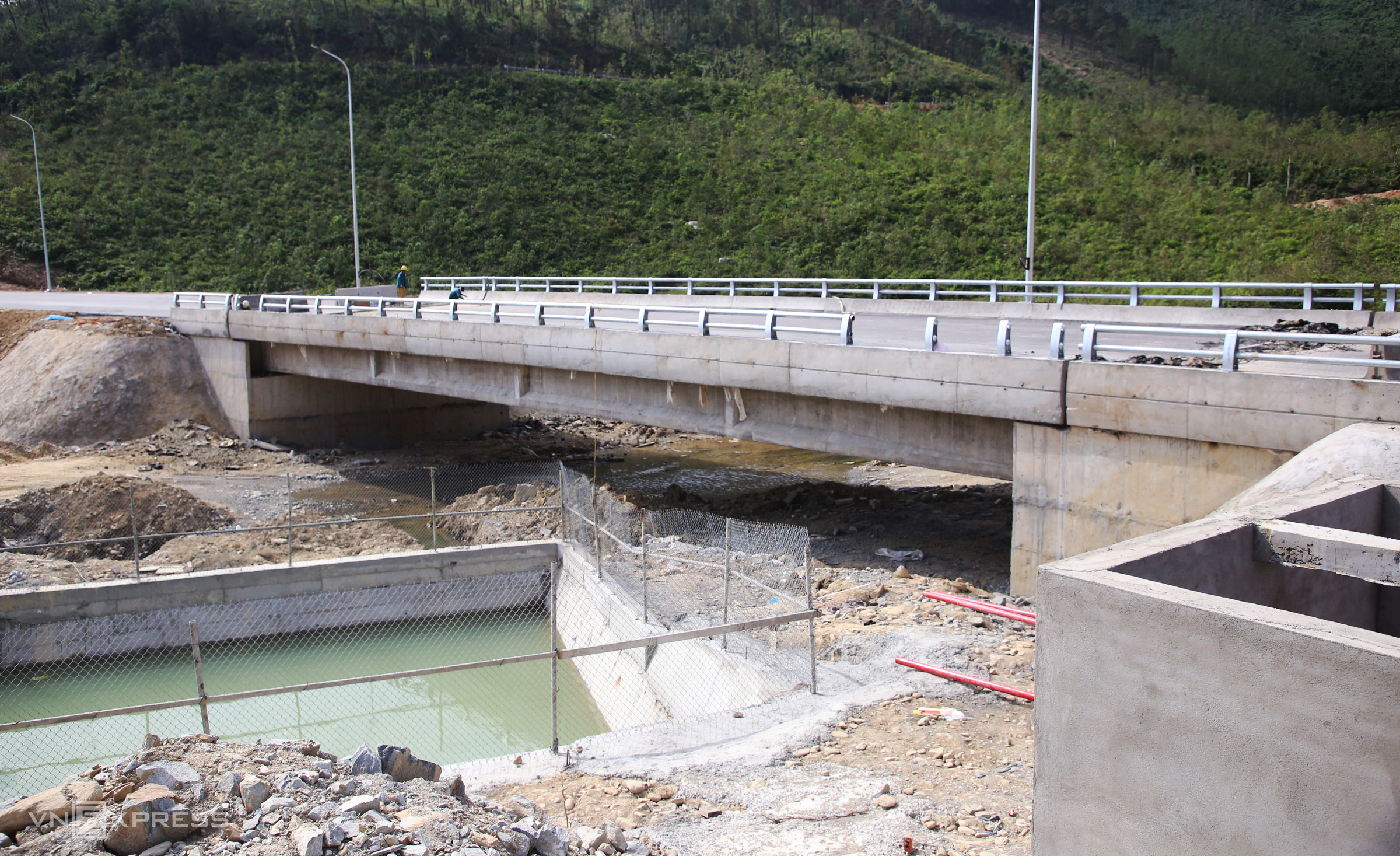
In addition to the tunnel tube, the access roads at both ends feature Dong Bo and Dong Muoi bridges, constructed by Huy Hoan, which are now complete.
 |
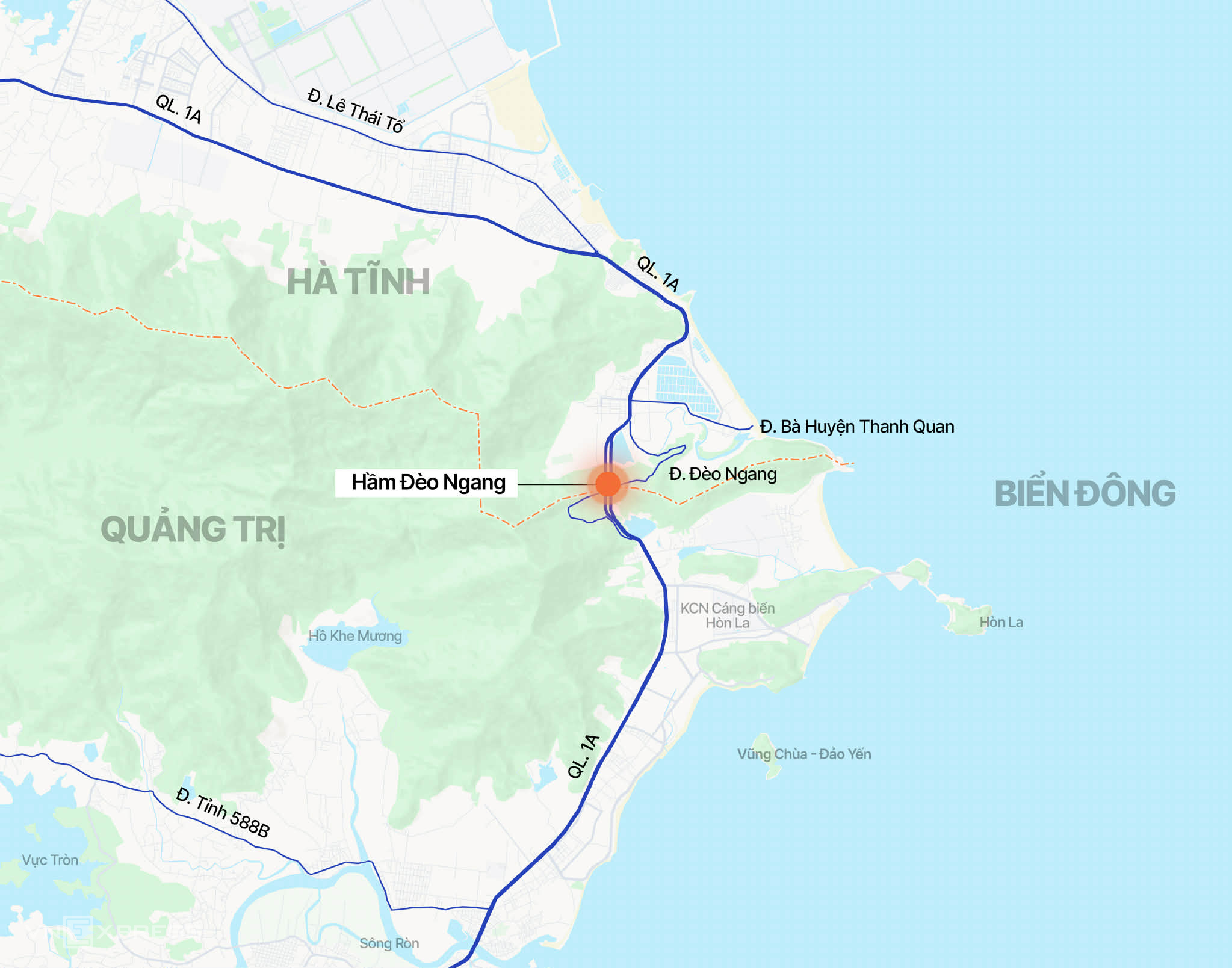
The expanded Deo Ngang tunnel on National Route 1 connects Ha Tinh province with Quang Tri. Graphics: Tam Thao |
 |
 |
 |
Dac Thanh