Chairing a meeting on the revised Land Law project on the morning of 21/9, Deputy Prime Minister Ho Quoc Dung requested the Ministry of Agriculture and Environment to research and include in the draft law principles for anti-land speculation tax and dealing with idle land. Based on these, the Government will issue detailed regulations to ensure policies align with reality.
The Deputy Prime Minister stated that the Land Law should only stipulate framework and principle-based issues to limit frequent amendments when new issues arise in practice. The drafting agency needs to continue reviewing and carefully assessing contents that still have differing opinions.
Regarding compensation policy, he requested preventing loopholes that could lead to losses of State assets or foster corruption. The mechanism for determining land prices and establishing land price tables needs to be appropriate for the conditions of each locality.
 |
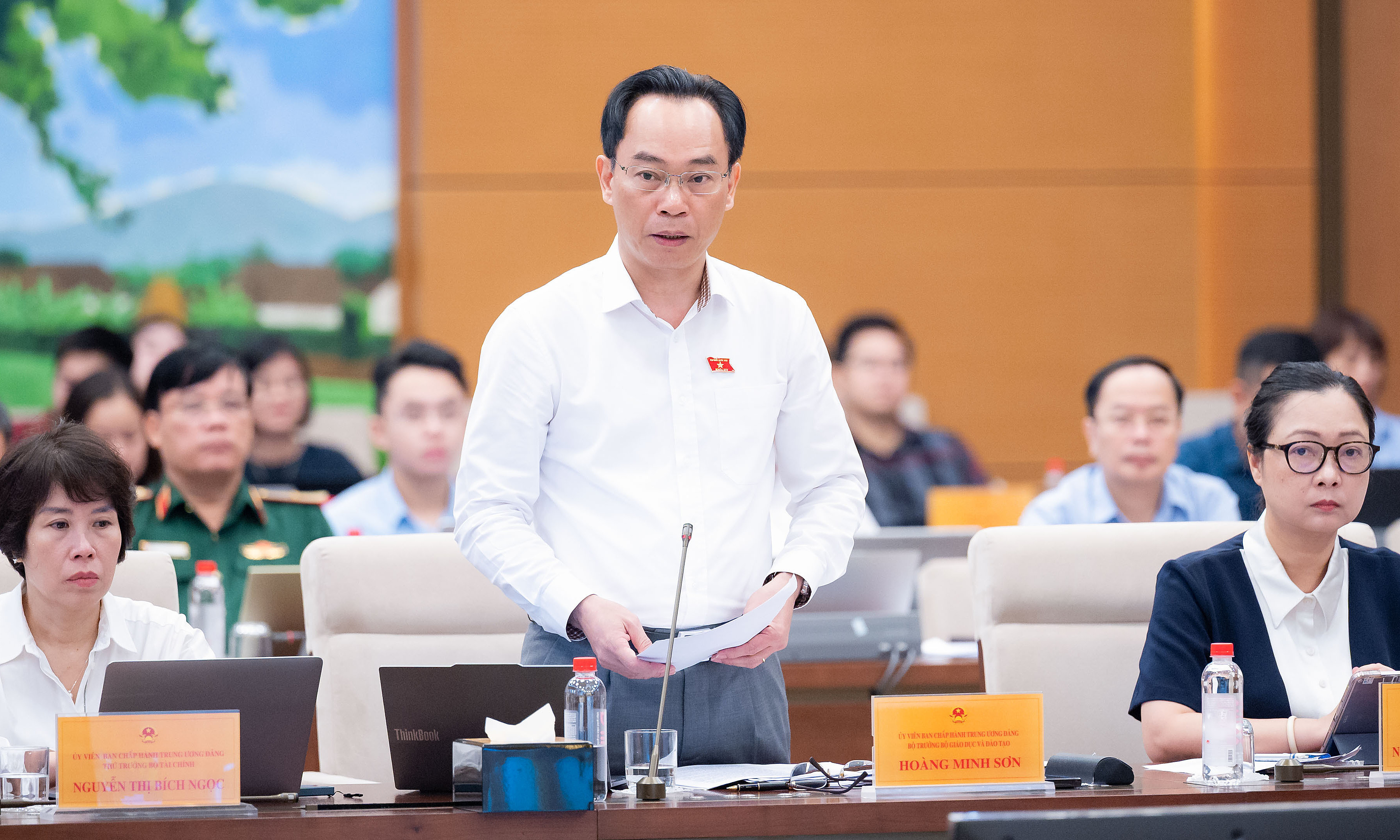
Deputy Prime Minister Ho Quoc Dung speaking at the meeting on the revised Land Law project, morning of 21/9. Photo: VGP.
The Ministry of Agriculture and Environment stated it has reviewed 64 relevant laws and codes, and concurrently received and explained National Assembly delegates' opinions at the August session. The technical units of the Ministry of Public Security are completing procedures to upload the draft law dossier to VNeID to gather public opinion.
The draft focuses on amending policies regarding: land use planning and plans; land allocation, leasing, and purpose conversion; land recovery, compensation, support, and resettlement; land finance and prices; users' rights and obligations, and the usage regime for each land type.
Previously, when presenting to the National Assembly the direction for amending the Land Law in August, Minister of Agriculture and Environment Trinh Viet Hung stated that one of the major contents is innovating land finance and price policies to enhance usage efficiency, limit speculation, hoarding, and leaving land idle.
This direction suggests using tax policies to limit holding land without putting it into use. The State is also researching mechanisms to regulate the additional land value gained from planning, infrastructure investment, or land use conversion, instead of allowing the entire differential amount to go to the current landholders.
The draft also adds sanctions for land allocated to projects but left unused or with delayed progress. Investors may have to pay an increasing fee based on the duration of delay in putting the land into use; if violations continue, the State will reclaim the land. The State may also reclaim agricultural and forestry land that is left idle, has been penalized, but is not put into use within the required period.
Regarding land prices, the draft proposes using land price tables along with adjustment coefficients to calculate financial obligations, budget revenues, land use rights value when equitizing State-owned enterprises, and compensation when the State reclaims land. The adjustment coefficient is the rate of increase or decrease compared to the price level for each land type, area, and location in the price table.
Valuation must rely on data and scientific methods, and be conducted publicly and transparently, preventing manipulation or creation of artificial prices, while harmonizing interests among the State, land users, and investors.
Vu Tuan