


This requirement is one of the criteria set by the Ho Chi Minh City Department of Construction on 22/1, following the city leadership's approval for deploying electric motorcycle battery swap systems on sidewalks. Currently, two companies have proposed installing about 20,000 swap cabinets on eligible sidewalks or existing public lighting poles.
The requirements specify that the cabinet design must have flexible dimensions and space, supporting shared battery types for various vehicle models, or a commitment to connectivity. This aims to provide convenience and meet the widespread demand for electric motorcycle users, as many different brands exist.
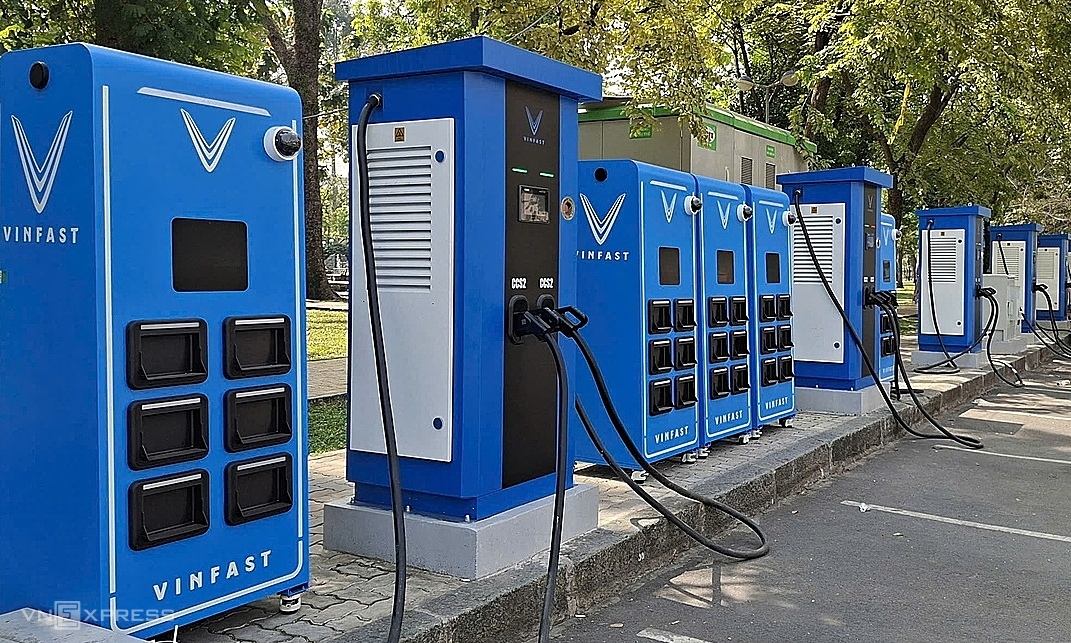 |
Battery swap cabinet on trial on Le Lai street sidewalk (former District 1), 1/2026. Photo: Ha Giang
In addition to these criteria, companies will bear the costs of investment, installation, electrical connection, and operation of the battery swap system once services launch. They must also be responsible for third-party damages in case of fire or explosion incidents causing harm to people or surrounding property.
To ensure safety, all equipment must achieve quality and fire safety certifications, featuring an automatic shut-off system and temperature alerts as regulated. The cabinets must also ensure absolute electrical safety, preventing leakage during heavy rain or flooding. Installation areas for battery swap cabinets require plans to ensure traffic safety, environmental protection, and urban aesthetics, including designated parking spaces, access routes, and a surveillance camera system.
The Department of Construction stated that battery swap cabinets would be considered for installation on sidewalks, green strips, utility poles, or green areas along wide roads, ensuring safety. However, installation will not be permitted in areas such as: intersections, entrances/exits, crosswalks, disabled access routes, in front of residential houses (due to potential complaints), or locations with high concentrations of existing technical infrastructure. Priority will be given to sites already equipped with electric vehicle charging stations and next to bus stops.
According to the plan, in January, the Ho Chi Minh City Department of Construction will announce the first phase of eligible streets and locations for installing battery swap cabinets on sidewalks. Companies will then use this list to develop and submit their installation proposals.
Statistics show that Ho Chi Minh City currently has over 100,000 electric motorcycles but only about 300 fast charging stations, which is insufficient to meet demand. Residents primarily charge at home or in apartment buildings, posing potential risks of electrical hazards and fires. Therefore, the battery swap cabinet model is supported by many drivers and experts, as it helps shorten waiting times, increase safety, and reduce conflicts in apartment complexes lacking charging points.
Giang Anh





