Esteemed leaders, former leaders of the Party, State, and Vietnam Fatherland Front,
Leaders of central committees, ministries, sectors, provincial and city Party committees, Party committees directly under the Central Government, localities, and Party organizations across the political system,
All cadres, Party members, and compatriots nationwide,
Today, the Politburo and Secretariat organized a national conference to study, grasp, and implement the resolutions, conclusions, and regulations of the 14th Party Central Committee's third plenum. Through various specialized topics, we have clarified the core content, new points, and implementation requirements. I highly appreciate your serious and responsible spirit.
The third plenum of the Party Central Committee reached high consensus on many issues and decided on major policies regarding Party building, the political system, and national development and defense. This marks a crucial step in concretizing the Party's 14th National Congress Resolution, linking 2026 tasks with term-long goals extending to 2030 and 2045. These decisions aim to enhance the Party's leadership and governance capacity, improve the nation's ability to manage, develop, and defend itself. They are designed to make the political system's apparatus operate more effectively, unlock resources, improve people's lives, and foster national development.
We have reached a unified understanding: implementation must be clear regarding tasks, personnel, deadlines, effectiveness, and responsibilities. The quality of execution measures leadership capacity, governance, and system operational efficiency; perception must transform into action, and determination into results.
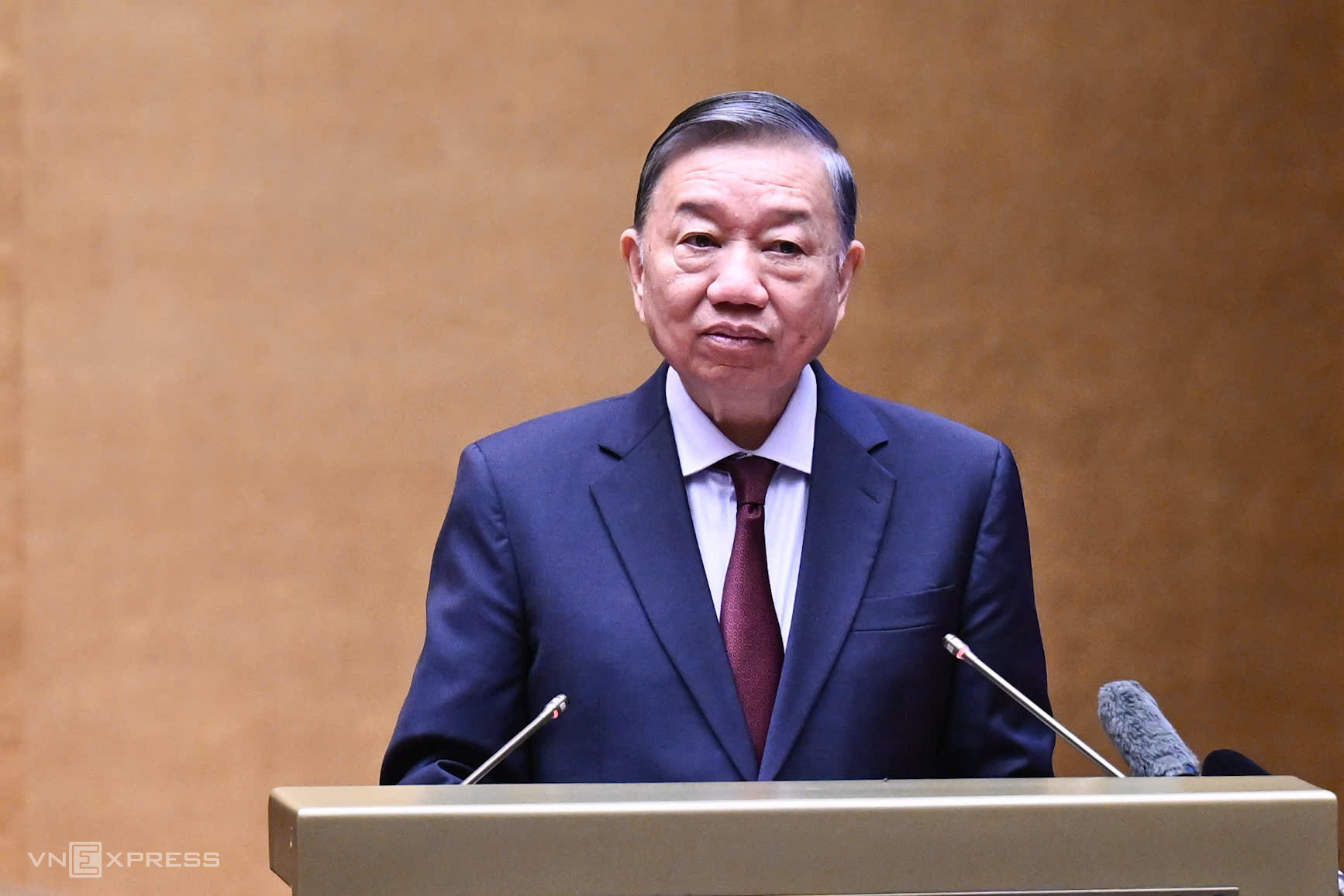 |
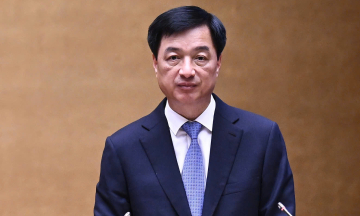
General Secretary and President To Lam speaks at the conference to grasp the Resolution of the 14th Party Central Committee's third plenum, on the morning of 29/7. Photo: Giang Huy |
General Secretary and President To Lam speaks at the conference to grasp the Resolution of the 14th Party Central Committee's third plenum, on the morning of 29/7. Photo: Giang Huy
In that spirit, I propose that the entire Party and political system focus on thoroughly grasping and effectively implementing five key issues:
First, we must unify understanding, firmly grasp the guiding ideology, new points, and the organic relationship between the Central Government's decisions and strategic shifts; understanding correctly is essential for unified action.
It is crucial to deeply understand that the Central Government's decisions form an interconnected system, aiming to comprehensively innovate leadership, governance, development, and national defense. Party building, organizational structure, and cadre development must enhance leadership capacity and operational quality. National development space and resources must be managed uniformly and used efficiently. The development model must rely on productivity, knowledge, technology, innovation, and people, closely adhering to Vietnam's reality. National defense, security, foreign affairs, and environment must proactively prevent, enhance resilience, adaptability, and firmly protect the nation. These tasks are an organic entity; any delay or weakness in one area affects the overall outcome.
In Party building, we must combine "construction" and "combating," strict discipline with encouragement for innovation. Implementing the Party Charter requires absolute adherence to its provisions and proper authority. New issues requiring piloting must have clear scope, duration, responsibilities, and be thoroughly evaluated. Regulations on what Party members are not allowed to do help identify and prevent violations, enabling cadres and Party members to self-reflect and self-correct; concurrently, they protect the spirit of daring to think, daring to act, and daring to take responsibility for the common good.
In managing development space and resources, we must overcome fragmentation by administrative boundaries, sectors, fields, and terms. Each locality and resource must be viewed within the overall context of regional linkages and national interests. Improving land laws must uphold the principle of public ownership, recognizing land as a special national resource and a space for survival and development. Land management and use must ensure the common interests of all people, contributing to improving people's lives and strengthening their trust in the Party and State. The State will not re-examine legal land use rights acquired under land policies and laws through various periods. The State guarantees improved housing and livelihoods for those whose land is reclaimed.
Developing the marine economy must be linked to protecting ecosystems, improving people's livelihoods, maintaining sovereignty, and national development. The marine economy is only one component of the goal to build a strong maritime nation. We must actively prepare conditions so that by 2045, Vietnam becomes a nation prosperous from the sea, sustainably developed from the sea, with modern marine governance and advanced marine technology.
Innovating the development model is not merely adjusting growth but transforming how development achievements are created, allocated, and enjoyed. It places people at the center as the subject, goal, and driving force. Science, technology, data, innovation, and high-quality human resources must become the primary drivers. Growth must originate from each sector, locality, enterprise, business household, and worker; allowing every entity more opportunities to contribute and benefit.
In national defense and sustainable development, the unified relationship between security and development must be thoroughly grasped. Development must create additional potential and resilience; ensuring security must maintain a stable environment for development. We must shift from focusing on responding to and overcoming consequences to proactively identifying, forecasting, preventing, and adapting. This ensures firm protection of the Party, State, people, regime, independence, sovereignty, and territorial integrity. Concurrently, it ensures human security, data security, energy security, water resources security, and critical infrastructure security. Environmental protection should not be sacrificed for immediate growth.
Second, we must urgently and synchronously concretize decisions into practical action programs and plans, with clear focus, priorities, and interconnected tasks.
A resolution must be accompanied by an action program. An action program must reflect the spirit, pace, and specific characteristics of each ministry, sector, locality, and grassroots unit to be effectively implemented. Each program must clearly state its objectives, tasks, lead agency, coordinating agencies, authority, resources, progress, deliverables, evaluation data, and responsible personnel. Implementation should not be overly bureaucratic; the quantity of plans or meetings should not substitute for results.
Immediately following this conference, Party committees, agencies, and localities must review their programs for implementing the Party's 14th National Congress Resolution, Party resolutions, and the documents of the third plenum of the Party Central Committee. Tasks with shared objectives, subjects, and areas must be integrated; overlapping content must be resolved; resources must be coordinated towards common goals. We must avoid situations where multiple entities work on the same task without a single agency ultimately responsible.
Work must be clearly categorized. Tasks with clear policies, sufficient basis, and conditions must be implemented immediately. Tasks requiring institutionalization must identify the responsible agency, deadline, and specific deliverables. New, difficult, or unprecedented tasks must clarify principles, authority, pilot scope, resources, and control mechanisms. We must not delay due to lack of precedent, nor act hastily or subjectively.
Institutionalization must be timely and synchronized, transforming Party policies into clear, feasible regulations. Agencies with authority must proactively resolve issues; those beyond their authority must be immediately reported, along with proposed solutions. We must not merely submit documents to higher levels and wait; we must not allow legal gaps or inconsistent guidance to slow down work or create additional procedures and costs for people and businesses.
Regarding the two-tier local government system, the Central Government is not proposing to rearrange or adjust administrative boundaries at the commune level, as the basic system is operating stably and effectively. Any province or city that deems it truly necessary to make adjustments, based on Party policies, State laws, planning, governance reality, and the legitimate aspirations of the people, should propose it to the competent authority for decision. Proposed administrative boundary adjustments must be scientific, cautious, feasible, and generate consensus. They must serve the local socio-economic development goals and better serve the people. We must resolutely eliminate the mindset of "convenient for officials, difficult for people." The Standing Committee and Executive Committee of the provincial and city Party committees must take responsibility for such proposals.
The progress of Resolution implementation must be designed within each task. In the last six months of 2026, the apparatus must operate smoothly, address urgent bottlenecks, and strive to achieve the highest socio-economic goals. During the 14th term, decisions must be largely institutionalized, decentralization and delegation of power completed, laying the foundation for a new development model. Towards 2030 and 2045, the nation's self-reliance, competitiveness, adaptability, and resilience must be enhanced.
Third, we must enhance implementation capacity, ensuring all necessary conditions for the political system to operate smoothly and interact effectively.
After one year of operating the overall organizational model of the political system and the two-tier local government, the apparatus is stable, smooth, and effective, but the quality is not uniform, especially at the grassroots level. The current goal is to continue enhancing leadership, governance, and public service capacity. We must further improve functions, authority, and implementation capacity. There must be a stronger and faster shift from management to service and creation; from decentralized processing to integrated data governance; from waiting for instructions to proactively resolving issues and taking responsibility.
Implementation must be under the unified leadership of the Party, promoting the proper functions and authority of each agency. The Politburo and Secretariat lead, direct, and inspect. The National Assembly and People's Councils at all levels institutionalize, decide, and supervise. The Government, ministries, sectors, and localities allocate resources and organize implementation. The Vietnam Fatherland Front and mass organizations propagate, mobilize, supervise, and conduct social criticism. We must ensure seamless connection between leadership, institutionalization, implementation, and supervision; avoiding encroachment on each other's functions.
The Central Government focuses on strategy, institutions, common platforms, major resources, and inspection. The provincial level concretizes policies, organizes development space, coordinates resources, and ensures conditions for commune-level operations to run smoothly. The commune level is the frontline of public governance, directly addressing all needs and tasks of people and businesses; it must have sufficient capacity to manage development. It must mature through organizing and implementing work.
The Central Government delegates power to localities. The provincial level decentralizes tasks that commune levels can handle. The commune level must strive to undertake assigned tasks, not pushing responsibilities upwards. When the commune level lacks implementation conditions, the provincial level must proactively resolve issues. If the work content exceeds its authority, it must report to the Central Government for consideration. Each task must have one main responsible entity, a clear coordination mechanism, shared data resources, and measurable results.
Decentralization and delegation of power must be synchronized with human resources, finance, data, technology, and power control. Data must be accurate, complete, clean, live, consistent, and shared according to authority; ending the requirement for people to re-provide information already held by the State. Information systems must serve operations, warnings, supervision, and accountability; not create additional procedures, software, or formalistic reports.
Fourth, we must continue to build a contingent of cadres with sufficient qualities, capabilities, and prestige, commensurate with their tasks; upholding exemplary responsibility and the decisive role of leaders.
Cadres are the decisive factor in the quality of implementation. A correct resolution and sufficient resources are ineffective if cadres lack capacity, responsibility, or the courage to act, leading to stagnation. Cadre evaluation must be democratic, public, impartial, and objective. It must be linked to job positions, deliverables, progress, effectiveness, prestige within the Party, and public trust. The results of resolution implementation must be the basis for evaluation.
Party committees and localities must assign cadres according to their capabilities and expertise, especially at the commune level and in positions directly implementing decisions. Training must be job-position specific. Weak, evasive, or shirking cadres must be promptly replaced or asked to resign. Honest, creative cadres who dare to take responsibility for the common good must be valued and protected. We must clearly distinguish between cadres who dare to innovate and those who exploit piloting, special policies, or cadre protection mechanisms for self-interest, legitimizing, or covering up wrongdoings.
Leaders must directly manage major and difficult tasks, and persistent bottlenecks. They must inspect progress, listen to grassroots units, businesses, and the people. They must make decisions within their authority and take full responsibility. They should not merely assign tasks and wait for reports; they should not claim achievements while shifting blame for delays. Leaders must be deeply connected to reality, understand their assigned areas and fields, and promptly identify and resolve problems.
Every cadre and Party member must strictly adhere to Party regulations and State laws. They must regularly self-reflect, self-correct, and set an example through concrete results. Strict discipline is not intended to make cadres fear responsibility, but to ensure everyone understands their limits, acts within their role and authority, and confidently innovates and contributes.
Fifth, we must establish strict implementation discipline; strengthen inspection, supervision, information dissemination, communication, and evaluation using data, deliverables, and actual results; making the people's interests and satisfaction the ultimate measure.
Inspection and supervision must be conducted from the beginning, throughout the implementation process, focusing on areas at risk of delays, prone to group interests, corruption, waste, negativity, and issues of public concern. Early monitoring, warnings, and timely resolution are crucial; we should not wait until tasks are delayed, resources wasted, or consequences arise before inspecting and addressing them.
We must clarify: to what extent have policies been institutionalized? how has the apparatus improved its operation? which bottlenecks have been removed? which resources have been unlocked? what benefits have people and businesses gained? A task is only complete when there is an operational product, verifiable data, and actual effectiveness. Results must be the basis for cadre evaluation; commending those who perform well, protecting those who dare to innovate; and strictly handling evasion, shirking, formalism, and profiteering.
We must regularly listen to the people, businesses, intellectuals, experts, and grassroots cadres; considering practical feedback as a channel for policy verification. When widespread problems arise, both implementation responsibility and policy shortcomings must be simultaneously examined. We should not attribute all limitations to the grassroots level, nor use policy to excuse weaknesses. Through inspection, difficulties must be resolved, methods adjusted, practices summarized, and institutions improved.
Information and communication work must be defined within each action program; ensuring timeliness, accuracy, clarity, and persuasiveness. It must clarify objectives, benefits, roadmap, and responsibilities for people to understand correctly, trust, and participate. We must proactively combat false and distorted information; concurrently listening to well-founded criticism. Social consensus is primarily built through correct policies, fair and transparent implementation, and tangible results that people can feel.
In all action programs, people must be placed at the center as the subject, goal, and driving force. Economic efficiency must be consistent with social efficiency; growth must go hand-in-hand with progress, equity, culture, environment, national defense, and security. Long-term benefits should not be traded for immediate achievements; vulnerable groups should not bear unreasonable costs. The value of resolutions must be reflected in the quality of life, development opportunities, safety, trust, and happiness of the people.
Comrades,
Today's conference opens an implementation phase with higher demands for responsibility, discipline, and effectiveness. The issues decided by the Central Government must immediately transform into specific programs, tasks, products, and results. Therefore, I propose that Party committees, Party organizations, agencies, localities, and leaders immediately commence work; correctly identifying priorities, clear points of contact, clear responsibilities, clear progress, and ensuring all conditions for implementation. Work results must be verified by actual changes, service effectiveness, and the satisfaction of the people.
Each level, each sector, each cadre, and Party member must transform understanding into action, and determination into deliverables. With the unified leadership of the Party, the synchronized action of the entire political system, and the people's consensus, we will certainly bring the documents of the third plenum of the Party Central Committee into life, contributing to the successful implementation of the Party's 14th National Congress Resolution.
Thank you very much.
General Secretary and President To Lam