On the afternoon of 28/7, the National Assembly Standing Committee provided feedback on the draft amended Land Law. A notable new provision involves the issuance of land use rights certificates and ownership of land-attached assets, commonly known as "so do".
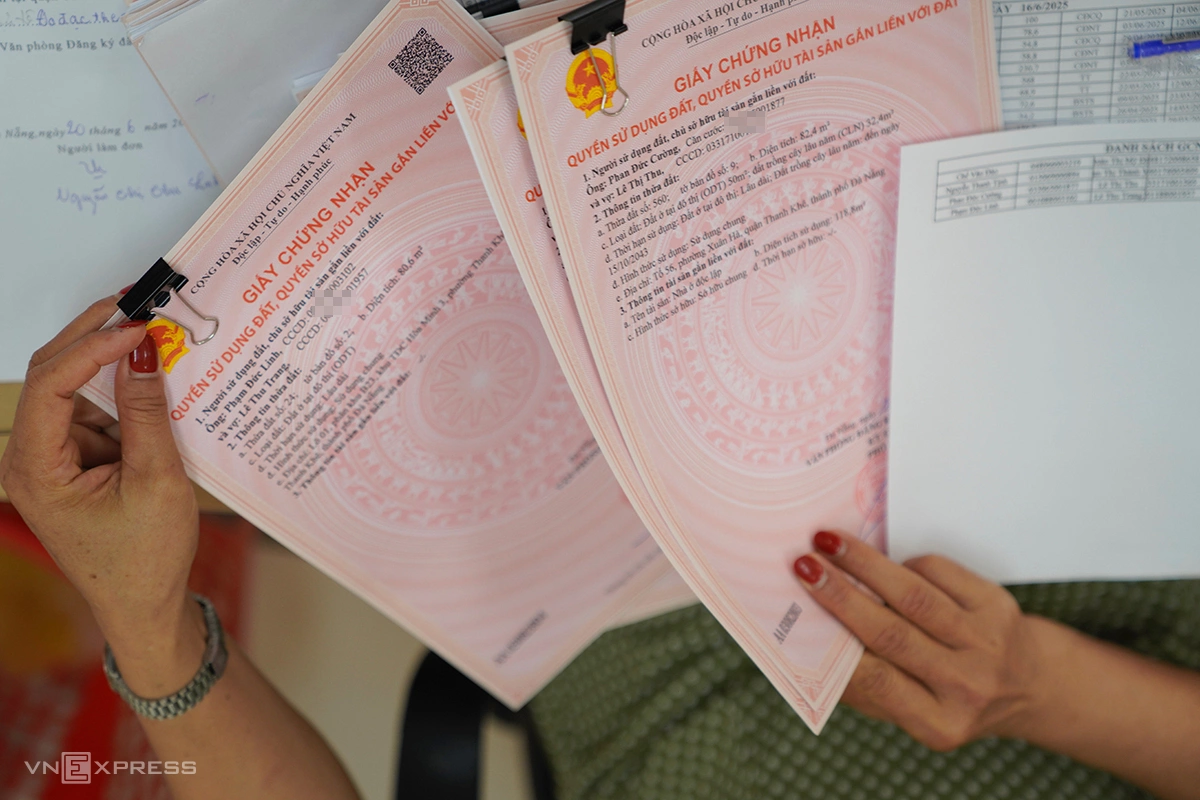
According to Article 63 of the draft, certificates will be issued nationwide using a unified template for individuals with land use rights and ownership of houses and construction works attached to land. Recipients will receive both a paper and an electronic version of the certificate.
The draft also stipulates that the electronic certificate will hold the same legal validity as its paper counterpart. The Ministry of Agriculture and Environment will be responsible for regulating the unified national certificate template. Currently, the Land Law only specifies the issuance of certificates based on a unified template, without provisions for an electronic format.
 |
Residents complete procedures for converting land use rights certificates at the Public Administration Service Center in Thanh Khe ward, Da Nang city. Photo: Nguyen Dong |
Residents complete procedures for converting land use rights certificates at the Public Administration Service Center in Thanh Khe ward, Da Nang city. Photo: Nguyen Dong
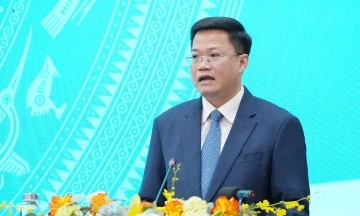
Presenting the report, Minister of Agriculture and Environment Trinh Viet Hung stated that the draft amended Land Law focuses on refining many major policies. These revisions aim to meet development requirements and align with the two-tier local government model.
Specifically, the government proposes innovations in land use planning and plans, moving towards integrated, digitized, and simplified planning systems. It also seeks to improve mechanisms for land allocation, land leasing, and land use purpose conversion, promoting greater transparency. Additionally, the draft clarifies cases for auctioning land use rights and bidding for land-involved projects.
The draft also includes mechanisms for exploiting surplus land from headquarters and facilities. It prioritizes land allocation for education, healthcare, social housing, rental housing, and other sectors deemed essential for development.
Regarding land recovery, compensation, support, and resettlement, the government proposes revisions to balance the interests among the State, citizens, and investors. The aim is to shorten site clearance times and introduce flexible mechanisms for key, urgent projects or situations with high public consensus.
For land finance and land prices, the draft law seeks to transition from an administrative management mindset to a development governance approach. The State will determine land prices based on comprehensive, public, and transparent data. Mechanisms will also be established to regulate differential land rent and prevent speculation and price manipulation.
Son Ha