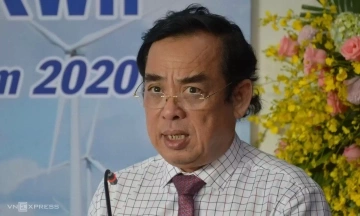
On the morning of 29/7, Nguyen Duy Ngoc, Head of the Central Organization Commission, presented a report on the Central Committee's Conclusion regarding the continued improvement and effective operation of the overall organizational model for the political system and two-tier local administration.
According to the report, special economic zones will be studied to create new development spaces. Nucleus administrative units at the commune level will be established to foster widespread development, aiming to make communes new operational centers at the grassroots level.
Localities are required to proactively review administrative units that do not fully meet standards or conditions, or have revealed inefficiencies during operation. If truly necessary, localities should develop adjustment plans and report them to competent authorities for consideration and decision.
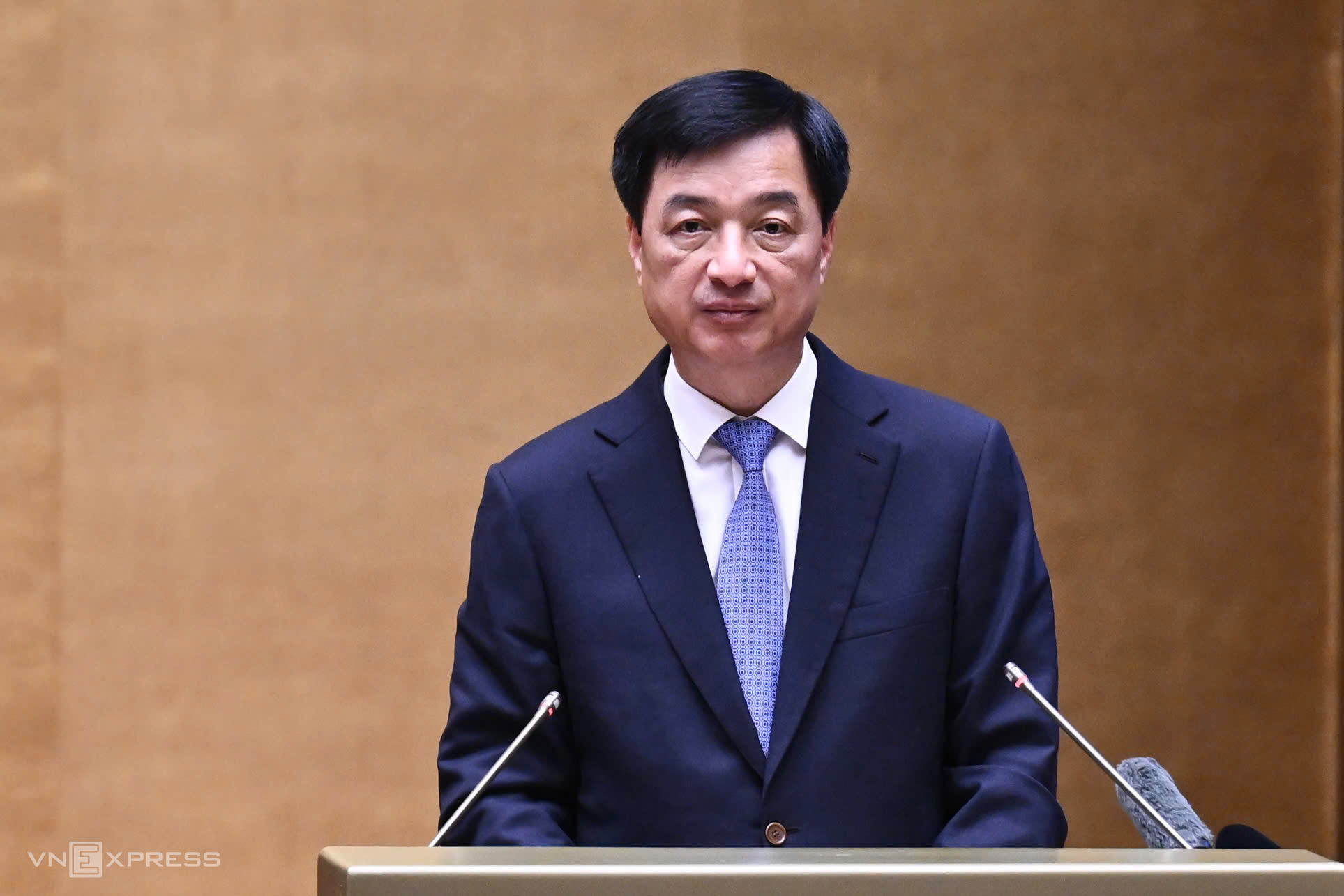 |
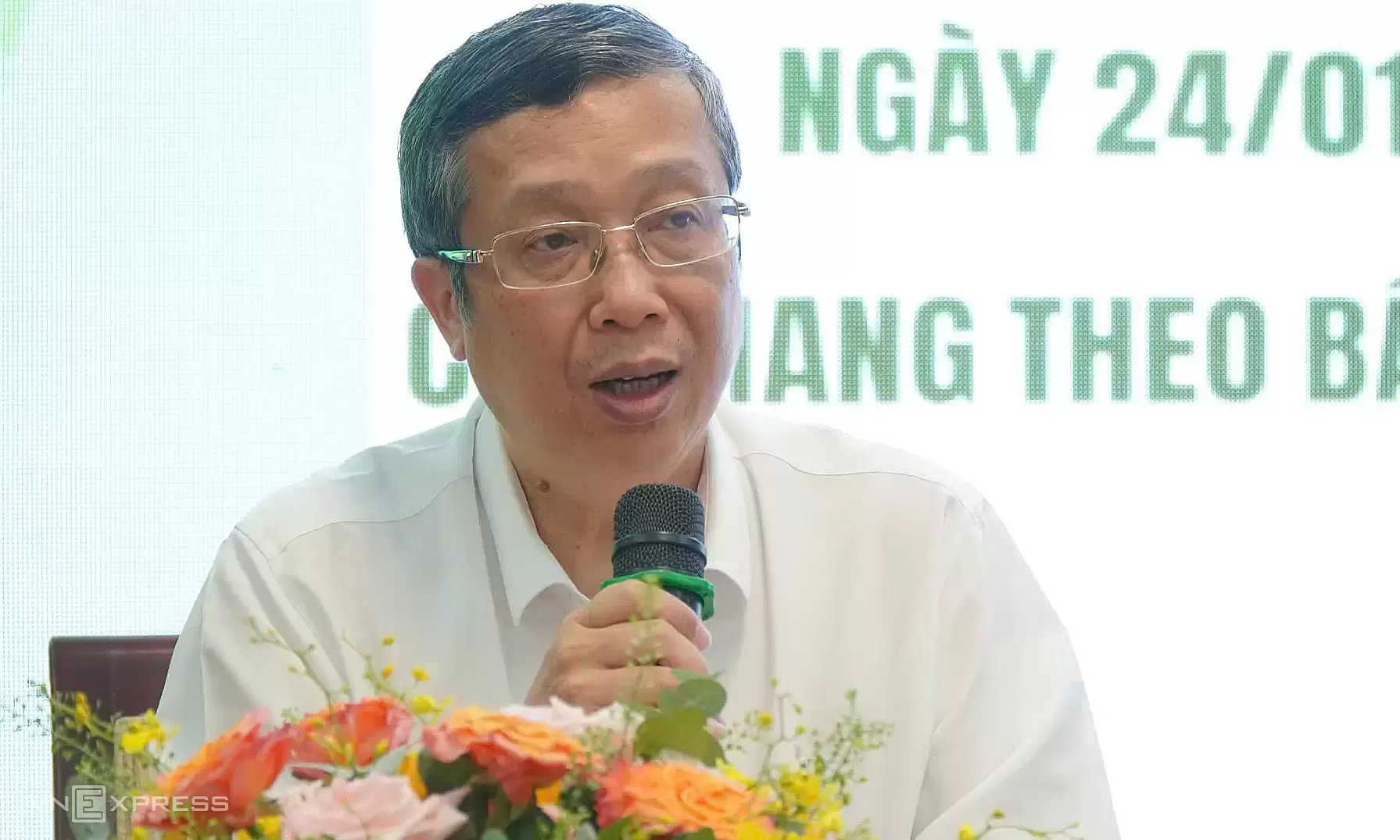
Nguyen Duy Ngoc, Head of the Central Organization Commission. Photo: Giang Huy |
Nguyen Duy Ngoc, Head of the Central Organization Commission. Photo: Giang Huy
After one year of implementing the new model, the Central Executive Committee affirmed that the policy of renovating and streamlining the organizational apparatus for effective and efficient operation is entirely correct and aligns with the nation's development requirements. However, results are only initial. The operational process still faces limitations and inadequacies in institutions, decentralization, delegation of power, resource allocation, cadre placement and quality, digital transformation, and implementation capacity, especially at the commune level.
The Central Committee recognized these issues as inevitable during model transformation, requiring continued review and rectification without altering the correctness of the apparatus streamlining policy. Moving forward, the internal apparatus will continue to be "fine-tuned," while shifting focus towards enhancing operational quality, governance capacity, development creation, and service effectiveness for the people.
Communes classified into 4 regions
According to the Head of the Central Organization Commission, staff allocation and specialized department arrangements must be flexible and practical. Based on the Central Committee's framework regulations, localities can proactively arrange them to suit their specific characteristics.
Within a locality, communes can be classified into 4 regions: urban, special urban, rural, and mountainous. Highly urbanized areas with large workloads may have a maximum of 6 specialized departments; rural, mountainous, and border areas may have 4 departments.
After accurately determining needs, localities must genuinely assess their workforce to recruit, train, foster, and assign the right people to the right jobs. The Central Committee also requires appropriate salary policies, allowances, housing, working conditions, and benefits to ensure commune-level cadres can commit to long-term service.
Relevant agencies must complete the system of standards, norms, and a set of criteria for measuring performance outcomes. They must identify the commune level as the frontline in national governance and serving the people. The network of public service units, especially in education, healthcare, culture, and basic public services, will continue to be streamlined. Staff reduction must be linked to improving the quality of public employees.
The Central Committee's Conclusion also calls for a substantive restructuring of administrative procedures based on shared data, shifting from digitizing old processes to redesigning new ones to reduce paperwork, time, costs, and unnecessary interactions. Artificial intelligence will be applied under controlled conditions in advisory, operational, and public service roles, prioritizing support for grassroots cadres in guiding procedures, aggregating and analyzing data, warning of risks, and receiving and processing feedback from citizens and businesses.
Surplus public land, buildings, offices, and assets after reorganization must be definitively and transparently handled to prevent waste and loss. Surplus land and facilities will be prioritized for healthcare, education, culture, sports, community activities, social welfare, and public administration.
The handover, management, and digitization of records after reorganization must ensure no loss or damage, safeguarding the rights of citizens and businesses. The Central Committee also requires a mechanism for budget allocation and an increased proportion of retained revenue to ensure communes have sufficient resources for operation and socioeconomic development.
The Head of the Central Organization Commission emphasized the principle of "authority granted to where accountability and control mechanisms extend." Leaders of Party committees, administrations, agencies, and units must bear comprehensive responsibility for the operational effectiveness of the apparatus under their management. Performance results in tasks, socioeconomic development, administrative reform, digital transformation, and public service are important bases for evaluating, assigning, appointing, transferring, commending, or disciplining cadres.
The Central Committee also requires transferring advisory tasks on mass mobilization from the Central Propaganda and Mass Mobilization Commission to the Party Committees of the Vietnam Fatherland Front and Central-level mass organizations, and implementing this synchronously at the provincial level. Feedback from citizens and businesses must become an important data channel for evaluating the operational effectiveness of the new apparatus.
Regarding leadership methods, the Party exercises comprehensive, direct leadership but does not monopolize, replace, or administratively interfere with the authority of state agencies, the Vietnam Fatherland Front, and political-social organizations. Leadership and direction mechanisms are being refined to ensure seamless communication from the Central Committee to the grassroots, embodying the motto "Central Committee creates, province coordinates, commune executes," overcoming passivity, over-reliance, and the shifting of responsibility to higher levels.
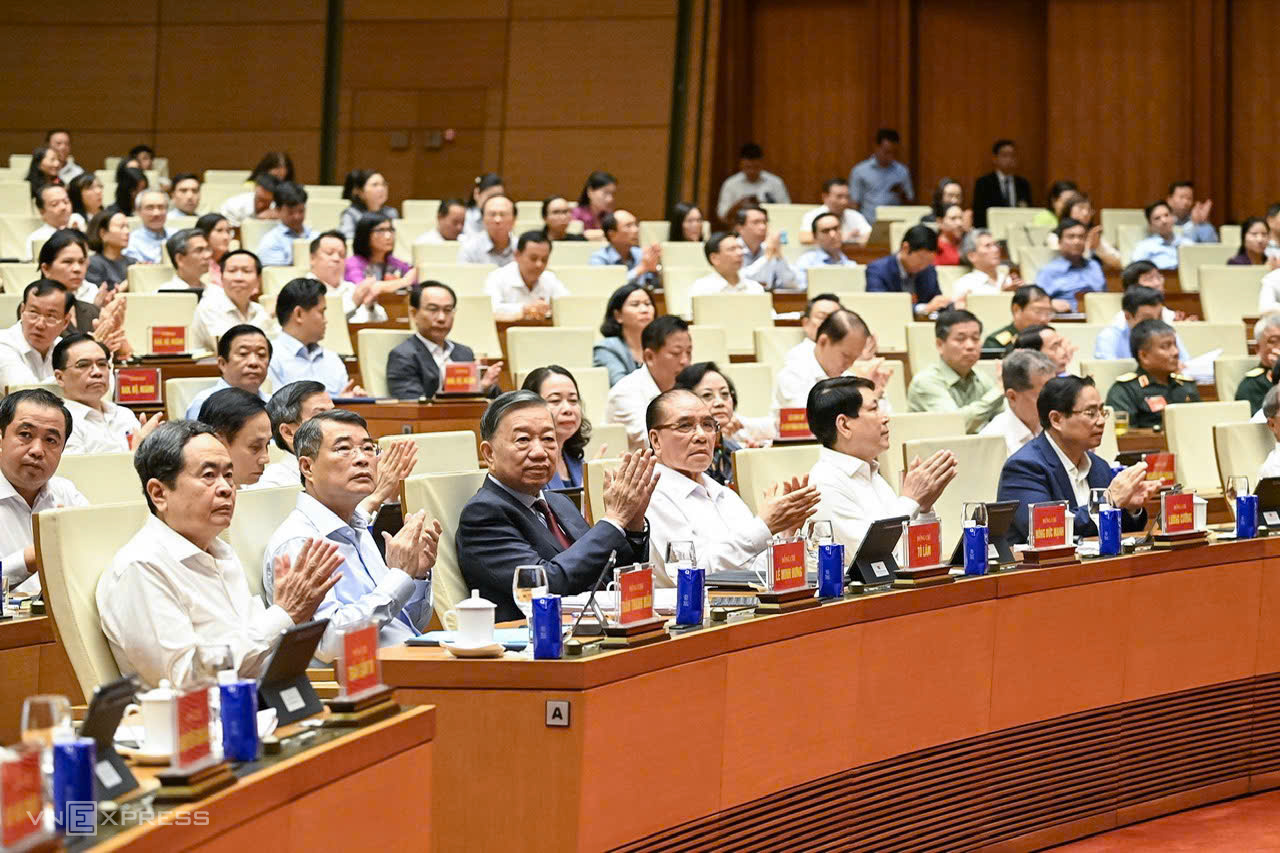 |
From left: National Assembly Chairman Tran Thanh Man; Prime Minister Le Minh Hung; General Secretary and President To Lam; former General Secretary Nong Duc Manh; former President Luong Cuong; and former Prime Minister Pham Minh Chinh. Photo: Giang Huy |
From left: National Assembly Chairman Tran Thanh Man; Prime Minister Le Minh Hung; General Secretary and President To Lam; former General Secretary Nong Duc Manh; former President Luong Cuong; and former Prime Minister Pham Minh Chinh. Photo: Giang Huy
Amending Party Charter implementation regulations
Presenting the content on the Party Charter implementation regulations, Nguyen Duy Ngoc stated that the amendment and supplementation of the Regulations aim to ensure consistency with the organizational model of the political system after reorganization.
One of the key new points is unifying the Party organizational system into three levels: Central, provincial, and grassroots, corresponding to the state administrative system. Party organizations with specific characteristics will have their internal structures adjusted according to the Politburo and Secretariat's regulations.
The new Regulations pilot renaming some types of grassroots Party organizations. Accordingly, "the direct superior Party committee of a grassroots Party organization" is renamed "grassroots Party committee"; "grassroots Party committee" and other types granted, piloted, or delegated powers are renamed "subordinate grassroots Party committees." The names "grassroots Party cell" and "subordinate Party cell" are no longer distinguished but unified as "Party cell." A grassroots Party organization is defined as comprising a subordinate grassroots Party committee and a Party cell.
The Central Committee also agreed to pilot the establishment of Party committees for provincial and city People's Councils, and Party committees for the Vietnam Fatherland Front and provincial and city mass organizations, directly under the provincial-level Party committees. Party organizations in communes, wards, and special zones are grassroots Party committees directly under the provincial-level Party committees. In areas with specific characteristics or a large number of Party members, subordinate grassroots Party committees may be established to address emerging issues, but without altering the Party's organizational system, increasing unnecessary administrative units, or personnel.
The establishment of specialized or concurrent advisory and assisting bodies for grassroots Party committees and subordinate grassroots Party committees is decided by provincial-level Party committees according to the Politburo and Secretariat's regulations, following the motto "locality decides, locality acts, locality takes responsibility."
Son Ha