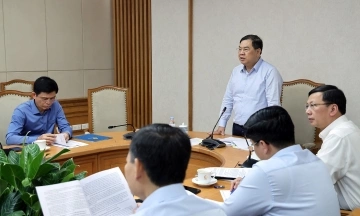
At the national workshop "Special Urban Law - Institutional Breakthrough for TP HCM," organized by the Standing Committee of the TP HCM People's Council in coordination with TP HCM University of Law on the morning of 8/5, Doctor Nguyen Thi Thien Tri stated that the law needs to clearly define areas under central authority, while granting proactive power to the city for the rest.
"TP HCM should not have to ask for more mechanisms. What does not fall under core areas such as macroeconomic fiscal policy, national defense, security, foreign affairs, or national strategic issues should be left for the locality to decide," Ms. Tri said.
According to her, the law needs to combine top-down and bottom-up decentralization models. The central government would retain power in critical areas, while TP HCM would have autonomy in urban governance, socioeconomic development, and addressing specific local issues.
Notably, she proposed applying direct decentralization from the National Assembly, instead of through various levels of delegation from the Government or ministries, to thoroughly remove institutional barriers.
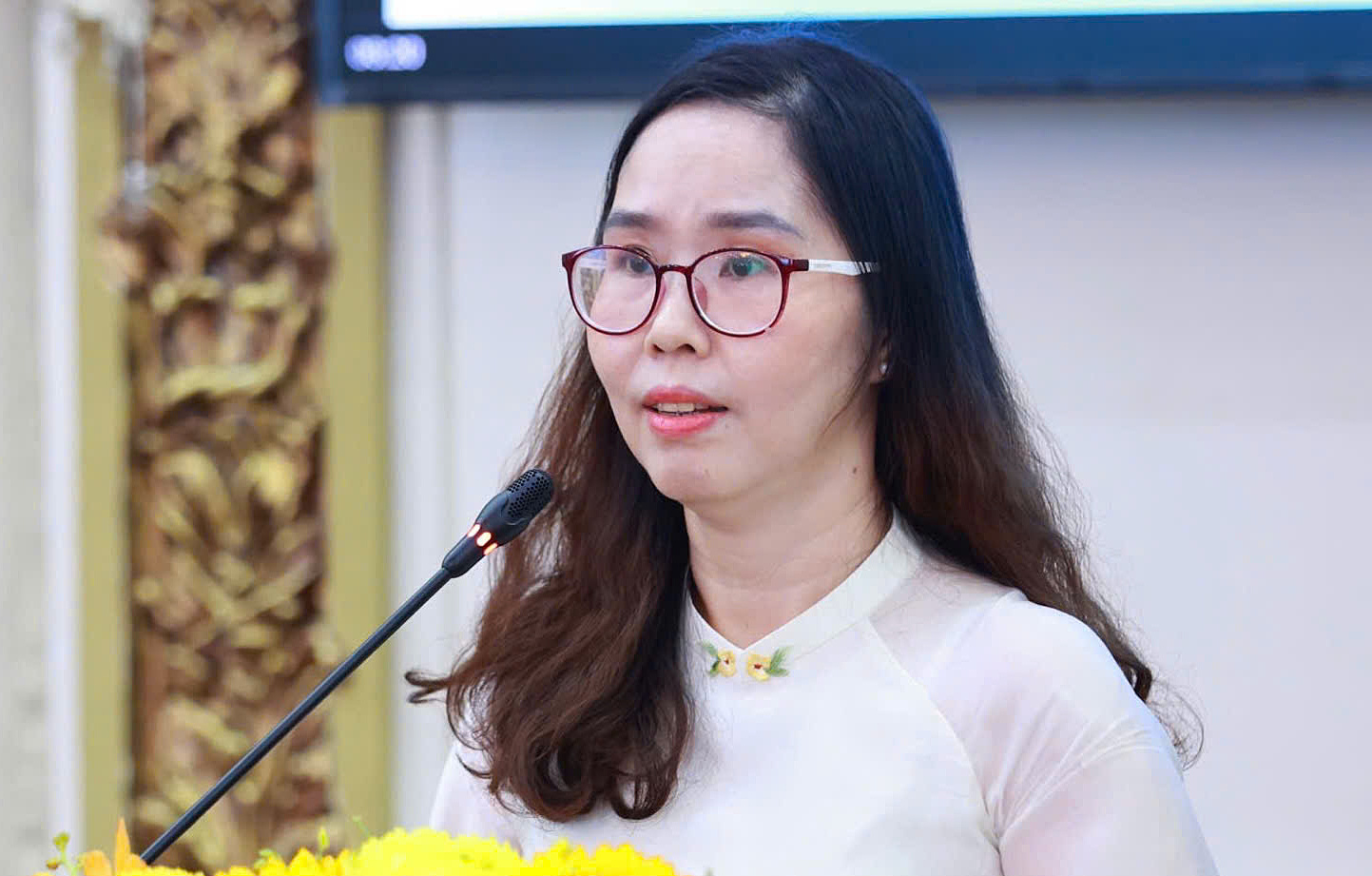 |
Doctor Nguyen Thi Thien Tri, TP HCM University of Law, speaking at the workshop on the morning of 8/5. Photo: An Phuong |
The draft law is also oriented to shift from an approach of "listing what localities can do" to clearly defining the central government's tasks, granting remaining powers to the urban administration. This approach is expected to help TP HCM be more flexible in resolving practical issues.
Many delegates proposed that the TP HCM People's Council should be empowered to issue "local laws," not only to concretize existing laws but also to allow pioneering solutions for newly arising issues.
Mr. Le Minh Duc, Deputy Head of the Legal Affairs Committee of the TP HCM People's Council, stated that the city currently lacks sufficient autonomy in organizational structure, personnel, and staffing, despite operating at a megacity scale.
The Legal Affairs Committee proposed 6 key decentralization groups, including: organizational structure; talent policies; finance and investment; planning and land; science and technology; and legislative power.
Accordingly, TP HCM needs to be proactive in adjusting planning, land use, implementing PPP models in new sectors, developing specific compensation and resettlement mechanisms, and experimenting with new technologies and business models.
From a business perspective, Mr. Dinh Hong Ky, Chairman of the TP HCM Construction and Building Materials Association (SACA), stated that the biggest bottleneck currently is not a lack of capital or initiatives, but a lack of mechanisms for quick decisions with clear accountability. "Many businesses just need to know who decides, how long it takes, and who is responsible," he said.
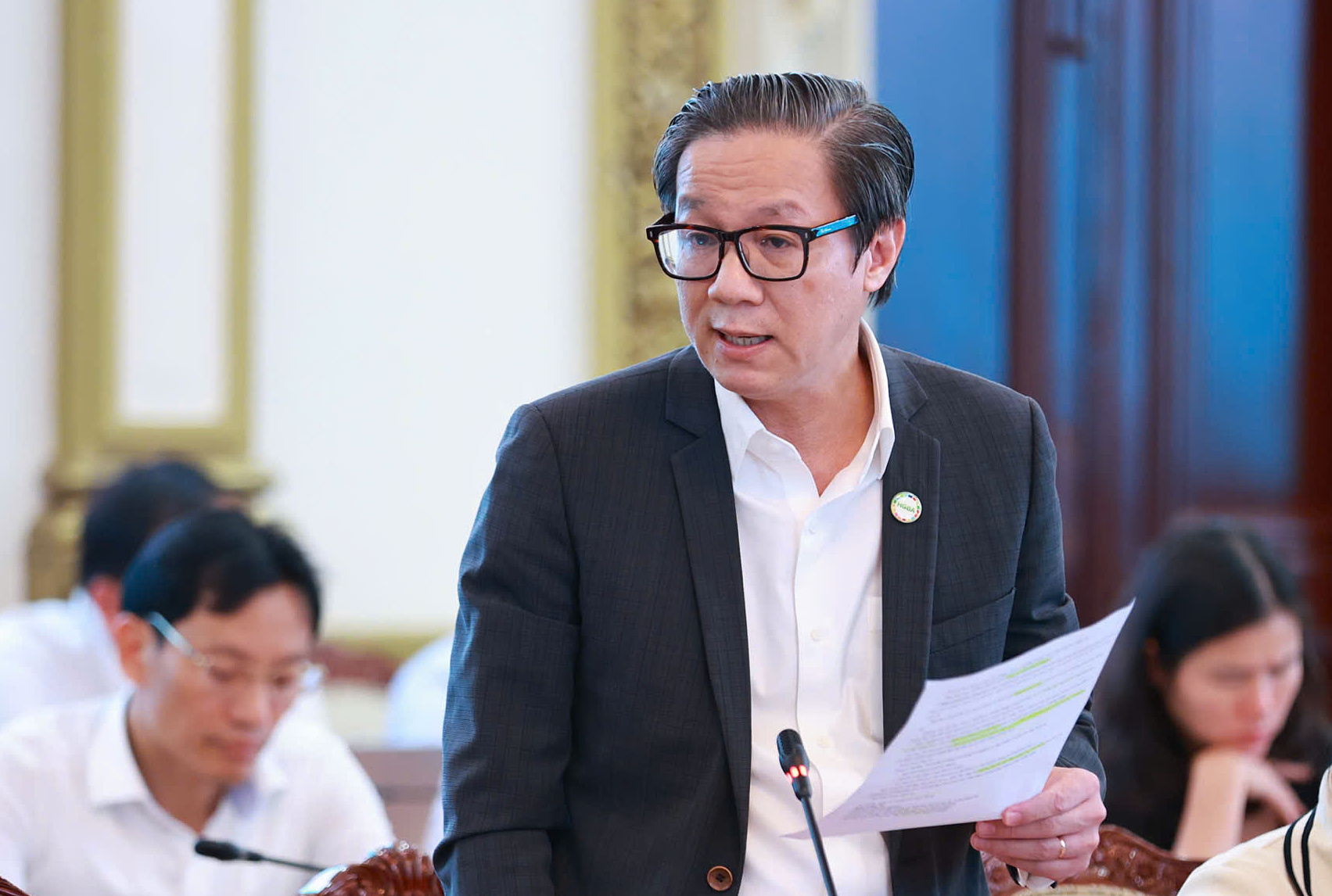 |
Mr. Dinh Hong Ky speaking at the workshop on the morning of 8/5. Photo: An Phuong |
He proposed that the law needs to design a "safe testing zone," protecting officials when implementing procedures correctly, transparently, and not for personal gain; and strongly shift from a procedural management model to governance by data and efficiency.
According to Deputy Minister of Justice Nguyen Thanh Tu, the central government has identified 6 core issues for the Special Urban Law, including: breakthroughs in governance institutions; concretizing strategic resolutions; innovating planning, mobilizing infrastructure resources; increasing regional linkages; and addressing urban bottlenecks such as traffic, flooding, and pollution.
However, he emphasized that the law must ensure constitutional limits, not overlapping with areas under the exclusive authority of the central government. "Granting substantial power to TP HCM is the focus, but it must be accompanied by mechanisms for post-auditing, strict supervision, and accountability," he said.
Previously, the Politburo agreed in principle for TP HCM to develop a Special Urban Law, similar to the Capital Law. The draft law is expected to be submitted to the 16th National Assembly for consideration in late 2026.
TP HCM has identified ba core principles when developing the law: granting comprehensive autonomy; legalizing practical issues that lack a legal framework; and institutionalizing specific mechanisms into stable, long-term legal regulations.
Le Tuyet