On the morning of august 24, the National Assembly passed a resolution on specific mechanisms and policies for handling legal violations related to state economy, private economy, application of science and technology, innovation, and digital transformation.
The resolution stipulates that prosecuting agencies will not criminally prosecute organizations or individuals who meet all five conditions. These are: no corruption; acting for the common good, not for personal or group interests, or with self-serving motives. Investment, production, business, application of science and technology, innovation, or digital transformation activities must be completed and bring socio-economic efficiency to the locality and the country.
Additionally, there must be no complaints or denunciations, or any existing complaints or denunciations must have been definitively resolved as per regulations; no loss or waste of assets; if there is loss or waste, the organization or individual must fully compensate for the damage.
Acting for the common good means acting for the national, ethnic, community, sector, field, or local interest; aiming to develop socio-economy, ensure national defense and security, not for personal or group interests. Socio-economic efficiency is demonstrated through promoting growth, attracting investment, creating jobs, improving infrastructure, enhancing quality of life, and ensuring social welfare.
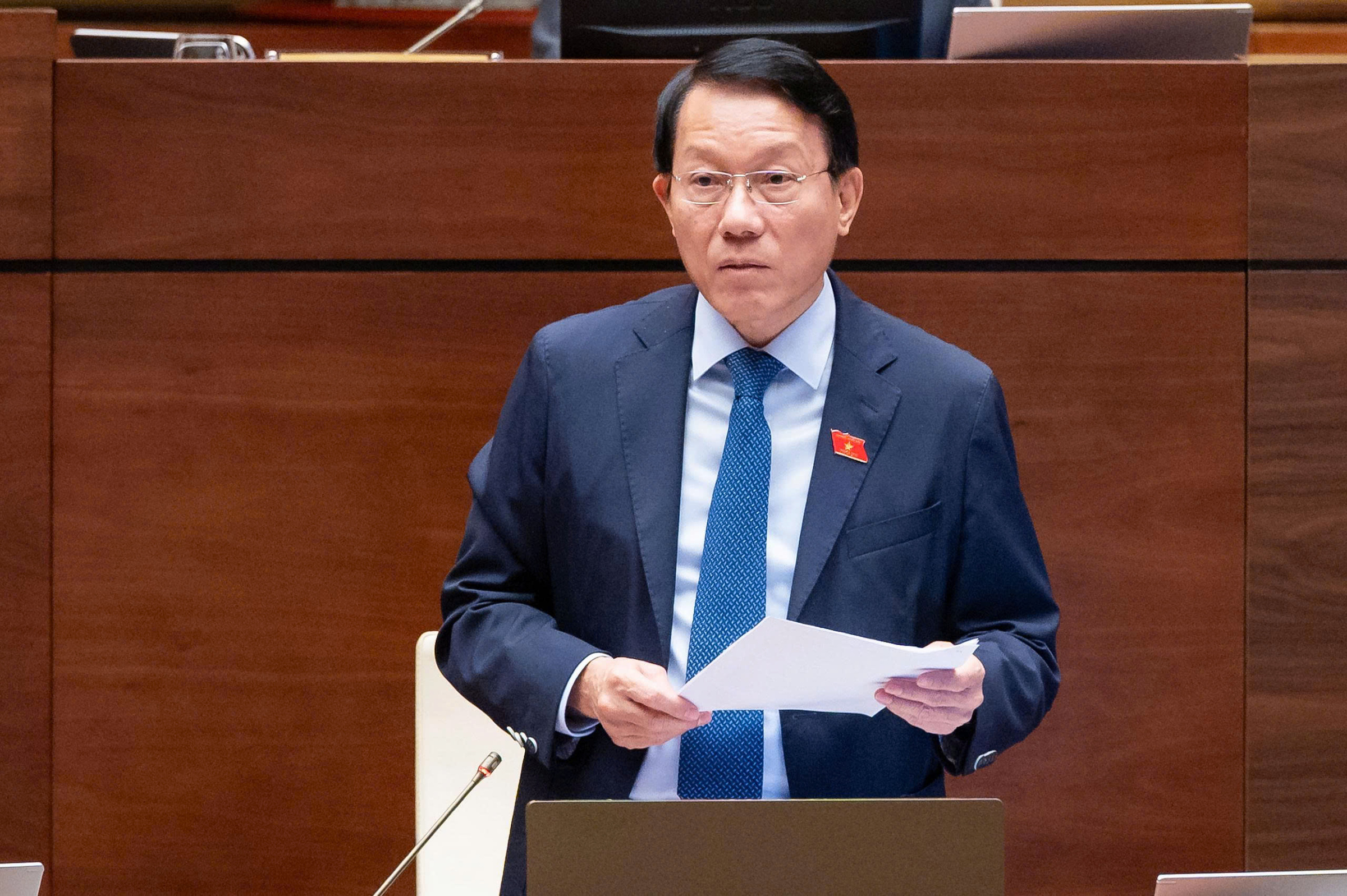 |
Police Minister Luong Tam Quang explained some contents before the National Assembly voted to pass the resolution. Photo: National Assembly E-portal
Cases considered not criminal offenses
Individuals who cause damage due to risks in applying science and technology, innovation, or digital transformation are exempt from criminal liability if they have strictly followed procedures, regulations, and fully applied preventive measures.
This policy also applies to individuals performing duties in cases where the law has no provisions or where existing provisions are contradictory, overlapping, or do not meet practical requirements.
The implementers must act out of urgent necessity, employing breakthrough methods to resolve difficulties and bottlenecks. To be exempt from criminal liability, they must not be corrupt, act for the common good, and their activities must be completed, bringing socio-economic efficiency, ensuring national defense and security, or developing science and technology.
According to the government's explanation, cases exempt from criminal liability are not considered crimes. This differs from not prosecuting or exempting from criminal liability individuals whose violations meet the resolution's conditions.
Two-year postponement to remedy consequences
If investment, production, business, or science and technology application activities are ongoing and not yet completed, prosecuting agencies may consider temporarily postponing criminal prosecution. This policy applies when the violation is for the common good, causes loss or waste of state assets, but does not involve corruption.
Related activities must not have fully remedied the damage due to objective reasons, but there must still be conditions, capability, and a feasible plan to remedy the damage and bring socio-economic efficiency. The involved organizations and individuals must commit to remedying the consequences.
Depending on the processing stage, the investigating agency, procuracy, or court may temporarily suspend the resolution of a report, temporarily suspend an investigation, or temporarily suspend a case. The maximum period is two years. During this time, prosecuting agencies will coordinate with management agencies to inspect and supervise the implementation of commitments and the progress of damage remedy.
If the violator fails to remedy or does not implement the committed plan without justifiable reason, the temporary suspension decision will be revoked to continue criminal prosecution. After the temporary suspension period, if all damages have been remedied, the competent authority will not initiate prosecution or will suspend the investigation or the case.
If the damage has not been fully remedied, the case will continue to be resolved according to regulations. The proportion of remedied damage and socio-economic efficiency will serve as grounds for considering a reduction in criminal liability.
The resolution also allows for considering disciplinary exemption for officials, public servants, civil servants, and members of the armed forces who meet the conditions for non-prosecution or exemption from criminal liability. If consequences still need to be remedied, disciplinary consideration may be postponed for a maximum of two years. If all damages are remedied, the violator will be considered for disciplinary exemption; if only partial damage is remedied, this result will be a basis for reducing the disciplinary level.
The resolution takes effect from 1/9/2026 and will be implemented for three years.
Son Ha