Following a government meeting on 5/10, the Ministry of Home Affairs will finalize a model for exemplary core commune-level administrative units, capable of leading and spreading development for wider replication. The ministry is also tasked with evaluating applications for establishing urban commune-level administrative units from eligible localities, submitting them to the government for reporting to the National Assembly Standing Committee this month.
General Secretary and President To Lam first proposed the initiative to develop special urban administrative units with a core nature in 6/2026, aiming to enhance development coordination, connect infrastructure, public services, and key economic zones.
In late 7/2026, during a national conference implementing Resolution of the 3rd Plenum of the 14th Central Committee, Nguyen Duy Ngoc, Head of the Central Organization Commission, stated that the Central Committee is guiding the formation of core communes capable of leading and spreading development within their regions.
During a meeting with the Ministry of Home Affairs in mid-9/2026, Deputy Prime Minister Pham Thi Thanh Tra clarified that core communes and wards are not a new type of administrative unit but are selected from existing ones. Other localities meeting the criteria may also be chosen in the future.
According to the Deputy Prime Minister, core communes and wards must possess superior socio-economic foundations, infrastructure, public services, and governance capabilities. These localities will receive decentralization, empowerment, and commensurate resources to become centers for governance, development, and service provision for surrounding areas.
Beyond their inherent development capacity, selected communes and wards must also demonstrate the ability to link with and support neighboring localities, fostering overall development. The selection process is not limited to former urban administrative centers but is based on potential, governance capabilities, and actual widespread impact.
 |
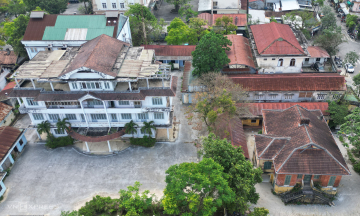
Headquarters of Cau Giay Ward People's Committee, Hanoi, 7/2026. Photo: Hoang Giang |
Alongside the core commune and ward project, the government has assigned the Ministry of Home Affairs to finalize the organizational framework for state administrative agencies and units from central to provincial and commune levels, along with a staffing allocation project for the 2027-2031 period.
Developing commune-level economic indicators
To assess socio-economic development outcomes at the grassroots level, the government has tasked the Ministry of Finance, in coordination with localities, to develop two indicators: gross regional domestic product (GRDP) at the commune level and per capita income, to be completed by 10/2026.
According to the Ministry of Finance's guidelines, commune-level GRDP reflects the total value of material products and services generated by production and business establishments across all economic sectors within a locality over a specific period, typically one year.
Per capita income is calculated by dividing the total income of households in the area by the total population of the commune in the reporting year.
Previously, GRDP was calculated at the provincial level, and per capita income was statistically measured over a broader scope. Developing these two indicators at the commune level aims to provide a basis for evaluating the development results of each locality, aligning with the two-tier government model and the requirement to assign growth targets to the grassroots.
Following administrative unit reorganization in mid-2025, the country will have 34 provinces and cities, along with 3,321 communes, wards, and special zones.
Vu Tuan