According to information from the central health protection council for officials, Doan Duy Thanh passed away due to old age and declining health at Military Central Hospital 108.
For his many achievements in the revolutionary cause, Thanh was awarded the first-class independence order and the 80-year party membership badge.
To express condolences and acknowledge Doan Duy Thanh's contributions, the Party Central Committee, National Assembly, President, Government, and Vietnam Fatherland Front Central Committee decided to hold a state funeral for him.
The memorial service for Doan Duy Thanh, former vice chairman of the council of ministers (now deputy prime minister), will be held from 7 h to 9 h on 12/2, at the National Funeral Home (5 Tran Thanh Tong Street, Hanoi). He will be laid to rest at the cemetery in his hometown, Tuong Vu village, Lai Khe commune, TP Hai Phong.
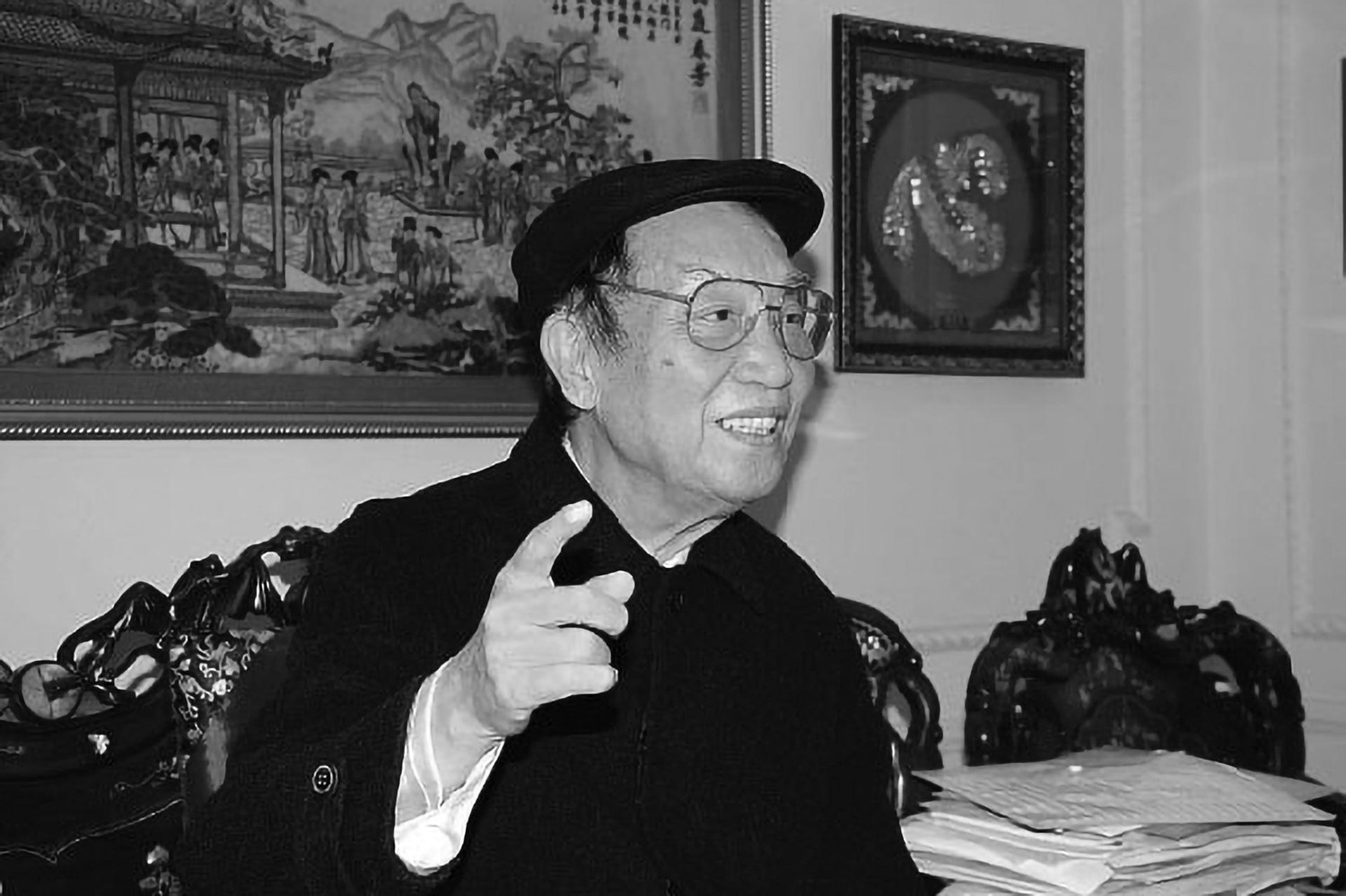 |
Former vice chairman of the council of ministers Doan Duy Thanh. *Archival photo* |
Doan Duy Thanh, whose birth name was Doan Huu Tong (with aliases Thanh Duy, Thanh Linh, Thanh Tong), was born in 1929 in Hai Duong (now Hai Phong). He was a member of the Party Central Committee for the V and VI terms, and a National Assembly delegate for the VII and VIII terms. He held various positions, including secretary of the City Party Committee and chairman of the People's Committee of TP Hai Phong; minister of foreign trade; minister of external economic relations (now the Ministry of Industry and Trade); director of the Central Institute for Economic Management; president of the Vietnam Chamber of Commerce and Industry (now the Vietnam Federation of Commerce and Industry); and vice chairman of the council of ministers (now the Government).
Joining the revolution in 1945, Thanh served as secretary of the Tuong Vu commune national salvation youth union, a Viet Minh cadre in Kim Thanh district, and secretary of the Ngo Quyen district party committee. He was arrested and imprisoned in Con Dao.
After his release, he held many positions in Hai Phong, primarily in industry and trade, before becoming chairman and secretary of Hai Phong.
In 1986, Thanh became minister of foreign trade, and a year later, he was appointed vice chairman of the council of ministers, concurrently serving as minister of foreign trade. This period marked Vietnam's transition from a centrally planned, subsidized economy to the Doi Moi (renovation) era with a multi-sector economy.
In these roles, Doan Duy Thanh initiated policies to expand economic development and improve local livelihoods. These included reclaiming land, building the Dinh Vu dike, establishing new residential areas, and launching the "rural tiling" movement (replacing thatched roofs with tiles). He was also a pioneer in "breaking barriers" by assigning land quotas to farmers.
He introduced many key decisions, such as importing gold to help curb inflation, gradually dismantling the foreign trade monopoly mechanism, and expanding autonomy for businesses in import and export.
During this period, he also promoted many economic reform policies, removing barriers of the subsidy mechanism and encouraging the development of various economic sectors. These contributions laid the foundation for a more open business environment during the Doi Moi period.
After leaving government positions, Thanh served as director of the Central Institute for Economic Management and then as president of the Vietnam Chamber of Commerce and Industry (VCCI).
As VCCI president, at a time when Vietnam's business community was nascent, lacked cohesion, and a representative voice, Thanh focused on expanding support activities for businesses. These included: trade promotion, fostering cooperation, and advocating for policies to improve the business environment. VCCI also promoted international cooperation to provide Vietnamese businesses with more market access and integration opportunities. In 2003, he retired.
Nguyen Phong