The Prime Minister's directive issued on 6/5 outlines a goal for all citizens to receive their first free periodic health check-up or screening by the end of 2026, along with the establishment of an electronic health record.
To implement this policy, the Prime Minister tasked the Ministry of Health with guiding local units in organizing free periodic health check-ups and screenings for citizens, ensuring effectiveness and meeting objectives. The Ministry will also provide guidance to hospitals on establishing and managing electronic health records, ensuring data linkage and integration with the VNeID application. Strengthening the capacity of grassroots and preventive healthcare systems is essential, which includes securing human resources, medical equipment, medicines, and chemicals. Furthermore, the Ministry will organize training, workshops, and technology transfer for staff involved in these examinations.
The Ministry of Public Security will utilize the National Population Database and the electronic identification and authentication system to facilitate the creation and updating of electronic health record information on VNeID. This system will also verify the identities of individuals participating in the free periodic health check-ups or screenings.
The Prime Minister has instructed the Ministry of Education and Training to guide schools in providing free periodic health check-ups for all students at the beginning of the 2026-2027 academic year.
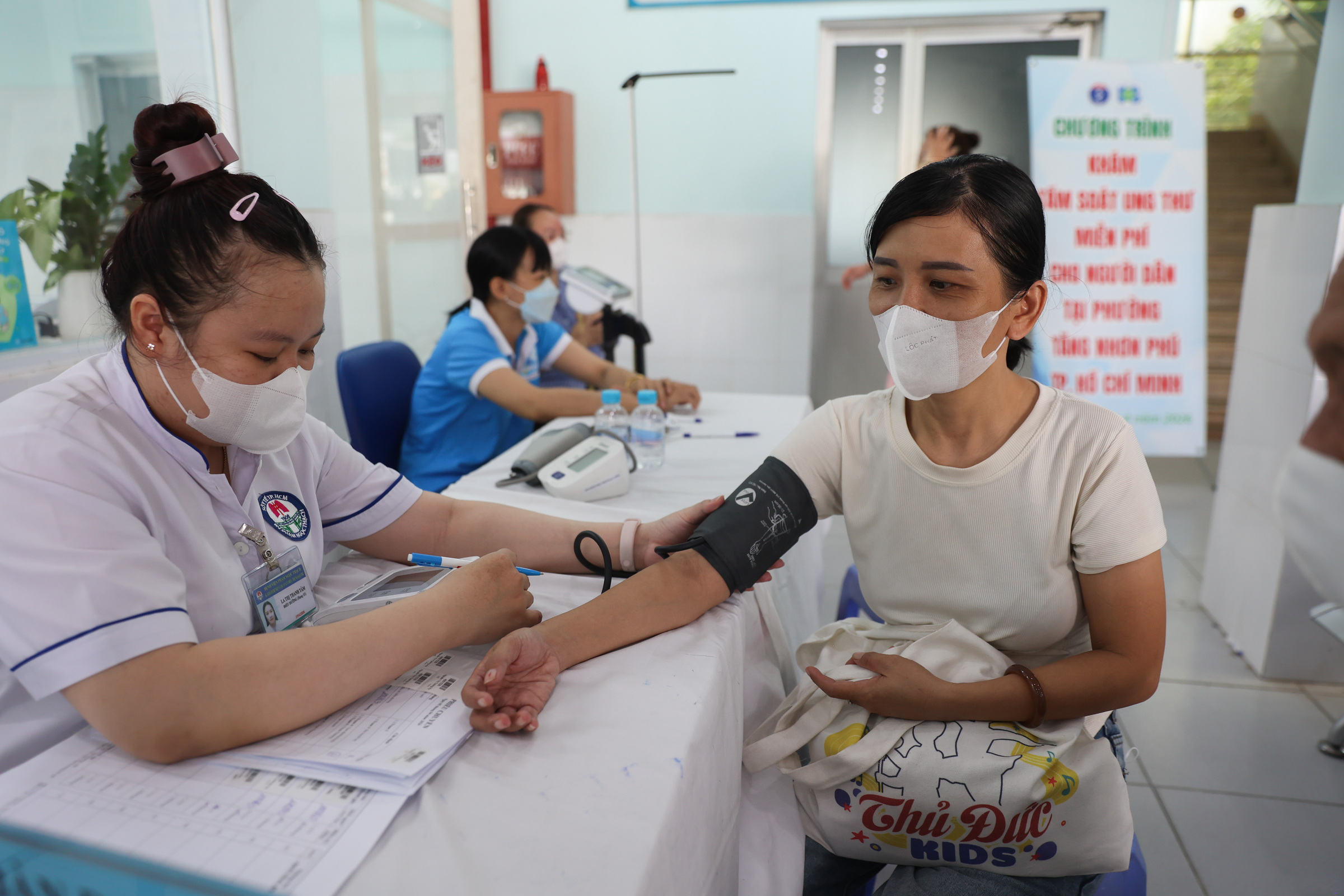 |
Residents receiving medical examinations at Tang Nhon Phu ward health station, 4/2026. Photo: Quynh Tran |
The head of the government urged provincial and city leaders to enhance public awareness campaigns, encouraging residents to participate in free periodic health check-ups and screenings. The aim is to facilitate early detection of diseases and disabilities, fostering proactive health habits among the population.
Localities will organize examinations for residents in groups, prioritizing vulnerable populations. These include: veterans, the elderly, people with disabilities, poor and near-poor households, individuals with chronic diseases, ethnic minority communities, those in mountainous areas, and residents in areas facing extremely difficult socio-economic conditions, border regions, and islands.
For residents in remote, distant, difficult, border, and island areas, local health stations will organize mobile examinations to ensure access.
The Vietnam General Confederation of Labor will enhance its oversight of health check-ups and occupational disease screenings for workers in industrial parks and export processing zones. It will also take strict action against businesses that violate workers' rights.
The Politburo's Resolution 72, issued in 9/2025, outlines a target for all citizens to receive free periodic health check-ups or screenings at least once a year starting from 2026. This initiative includes establishing an electronic health record for lifelong health management, aiming to gradually reduce the burden of medical costs.
By 2030, the plan is for citizens to be exempt from basic hospital fees, aligning with health insurance benefits and a predefined roadmap. This includes achieving universal health insurance coverage and developing diverse health insurance options.
Vu Tuan