Speaking at a meeting with ethnic minority National Assembly delegates on the afternoon of 20/4, General Secretary and President To Lam affirmed that great national unity is a strategic guideline and the source of strength determining all victories. He noted that ethnic minority delegates have directly translated policies into action and overseen their implementation. Over 15 terms, this group has increasingly participated in legislation, oversight, and decision-making on important issues.
Despite ongoing improvements in ethnic policies and gradual betterment of living standards, the General Secretary and President acknowledged that ethnic minority and mountainous regions remain the most challenging areas nationwide. He highlighted significant development gaps, unsustainable livelihoods, and limited access to services. Infrastructure in many places is inadequate, transportation is difficult, and schools and healthcare facilities are insufficient. He added that after each rainy season and flood, people's lives are disrupted, and education is affected.
He pointed out that these limitations directly relate to fairness, development quality, and public trust. The gap between policy and reality remains significant. The underlying reason, he stated, is an approach still heavily focused on aid rather than creating conditions for development. "The biggest current bottleneck is not in direction, but in the quality of institutions and the effectiveness of implementation," the General Secretary and President emphasized.
Consequently, he urged a strong shift from "issuing" to "effective implementation". He challenged each delegate to clearly answer whether "decisions have truly reached the people, and whether people's lives have genuinely improved".
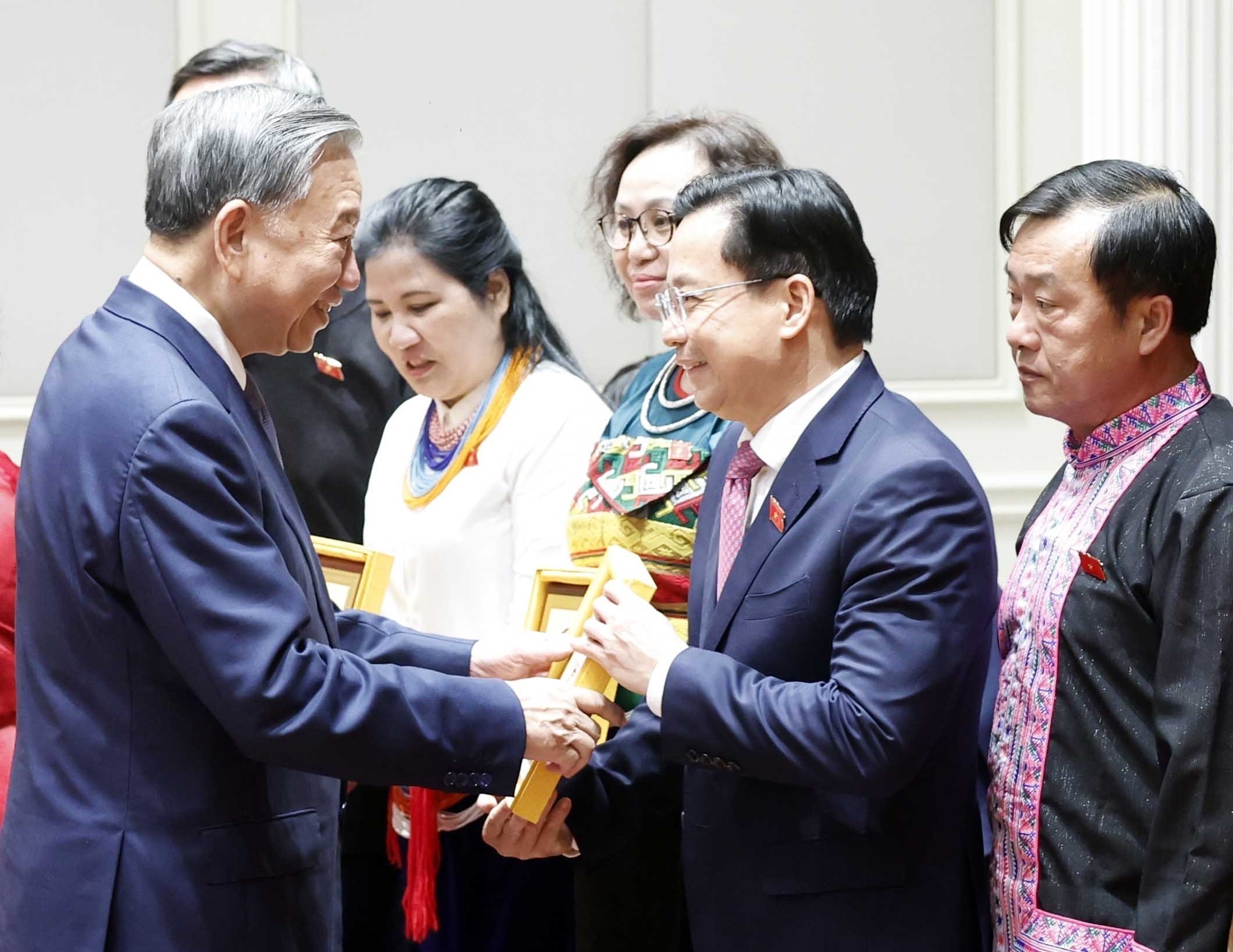 |
General Secretary and President To Lam presents a portrait of President Ho Chi Minh to the delegates. Photo: TTXVN |
The General Secretary and President stressed the need for fundamental innovation in the approach to ethnic affairs. The focus, he explained, must shift from merely providing support to actively creating conditions for development and empowering people to progress. The objective, he clarified, is not solely poverty reduction but also sustainable income growth, improved living standards, narrowing development gaps, and ensuring substantive equality.
Ethnic affairs must be integrated into the overall national development strategy, linked with strengthening great national unity, and safeguarding national defense, security, and sovereignty. Concurrently, institutions must be refined to foster development, accurately reflecting the realities of each locality and ethnic community.
The General Secretary and President underscored that every policy and decision must aim to enhance the material and spiritual lives of the people. In this regard, actual effectiveness and public satisfaction serve as the highest criteria for policy evaluation. In the long term, he noted, human capital is the decisive factor, thus education and human resource development must be central, laying the foundation for sustainable development.
Entering a new term, the General Secretary and President called upon ethnic minority National Assembly delegates to enhance their representative role. He urged them to participate directly in policy formulation, translating practical realities into concrete, well-founded, and feasible recommendations, linked with accountability and specific outcomes.
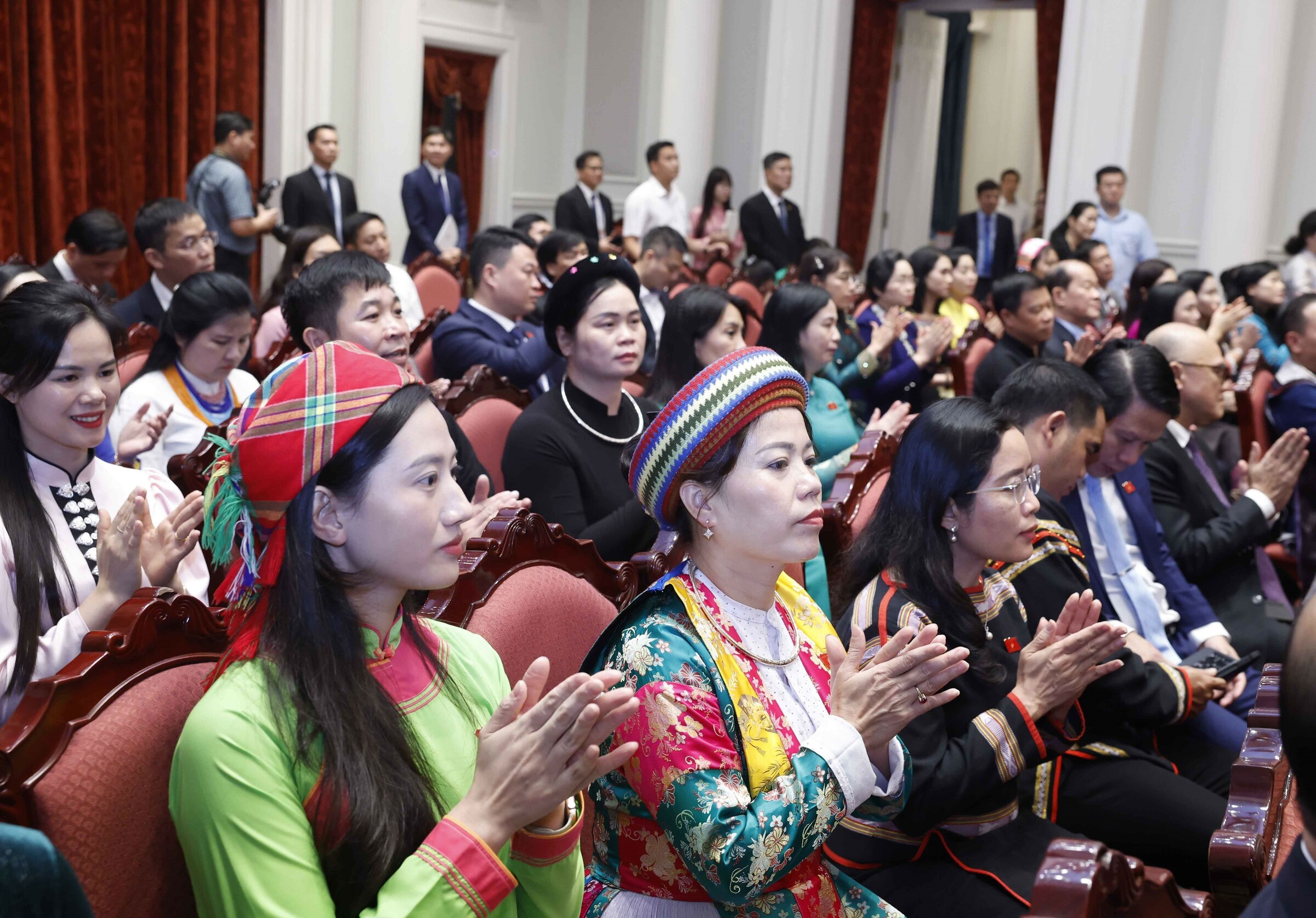 |
Ethnic minority National Assembly delegates at the meeting. Photo: TTXVN |
Delegates must proactively propose and shape policies, improve their research and analytical capabilities, engage with practical realities, and effectively utilize data. Simultaneously, they should leverage their role in connecting the legislative chamber with local communities, ensuring the people's voices are fully reflected.
"Delegates must dare to speak, dare to propose, dare to take responsibility, and pursue their recommendations until the end," the General Secretary and President affirmed.
He also urged the Ethnic Council to strengthen its strategic advisory role, proactively identifying and recommending solutions to institutional bottlenecks, particularly in the implementation phase. Furthermore, he emphasized improving support mechanisms for delegates and enhancing the quality of information, data, and policy consultation.
The General Secretary and President called for increased coordination between delegates and agencies of the National Assembly, Government, and local authorities. This cooperation, he stated, will ensure that recommendations stemming from practical experience are promptly received, processed, and translated into concrete results on the ground.
Son Ha