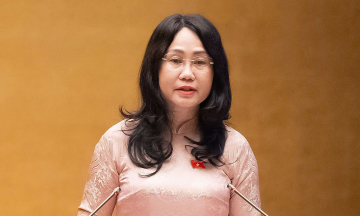
During a socio-economic discussion at the National Assembly on the afternoon of 20/4, Nguyen Thi Thuy, Vice Chairwoman of the National Assembly's Law and Justice Committee, noted that citizens have benefited from significant Party and State policies, particularly in education.
Notably, the Politburo's Resolution 71 on breakthrough development in education and training introduced strategic policies. Starting in 2025, the State will waive all tuition fees from preschool through grade 12 at public educational institutions. By 2030, students nationwide are expected to receive free textbooks.
Over the past nine months, 428 inter-level boarding schools were initiated in mainland border communes, improving educational access for students in disadvantaged areas.
Despite these achievements, representative Thuy expressed concern about partnership teaching in public schools. Parents report that even with waived tuition and lunch support, educational costs remain high due to fees associated with partnership programs.
Many schools contract with businesses to offer supplementary subjects: advanced English, international information technology, artificial intelligence, and life skills. While there is a genuine demand for these subjects, the widespread implementation of such partnership programs risks overlapping curricula. These supplementary subjects often lack proper quality assessment.
"The most pressing issue is that many schools schedule these partnership subjects during core class hours. Students who do not register are separated, which can lead to feelings of inferiority. This often compels families to enroll their children," Thuy stated.
Given this situation, the representative proposed that the Ministry of Education and Training (MOET) strictly prohibit the scheduling of partnership subjects during core class hours. Any partnership programs offered must adhere to principles of financial transparency and cost-sharing with parents, preventing public schools from operating like private institutions and imposing additional financial burdens.
For a long-term solution, Thuy recommended that MOET plan to recruit, train, and deploy teachers within each locality to meet the demand for skill-based subjects. This would ensure students do not need to rely on partnership programs or extra tutoring to receive a comprehensive education.
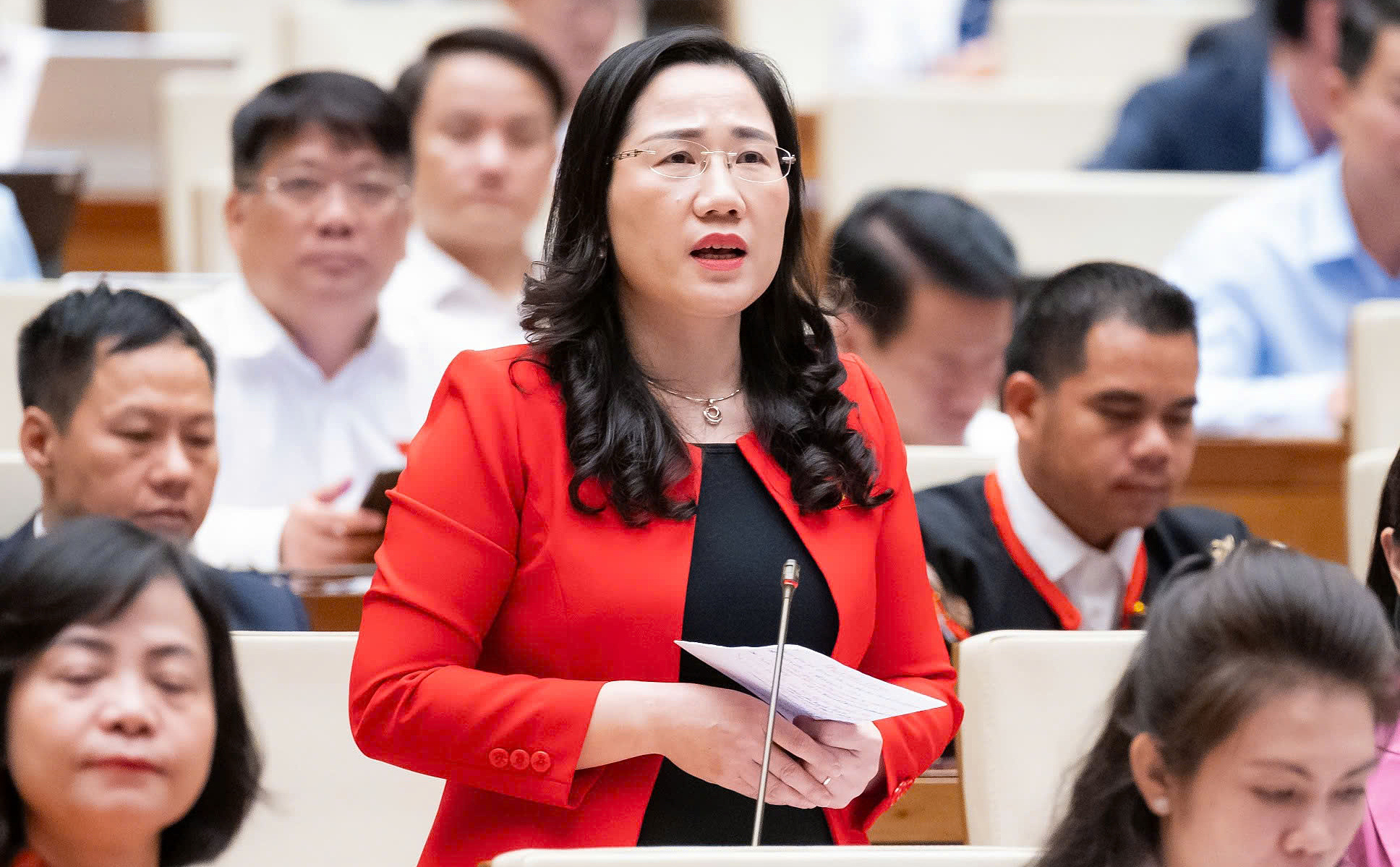 |
Representative Nguyen Thi Thuy speaking at the National Assembly, 20/4/2026. *Photo: National Assembly Media* |
Previously, during a meeting with Hanoi voters in late 2025, General Secretary To Lam revealed numerous complaints about schools partnering with businesses. These schools brought in external teachers, collecting additional fees that exceeded the tuition waived by the State.
He emphasized that the State is responsible for managing education and universal curricula. If there is a shortage of teachers for subjects like music, art, or foreign languages, appropriate training and deployment must be organized. External teachers should not be brought in to charge parents fees.
"Schools cannot be turned into service providers collecting money," General Secretary To Lam declared, urging local authorities to investigate and strictly address violations.
Vu Tuan