The Vietnam Road Administration recently submitted a report to the Ministry of Construction detailing the impact of fuel price fluctuations on construction investment projects and road maintenance work. According to the agency, global crude oil prices have surged since early march, leading to multiple domestic price adjustments. Gasoline prices have risen by about 15%, diesel by up to 70%, and asphalt, a primary material in asphalt concrete production, has increased by nearly 32% compared to late february.
Beyond price hikes, asphalt supply faces potential disruption. Several suppliers indicate restricted imports, leading to reduced market availability and hindering contractors' access to materials.
For road maintenance projects scheduled in 2026, road management zones have completed contractor selection for 89 of 119 construction packages, all utilizing fixed-unit-price contracts. With material costs rising sharply, contractors face significant cost risks, potentially impacting construction timelines. Preliminary calculations suggest that the total cost for these road maintenance packages could increase by approximately 946 billion dong, from 3,294 billion dong to 4,240 billion dong, an increase of 28%. This is primarily because most work involves asphalt concrete paving, which is directly affected by fuel and asphalt prices.
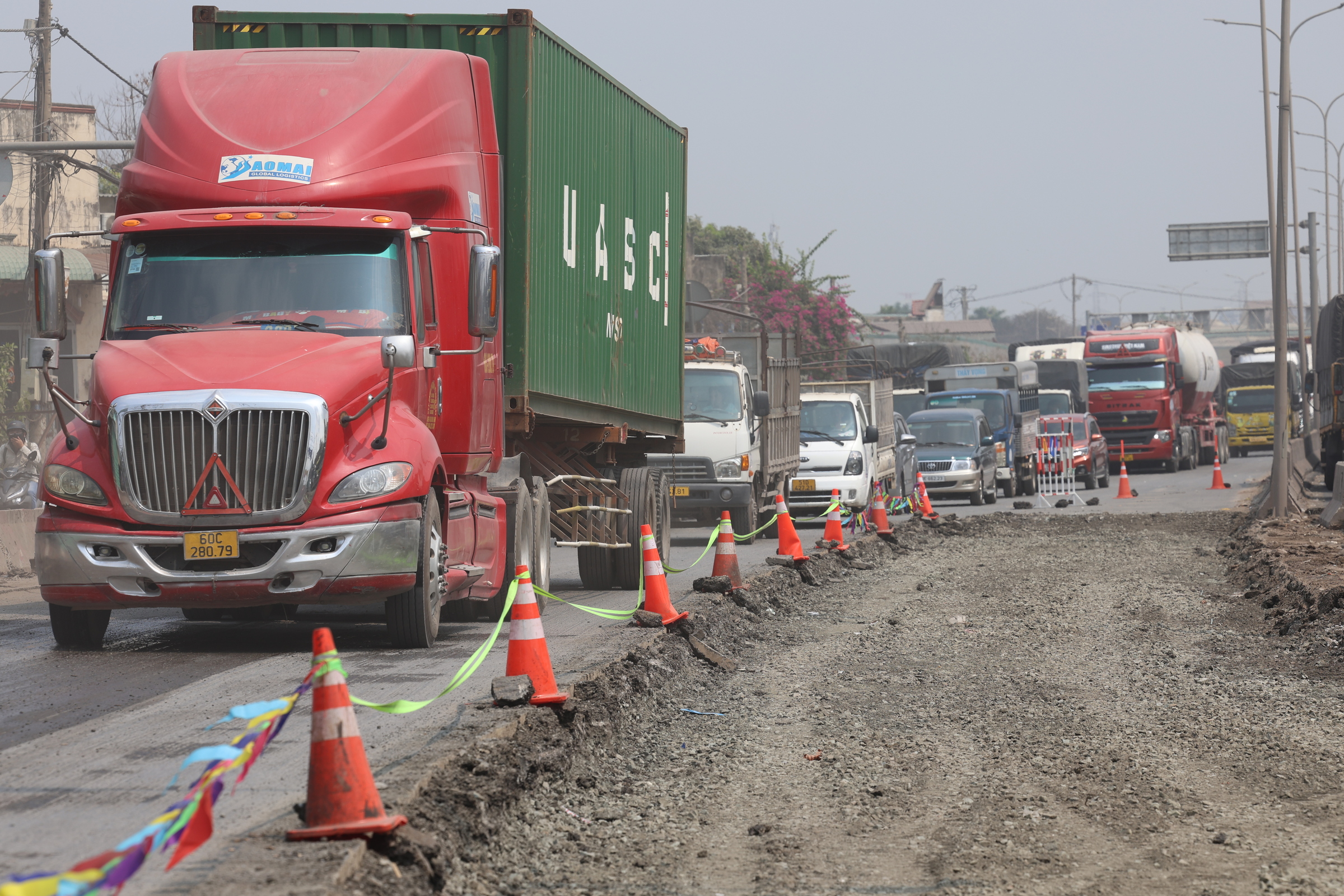 |
Repairing National Highway 51 in 4/2026. Photo: Phuoc Tuan. |
Some projects have incurred substantial cost overruns. For instance, the upgrade project for National Highway 14E in Quang Nam province, specifically package XD05 for upper-layer asphalt concrete paving across the entire route, is under a lump-sum contract which typically does not allow price adjustments. However, rising material costs have already increased package XD05's expenses by about 25%. Similarly, the upgrade project for National Highway 28B, spanning Binh Thuan and Lam Dong provinces, is projected to see an increase of over 56 billion dong in costs due to fluctuating fuel and material prices.
Under current conditions, many contractors risk severe losses if they proceed with signed contracts. Some entities have already delayed implementation and extended construction periods, raising traffic safety concerns and potentially compromising road quality. Additionally, the disbursement progress for 2026 road maintenance funds is at risk of not meeting planned targets.
According to the Vietnam Road Administration, most maintenance projects are implemented within the planned year, with about 75% of the portfolio having completed tendering and preparing for construction. In response to this situation, the managing agency has implemented temporary solutions. For already signed packages, the units are working with contractors to share difficulties and adjust construction plans, prioritizing items less affected by fuel price fluctuations.
For packages that have been tendered but where contractors have not yet signed contracts, the Vietnam Road Administration requires adherence to legal regulations. For packages not yet tendered, the package prices will be updated, and adjustable-unit-price contracts will be applied, including specific provisions for material types and price adjustment methods.
However, for contracts already signed under a fixed-unit-price model, the agency reports legal difficulties, lacking a basis to adjust or compensate for fuel and material price increases.
Given these challenges, the Vietnam Road Administration recommends that the Ministry of Construction report to the Government and the National Assembly to consider the impact of fuel price fluctuations on the construction and road maintenance sectors. Based on this, it proposes amending and supplementing legal regulations to establish a framework for adjusting lump-sum and fixed-unit-price contracts when material prices experience significant changes.
Doan Loan