


As the Party prepares for its 14th National Congress, propaganda and mass mobilization continue to hold a crucial position, connecting the Party's policies with the people's thoughts, aspirations, and actions. General Trinh Van Quyet, Secretary of the Party Central Committee and Head of the Central Propaganda and Mass Mobilization Commission, recently spoke to the press about the sector's developments and future challenges.
The 13th National Congress term was special due to an immense workload and a complex, rapid, and unpredictable domestic and international landscape. Profound shifts in global geopolitics and economics, the prolonged impact of epidemics and natural disasters, and the rapid rise of cyberspace and social media directly influenced the people's thoughts, psychology, and trust. Amidst this backdrop, the demands on propaganda and mass mobilization were substantial, requiring the maintenance of ideological stability, unity within the Party, and social consensus. The sector also directly participated in implementing major strategic decisions by the Party and the State, many of which were new, challenging, and unprecedented. This represented a "major challenge" throughout the entire term.
Under the centralized and unified leadership of the Party Central Committee, specifically the Politburo and the Secretariat, led by General Secretary To Lam, propaganda and mass mobilization became more proactive. They advised and timely guided on major, sensitive issues, enhancing explanation, dialogue, and persuasion to alleviate societal concerns. As a result, socio-political stability was maintained, especially during difficult times. A notable milestone was the merger of the Propaganda Commission and the Mass Mobilization Commission at all levels in 2025. This was not merely an organizational change but a significant shift in mindset and operational methods, strengthening the link between ideological work and mass mobilization, connecting "speaking for the people to understand" with "acting for the people to trust and participate". This was a necessary requirement as societal issues grew more diverse, complex, and demanded a comprehensive approach.
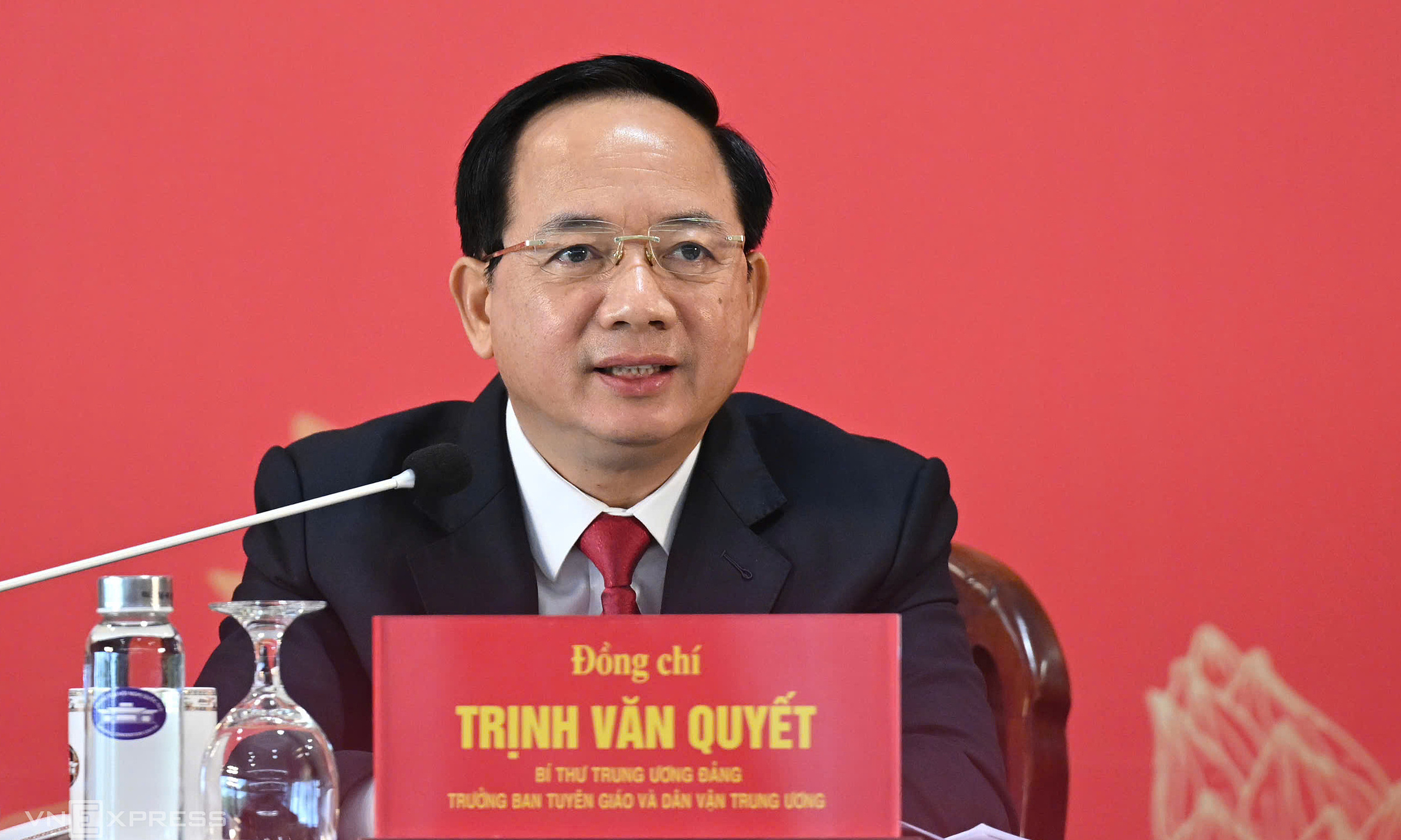 |
General Trinh Van Quyet, Head of the Central Propaganda and Mass Mobilization Commission. Photo: Giang Huy |
The public consultation on the draft documents for the 14th National Congress is considered a major highlight, vividly demonstrating the role of propaganda and mass mobilization in promoting democracy, strengthening the close relationship between the Party and the people, and reinforcing the people's trust and support. Within just one month of consultation, from mid-October to mid-November 2025, nearly 14 million comments were submitted, with around 5 million officials, Party members, and citizens directly contributing. The significance lies not just in the numbers, but in the quality and spirit of the feedback. Many opinions were insightful and heartfelt, reflecting the people's deep concern, responsibility, and high expectations for the nation's development directions in the upcoming period. This also provides a crucial basis for the Party to refine its documents, ensuring that strategic policies and goals are practical and align with the people's aspirations. This process shows that when propaganda and mobilization are effective, when people are fully informed, listened to, and respected, democracy becomes a vibrant reality, not just a slogan. It also reflects the people's trust, companionship, and high expectations for the Party.
Moving into a new phase, innovating the mindset and operational methods of propaganda and mass mobilization is a mandatory requirement. The Party's decisions increasingly have a broad impact, directly and profoundly affecting the people's lives and interests. Meanwhile, the information environment and public opinion are rapidly changing, multi-faceted, and at times difficult to control. Without fostering unity in perception and social consensus, even sound policies will struggle to be implemented. Therefore, propaganda and mass mobilization must shift from a one-way communication approach to dialogue and persuasion, clarifying the political, practical, and long-term benefits of each policy. A crucial requirement is to enhance the quality of understanding, analyzing, and forecasting ideological trends and public opinion. This is fundamental for proactively advising Party committees on leadership and guidance, while maintaining the initiative on the ideological front and avoiding passivity or surprises when complex issues arise. Propaganda and mass mobilization must truly "pave the way, accompany implementation, and reflect on outcomes". Ultimately, mass mobilization is about making the people understand, trust, and participate. To achieve this, it is essential to increase dialogue, listen, and accompany the people; promptly address legitimate concerns at the grassroots, preventing them from escalating into ideological and public opinion hotspots. It is imperative to consistently practice Ho Chi Minh's ideology: listen to the people, speak for the people to understand, and act for the people to trust.
With the upcoming implementation of the 14th National Congress Resolution, the need to innovate how resolutions are studied and thoroughly grasped is clear. Digital transformation in propaganda and mass mobilization is therefore very important. This is not just about applying technology, but about innovating methods of ideological leadership, organizing propaganda, and connecting the Party with the people. Digital transformation helps expand propaganda reach, shorten the information access gap, and increase timeliness, interactivity, and persuasive effectiveness. Currently, the Central Propaganda and Mass Mobilization Commission is gradually building and operating a digital ecosystem across the sector, linked to enhancing information management capacity and guiding public opinion. Following General Secretary To Lam's directive, digital transformation is also tied to curbing harmful and false information, helping to maintain the people's trust. Digital transformation also helps expand channels for "listening" to the people by collecting and analyzing public opinion data, thereby promptly advising the Party to adjust policies to better align with reality and the people's will. Ultimately, digital transformation serves the core objective of maintaining the Party's ideological foundation, strengthening social trust, and increasing public consensus.
The overarching goal remains to build and strengthen the people's trust in the Party's leadership; promote democracy, enhance social consensus, and foster national great unity. When the "Party's will" aligns with the "people's aspirations", that is the greatest source of strength for the nation to overcome difficulties, challenges, and achieve sustainable development in the new era.
According to Nhan Dan


