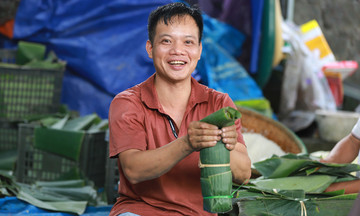
In the days leading up to Tet, Mr. Truong Hoan Thien's 1,5-hectare banana farm, nestled at the foot of rocky mountains in Tan Yen hamlet, Gia Kiem commune, Dong Nai, buzzed with activity as workers harvested "buddha's hand" bananas for delivery to Ha Noi, Hue, and Da Nang. This unique banana variety, known for its unusual shape, is a popular choice for Tet altar displays. With prices ranging from 80,000 to 100,000 dong per kg, the farmer estimates this Tet season's revenue will reach nearly 400 million dong. Mr. Thien noted that this variety offers higher value compared to common chuoi su or tissue-cultured bananas. "I am currently expanding the cultivation area and providing seedlings to help other farmers grow them too," he stated.
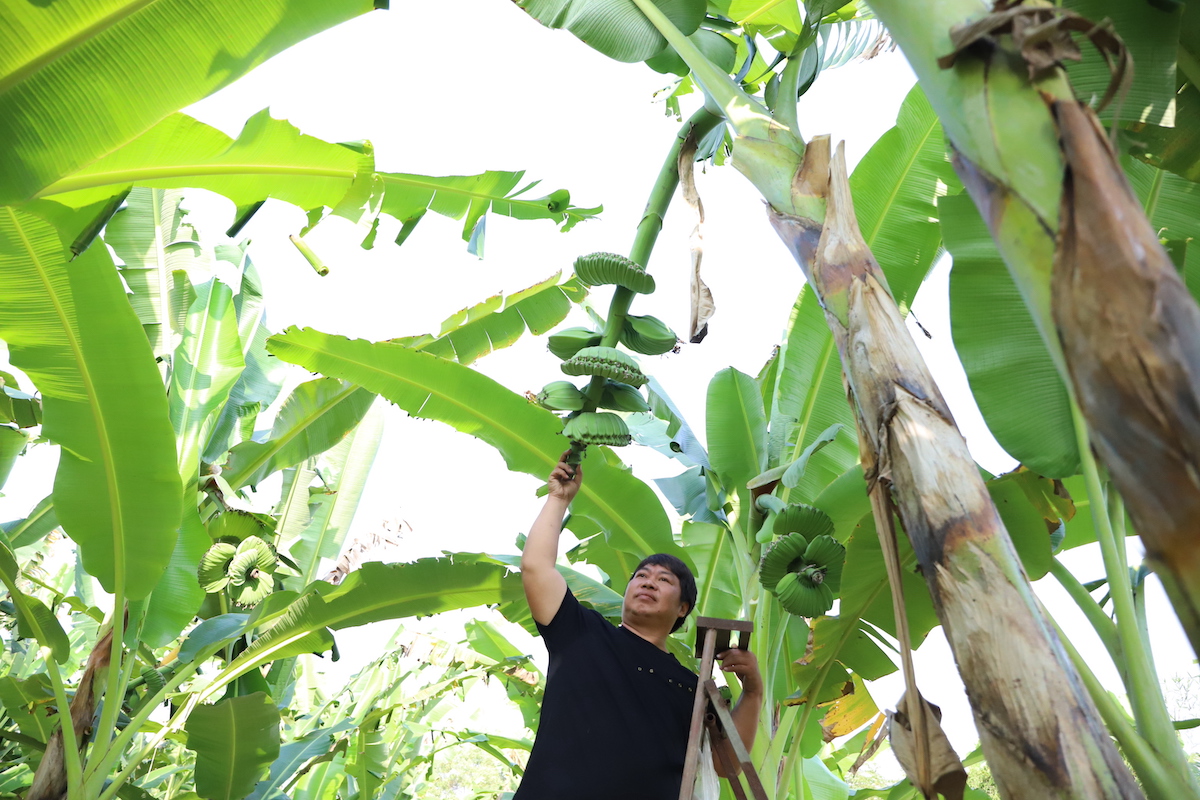 |
Mr. Thien at his "buddha's hand" banana farm. Photo: Phuoc Tuan |
Before dedicating himself to agriculture, Mr. Thien was involved in construction materials, later transitioning to organic cantaloupe and vegetable farming. Two years ago, during a visit to a new agricultural model, he discovered the "buddha's hand" banana variety, which was imported from abroad, and decided to cultivate it experimentally. After a one-year trial on a small plot, observing healthy plant growth and stable market demand, he expanded production for the Tet Binh Ngo 2026 market. "At that time, Dong Nai primarily grew chuoi su and tissue-cultured bananas. I chose a different path, and fortunately, this variety suited the soil and the market," he explained. This Tet season, his banana farm yielded approximately 4 tons.
In the initial phase, cultivating "buddha's hand" bananas presented challenges, including plant loss and inconsistent fruit size, particularly during the rainy season due to fungi and pests. Mr. Thien addressed these issues by researching techniques online and learning from experienced banana farmers. "Later on, the banana bunches became more uniform and aesthetically pleasing," he noted. According to the farmer, the cultivation techniques for this variety are similar to common bananas, with a growth period of about 12-13 months from planting to harvest. The yield can reach approximately 30 tons per hectare, with each bunch weighing an average of 2-4 kg.
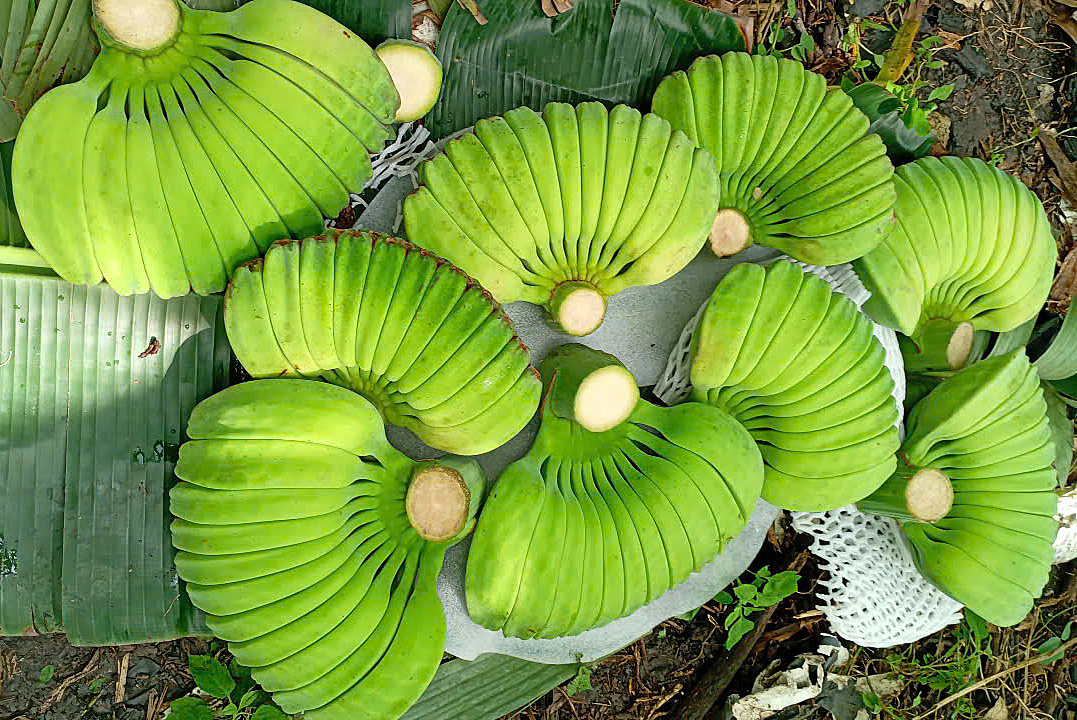 |
"Buddha's hand" bananas after harvest, ready for sale to traders. Photo: Phuoc Tuan |
Primarily catering to ceremonial display needs, "buddha's hand" bananas require meticulous care to ensure beautiful color and shape. When ripe, the fruit has a soft, sweet flesh with a distinctive aroma and can also be consumed as a regular fruit. Unlike many banana varieties harvested in a single batch, Mr. Thien's farm employs a staggered ripening process, allowing for harvest at two key times: the full moon and the end of the month. In addition to commercial fruit, he sells hundreds of seedlings annually at prices ranging from 200,000 to 250,000 dong each. Committed to sustainable development, Mr. Thien adopted an organic farming model, avoiding chemical fertilizers and pesticides. Weeds in the orchard are manually cut and used as ground cover to decompose naturally, enriching the soil. "The soil is improved with organic fertilizers, utilizing agricultural by-products for composting," he explained, adding that his "buddha's hand" banana product has achieved a 3-star OCOP certification from Dong Nai province and is regularly featured at regional agricultural fairs.
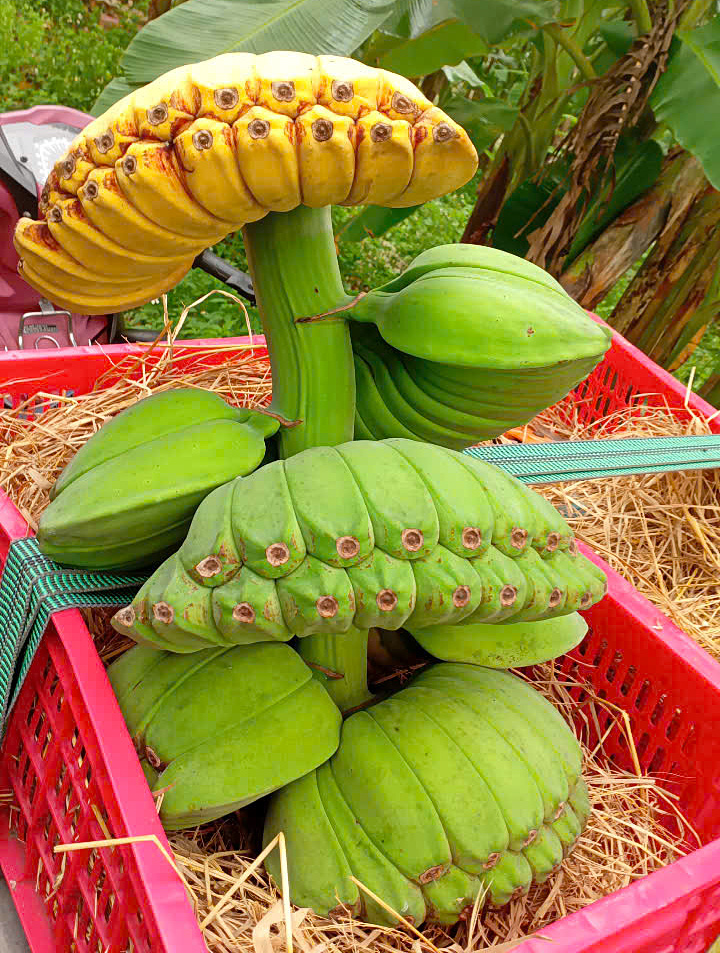 |
"Buddha's hand" bananas when ripe are soft, sweet, have a distinctive aroma, and can be used as common fruit. Photo: Phuoc Tuan |
Nguyen Van Thang, Deputy Director of the Dong Nai Department of Agriculture and Environment, stated that "buddha's hand" banana is a new crop variety introduced from abroad. "The department will research appropriate mechanisms and policies to support farmers in collaborating with businesses, gradually expanding the cultivation area," he affirmed.
Phuoc Tuan