


 |
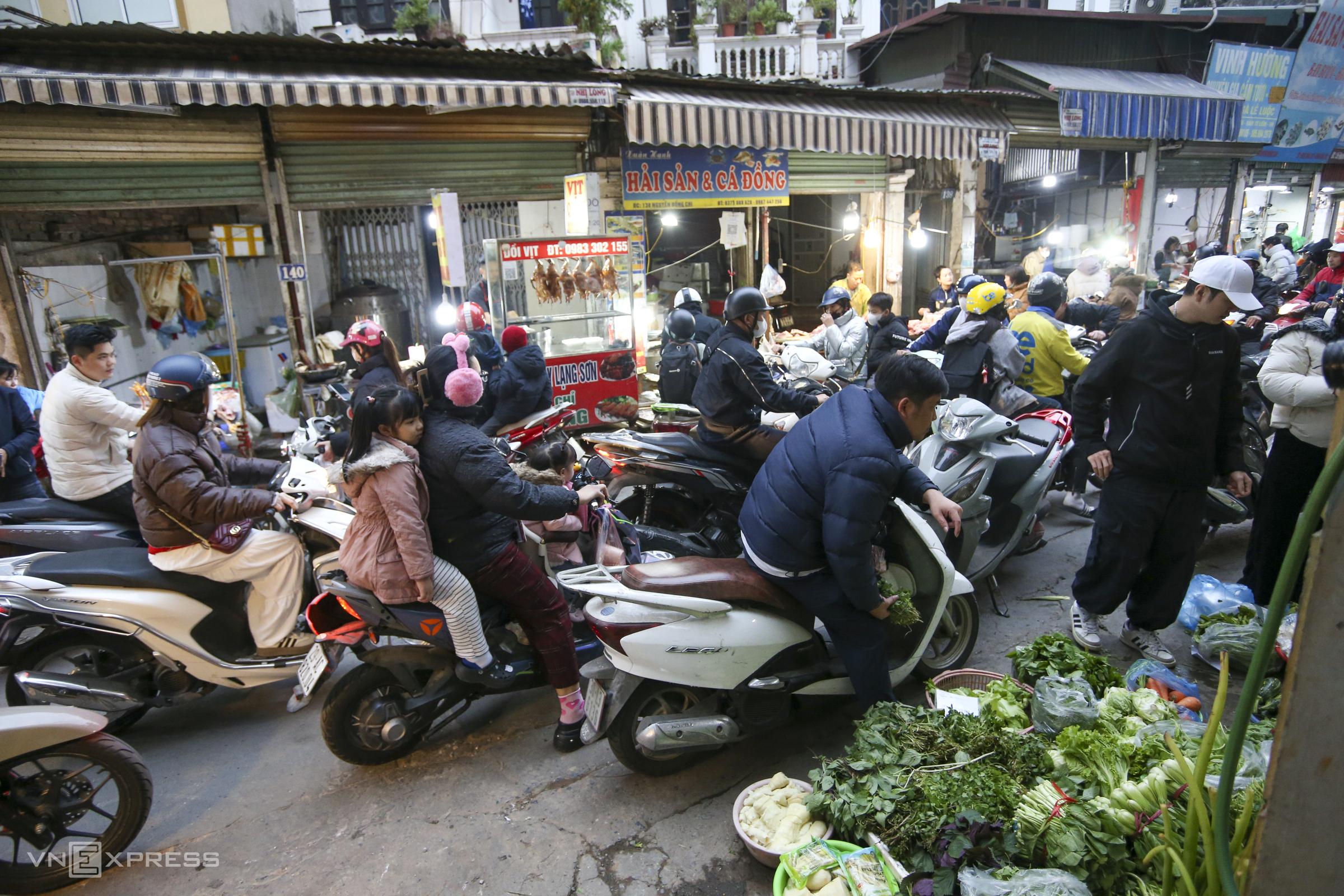
In Tu Liem ward, the spontaneous business point on Nguyen Dong Chi street is always crowded every afternoon.
Along a street stretch of about 500 m, dozens of households conduct business. During peak hours, buyers and sellers are bustling, and the road is frequently congested.
Some vendors occupy part of the road, affecting traffic. Nguyen Luu Ngoc, who lives on Nguyen Dong Chi street, stated that while the informal market affects traffic, it facilitates her shopping. If this informal market were removed, she would have to travel 4 km to buy food for her family.
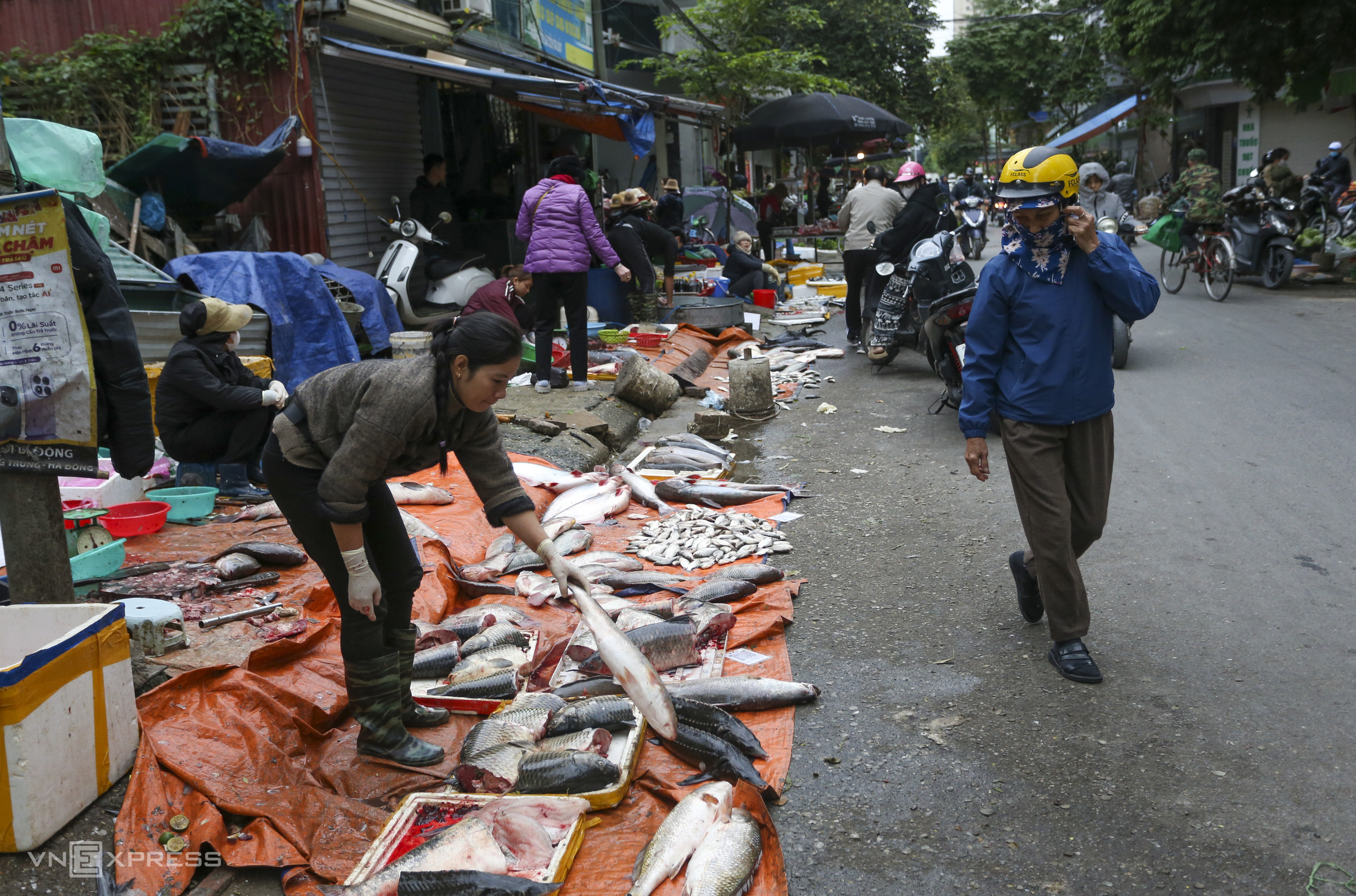 |
For over a decade, the Ngo Thi Nham auctioned land area, near Bong Do market in Ha Dong ward, has become a commercial hub for hundreds of households.
Due to the limited number of kiosks in Bong Do market, many households display their goods on the sidewalks around the service land, forming an informal market. Some vendors even set up their stalls on a portion of the road.
This informal market operates all day, but it typically sees more customers in the afternoon.
The People's Committee of Hanoi (UBND) recently issued a plan to implement solutions for addressing informal markets and spontaneous business points. The plan anticipates the elimination of 231 informal markets across many wards and communes, including the one operating on the Ngo Thi Nham service land. A week prior, local authorities informed many business households about the relocation plan.
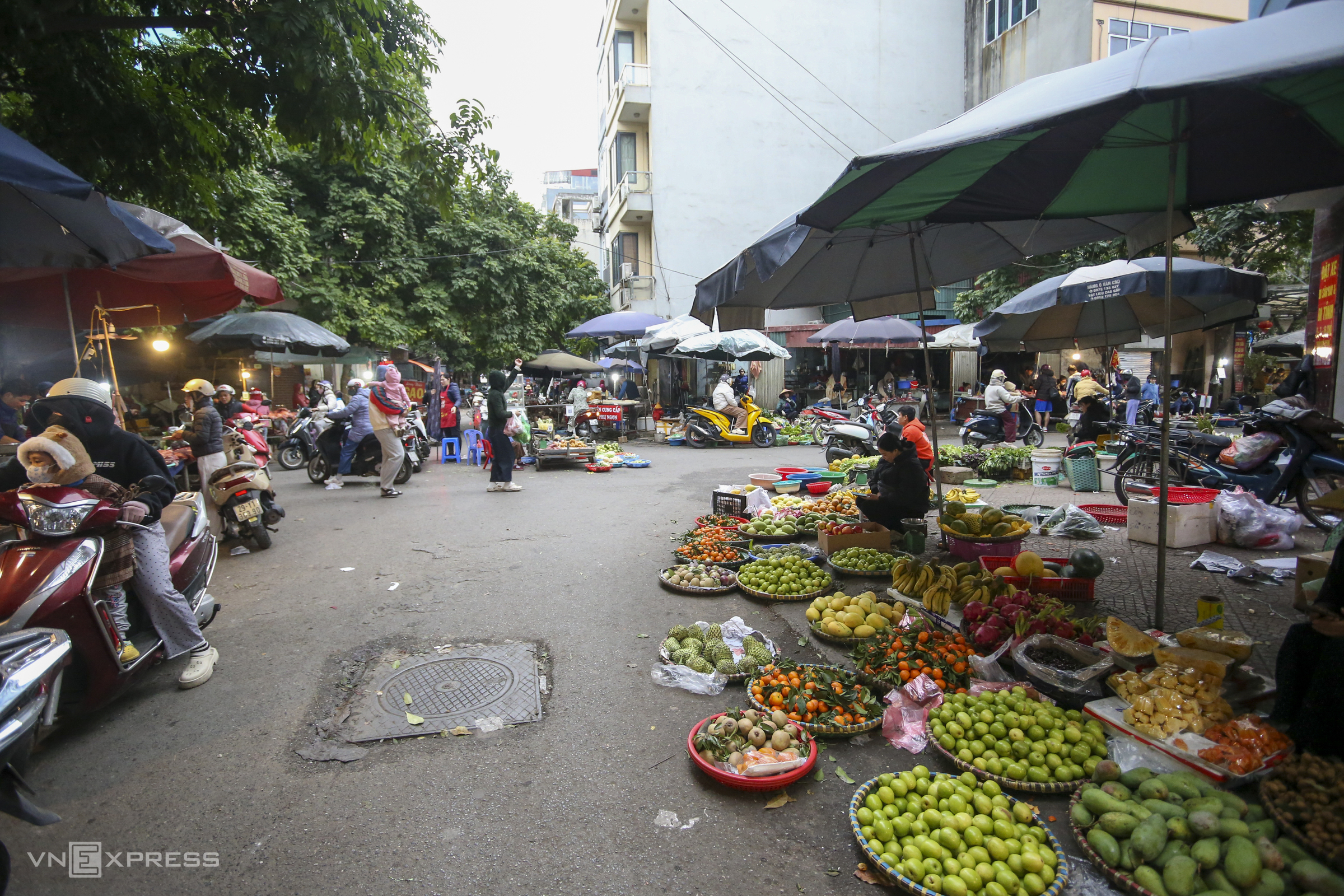 |
About 4 km away, on the sidewalk of Xa La service land in Ha Dong ward, approximately 100 households also gather to trade at a spontaneous informal market. This market usually convenes in the morning and is particularly busy on weekends.
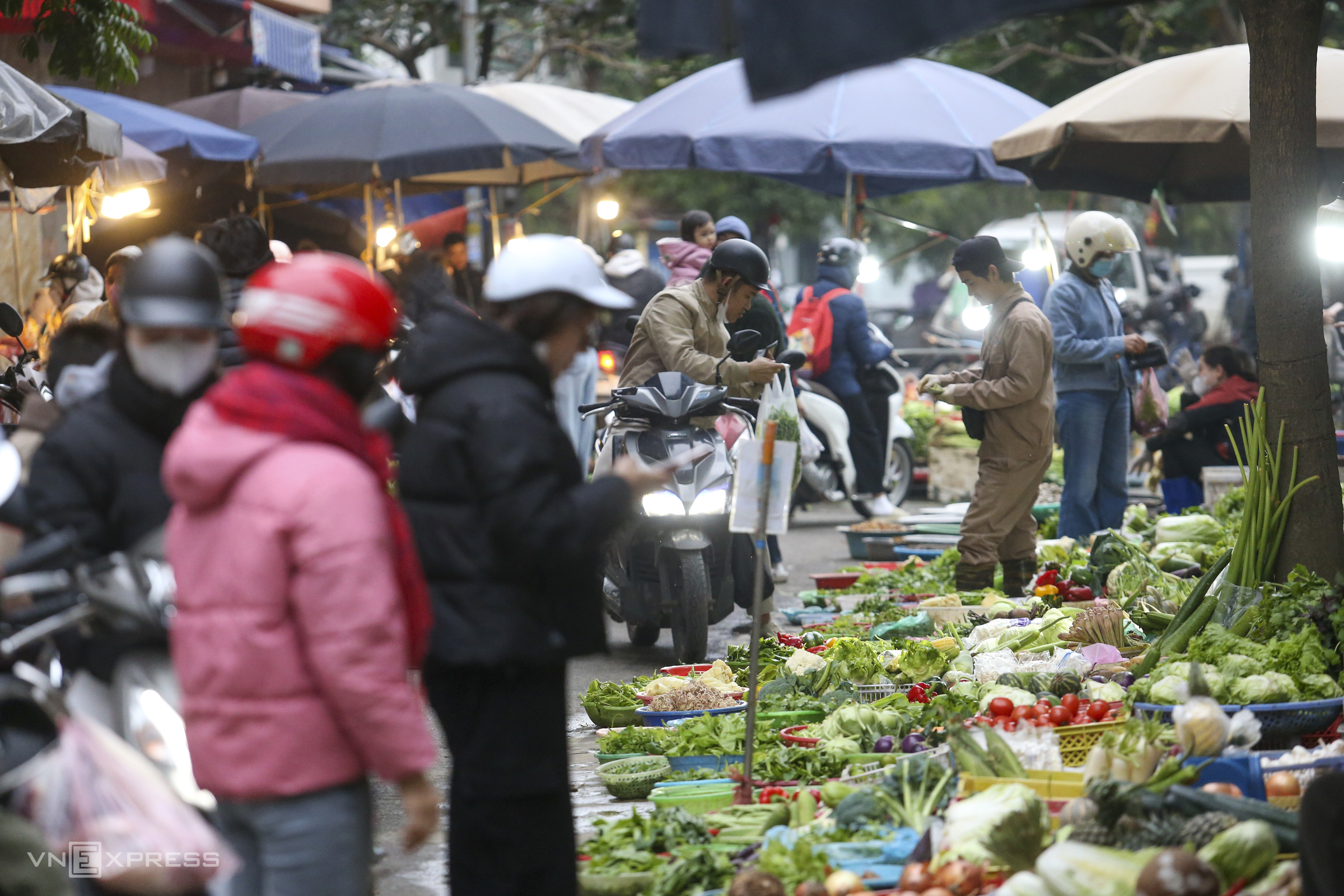 |
The main goods in these informal markets are food, vegetables, meat, and fish. Occasionally, household goods or clothing are also sold.
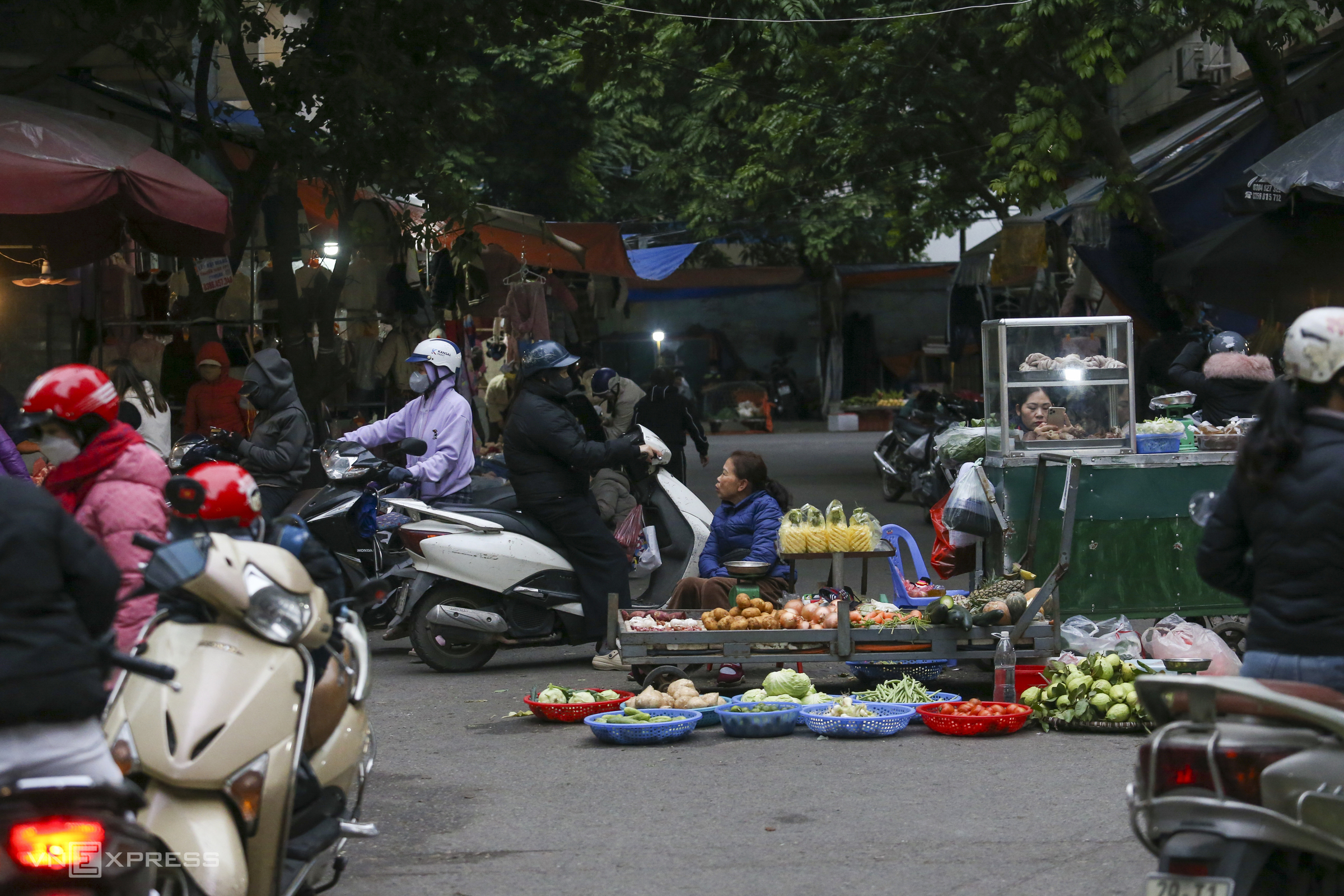 |
Many residents display their goods in the middle of the road.
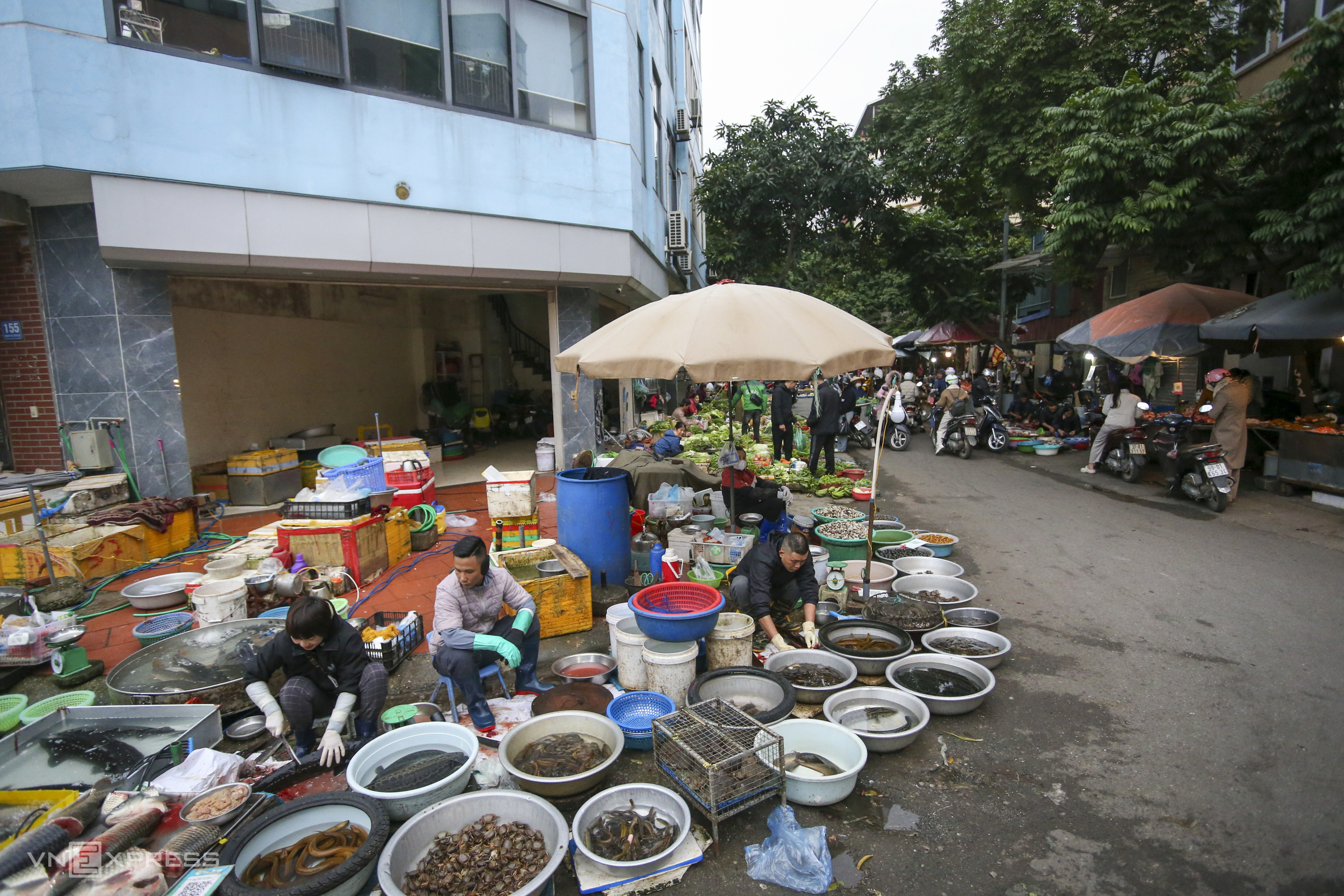 |
Hanoi plans to clear 231 informal markets and spontaneous business points to restore urban order. Vendors at these markets express concern about this news.
Mai, a seafood vendor, explained that she had recently stocked up on goods for the Lunar New Year (Tet Nguyen dan) sales. If forced to move, she faces the risk of debt because finding a new business location at the end of the year would be impossible.
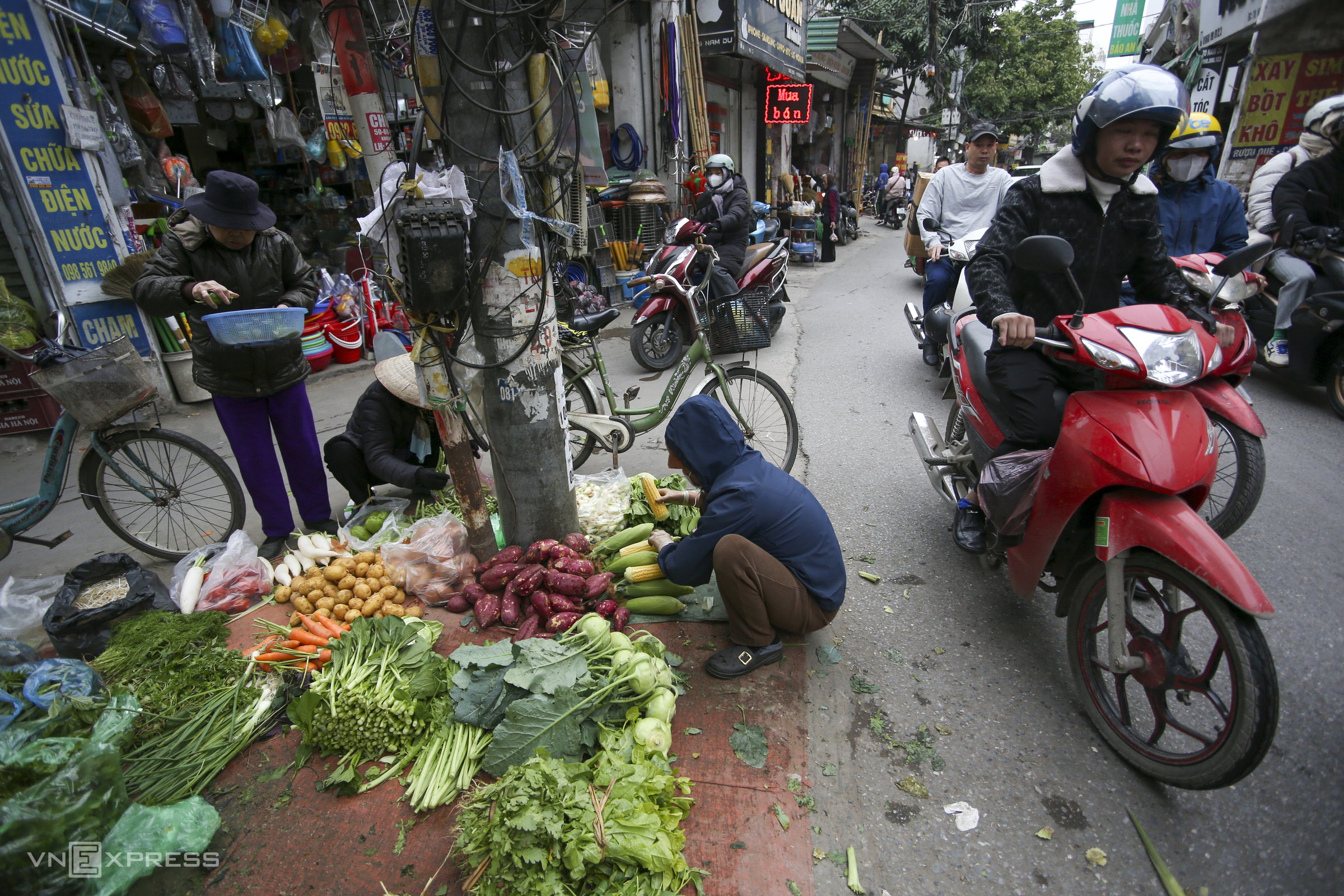 |
Along Nam Du street in Vinh Hung ward, about 100 stalls sell food and consumer goods.
Every empty space on the street is utilized to display vegetables and tubers.
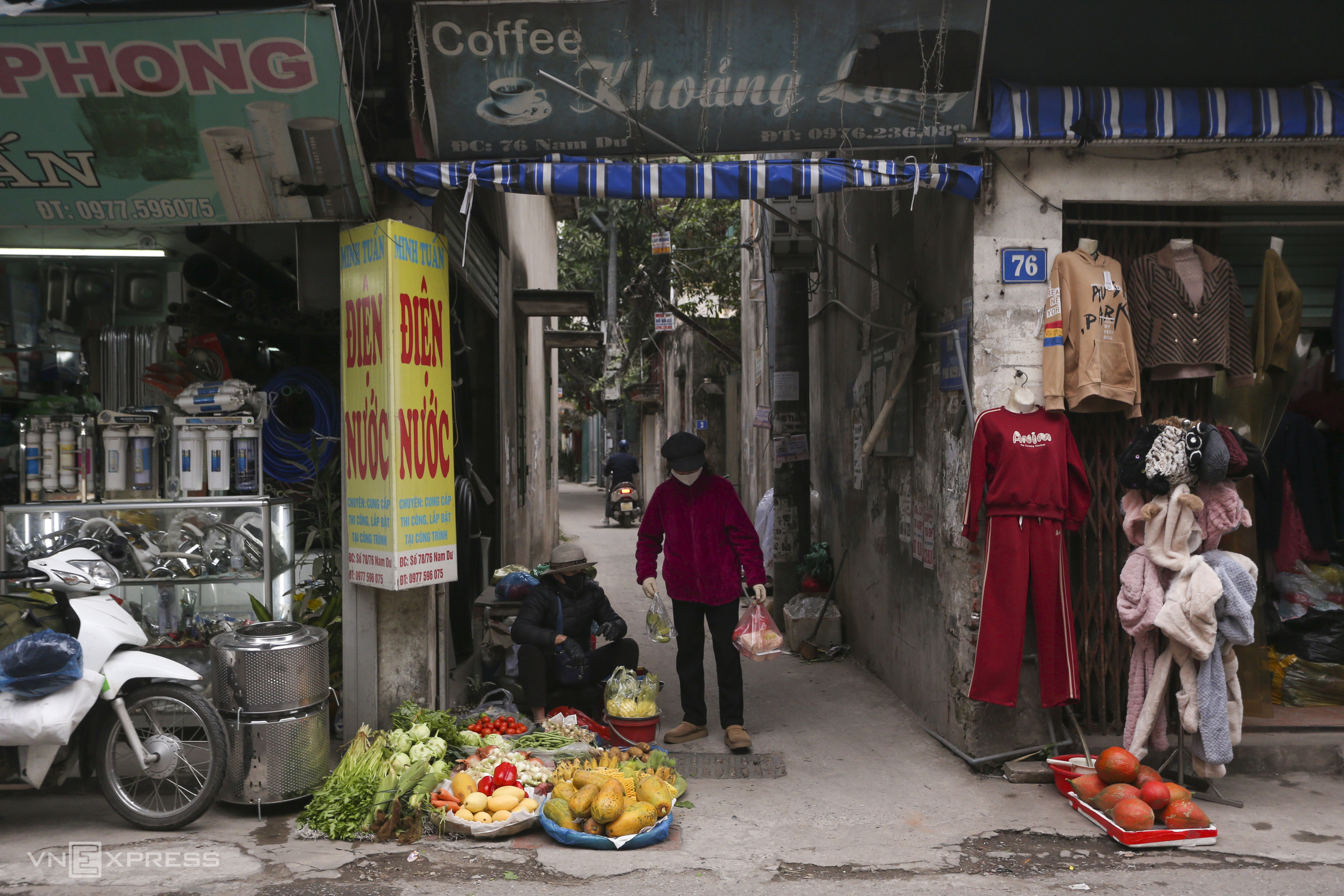 |
Goods are displayed directly in front of the entrance to alley 76 on Nam Du street, occupying nearly half of the road.
According to the People's Committee of Hanoi, the informal market on Nam Du street is among those slated for clearance by 30/1.
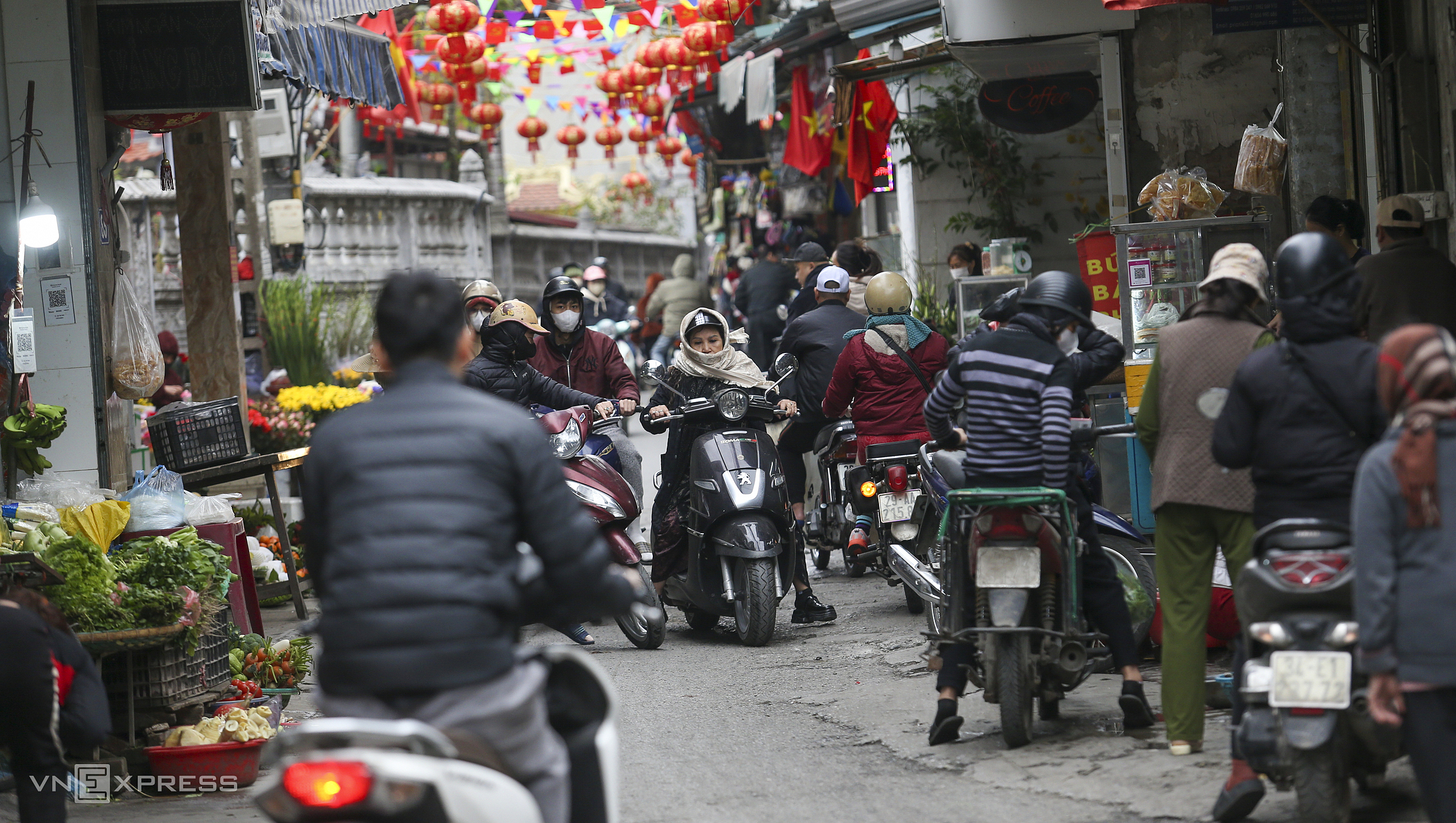 |
A woman on a motorbike navigates through the crowds of people who have stopped to shop.
Hanoi has repeatedly aimed to eliminate informal markets since the 2000s, yet these markets persist. Recognizing that informal markets occupy roads and sidewalks, causing traffic obstruction, environmental pollution, and urban aesthetic degradation, the city is developing a comprehensive and long-term treatment roadmap.
Viet An


