According to a resolution issued by the Hanoi Party Committee on 8/7, the two adjacent communes chosen for the pilot of the "socialist commune/ward" model cover a total area of more than 86 km2 and have a current population of nearly 200,000 people.
Thu Lam commune spans over 43 km2 with a population exceeding 100,000 people, while Phuc Thinh commune covers over 42 km2 with a population of more than 90,000 people. The average per capita income in both communes is projected to reach approximately 90 million VND in 2025. The combined population of the two localities is forecast to reach about 690,000 people by 2030.
The Hanoi Party Committee stated that the pilot aims to concretize the values, goals, and characteristics of Vietnamese socialism amidst the capital's new development conditions. It also seeks to test and refine a modern, democratic, disciplined, and humane grassroots governance model.
This model clearly demonstrates the essence of the socialist regime at the closest level to the people, where residents are the center, subject, goal, and driving force of development. All policies, tasks, and solutions must aim to enhance the quality of life, ensure social equity and progress, and leave no one behind. The consent, satisfaction, level of enjoyment, and happiness of the people are identified as important metrics for evaluating the model's effectiveness.
The pilot adheres to principles of not creating intermediate organizational layers or increasing personnel. It is also linked to improving the quality of commune-level officials and civil servants, administrative reform, digital transformation, accountability, and innovating local governance methods. The city selected Thu Lam and Phuc Thinh based on development space organization, infrastructure conditions, potential, governance capacity, and the grassroots political system's readiness for innovation.
According to the roadmap, in 2026, Hanoi will finalize and issue the project proposal, develop plans, and implement component programs and projects. It will also consolidate leadership and operational mechanisms, identify priority tasks, and determine resource allocation needs and plans. During phase 2027-2030, the model will be synchronously implemented in the two pilot communes. The city will regularly inspect, monitor, and evaluate results against a set of criteria, promptly addressing difficulties and adjusting unsuitable content.
In 2030, Hanoi will conduct a preliminary review, evaluate pilot results, and refine criteria, mechanisms, policies, and implementation methods. This will serve as the basis for considering expanding the model in the subsequent phase. During phase 2031-2035, the city will continue to refine the model and expand it to eligible areas. By 2035, the project will undergo a comprehensive review of its results, impacts, feasibility, and effectiveness. This will form the basis for reporting to competent authorities to consider city-wide replication.
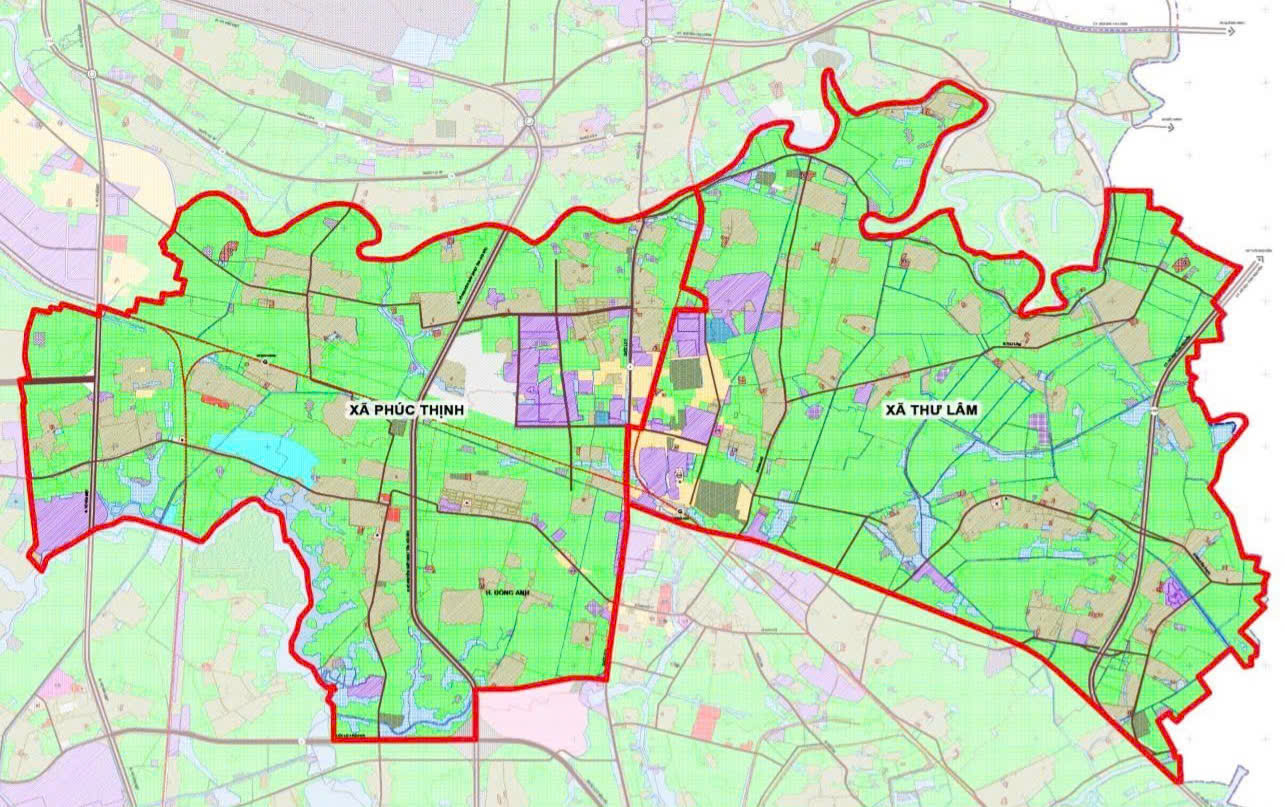 |
Map of the administrative boundaries of Phuc Thinh and Thu Lam communes.
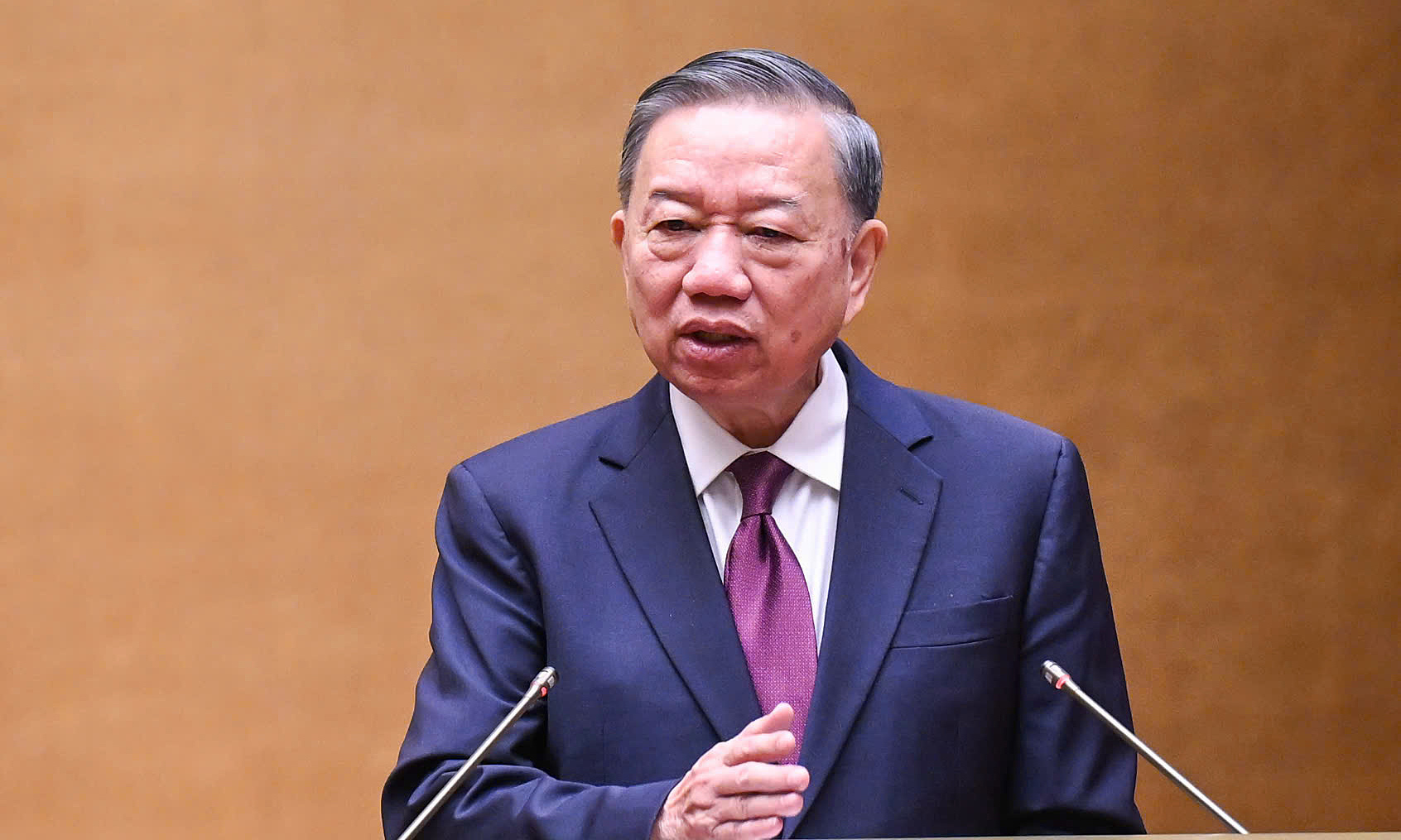
The idea of piloting a "socialist commune/ward" model was suggested by General Secretary and President To Lam during a working session with the Standing Board of the Hanoi Party Committee on 30/3. At a meeting with voters on 4/5, he reiterated the possibility of starting with one commune or ward to gain experience, clarify the organizational model, and assess its ability to meet residents' living needs.
At that time, General Secretary and President suggested that Hanoi could select a typical ward for renovation and development under this model, or construct a new ward with a population ranging from 500,000 to one million people, featuring synchronized investment in infrastructure, schools, hospitals, public spaces, and smart urban development. According to him, if large-scale implementation is not yet feasible, starting at the commune/ward level allows residents to experience it directly, thus creating a model for other localities. "If Hanoi succeeds, the capital will not only develop faster and become more modern but also transform into a more livable, humane, civilized urban area, more befitting its role as the country's center", said the head of the Party and State.
The socialist society model in Vietnam was first clearly defined in the Platform for National Construction during the Transitional Period to Socialism in 1991. Through successive Party Congresses, the model has been further supplemented and refined. At the 9th Congress in 2001, the Party identified a socialist-oriented market economy as the general economic model for the transitional period, aiming to develop productive forces under new conditions.
By the supplemented and developed Platform in 2011, the characteristic system of the socialist society model was completed with 8 key features: a wealthy people, a strong nation, democracy, equity, and civilization; people as masters; a highly developed economy based on modern productive forces and progressive, appropriate production relations; an advanced culture rich in national identity; people living in prosperity, freedom, and happiness, with conditions for comprehensive development; ethnic groups within the Vietnamese community being equal, united, respectful, and mutually supportive in development; a socialist rule of law state of the people, by the people, for the people, led by the Communist Party; and friendly, cooperative relations with countries worldwide.
Vo Hai