The Southern Hydro-Meteorological Station announced on 28/9 that the region is experiencing the highest tide of the year, a phenomenon expected to persist until 30/9. Tran Van Hung, deputy director of the station, noted the significant impact across the area.
In Ho Chi Minh City, peak tides are anticipated between 28/9 and 30/9. Water levels at the Thu Dau Mot station could reach 1,75-1,85 meters, surpassing alarm level 3 by 15-25 centimeters. Similarly, the Phu An and Nha Be stations are projected to see levels of 1,6-1,65 meters, approximately 5 centimeters above alarm level 3.
The critical periods for high tides are 6-8h and 17-19h, coinciding with morning and evening commutes. Should these high tides combine with heavy rainfall, many low-lying and riverside areas face a high risk of deep inundation.
Already, yesterday afternoon, even before reaching its peak, the rising tide caused flooding in areas like Thanh Da, Pham Huu Lau street, and Tran Xuan Soan street in former District 7. This disruption impacted daily activities and travel for residents.
In the Mekong Delta, the Can Tho Hydro-Meteorological Station predicts that the peak tide in Can Tho could reach 2,28 meters on the afternoon of 29/9. This level would be one centimeter higher than the historic peak recorded in 2022. While water levels are expected to gradually recede from 30/9, they will remain elevated.
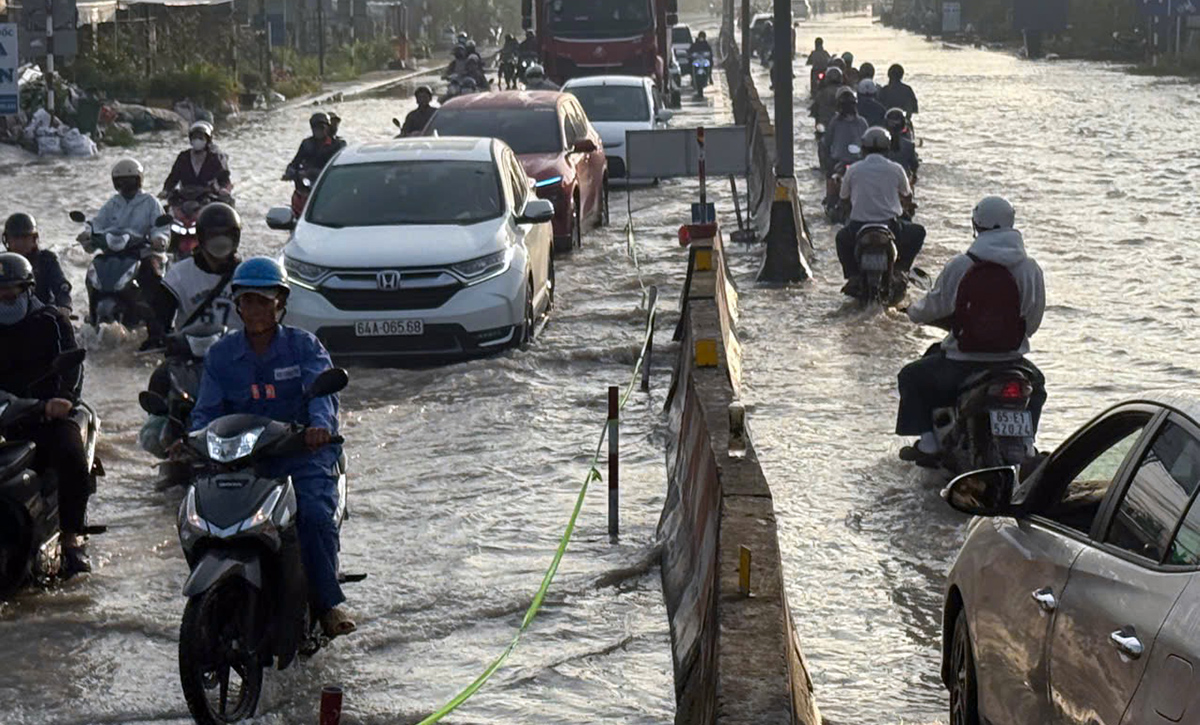 |
Vehicles navigate with difficulty on National Highway 1 through Binh Minh ward, Vinh Long province, morning 28/9. Photo: Hung Loi |
Vehicles navigate with difficulty on National Highway 1 through Binh Minh ward, Vinh Long province, morning 28/9. Photo: Hung Loi
The meteorological agency noted that this surge in water levels results from a combination of high tides, abundant rainfall, and floodwaters flowing in from upstream. Residents are advised to monitor tide developments, plan their travel routes and times, and avoid deeply flooded areas.
This morning, the Hau River in Can Tho reached a peak tide of 2,23 meters, an increase of 6 centimeters from the previous day, and 23 centimeters above alarm level 3. The overflowing river inundated residential areas, causing widespread flooding that lasted approximately two hours.
Several key routes, including Bui Huu Nghia street (near Binh Thuy market), Le Hong Phong, Cach Mang Thang 8, Nguyen Van Cu (near Con Khuong), and the Ninh Kieu wharf area, experienced flooding between 0,3-0,7 meters, with some spots nearing one meter. This made travel and commerce difficult, forcing many students to wade through water to reach school.
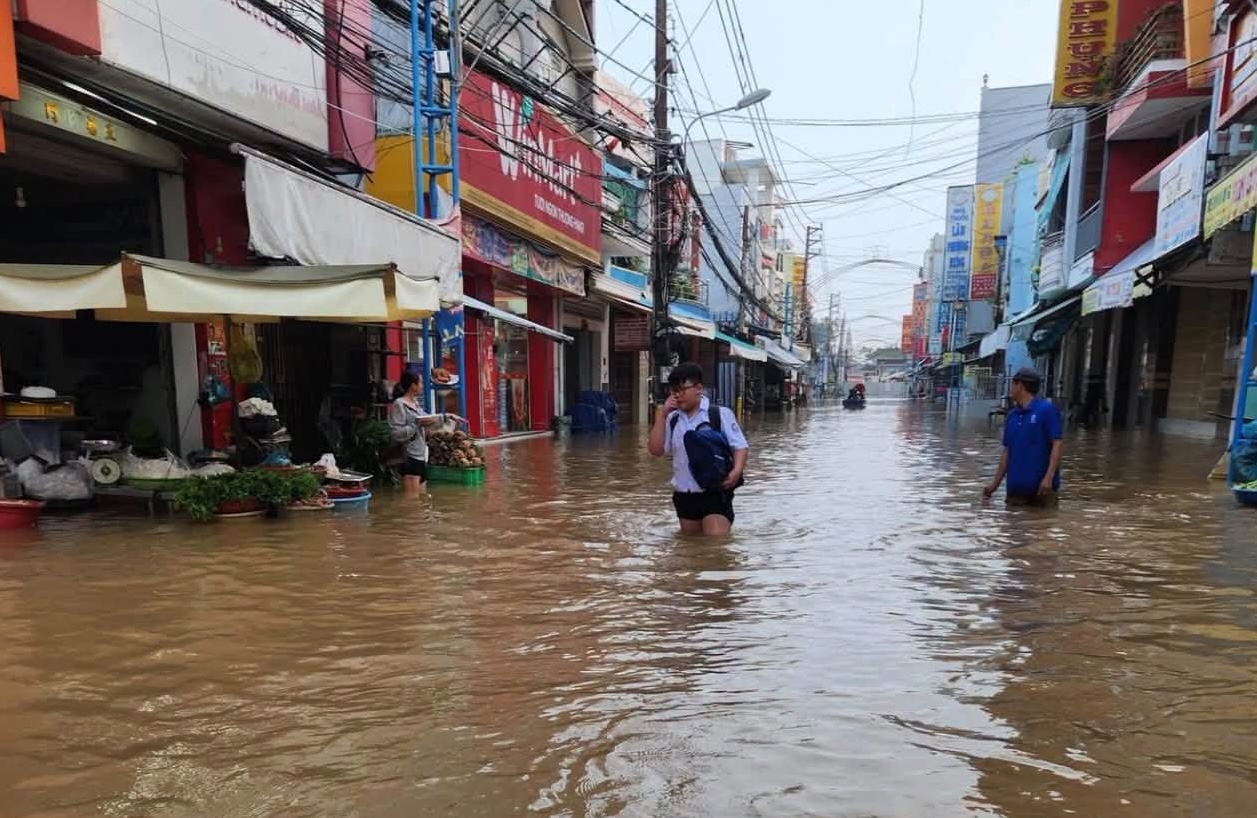 |
Students wade through floodwaters to school as high tide exceeds alarm level 3 in Can Tho, morning 28/9. Photo: Minh Bang |
Students wade through floodwaters to school as high tide exceeds alarm level 3 in Can Tho, morning 28/9. Photo: Minh Bang
At Binh Thuy Primary School, branch two, located on Bui Huu Nghia street, the schoolyard was submerged by water from the Binh Thuy river. Trieu Thanh Van, the school's vice principal, stated that teachers and staff were mobilized to clean up, clear pathways, and assist parents in bringing students to class.
"The school utilizes trolleys and food transport carts to help students navigate the flooded area", Van said. During days of significant high tides, the school adjusts its schedule, delaying the start of classes until 8h to ensure parents can conveniently bring their children to school.
In Vinh Long, hundreds of meters of National Highway 1 in Binh Minh ward were flooded by about half a meter early this morning, leading to numerous stalled vehicles. Large vehicles passing through created waves that spilled into homes along the roadside. High tides also caused extensive flooding in many other areas of the Mekong Delta, including Dong Thap, Ca Mau, and An Giang.
An Binh - Dinh Van