


The project is being built in Binh Trung ward, Thu Duc City, covering an area of over 186 hectares. The largest component is the central stadium, spanning 24 hectares with a capacity of about 70,000 seats, meeting the standards for hosting SEA Games and ASIAD.
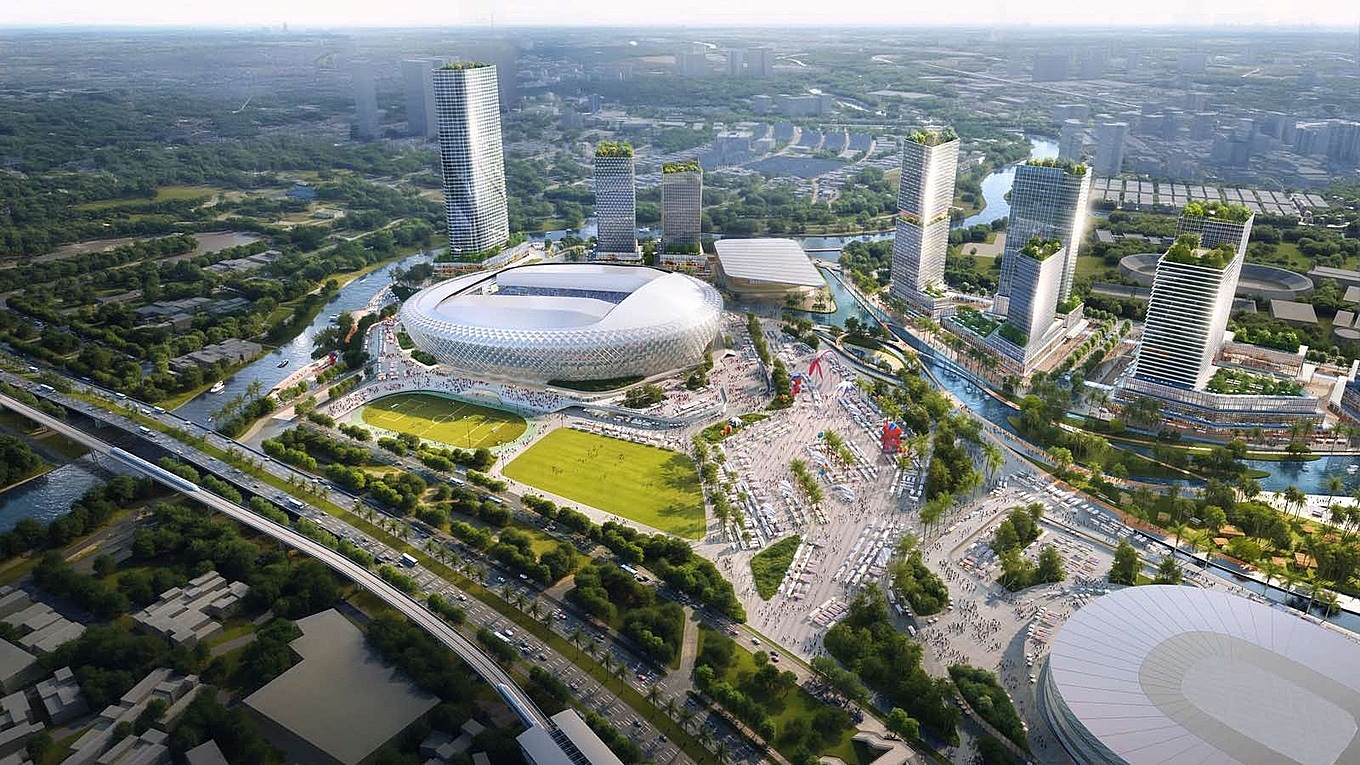 |
Rach Chiec National Sports Complex. Photo: Sun Group |
The stadium's total estimated investment is about 35,000 billion VND. It features a soundproof, temperature-controlled roof that can open and close automatically. This design allows the venue to flexibly transition from hosting sports competitions to large-scale concerts and entertainment events.
The project also includes an 18,000-seat multi-purpose arena for competitions and performances, along with aquatic, tennis, and general sports centers. The service and public area will feature a plaza, a sports hospital, a convention and exhibition center, green spaces, water features, and integrated technical and internal transport infrastructure.
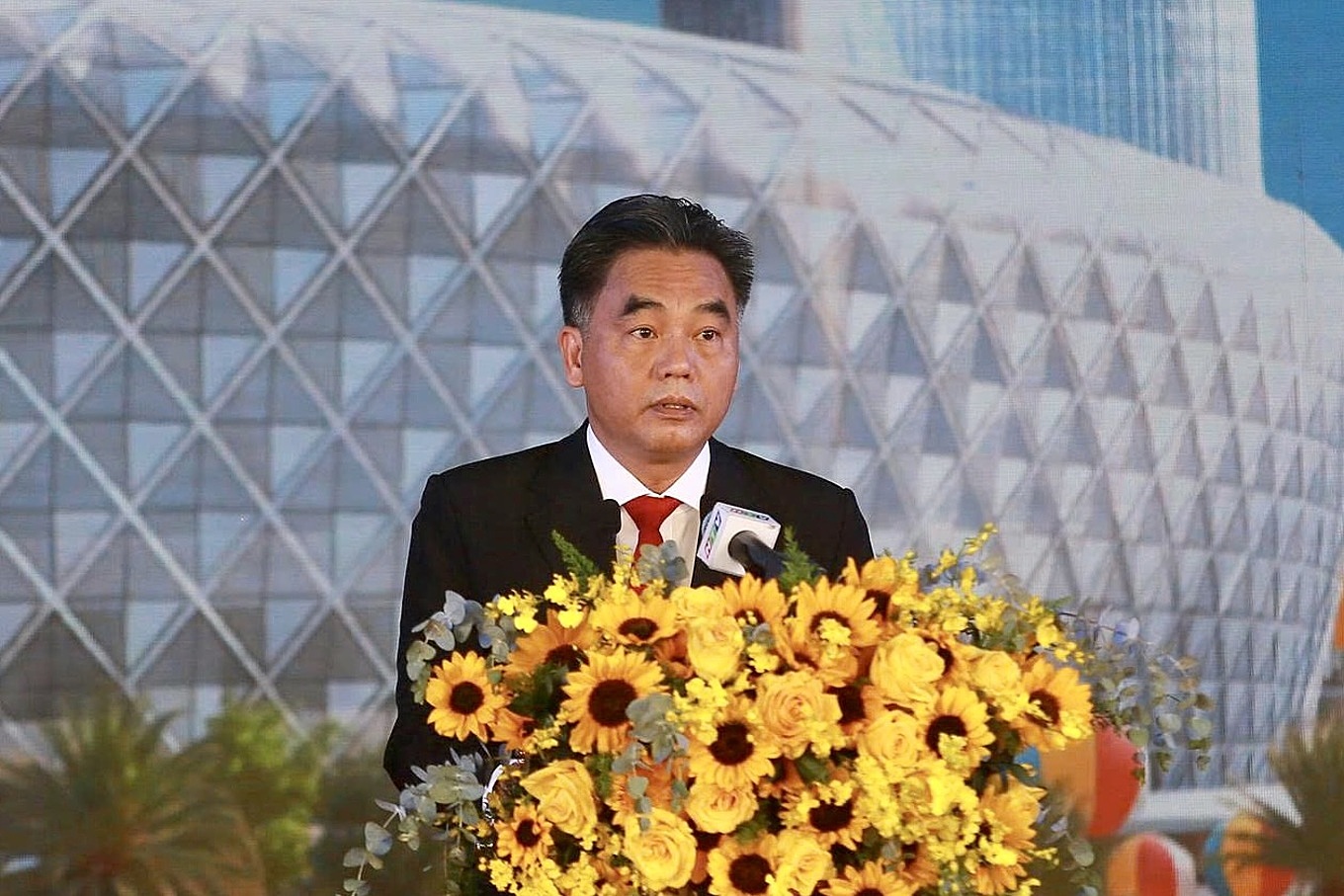 |
Nguyen Loc Ha, Permanent Vice Chairman of the Ho Chi Minh City People's Committee, speaks at the groundbreaking ceremony. Photo: Ha Giang |
The complex is being implemented under a Public-Private Partnership (PPP) model, specifically a Build-Transfer (BT) contract. Sun Group, through its subsidiary Sun Group Vung Tau Limited Company, is the proposed investor. The project was initially slated for an 8-year implementation, but the investor is collaborating with the city to reduce this to about 5 years.
According to Nguyen Loc Ha, Permanent Vice Chairman of the Ho Chi Minh City People's Committee, this is one of four key infrastructure projects breaking ground or commencing construction to mark the 14th National Congress of the Party. The project will serve as a multi-functional complex for culture, services, and public spaces, aligning with the city's cultural industry development strategy, beyond just sports.
 |
The current site of the Rach Chiec National Sports Complex, near Rach Chiec Bridge. Photo: Ha Giang |
Upon completion, the complex is expected to become a regional and national sports hub, capable of hosting major events like the SEA Games, ASIAD, and other international competitions. It will also cater to the public's needs for exercise, recreation, and tourism.
The Rach Chiec complex was first planned in 1994. Situated at Ho Chi Minh City's eastern gateway, it borders major transport arteries such as Mai Chi Tho Boulevard, Vo Nguyen Giap Boulevard, and the Ho Chi Minh City – Long Thanh – Dau Giay Expressway. However, its implementation was delayed for over 30 years due to funding shortages and investment mechanism obstacles.
Following its expansion, Ho Chi Minh City now spans over 6,772 km2 with a population exceeding 14 million, establishing it as a megacity. Despite this, the city lacks a sports complex befitting its stature. The nearly 100-year-old Thong Nhat Stadium is deteriorating, the Phu Tho sports area is small, and stadiums in Binh Duong and Ba Ria – Vung Tau (formerly) do not meet the sports development needs of the nation's largest urban center.
Giang Anh


