The Ho Chi Minh City People's Committee has proposed constructing a 15-kilometer cable car system connecting Co Ong Airport to Con Dao's central area. This initiative was outlined in a report addressing the promotion of socio-economic development for the Con Dao special zone.
This project aims to address anticipated traffic congestion as visitor numbers to Con Dao are projected to surge. Co Ong Airport, located approximately 15 km from the special zone's center, is currently connected by a two-lane road with a travel time of 20-30 minutes. According to the Ho Chi Minh City People's Committee, the airport is expected to handle 2 million passengers annually by 2030, increasing to 3 million by 2050.
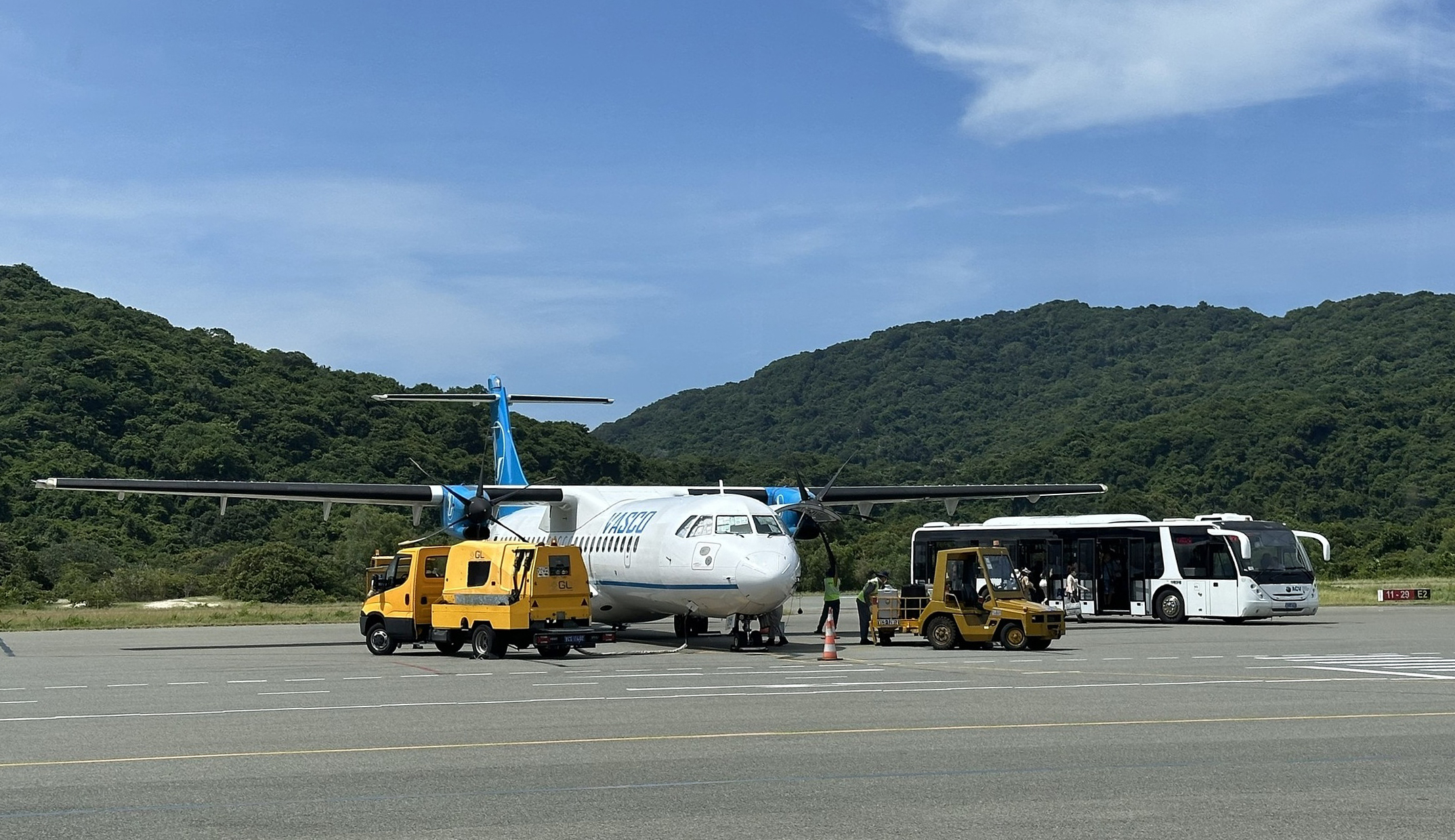 |
Co Ong Airport, Con Dao special zone, August 2025. *Photo: Le Tuyet* |
The existing road presents significant challenges. It is narrow, with many winding and hilly sections, leading to a high risk of congestion. Expanding it to four lanes is not feasible, as it would require extensive mountain excavation and the destruction of over 15 hectares of forest, causing substantial environmental impact. Additionally, water transport is unsuitable due to rough seas and complex weather conditions.
Given these challenges, the city is advocating for the cable car solution. This proposed system would be similar to the existing route connecting the mainland to Cat Ba (Hai Phong), which spans over 20 km. The cable car is not only intended to solve the immediate travel demand but also to create a unique tourism product.
Beyond alleviating transport issues, the cable car is envisioned as a unique tourism product, offering visitors scenic experiences of forests, mountains, and the sea. This aligns with Con Dao's strategic orientation towards high-quality, sustainable tourism development. Calculations suggest that by employing advanced technology, the cable car route would impact only approximately 3 hectares of forest, reducing the environmental footprint by more than five times compared to the road expansion option.
Con Dao, a special zone covering nearly 76 square kilometers and located about 230 km from Ho Chi Minh City, faces unique development considerations. Over 78% of its area lies within the National Park, which features a sensitive forest and marine ecosystem. The region's development strategy focuses on integrating its status as a special economic zone with eco-tourism, historical-spiritual tourism, and nature conservation.
Le Tuyet