The Ho Chi Minh City People's Council approved the policy at its third session on the afternoon of 19/6. It applies to all goods subject to port infrastructure fees under Resolution 91/2025.
The exempted categories include import and export goods, temporary import for re-export, goods stored in bonded warehouses, transit goods, and transshipment goods passing through the city's seaport system. The policy applies to goods from all countries, regardless of industry.
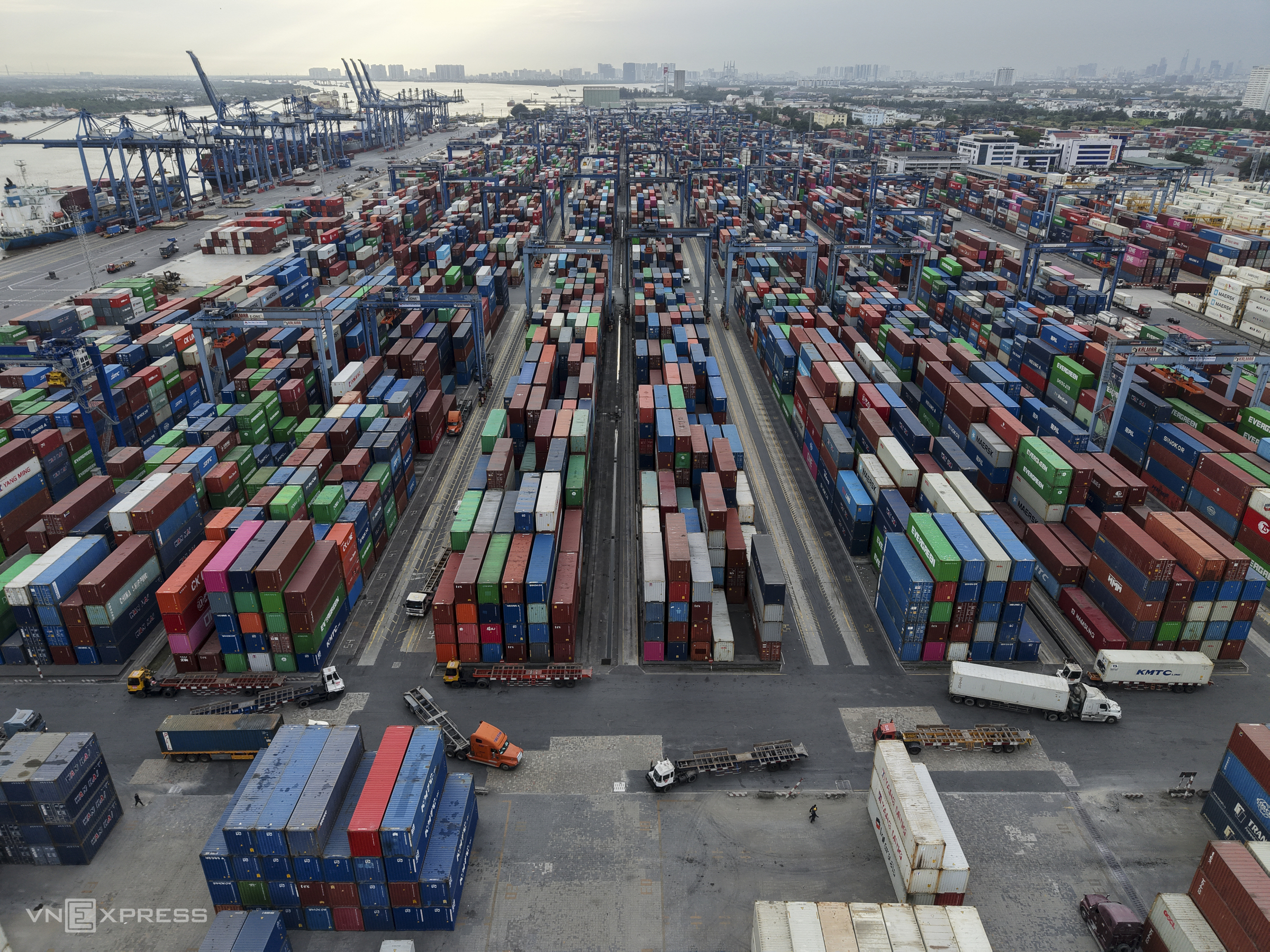 |
Containers at Cat Lai Port. Photo: Thanh Tung
Ho Chi Minh City currently has 94,053 businesses paying port infrastructure fees, with an estimated total revenue of about 2,390 billion dong per year, averaging 25,4 million dong per business.
According to city calculations, the fee exemption helps small businesses directly reduce logistics costs by 0,34-0,51%. Medium-sized businesses will see a reduction of 0,11-0,17%, and large businesses 0,03-0,05%.
The policy is also expected to reduce the prices of transportation, warehousing, and delivery services, as infrastructure fees are an input cost. Businesses' total logistics costs could decrease by 0,5-0,8%.
The fee exemption is being implemented amid businesses facing pressure from sea freight rates, fuel, cargo insurance, interest rates, exchange rates, and storage costs. Geopolitical conflicts and instability on international shipping routes also increase import and export costs.
The city believes that the three-year period is sufficient for businesses to recover orders, restructure supply chains, and stabilize cash flow.
Ho Chi Minh City's budget is expected to see a revenue reduction of 2,390 billion dong annually, totaling 7,170 billion dong over three years. However, the administration considers this a necessary resource to support business recovery, promote growth, and generate long-term revenue.
Le Tuyet