On 10/6, Nguyen Van Manh, Vice Chairman of Hue City, and a delegation from the city's Military Command, met with 70-year-old Le Van Luot in Phu Xuan ward to gather more information and conduct a field survey at the alleged mass grave site.
During the meeting, Le Van Luot stated that 58 years ago, he and his father were in the Hue Citadel area and saw approximately 15 liberation soldiers buried in a bomb crater about 3 meters deep, next to Chanh Tay Gate. This bomb crater area is now the intersection of Ton That Thiep and Thai Phien streets, near Chanh Tay Gate. He hopes authorities will soon implement survey and search measures to collect the remains of these martyrs.
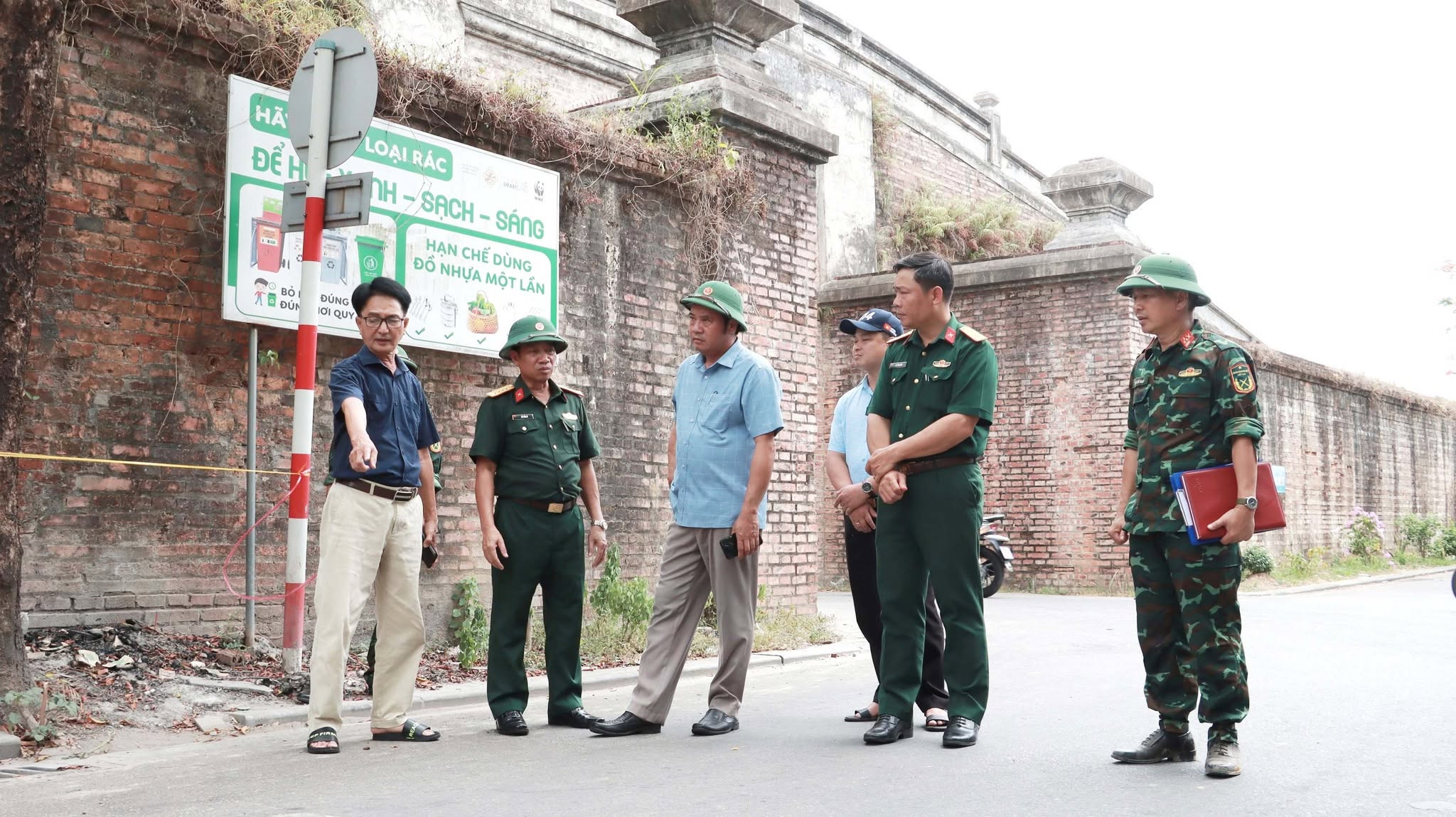 |
Luot points to the location of the bomb crater where approximately 15 liberation soldiers who died during the 1968 Mau Than Offensive are believed to be buried. *Photo: Van An*
After hearing from the witness, Nguyen Van Manh directly surveyed the site and requested the city's Military Command to urgently research and propose plans for further verification and subsequent steps. In the coming time, Hue City and the Steering Committee will objectively and scientifically verify the information. Once sufficient evidence is gathered, a plan for searching, excavating, and collecting the martyrs' remains will be developed.
The General Offensive and Uprising began at dawn on 31/1/1968, with simultaneous attacks on many urban areas across southern Vietnam. Hue was identified as one of three key urban battlefields, alongside Saigon and Da Nang.
Liberation forces simultaneously attacked Hue City, quickly gaining control of most of the Imperial City (Thanh Noi) and many administrative agencies. The battle lasted nearly a month, from late January to late February 1968. The US and Republic of Vietnam forces later launched multiple counter-offensives to retake the city. Fierce fighting occurred in the Imperial City area, Ky Dai, Dai Noi, and residential areas along the Huong River.
Vo Thanh