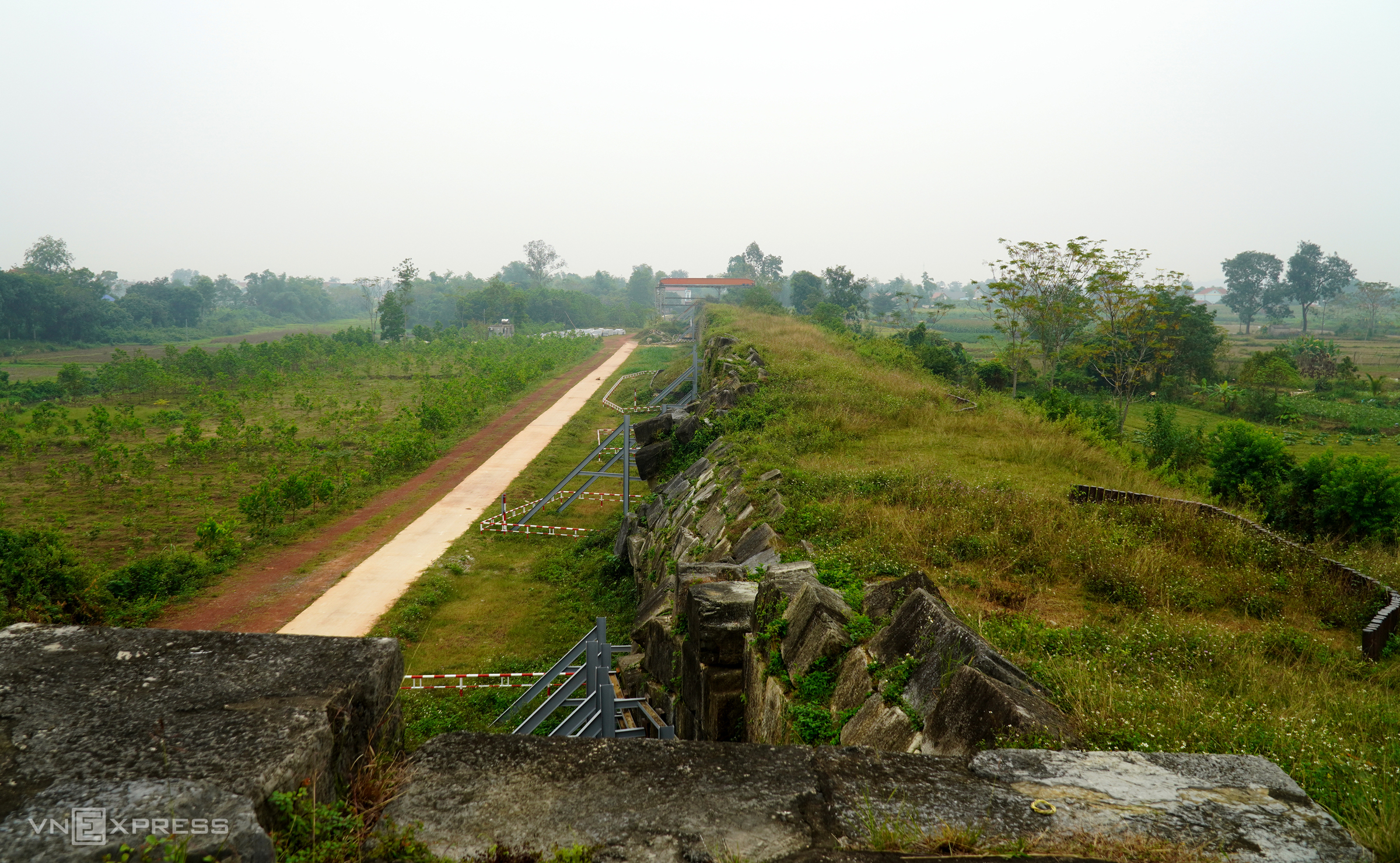
 |
The steel frame system is anchored to the ground and then erected against stone slabs at risk of falling. Engineers calculate appropriate steel frames based on the height of the stones needing reinforcement. |
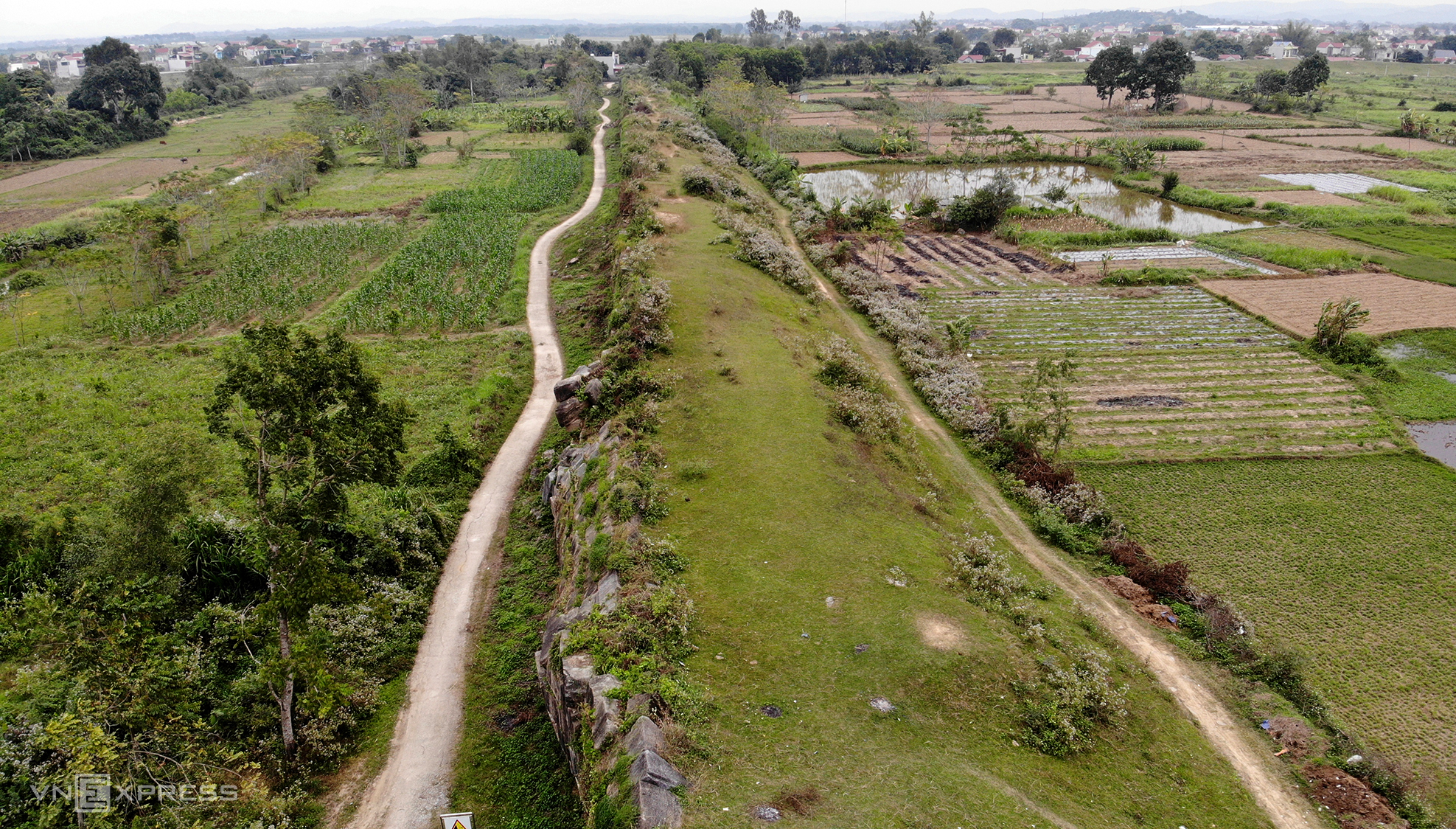 |
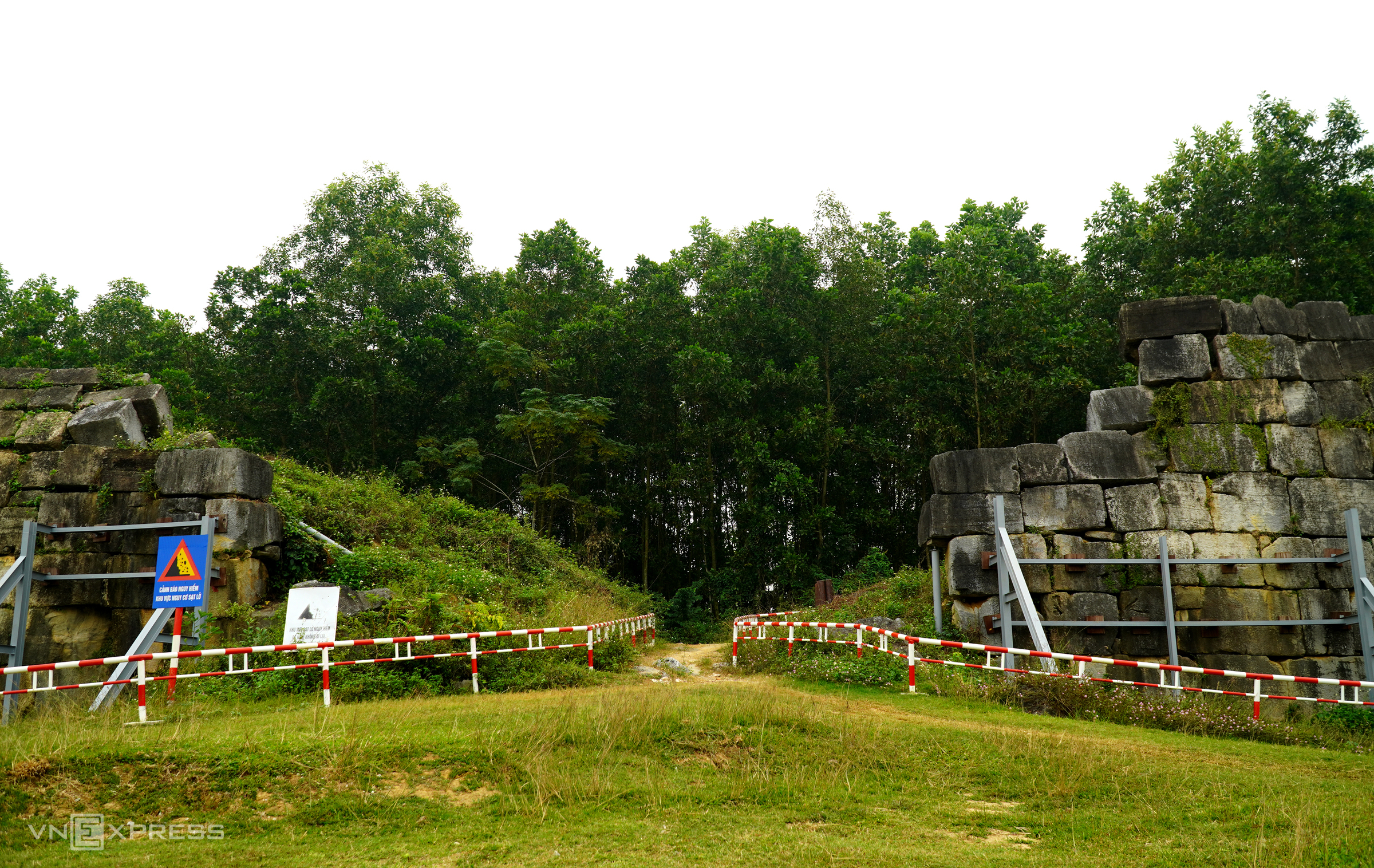
Warning signs have been erected in dangerous areas to alert residents and tourists, preventing unfortunate risks. |
The Thanh Hoa Department of Culture, Sports and Tourism recently accepted and handed over a project to reinforce and prevent erosion on 16 damaged wall sections around the north and east gates of the Ho Citadel, a World Cultural Heritage site.
The project, with an investment of over 14 billion VND, began in late 2024 and is now complete.
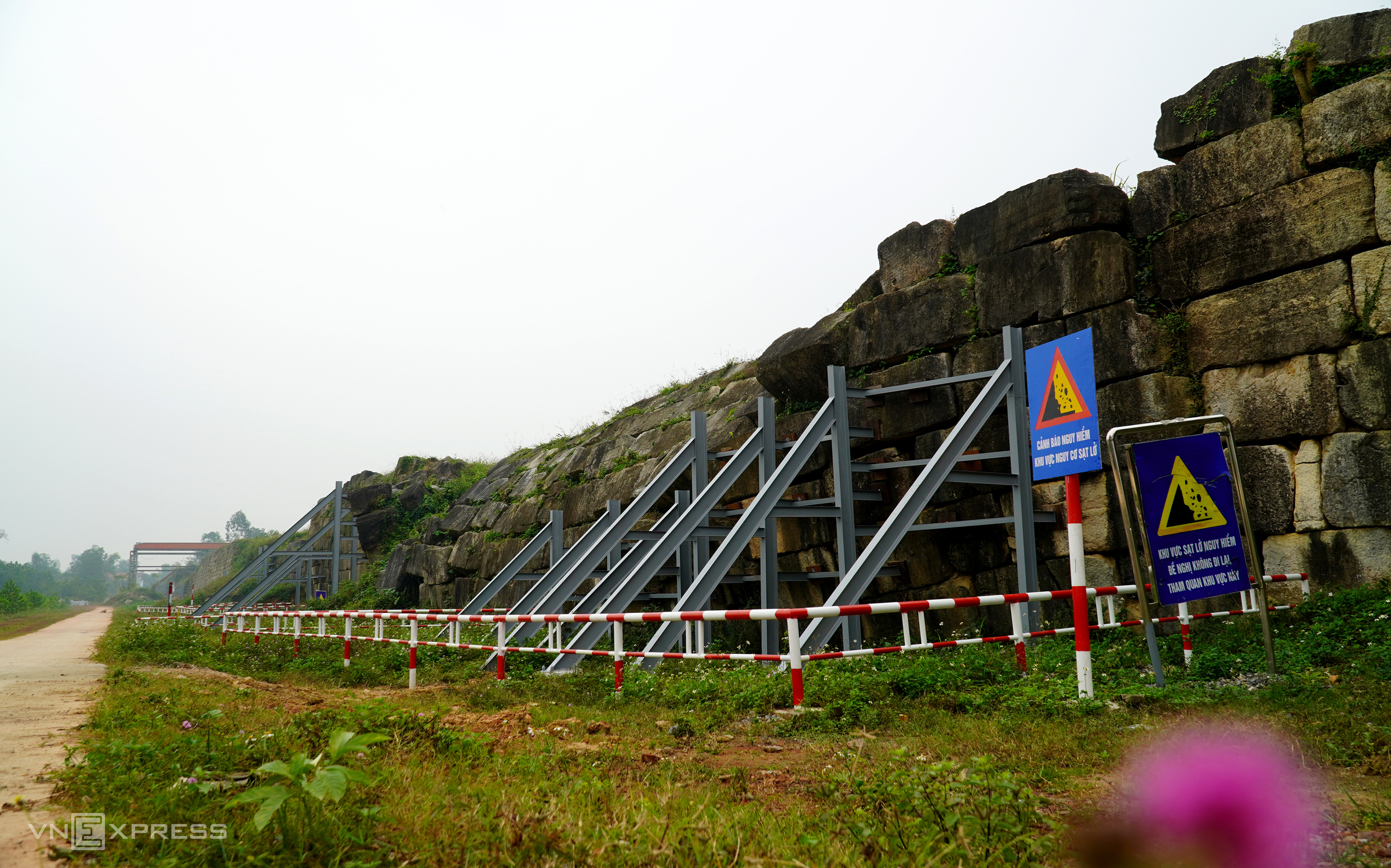 |
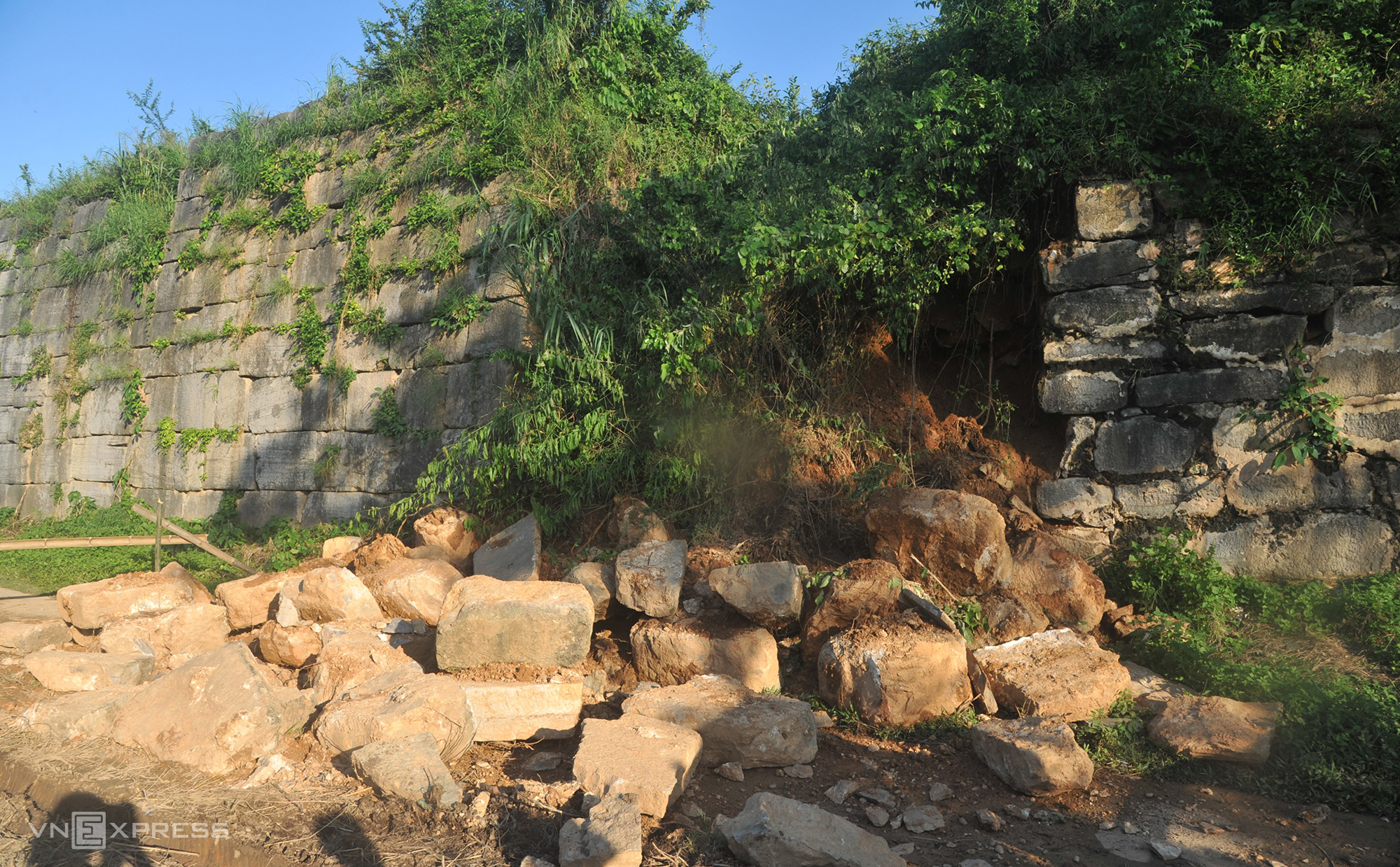
Despite reinforcement and support, many sections of the stone wall remain unstable, with a risk of further collapse and damage during heavy storms. |
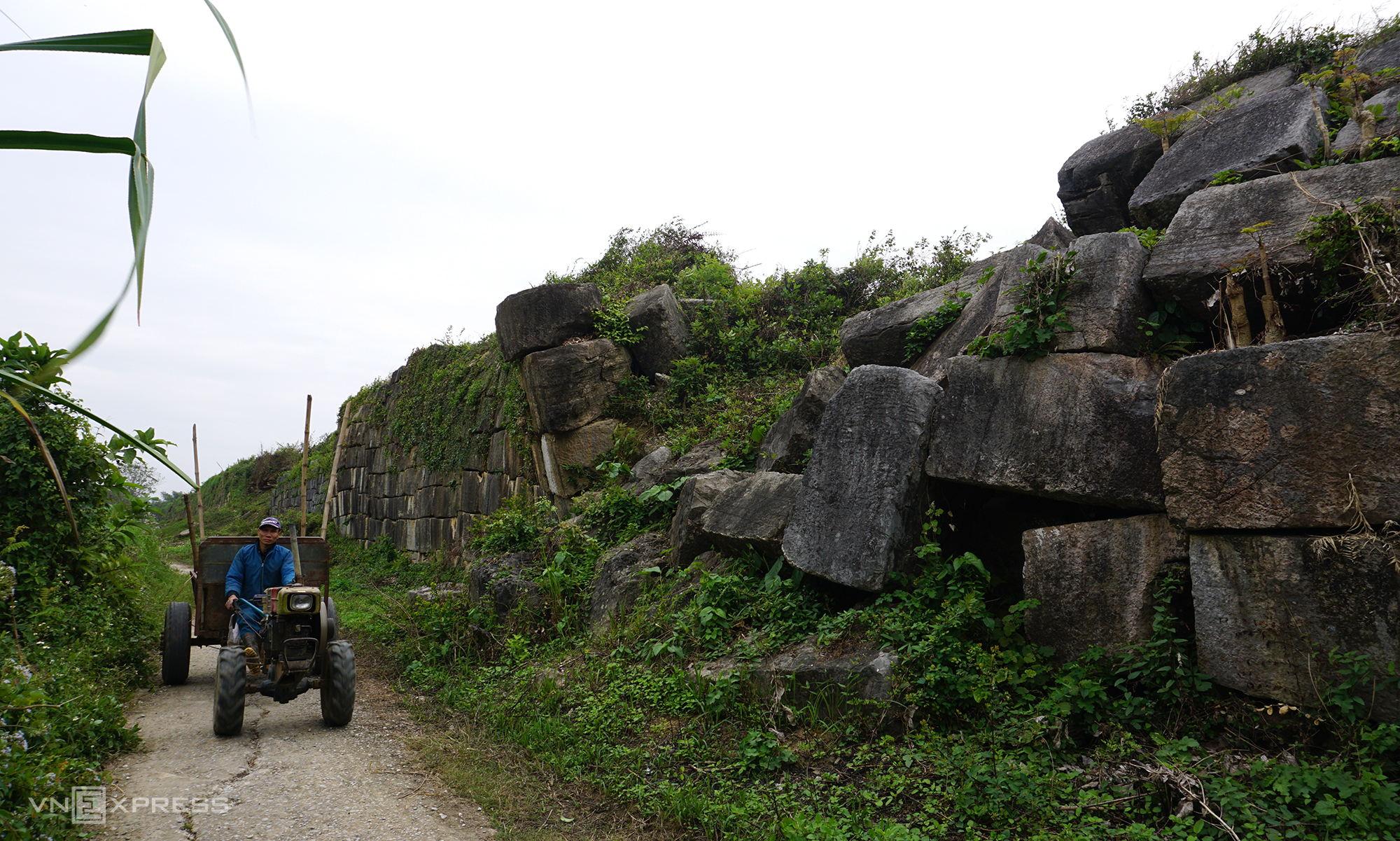 |
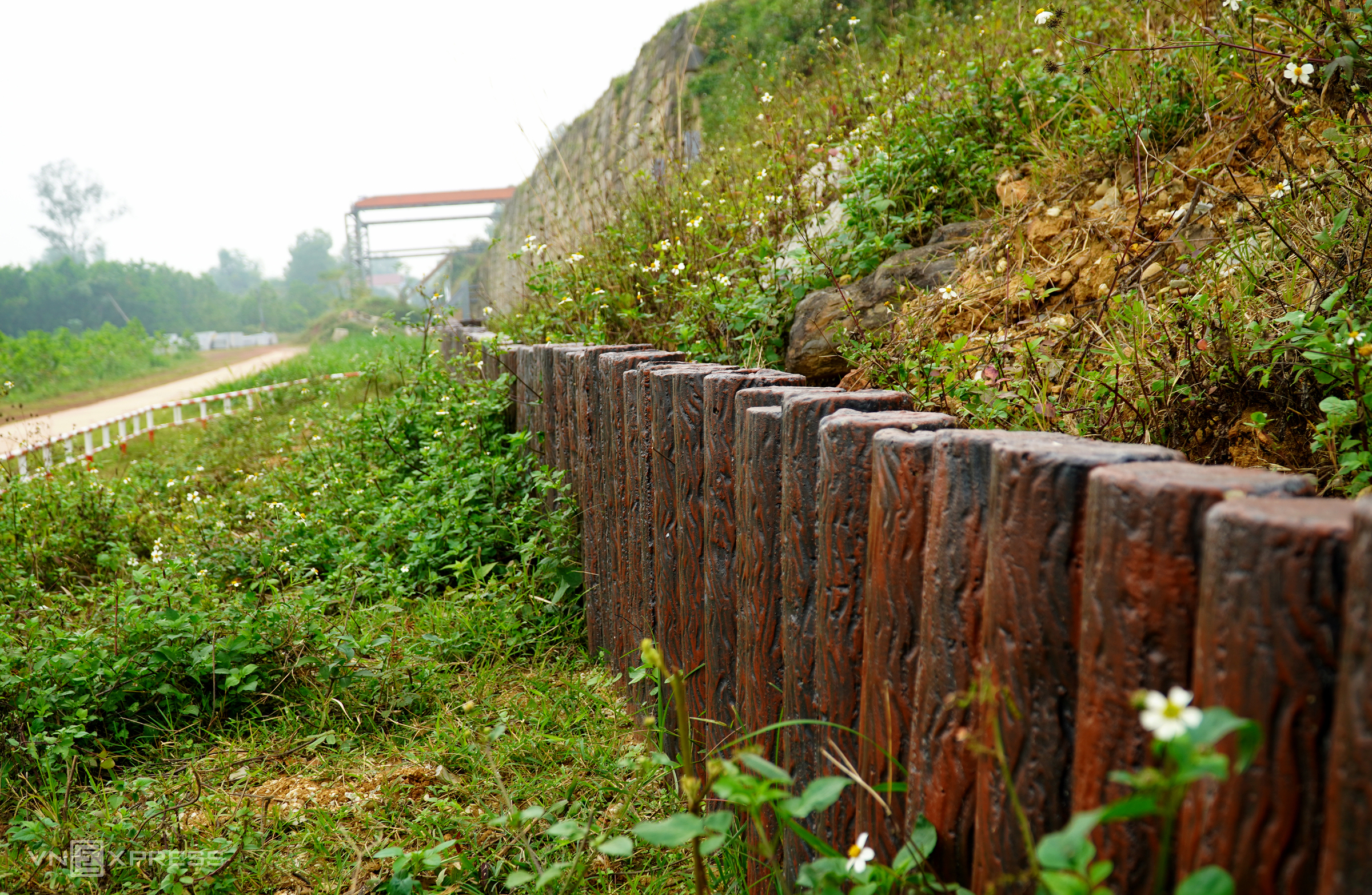
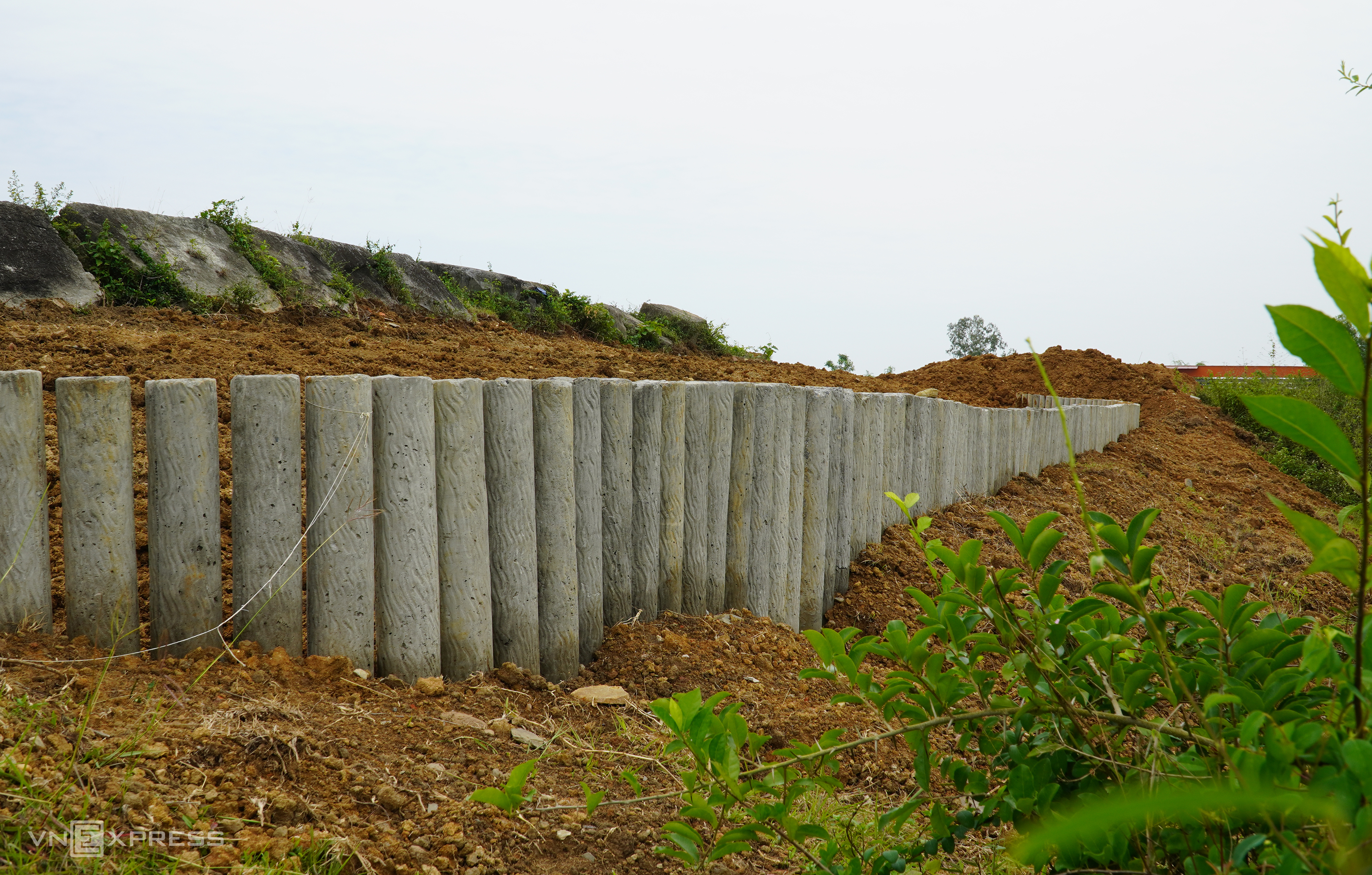
The construction unit also drove reinforced concrete piles, painted to resemble wood, to reinforce some weak sections of the wall base, applying a waterproof layer and creating drainage channels. |
Nguyen Van Long, Deputy Director of the Ho Citadel Heritage Conservation Center, stated that storms, the effects of time, and the consequences of war have caused many sections of the wall to deteriorate. The most severe erosion is in the northern wall area, which is part of the ancient citadel's core.
According to Long, many large stone blocks here have deformed and shifted, losing their original alignment and stability. The current reinforcement solution focuses on supporting these shifted stone blocks with large steel frame systems.
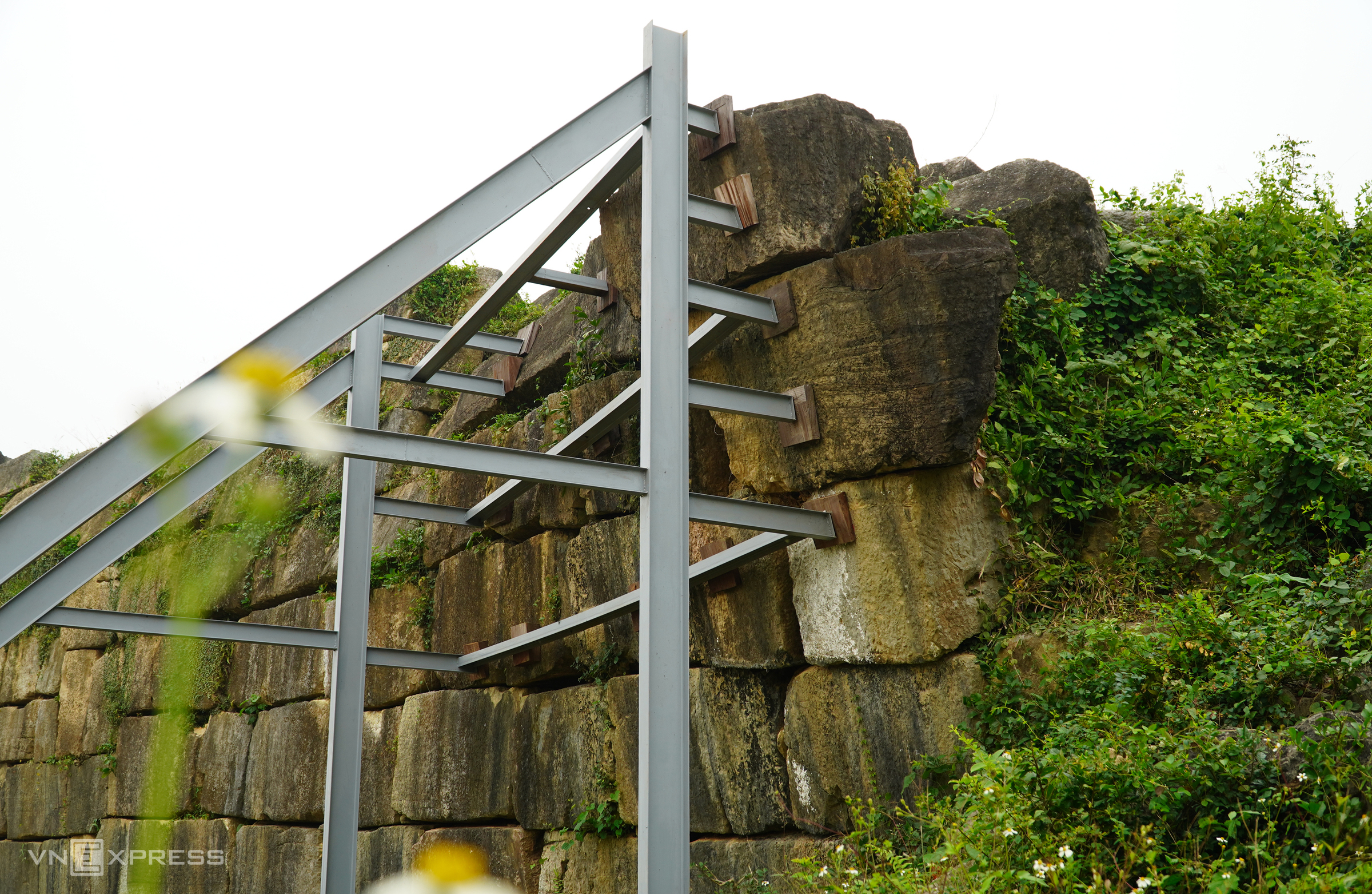 |
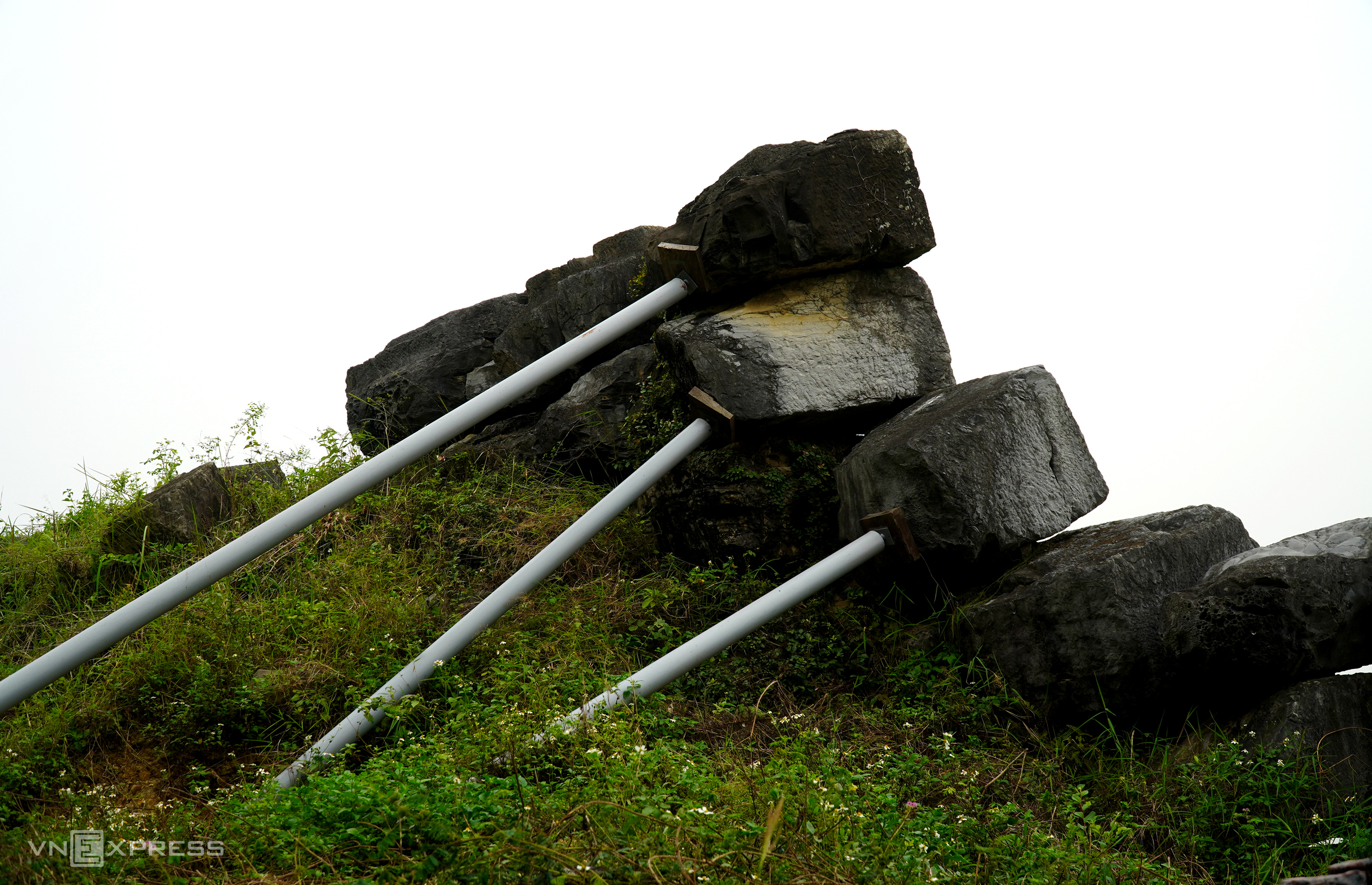
In addition to reinforcing the exterior of the wall, stone slabs that tend to lean inward are also supported by the construction unit with round iron pipes to stabilize their position as they are. |
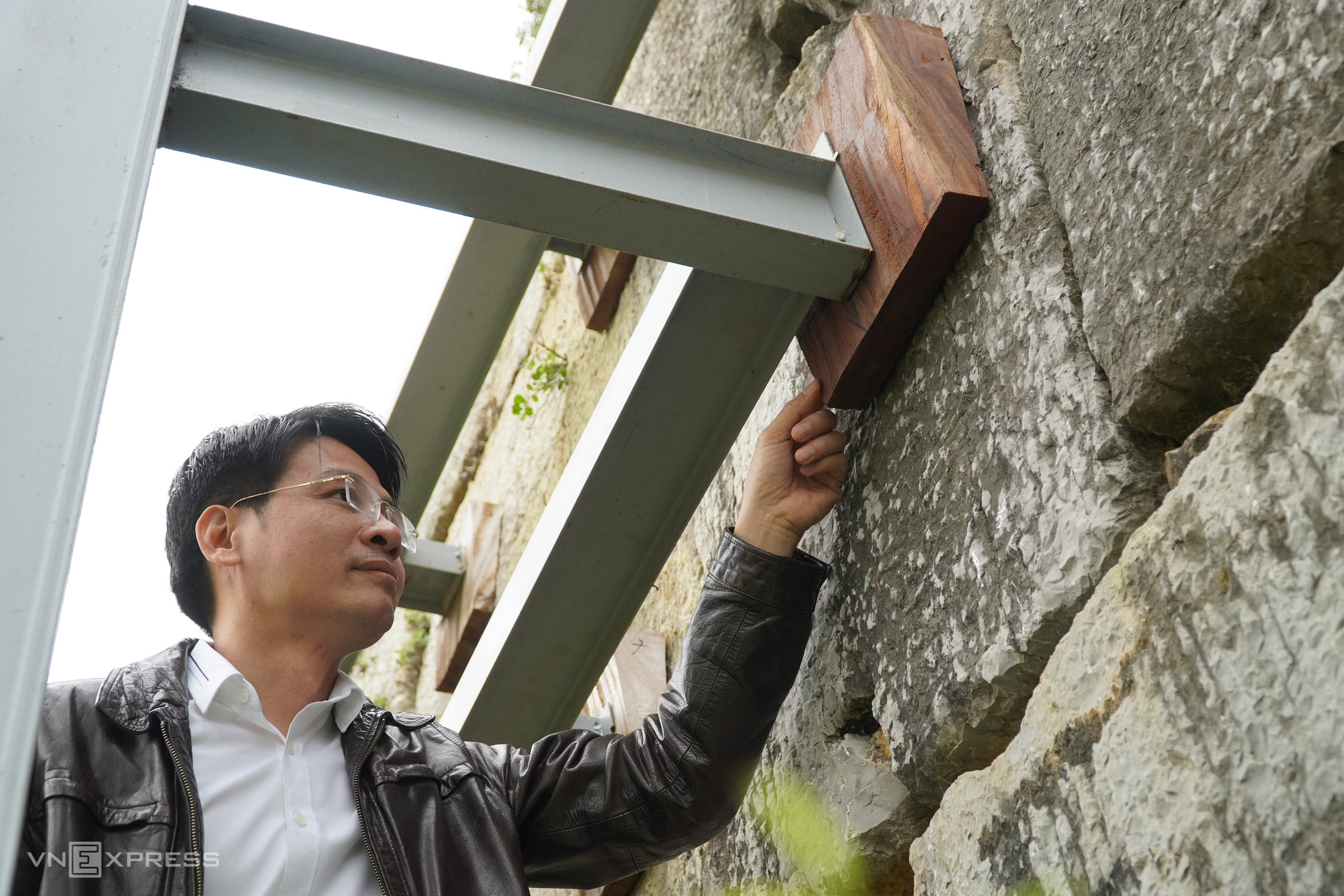 |
A representative from the Ho Citadel Heritage Conservation Center stated that after the damaged wall sections are reinforced, visitors can tour these areas but must remain outside the barriers to ensure safety. |
At the contact points between the supporting iron frames and individual stone slabs, the construction unit added lim wood pieces to create elasticity, reduce friction, and prevent direct impact of steel on the surface of the ancient artifacts.
Nguyen Van Long, Deputy Director of the Ho Citadel Heritage Conservation Center, explained that erecting steel frames to prevent erosion is an immediate urgent solution to stabilize the wall structure. In the long term, specialized agencies will continue to research and propose suitable restoration plans to ensure the sustainability of Viet Nam's only remaining ancient capital.
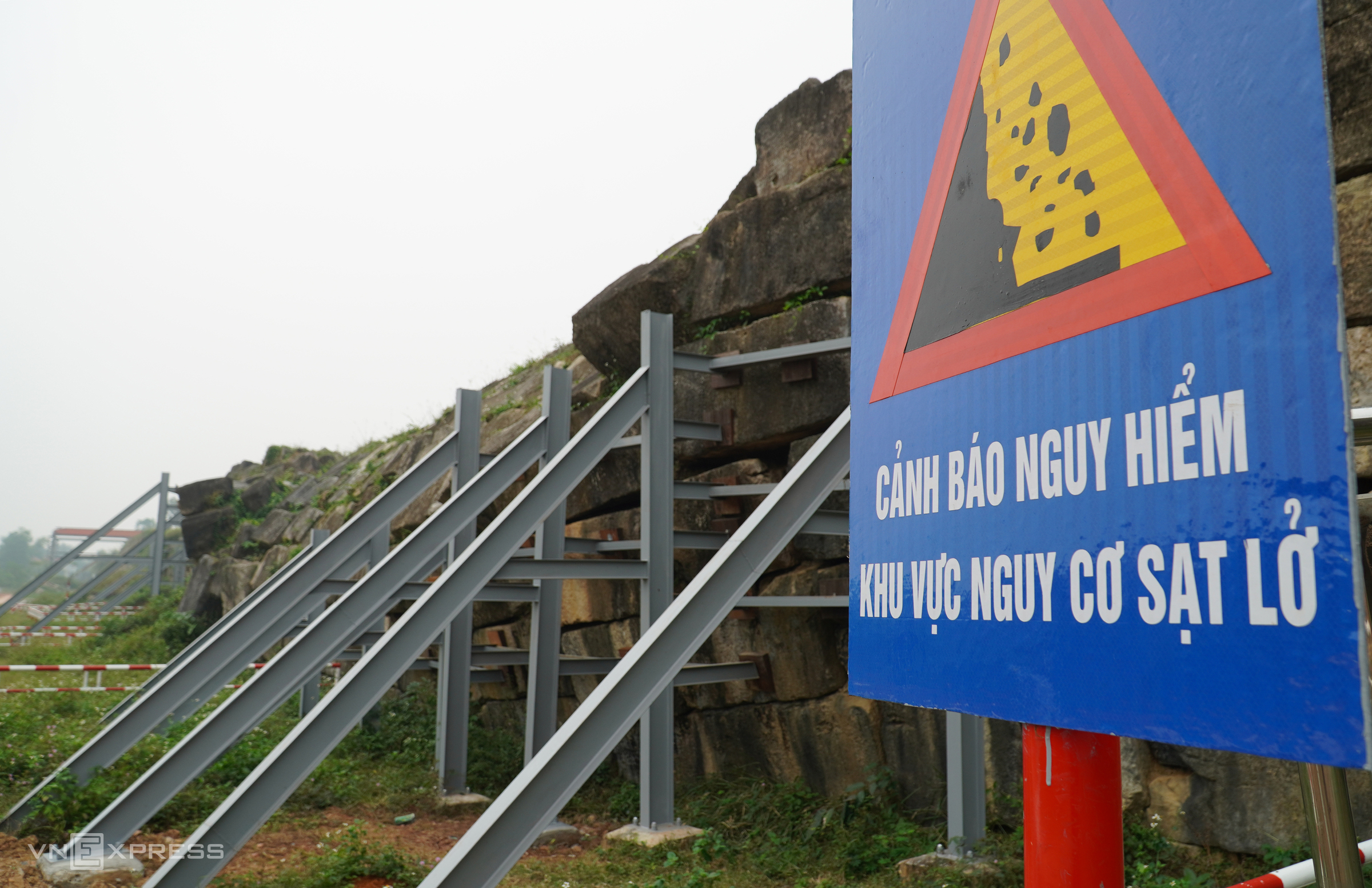 |
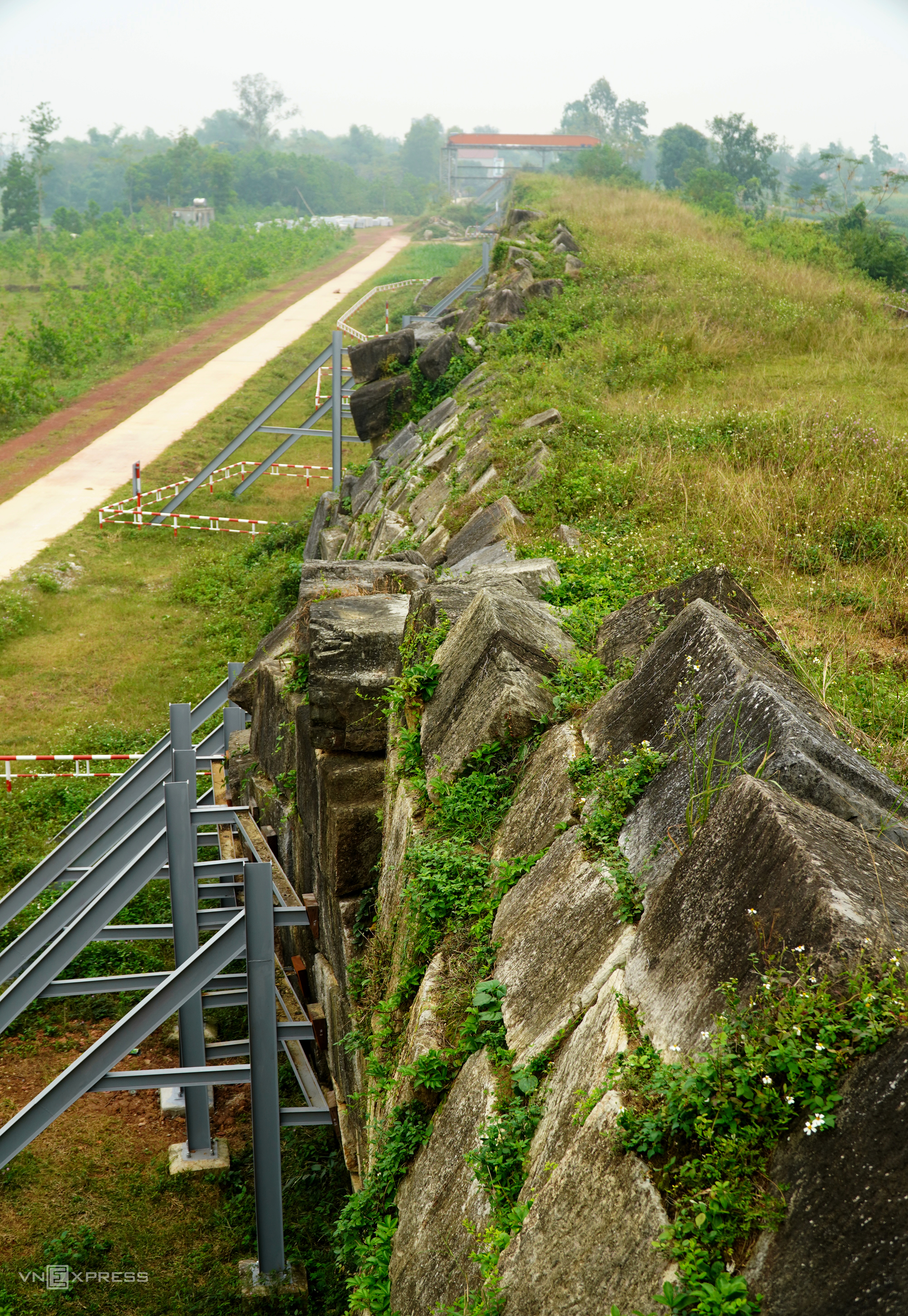 |
 |
 |
 |
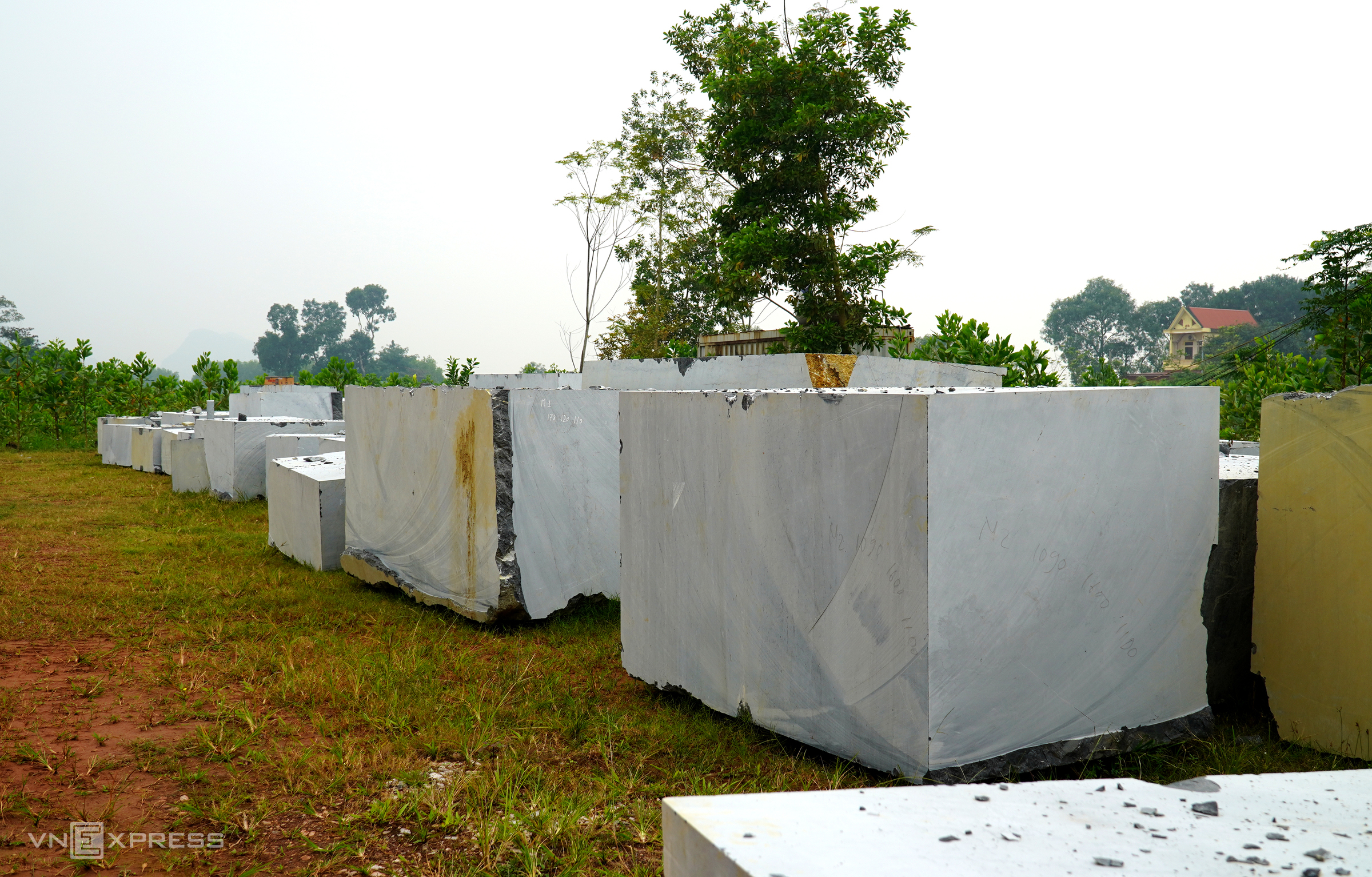 |
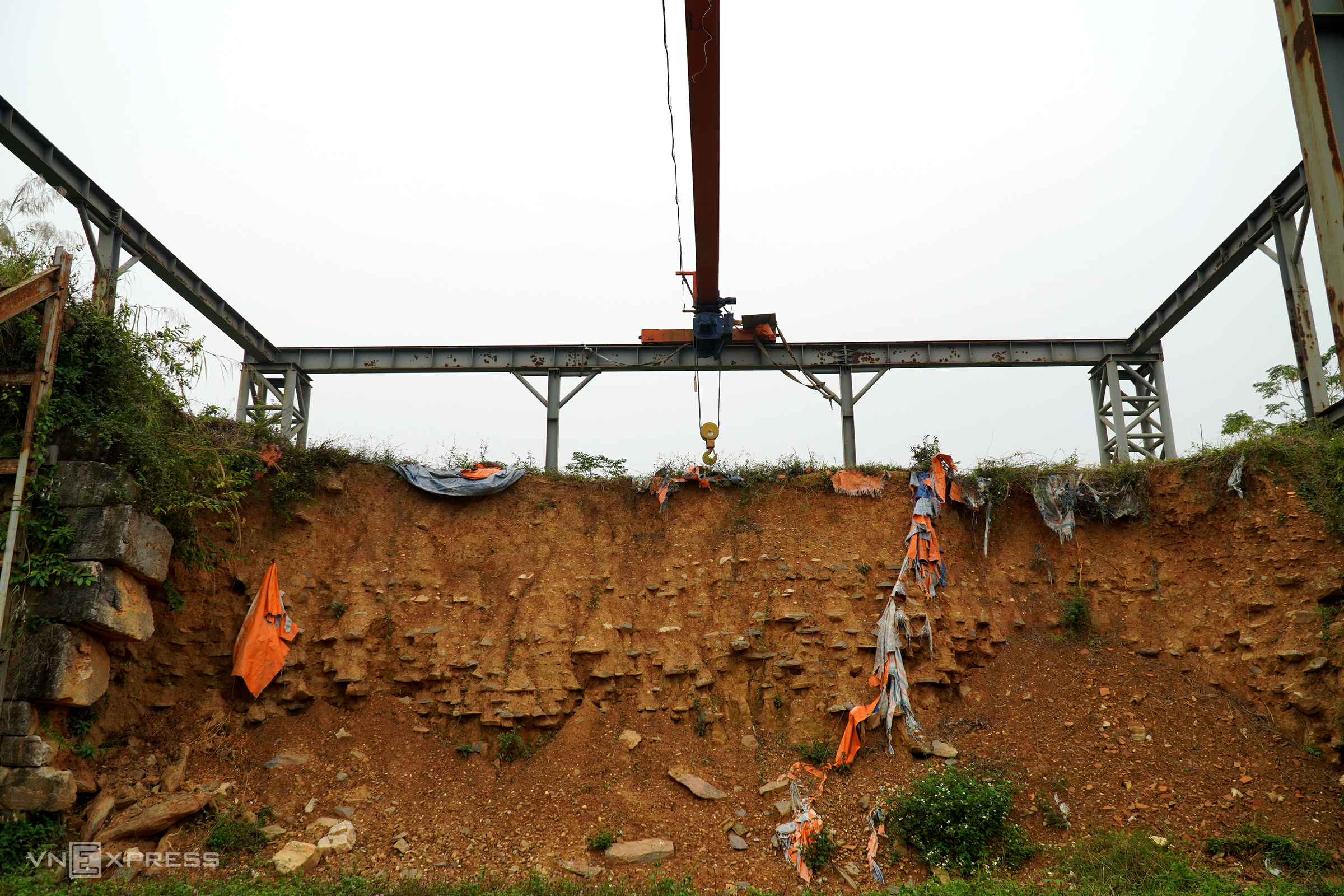
At the restoration site, the contractor has gathered many large stone slabs, some weighing 5-7 tons, for wall repair. These are monolithic green stones, believed to be of the same type as those quarried from local mountains to build the Ho Citadel in the 14th century.
After measuring for suitable dimensions, the stone slabs will have their surfaces crafted to ensure uniformity with the existing stone wall structures and shapes.
 |
 |
In addition to the 16 wall sections (totaling approximately 370 m in length) that have just been reinforced, a severely eroded section of the east wall near the north gate is undergoing restoration under a separate project.
Due to archaeological procedures and other related regulations, this project is behind its initial schedule.
 |
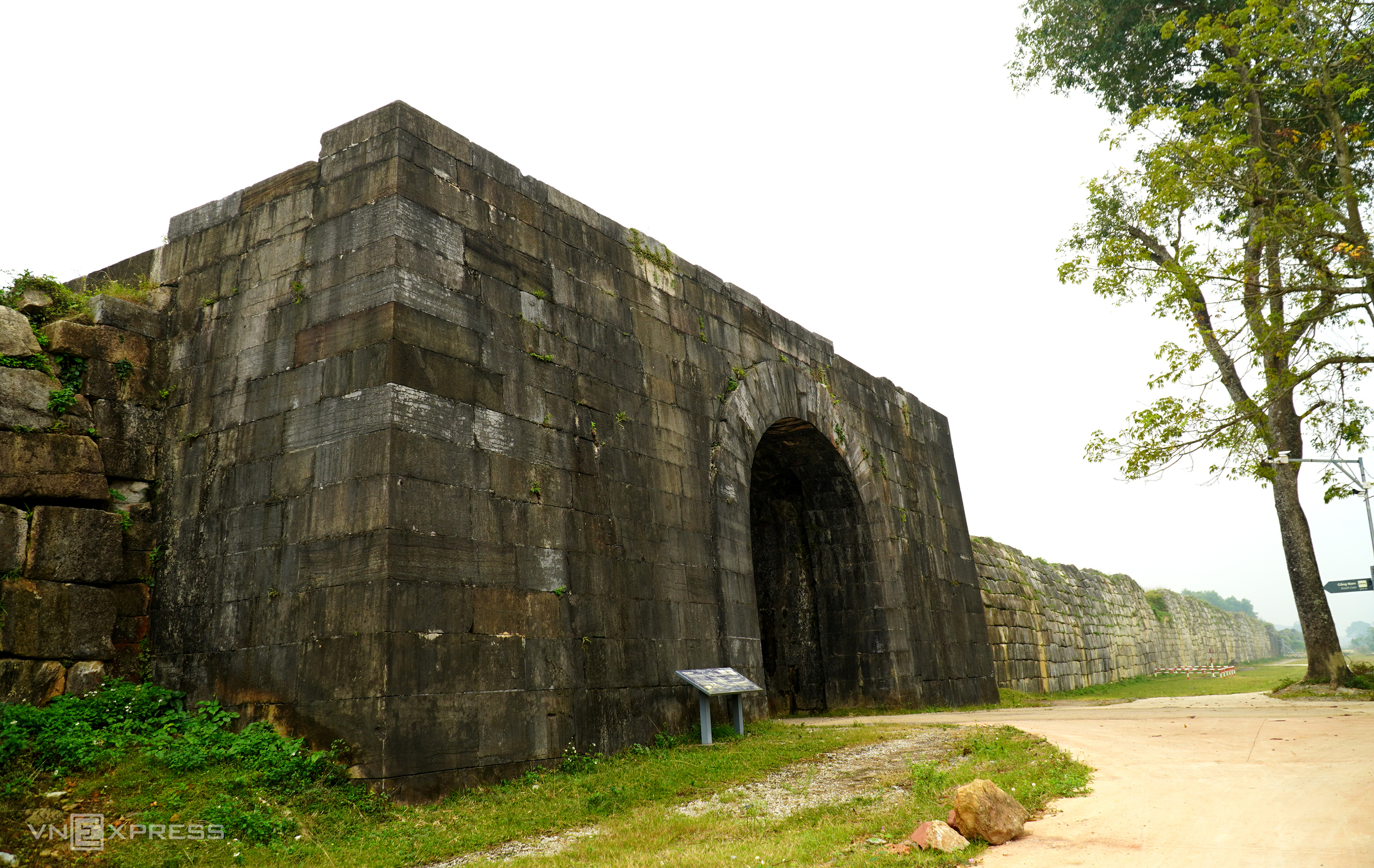 |
The north gate of the Ho Citadel remains relatively intact, even though many sections of the walls on both sides are severely damaged. In phase 2025-2028, Thanh Hoa province will continue to allocate 350 billion VND to renovate many major components of this heritage site, including Dien Hoang Nguyen, the southern moat, waterproofing roofs and walls at the gates, and other technical and auxiliary items.
The Ho Citadel was built in 1397 under the reign of Ho Quy Ly. It is one of the most unique stone architectural works remaining in Viet Nam. With its construction technique using massive, tightly interlocking stone blocks without mortar, the Ho Citadel was recognized by UNESCO as a World Cultural Heritage site in 2011. After more than 600 years of existence, the structure still retains many original features, holding special value in history, architecture, military, and archaeology.
Le Hoang