In September 2024, a severe flash flood completely destroyed the homes of 37 households in Lang Nu village, formerly part of Bao Yen district, Lao Cai province. Less than three months later, a new Lang Nu community was built approximately 2 km from the old site, helping residents gradually stabilize their lives.
The new Lang Nu project received the National Architecture Gold Award 2024-2025, organized by the Vietnam Association of Architects. This project was a dedicated effort by architects Hoang Thuc Hao, Nguyen Xuan Ngoc, Vu Xuan Son, and their colleagues from 1+1>2 International Architecture and Construction Joint Stock Company, in collaboration with the Institute of Architecture, Urban and Rural Planning and the Lao Cai Department of Construction.
Architect Hoang Thuc Hao, the project leader, stated that after the flash flood in Lang Nu, upon learning that the Lao Cai Provincial People's Committee was coordinating with Vietnam Television to mobilize social resources for resettlement, he proactively contacted provincial leaders to offer free design services. The following day, the province held an online meeting with the provincial Chairman, Vietnam Television, and design and construction experts to discuss preparations.
From the outset, the project aimed not just to build houses, but to reconstruct a complete living community. This included housing, technical infrastructure, schools, community centers, and a focus on non-agricultural livelihoods such as tourism, handicrafts, and services.
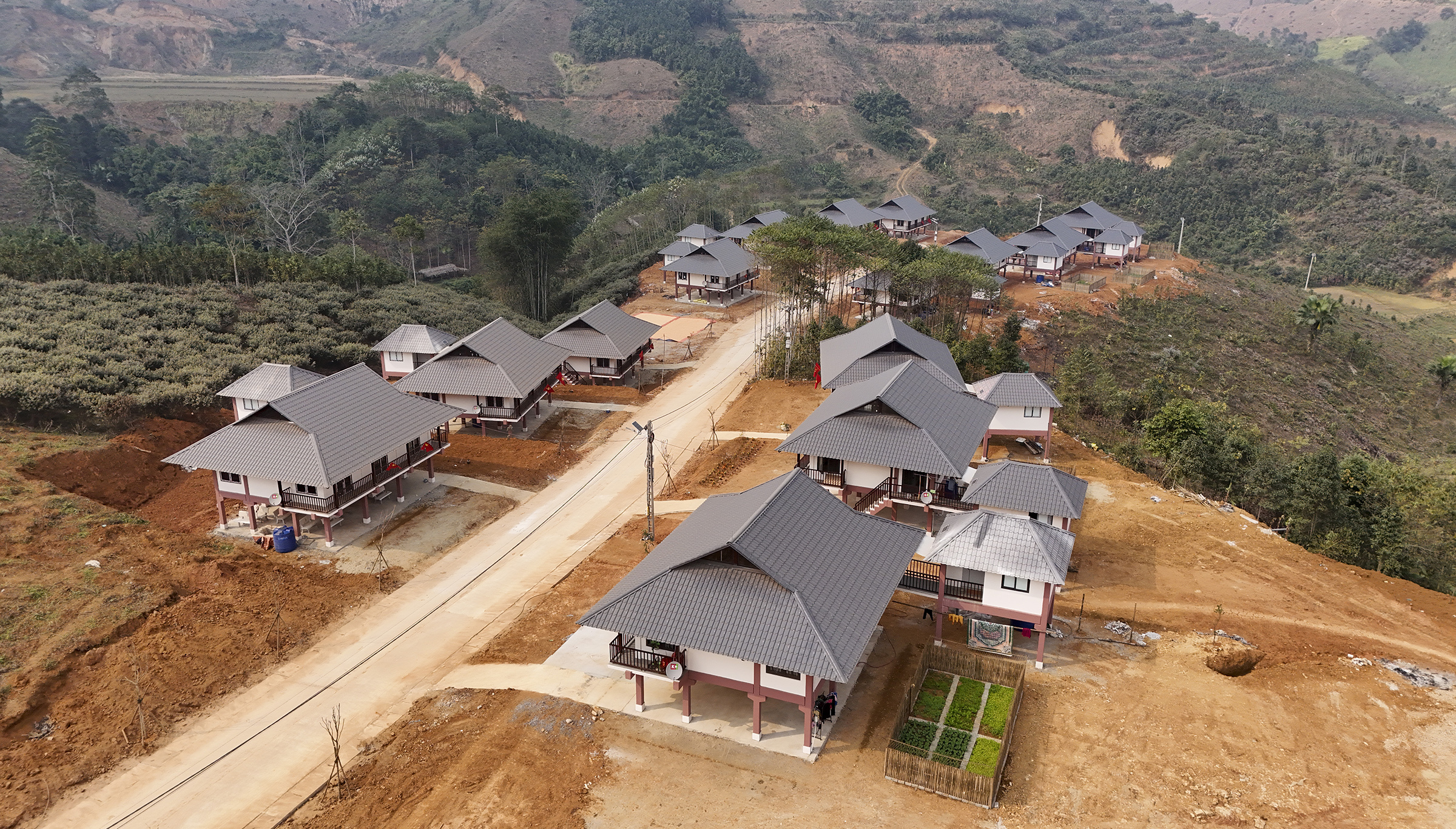 |
Lang Nu after completion. Photo: Pham Chieu |
Architecture born from community consensus
To select the site, Lao Cai province invited geological experts to survey several locations. Some initial sites were rejected due to potential landslide risks during prolonged heavy rains. The final location chosen was a sim hill, offering an open terrain, avoiding high mountain bases, minimizing strong winds, ensuring natural drainage, and providing wide views—a crucial factor for the long-term sense of security among highland residents.
On an area of approximately 10 ha, the architects proposed respecting the natural topography and minimizing leveling. Roads were designed to follow the terrain, with intersections forming small courtyards that also served as community spaces for scenic views. Houses were organized at various elevations, creating a rich and diverse landscape. Internal roads followed the village's terrain, ensuring natural surface water drainage. Existing vegetation and sim hills were preserved, laying the groundwork for future eco-tourism development.
The next major challenge was designing homes with durable structures that could be built quickly while retaining cultural identity and ensuring quality of life. Architect Hoang Thuc Hao shared that he invited structural engineers and material specialists to research suitable solutions. Within one week, the team agreed on an improved two-story Tay stilt house design using precast concrete.
Traditional Tay stilt houses were typically made of wood with surrounding corridors. However, natural wood sources are increasingly scarce, compelling the design team to explore new materials while adapting the traditional architectural spirit and space. The residential homes and community center incorporate the distinctive "con song bon buc" (four-wall stilt house) identity of the Tay people in Bao Yen, Lao Cai. Each home, with a total area of 850 to 1,000 m2, includes a main house and an auxiliary section for the kitchen and bathroom, connected to front and back gardens.
The new stilt houses retain the wide, three-bay roof and feature a main staircase placed on the side, following spiritual beliefs. The lower level is an open space, used for small community activities, handicraft production, or welcoming tourists. The upper level serves as the living area, with four main concrete pillars replacing traditional wooden ones. The steel roof frame is designed in the style of traditional wooden trusses, ensuring durability while preserving the familiar appearance of Tay stilt houses.
A notable aspect of Lang Nu was the active participation of residents in the design process. The stilt house model was presented to the villagers for feedback and adjusted before mass production. During construction, many details continued to be refined based on practical living habits.
According to architect Nguyen Xuan Ngoc, Vice Chairman of 1+1>2 International Architecture and Construction Joint Stock Company, the house functions were adjusted based on residents' suggestions, such as moving the kitchen to the auxiliary bay and placing the restroom behind the house for convenience. Based on community input, the village space was organized into three to five small hamlets, following traditional customs and clustered according to the natural terrain. At the center are the community house and school, serving as venues for market days, cultural activities, and making banh chung (sticky rice cakes) during Tet.
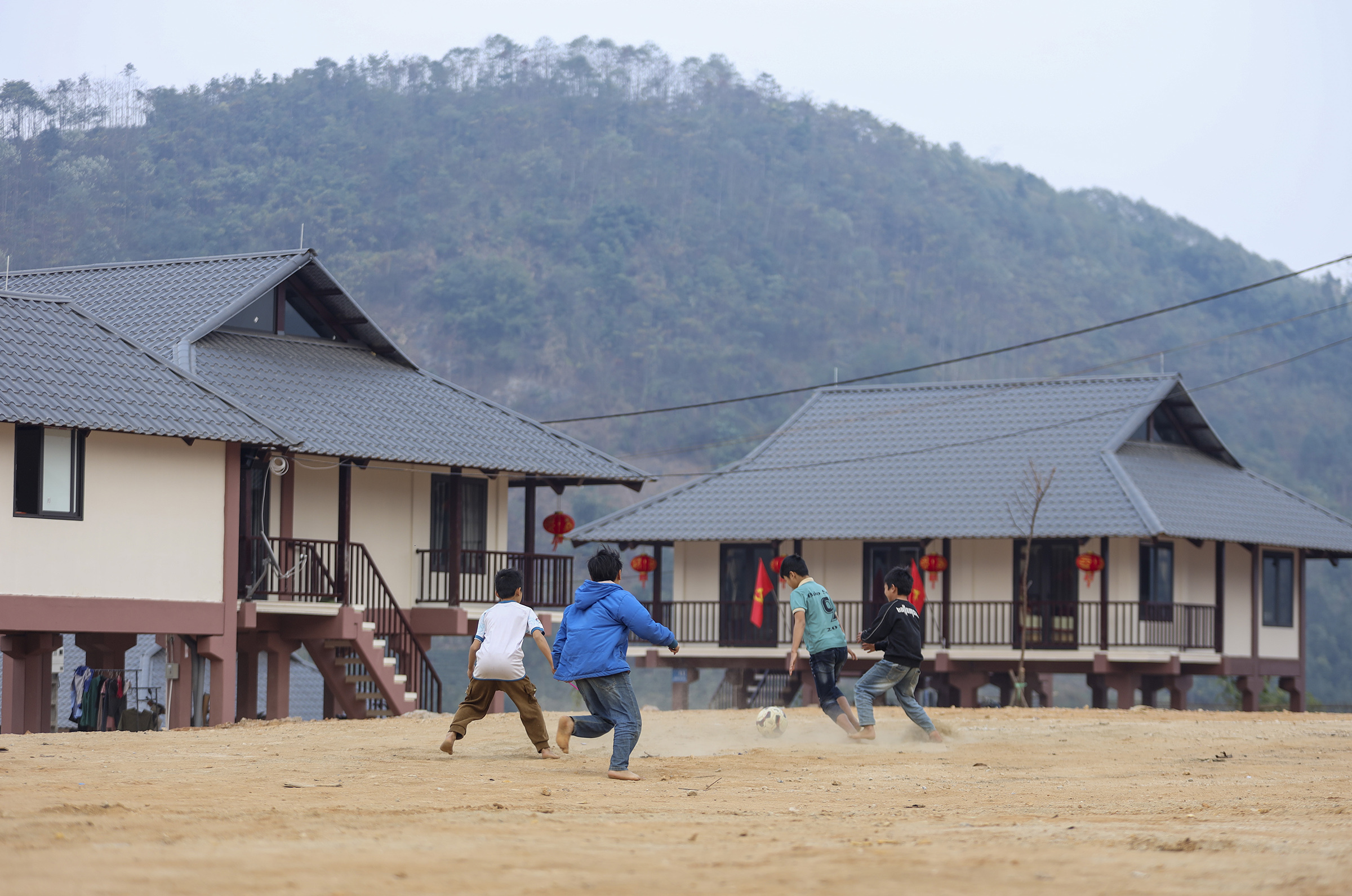 |
The houses in Lang Nu are built with simple materials, easy to maintain and replace. Photo: Pham Chieu |
Rapid construction without sacrificing identity
Architect Nguyen Xuan Ngoc noted that the greatest pressure was the timeline. In a short period, the design team had to propose quick, efficient construction solutions and select materials that residents could easily maintain and replace later.
To shorten the construction time, engineers innovated a foundation system based on the principle of tree roots, with components deeply embedded in the ground to enhance stability, reduce costs, and accelerate construction. The houses utilize precast concrete columns, beams, and floor panels manufactured in factories, then transported to the site for assembly, meeting the rapid schedule. The roof uses lightweight steel trusses covered with corrugated metal sheets patterned like tiles, ensuring traditional aesthetics while fitting the timeline and ease of maintenance.
Beam ends and column shoulders supporting floor beams leverage the characteristics of wood structures, creating precast components that inherit the traditional stilt house design. Beams, columns, and trusses are painted wood-brown, with the space and materials creating a warm, friendly atmosphere. An initial proposal for faux wood paint was considered but rejected due to high long-term maintenance costs; instead, a common brown color was chosen for easier maintenance and cost savings.
Architect Nguyen Xuan Ngoc stated that the company mobilized its entire office, with 15 young architects working continuously day and night to finalize the drawings. Some former employees also volunteered to participate, contributing to the community project. For a project of similar scale, design typically takes about two months, but this project was completed in less than one month. Similar constructions usually take six to nine months, while Lang Nu took less than three months.
The entire process involved simultaneous design, manufacturing, and construction. While site leveling was underway, architects were simultaneously finalizing detailed drawings. Many late afternoon and evening meetings were held online to resolve issues.
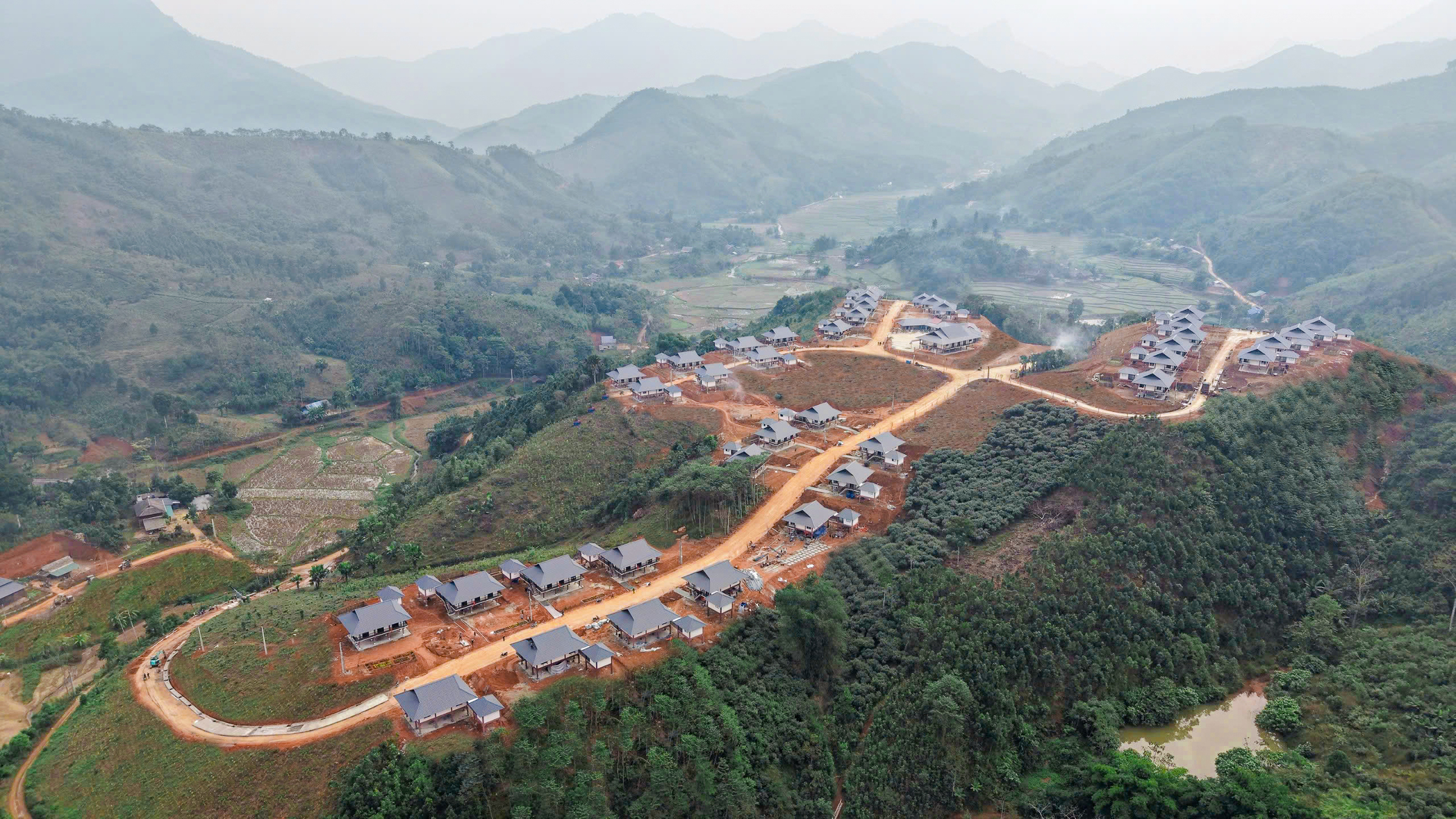 |
The new Lang Nu village is located on a hill with an open view. Photo: Pham Chieu |
Architect Hoang Thuc Hao mentioned that Lang Nu villagers frequently visited the construction site, eagerly awaiting their return to new homes. This anticipation made the design and construction teams even more aware of their responsibility. After nearly three months of implementation, the project was completed on 22/12/2024, ahead of the Government's target of 31/12/2024.
Tran Trong Thong, Chairman of Bao Yen commune and former Chairman of Bao Yen district, reported that the 37 households who lost their homes have been relocated to the new Lang Nu village and have been living stably since. Residents have agreed with the design and have not made alterations; some families have added wood-burning stoves under their stilt houses for warmth in winter. Community facilities such as the school, cultural house, and community center are in regular use.
The National Architecture Award Council recognized Lang Nu as an exemplary social architecture project, solving the post-disaster resettlement challenge in record time, preserving Tay architectural identity with modern materials, and harmonizing with the landscape and community life.
Doan Loan