On a morning before Tet, Le Khac Dung, 39, left his rented room early for the bike storage facility, lent by the ward People's Committee, to begin his routine. Each bicycle there was once abandoned in a yard, an apartment hallway, or sold for scrap. For Dung, these discarded items mark the start of a different journey.
"When a 'dead' bicycle rolls again, I feel like I've saved something," he said.
Despite graduating in petroleum engineering, Dung tutored math, physics, and chemistry during university to support himself. Tutoring gradually became his long-term profession. His venture into bike repair came later, an unexpected turn in his life.
Over two years ago, while visiting a student's parent, Dung noticed a relatively new bicycle gathering dust. This sight reminded him of a single mother and her two young children he had met earlier, who walked several kilometers daily from their rented room to beg for food. On scorching days, the children would be exhausted, and their mother had to spend 20,000-30,000 dong to hire someone to take them home.
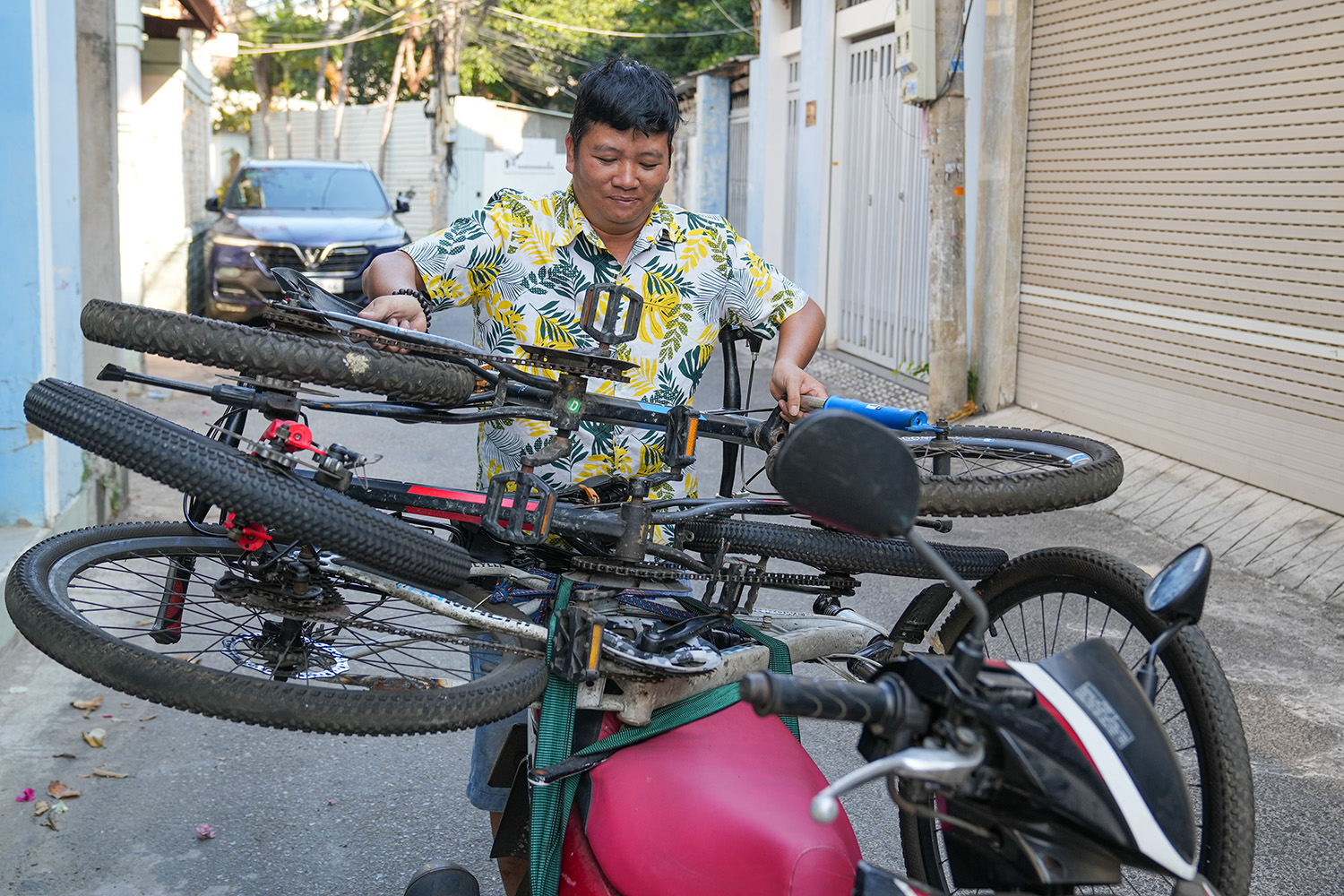 |
Le Khac Dung ties recently acquired old bicycles onto his motorbike to transport them to the warehouse for repair before donation. *Photo: Truong Ha* |
He asked for the bike, and the owner readily agreed. When he gave it to the mother, her grateful eyes left an indelible impression on him. From that moment, his journey of collecting, repairing, and donating old bikes began.
Initially, he sought bikes from students' parents. Later, he approached online groups selling used items. While some sellers asked for tens of thousands or even millions of dong for a bike, many decided to donate them once they understood his charitable purpose. Dung then rode his motorbike through various alleys, transporting the bikes to his storage facility.
Some bikes required only about 30 minutes for a tire tube replacement or brake adjustment. Others seemed beyond repair, yet he patiently dismantled every screw, cleaned the chain, replaced brake cables, and trued the wheels. He acquired these skills from online videos and extensive self-study.
To date, over 400 bicycles have been donated, reaching not only coastal areas but also destinations hundreds, even thousands, of kilometers away. After typhoon Yagi, 47 bikes were loaded onto a train to Lao Cai. Other shipments have reached Long An, Binh Phuoc, and Thanh Hoa.
Recipients include not only poor students but also lottery ticket vendors, scrap collectors, and elderly people receiving charity meals. The total repair cost for all these bikes was less than 40 million dong.
During a recent conversation, Dung's phone rang. On the other end, a teacher reported the situation of a 7th-grade student living in an alley on Truong Cong Dinh street who needed a bicycle for school.
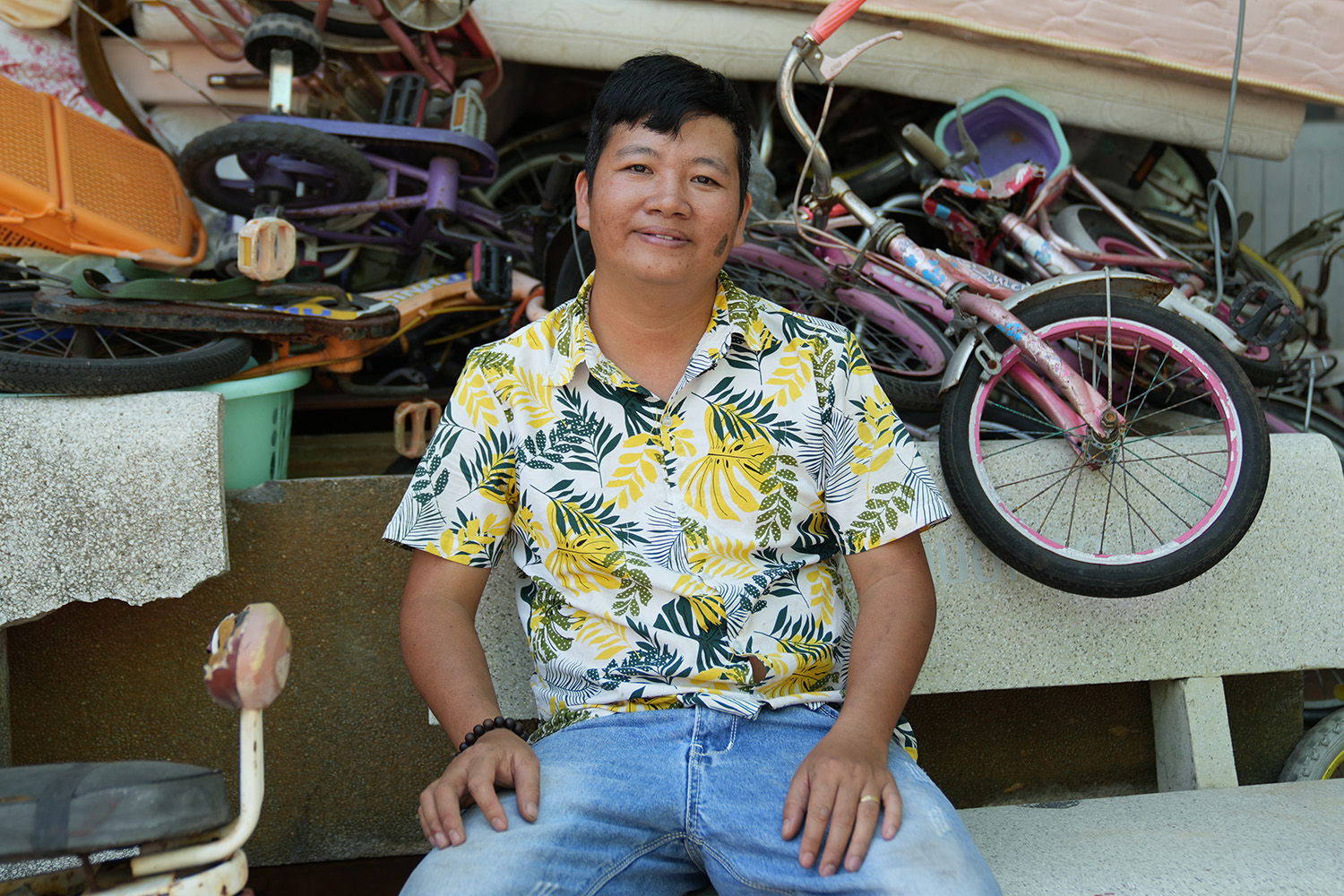 |
Le Khac Dung at the old bicycle storage warehouse. *Photo: Truong Ha* |
The boy had moved with his mother from the Mekong Delta to Vung Tau to earn a living. His mother works as a dish washer, earning about 6 million dong per month, but sends 2 million dong back home to support her family. The mother and son live in a small rented room. The walk to school takes over 20 minutes, regardless of sun or rain. Neither of them knew how to ride a bicycle.
That afternoon, Dung delivered the newly repaired bicycle to their rented room. Upon receiving the bike, the boy's face lit up, and he promised to learn to ride and take good care of it. His mother stood beside him, silently watching her son, her eyes red-rimmed.
Dung stated that his greatest motivation comes from the moment children receive their first bike. They timidly touch the handlebars, then boldly pedal their first few turns, their laughter echoing across schoolyards or small rented rooms. Some children clean their bikes daily as if they were precious possessions. "That energy makes me forget all my fatigue," he said.
Beyond bicycles, Dung also organizes the collection of used wheelchairs and hospital beds to transfer to ward medical stations or lend to poor patients on a rotational basis. For him, the importance lies not in material value, but in ensuring usable items are not wasted.
Last year, he was honored as an exemplary figure of TP HCM, receiving certificates of merit from the Prime Minister, the Central Committee of the Vietnam Youth Union, and the City People's Committee Chairman.
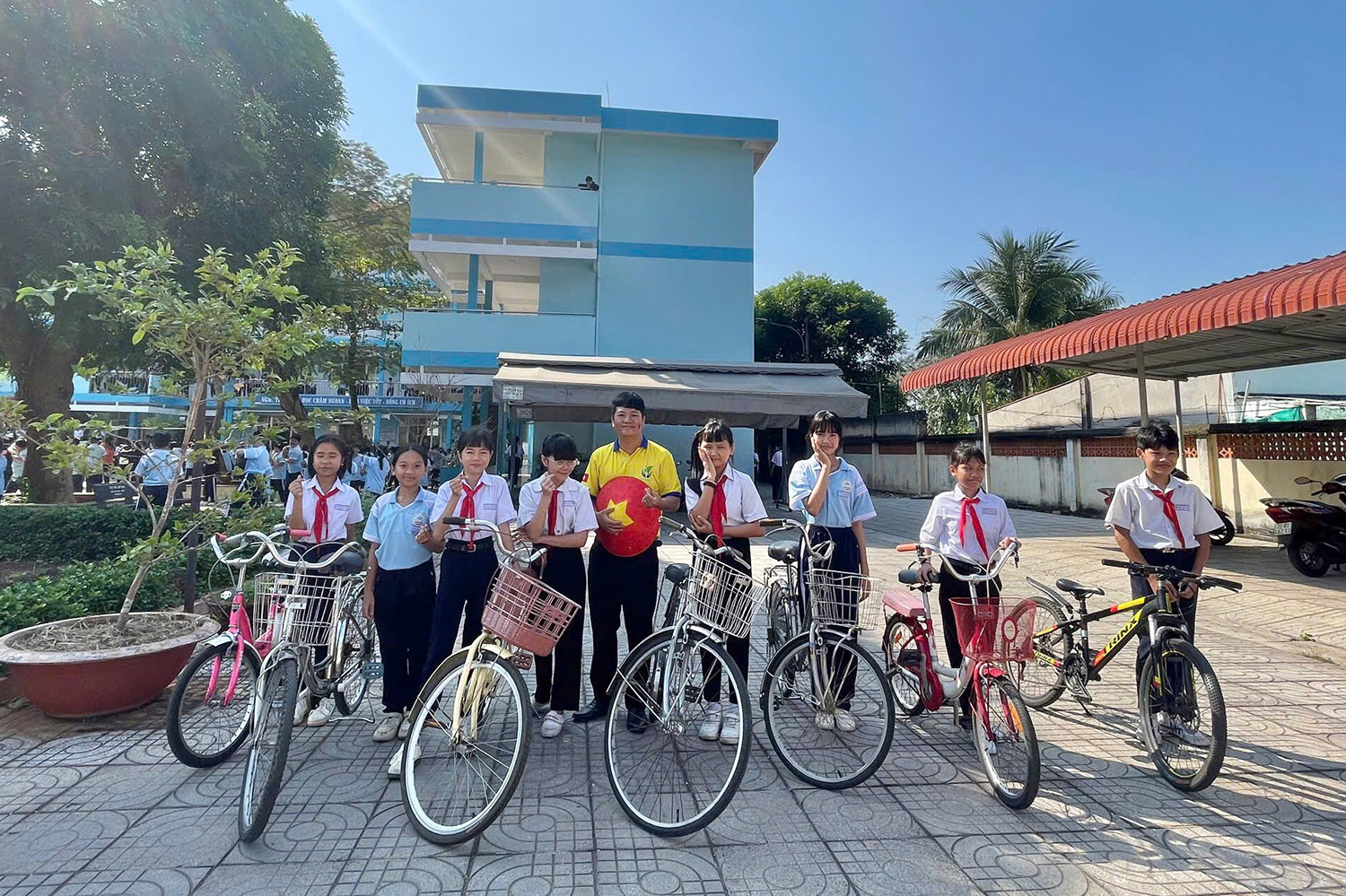 |
Dung donates bicycles to students at a school in Vung Tau. *Photo: Contributed* |
However, Dung believes this journey is not solely his effort. Behind him are many "invisible satellites" – a network of supporters. A nail technician in the US sent 100 USD for parts; a man quietly transferred 10 million dong without a message; a woman in TP HCM collected 40 old bikes from apartments and sent them to Vung Tau. Locally, small traders, material store owners, and rice dealers donate bikes, sell parts at low prices, and lend transportation.
"The resources and faith in this journey are contributed by many kind hearts. I am just the one who dedicates time and effort, delivering them to those who need them most on their behalf," he said.
Beyond that small bike warehouse, old wheels still await a new life every day. And for Dung, as long as there are people who need a means to get to school or earn a living, this journey will continue.
Truong Ha