On 9/4, Prime Minister Le Minh Hung reported to the National Assembly on the 2025 socio-economic development and State budget results, as well as the 2026 plan.
The prime minister stated that the government designates 2026 as the "year of improving the quality of grassroots civil servants," focusing on professional qualifications, public service execution skills, and a sense of responsibility to serve.
The government directs ministries, sectors, and localities to effectively use existing working headquarters, minimizing the construction of new headquarters and administrative centers. The prime minister requests a review and thorough handling of surplus public assets to prevent deterioration and waste, ensuring equipment for work, especially at the commune level.
Civil servant evaluations will be based on work performance. The government will resolutely replace weak, evasive, and irresponsible individuals who fail to complete tasks. Simultaneously, it will reward, plan, and appoint civil servants who dare to think, dare to act, and dare to take responsibility for the common good.
The government continues to intensify the prevention and combat of corruption, waste, and negativity, improving the effectiveness of inspections, especially for cases monitored and directed by the Central Steering Committee. It will strictly implement inspection and audit conclusions, increasing the rate of money and asset recovery.
The government demands thorough expense savings and the prevention of State budget waste, particularly recurrent expenditures, to allocate resources for social welfare, development investment, and key, urgent tasks.
Provincial and city Party Committee Secretaries, along with the heads of ministries and agencies, are urged to promptly review, statistically classify, and comprehensively address all projects, both budgeted and non-budgeted. They must focus on resolving long-standing problematic projects within their authority.
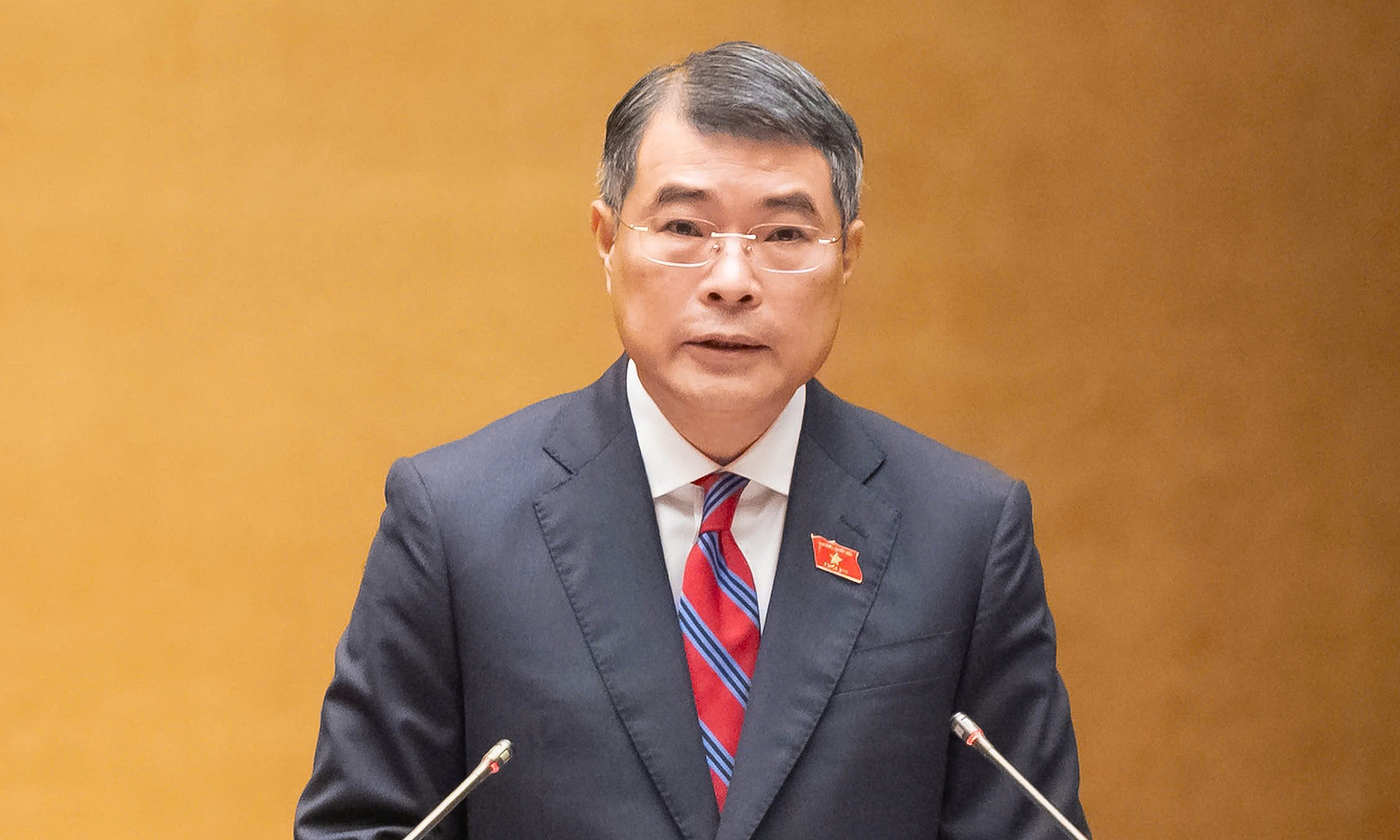 |
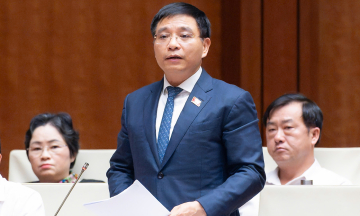
Prime Minister Le Minh Hung presents a report to the National Assembly. Photo: Hoang Phong |
**Setting Ambitious Goals for Social Welfare, Infrastructure, and Digital Transformation**
The government strives to complete over 110,000 social housing units in 2026. From 2026, citizens will receive free periodic health check-ups or screenings at least once a year, prioritized by group and roadmap.
The government also aims for 100% of public and private hospitals to implement electronic medical records, eliminating paper records. It will develop a "silver economy" project and labor and employment policies adapted to rapid population aging, to be completed in 2026.
In education, the government will effectively implement the Politburo's resolution on breakthroughs in education and training, providing one unified national general education textbook set from the 2026-2027 academic year. The education sector will implement mechanisms to attract high-quality human resources, policies for talented individuals, and incentives for training highly skilled workers.
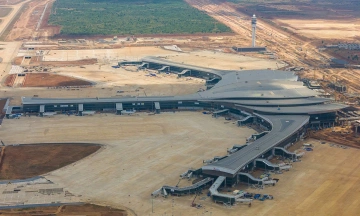
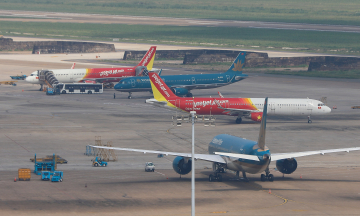
The prime minister stated that the government will develop a synchronized, modern infrastructure system, especially key transport projects, railways, airports, seaports, energy infrastructure, and urban areas. Agencies will accelerate the progress of urban railway lines in Ha Noi and Ho Chi Minh City, lines connecting with China, and some sections of the North-South high-speed railway. Ministries, sectors, and localities will ensure the construction progress of Gia Binh International Airport and the expansion of Phu Quoc, Chu Lai, and Ca Mau airports.
According to the prime minister, in the early months of 2026, the macroeconomy was basically stable, inflation was controlled, and major balances were ensured. Q1 GDP growth is estimated at 7.83%. Infrastructure projects are being implemented synchronously, focusing on expressways, high-speed railways, and airports.
The government actively urges localities to address public assets and long-standing outstanding projects. Social welfare policies and sustainable poverty reduction are effectively implemented, with attention given to culture, health, and education. Across the country, 121 ethnic boarding schools have been started in border communes, and electronic health records and interconnected electronic medical records from grassroots to central levels are being deployed. People's lives continue to improve.
However, the prime minister acknowledged that the country faces many challenges, with the macroeconomy experiencing adverse external impacts. The two-digit growth target remains a significant challenge, and production and business activities in some sectors still face difficulties. In the early months of 2026, the global situation has been complex and unpredictable, causing supply chain disruptions. Rising oil and gas prices and transport costs affect international trade and investment, directly impacting domestic socio-economic development.
Some administrative procedures remain cumbersome, and online public services are not truly convenient. Decentralization, delegation of authority, and civil servant capacity at some grassroots levels are still limited. Facilities and equipment in some places are not used effectively.
2026 is the first year of implementing the 2026-2030 socio-economic development plan, making the tasks from now until the end of the year very challenging but crucial for creating momentum for subsequent years. "The government, the prime minister, ministries, sectors, and localities will continue to uphold the spirit of solidarity, joint effort, consensus, and innovation, not shrinking from difficulties and challenges, to successfully achieve the stated goals," Prime Minister Le Minh Hung emphasized.
Son Ha