During a presentation to the National Assembly's Forum on oversight activities for 2026 on the morning of 30/7, the Vietnam Academy of Science and Technology asserted that fundamental research is the bedrock of scientific and technological self-reliance. Breakthroughs in artificial intelligence, semiconductors, biotechnology, new materials, quantum technology, and space technology all stem from a long process of accumulating basic knowledge. Without a sufficiently strong foundation in fundamental research, Vietnam will struggle to master core, source, and strategic technologies, remaining dependent on external technology acquisition.
The academy considers the fundamental research foundation, accumulated over decades, a strategic national asset. However, transforming this knowledge into technology, products, and growth drivers requires addressing institutional and investment mechanism bottlenecks.
A key recommendation is for the National Assembly to oversee the development of long-term investment mechanisms for fundamental research. Currently, many scientific tasks are designed with short cycles, demanding quick results. In contrast, fundamental research requires extended periods to accumulate knowledge, verify findings, and generate breakthroughs.
Therefore, the academy proposed ensuring that fundamental science is not bureaucratized, short-term oriented, or mechanically commercialized. The oversight aims to establish a stable, long-term investment mechanism, enabling research groups to pursue strategic research directions.
The academy also recommended that the National Assembly oversee the shift from a model of funding fragmented projects to strategic research programs aligned with national missions. According to the agency, the State should commission large, long-term projects with clear objectives regarding the technological capabilities to be developed, rather than allocating resources to numerous small-scale projects.
Current reality shows many scientific tasks remain fragmented, small-scale, short-term, and lack linkage among research institutes, universities, businesses, and management agencies. Without a change in investment approach, Vietnam will find it challenging to transition from a technology recipient to a technology master in fields such as artificial intelligence, semiconductors, biotechnology, or advanced materials.
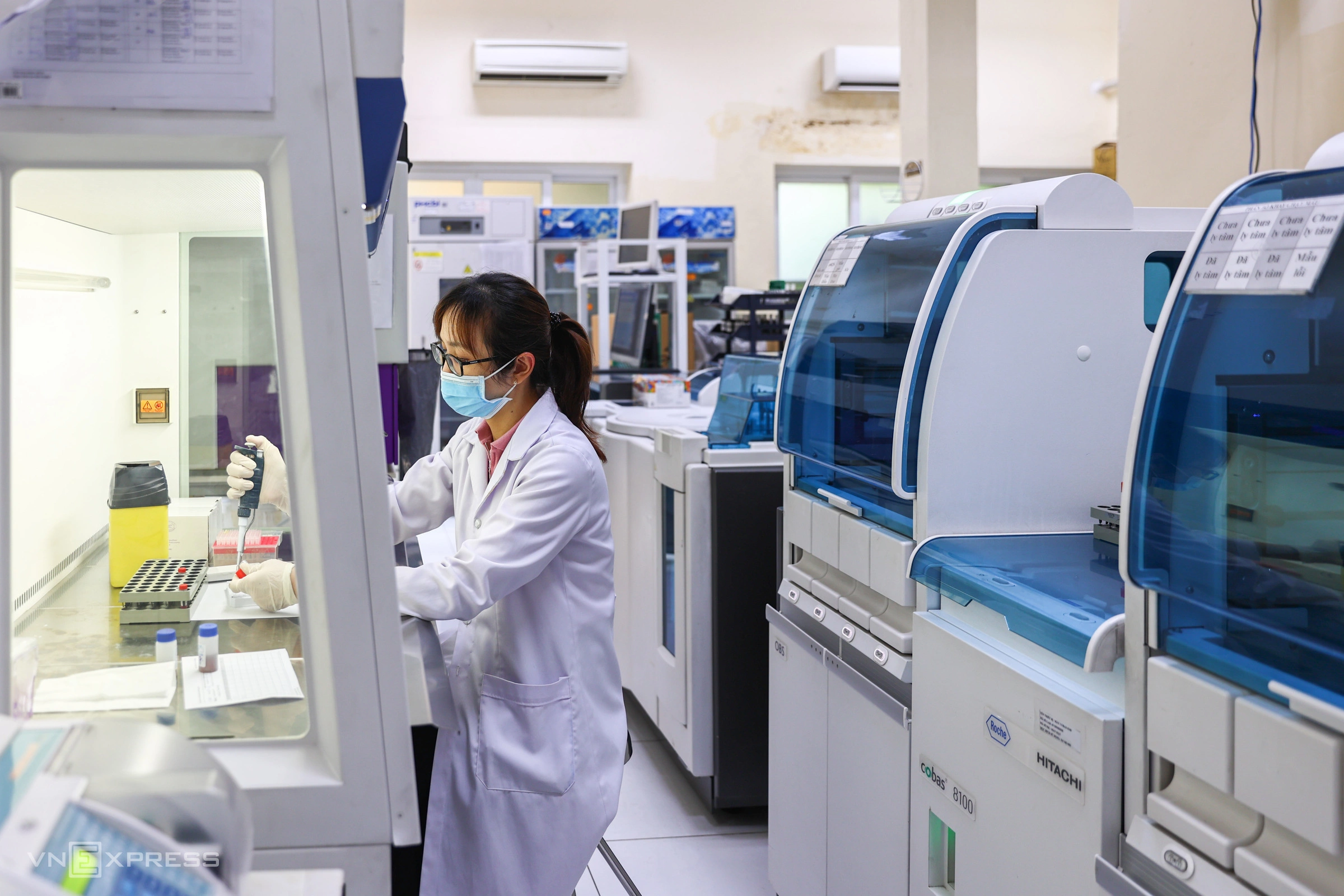 |
Medical staff at Pasteur Institute Ho Chi Minh City conducting research and testing, 8/2025. Photo: Quynh Tran |
Another area the academy recommended for oversight is improving mechanisms for research transfer and commercialization. Establishing ownership of state-funded research results, intellectual property valuation, capital contribution through intellectual property, and benefit sharing for scientists still face many obstacles. If these are not resolved, research outcomes will be difficult to implement in practice, and science will struggle to become a direct driver for national development.
Additionally, the academy proposed that the National Assembly oversee the issuance and implementation of specific mechanisms to attract and utilize scientific talent, particularly in strategic technology fields. Concurrently, it advocated for creating a research environment that ensures academic freedom, scientific integrity, fair competition, and international evaluation standards.
According to the Vietnam Academy of Science and Technology, Vietnam faces an opportunity to transform its decades-long accumulated fundamental research foundation into technology, products, and national competitiveness. This process can only accelerate when institutions are synchronously reformed, research organizations are granted genuine autonomy, and resources are focused on strategic objectives.
Son Ha