Sentosa Villa, covering over 16 hectares, is developed by Saigon Investment Co. Ltd. It received an investment certificate in 2010 with the goal of constructing high-rise apartments, a 3-star hotel, and villas for sale or lease. However, a recent inspection by the Lam Dong Provincial Inspectorate revealed numerous long-standing violations.
Authorities discovered that the Binh Thuan Department of Natural Resources and Environment and the former Binh Thuan Provincial People's Committee (UBND) had allowed the conversion of over 88,600 square meters of perennial crop land to urban residential land. This decision contradicted Phan Thiet City's land use plans for 2016-2017, which designated the entire area solely for commercial-service development, not urban residential use.
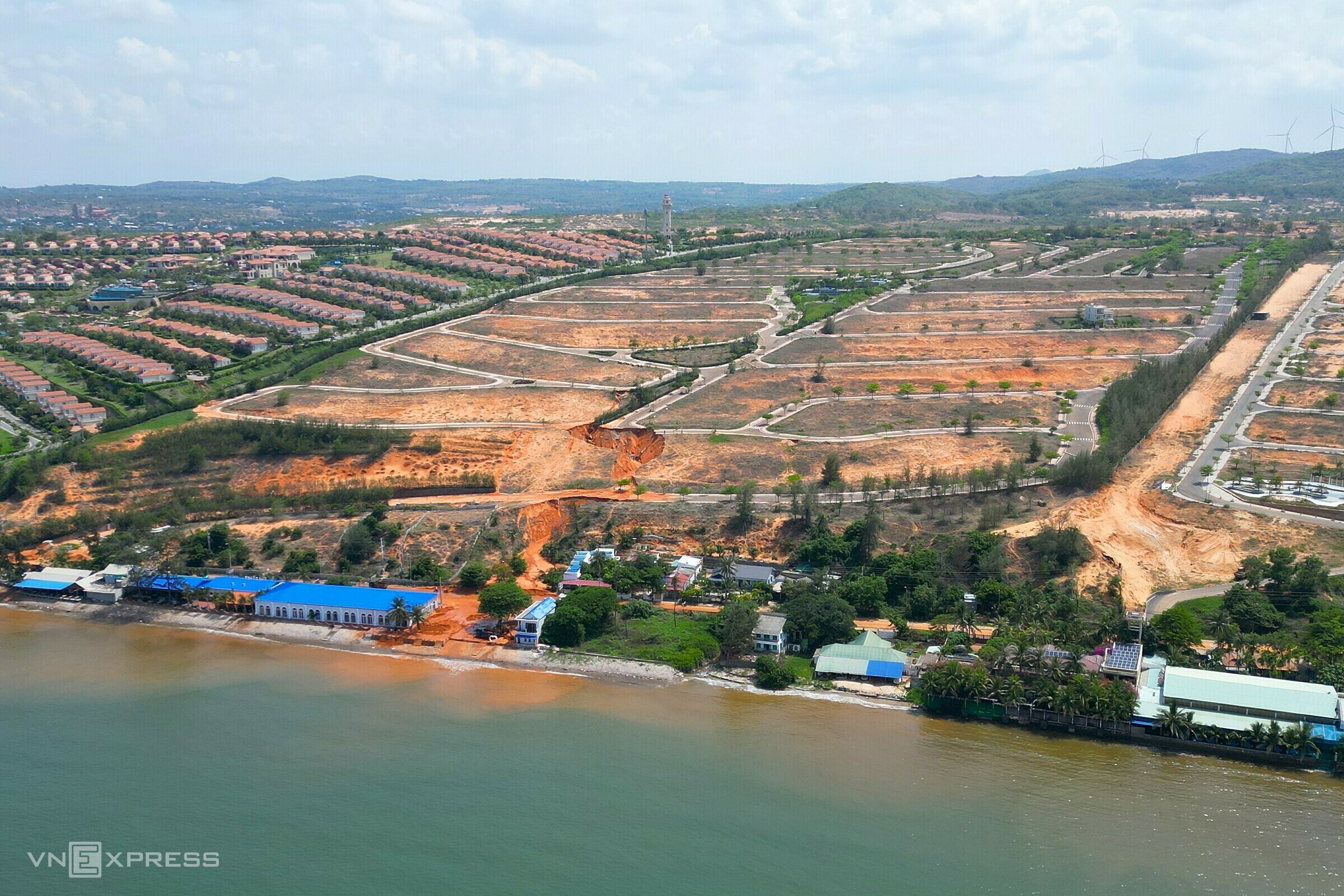 |
The Sentosa Villa project in Mui Ne ward at the time of the landslide, 5/2024. *Viet Quoc* |
The project has been delayed for over 11 years, making it eligible for revocation. However, in line with the central government's policy to resolve issues, the provincial inspectorate recommended that the Lam Dong Provincial People's Committee (UBND) propose to Steering Committee 751 to allow the project to continue. This continuation is contingent on adjusting its objectives to commercial, service, and resort tourism.
The investor agreed to the change in objectives during a meeting in September, but requested reimbursement or offsetting of financial obligations as per regulations.
The provincial inspectorate also clarified that the project was not eligible to sell future real estate. Despite this, the investor signed numerous sales contracts totaling nearly 230 billion dong, leading to many complaints. If the project proceeds, the company must re-engage with customers to definitively resolve these issues, preventing prolonged disputes.
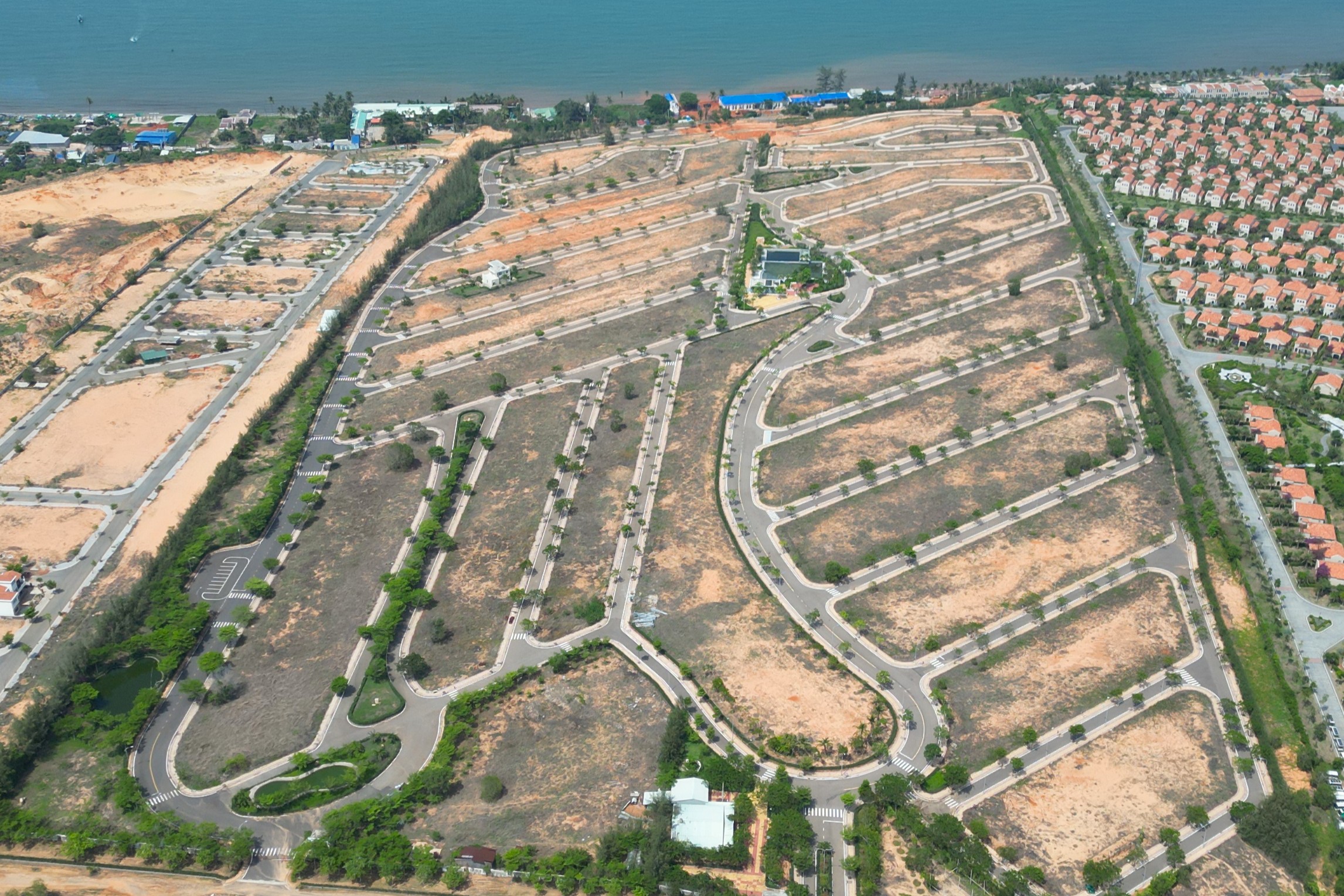 |
Numerous components of the Sentosa Villa project were constructed without permits. *Viet Quoc* |
In 2018, the Ministry of Natural Resources and Environment inspected Sentosa Villa and uncovered a series of violations. These included the construction of infrastructure, such as internal roads, water and drainage systems, electricity, communication lines, underground lighting, paved sidewalks, and parks, all without the necessary construction permits.
Last year, a major landslide occurred in the area, causing sand floods to pour onto Mui Ne's tourist road, burying oto and motorbikes. Investigators determined the cause was the investor's failure to comply with disaster prevention regulations, leading to the sand dune collapse.
Viet Quoc