The resolution was passed by the National Assembly on the morning of 24/4, at the closing session of its first meeting, 16th tenure. It calls for comprehensive reform and improvement of legal systems, mechanisms, and policies to enhance the quality of education and human resource training.
The National Assembly mandated the integration of digital skills and artificial intelligence education into the national education system, starting from preschool. It also called for accelerating the popularization and application of digital technology and artificial intelligence in teaching and learning.
The National Assembly requested prioritizing training highly skilled labor in technical and technological sectors to serve national strategic projects. It also emphasized developing high-quality vocational education institutions. Agencies are tasked with collaborating with large enterprises, foreign-invested companies, and technology firms to provide vocational training, aligning education with market demands, and enhancing digital and technological skills for the workforce.
The resolution also outlines plans to improve students' foreign language proficiency, aiming to establish English as a second language in schools. It also seeks to equip students with fundamental knowledge of culture and arts, and to boost physical education and sports activities to enhance their physical well-being. Higher education is to be modernized, with some research-oriented institutions developing into centers for science, technology, and innovation.
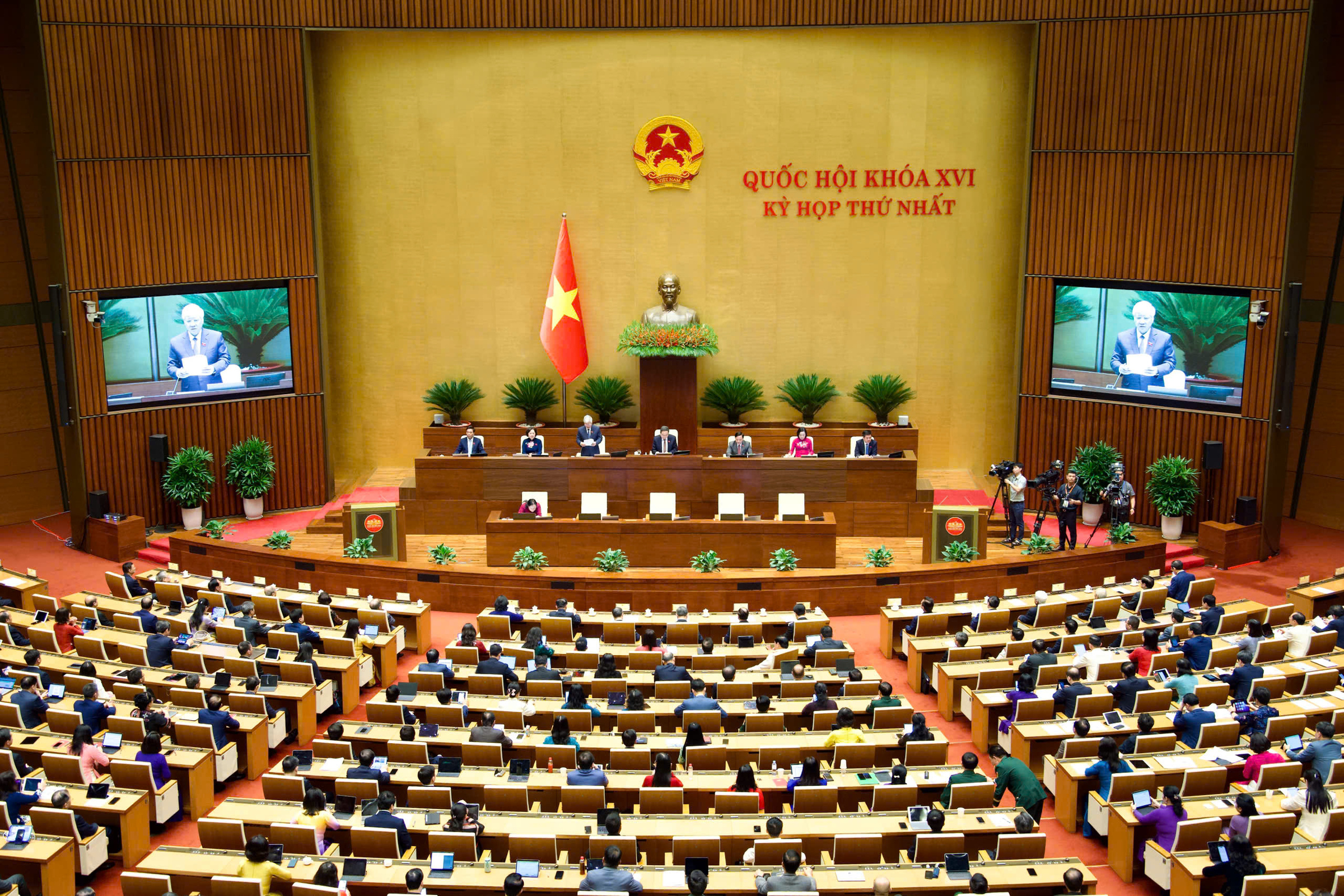 |
Closing session of the National Assembly's first meeting, 16th tenure, on the morning of 24/4. *Photo: National Assembly Media* |
According to Professor Doctor Le Anh Vinh, Director of the Vietnam Institute of Educational Sciences, a survey of over 11,000 students in 44 provinces and cities in early 2024 revealed that 87% were aware of using AI in their studies. However, limitations in knowledge, skills, equipment, and guidance remain.
A survey of nearly 35,000 teachers in early 2025 indicated that 76% had used AI in the classroom, with almost 70% giving positive feedback.
The AI education framework is structured around four knowledge areas: human-centered thinking, AI ethics, techniques and applications, and system design. The content is divided into three levels based on educational stages: introduction at primary school, foundational at lower secondary, and creative at upper secondary.
Alongside education, the resolution emphasizes developing an advanced Vietnamese culture rich in national identity, characterized by ethnic traits, democracy, humanism, science, and modernity. Cultural industries, entertainment, cultural services, creative economy, sports economy, and event industries are to be promoted, linked with expanding the market for digital cultural products and services.
Vietnam plans to establish several heritage cities and develop a heritage economy. Enterprises are encouraged to invest in digital cultural products and services, connecting them with tourism, trade, and technology to create value chains that promote the national image.
Vu Tuan