 |
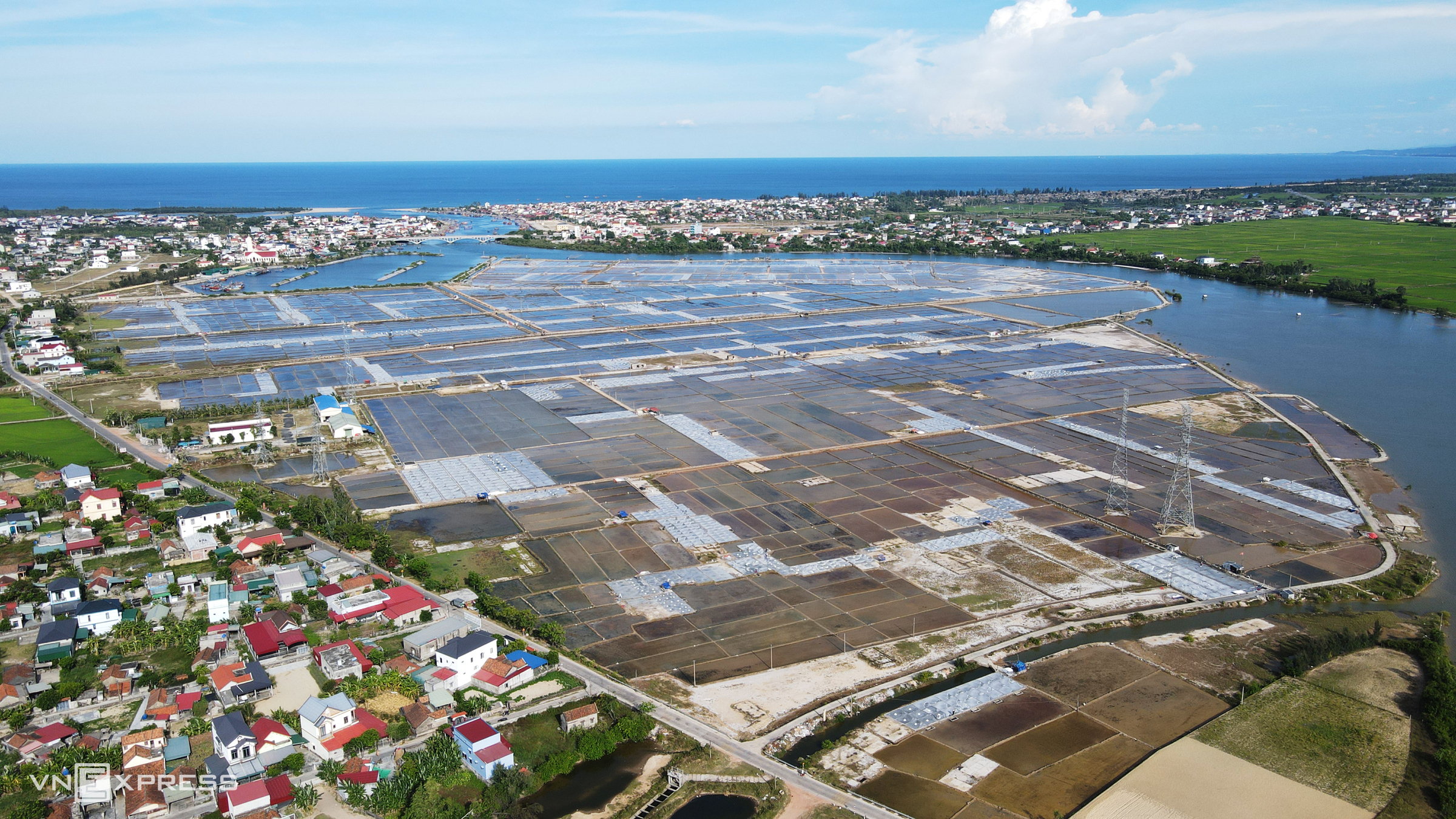
In mid-june, with outdoor temperatures near 40 degrees Celsius, the Phu Loc salt fields in Phu Trach commune entered their main harvest season. Spanning over 75 hectares adjacent to the Loan River, about one km from the Roon estuary, over 200 households work the fields, continuing a salt-making tradition that has existed for over half a century. This is Quang Tri province's last salt village, recognized as a traditional craft village since 2011.
To produce white salt, salt farmers follow many meticulous steps. Salty water from the Loan River is channeled into a system of fields designed in 5 tiers, flowing through one plot each day to gradually increase its salinity before being stored in a reservoir.
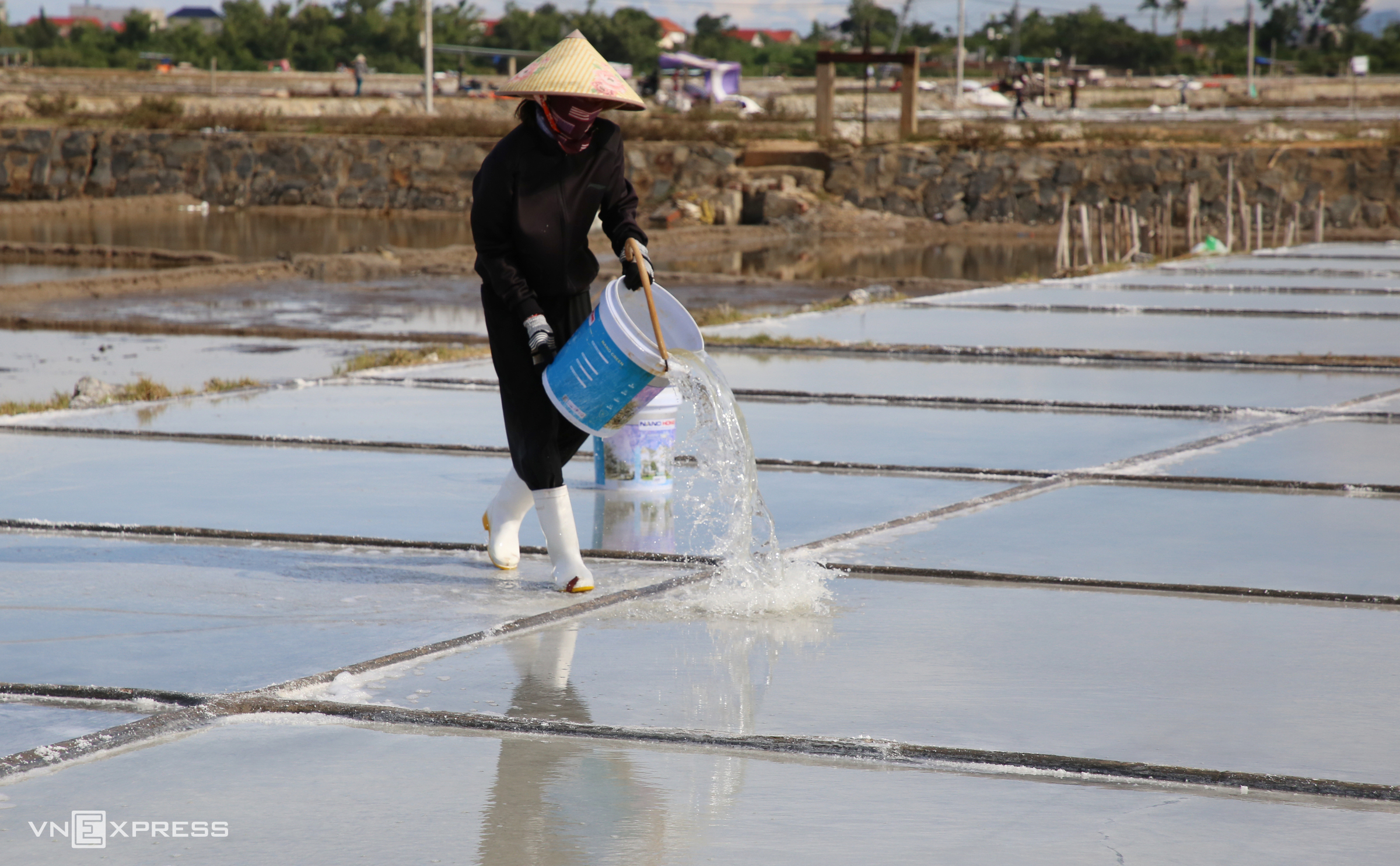 |
Water is poured into cement fields, each plot measuring about 10 square meters and 5 cm high. The water is poured in the previous evening, and under the next day's sun, water vapor evaporates, allowing salt to crystallize into white grains on the field. Many households have invested in pumps to reduce labor, replacing the buckets and pails used for decades.
{"caption_all":null,"caption_items":["Mr. Le Ngoc Linh, 58 years old, pours water into a bamboo tube and uses a tool to check salinity. A result above 18 degrees is suitable for salt fields. "The hot, sunny weather, combined with the Lao wind, results in very high salinity. When water is brought to the fields and the sun shines, much salt crystallizes", he says.","After a hot day of nearly 40 degrees Celsius, the thin layer of water gradually evaporates, leaving white salt crystals covering the field surface.u00a0"]}
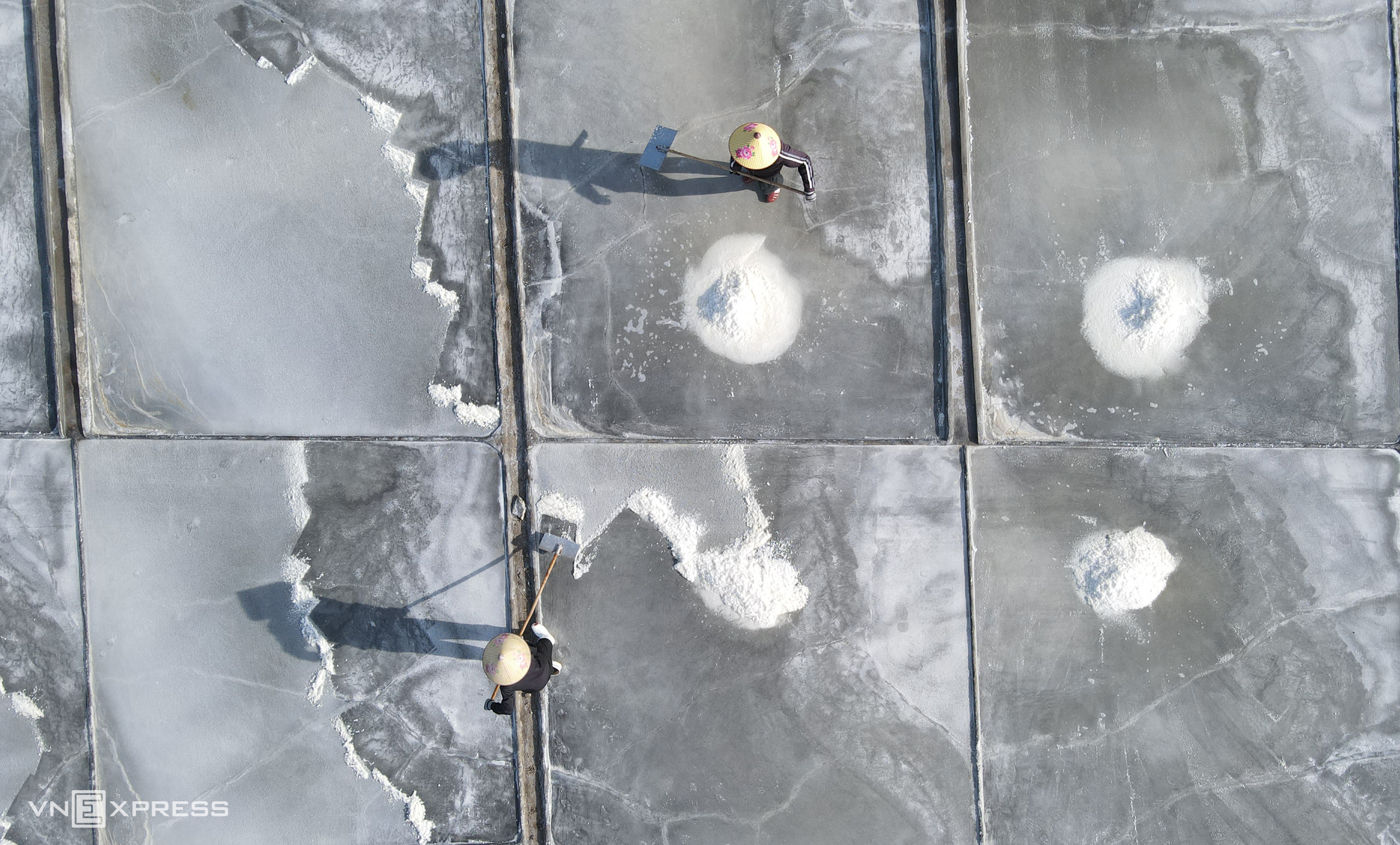 |
Salt crystallized on the cement fields is gathered into piles by residents.
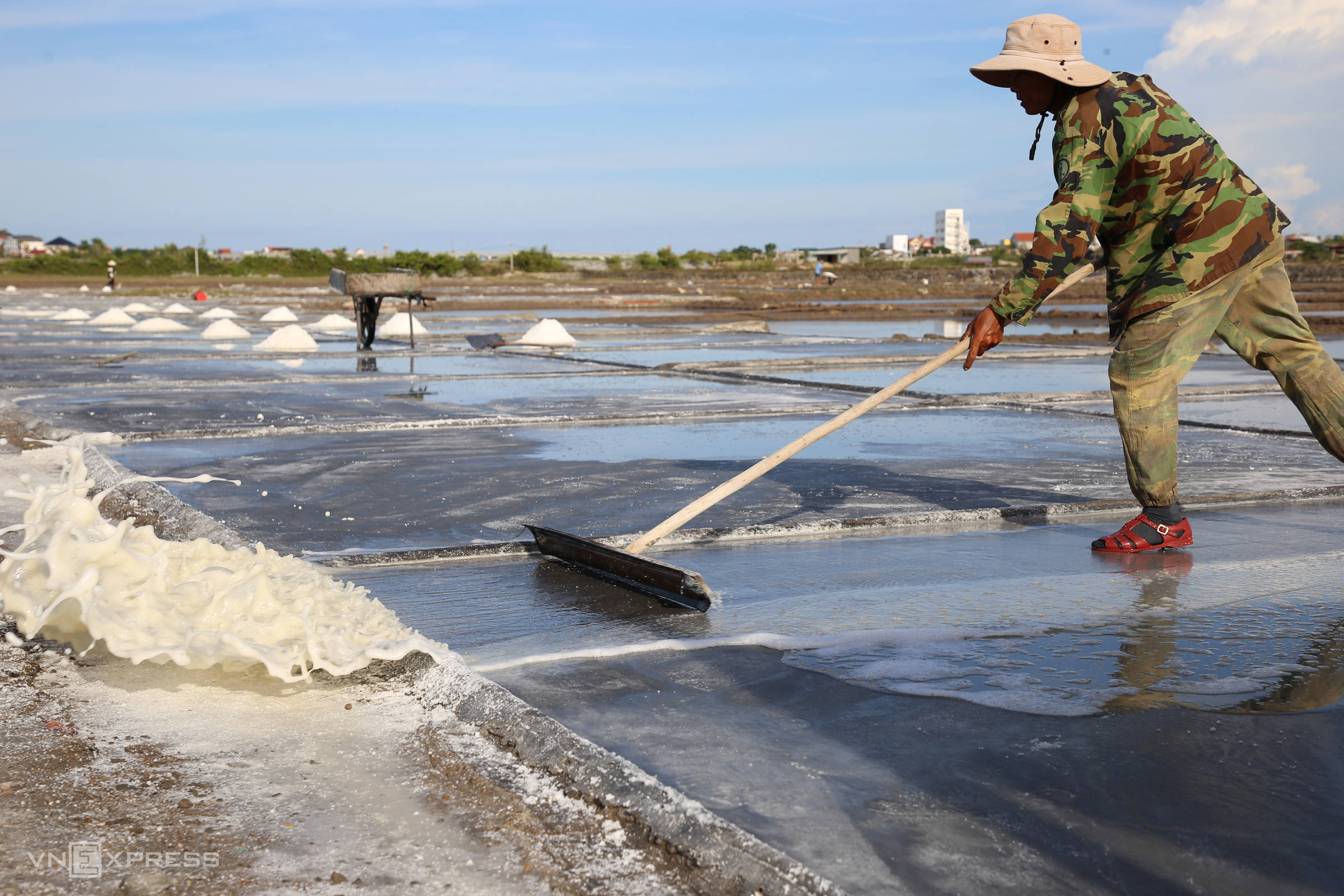 |
To ensure white salt, after each harvest, residents use a rubber scraper to push any remaining water out of the fields. "This method ensures the salt grains are clean and white", explains Mr. Pham Toan, 72 years old.
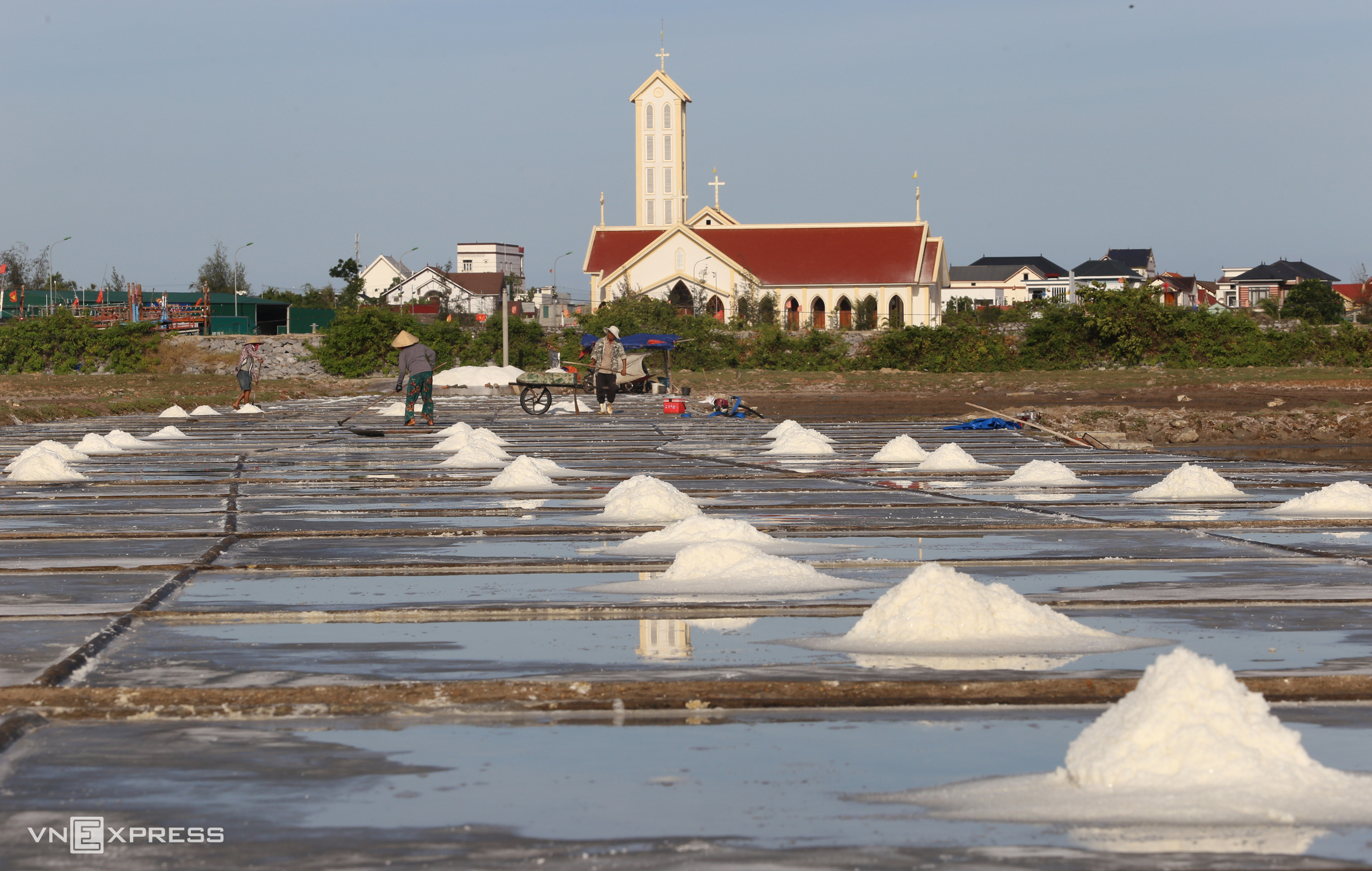 |
From 3 p.m. to 4 p.m., even under the intense sun, salt farmers use specialized rakes to gather salt into piles. This work requires strength and endurance due to continuous bending. The white salt piles are arranged in long rows on the fields to drain.
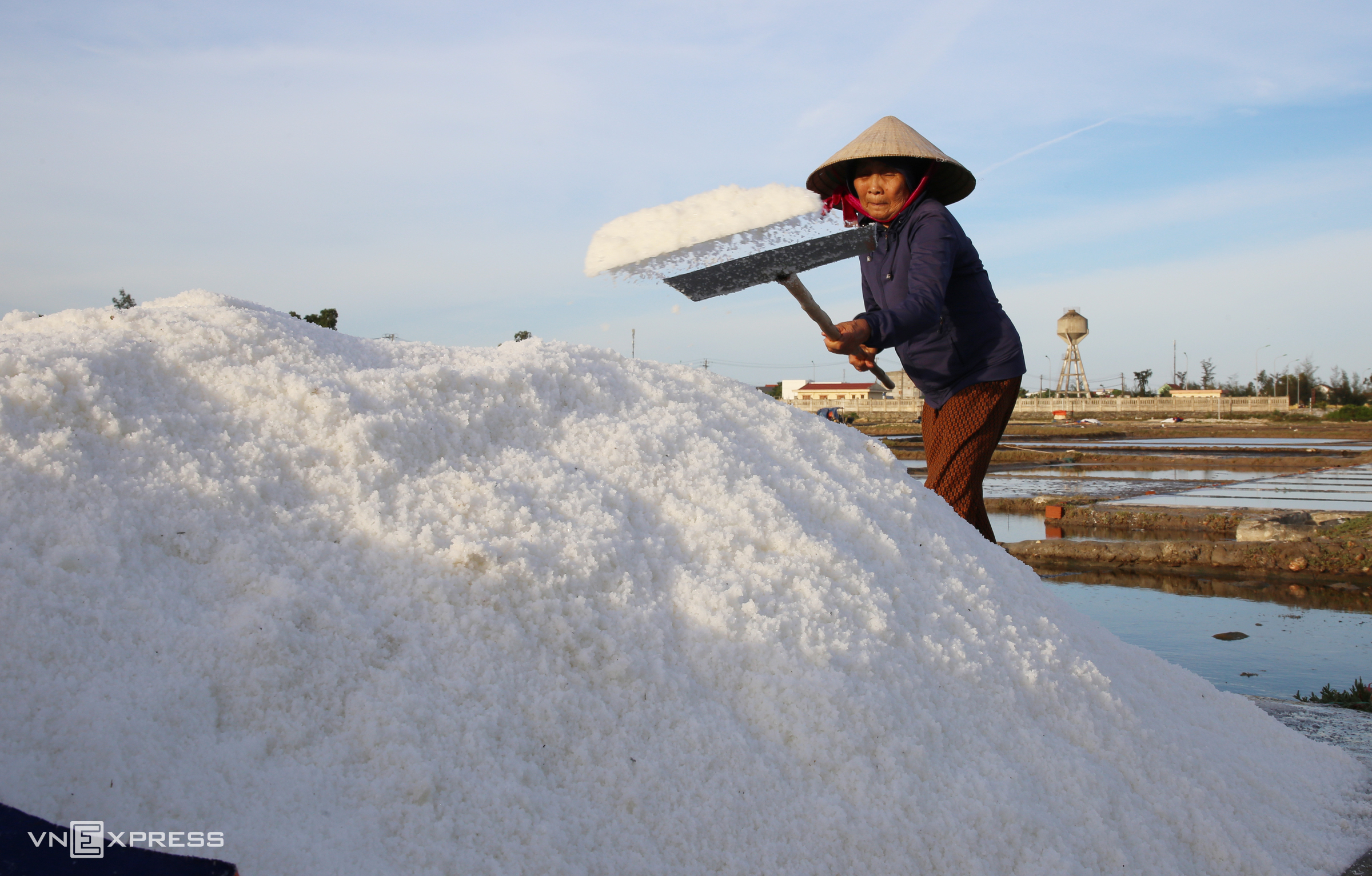 |
As the sun began to set behind the mountains, Ms. Nguyen Thi Thuong, 71 years old, and her husband finished collecting over one ton of salt. After many hours in the scorching fields, their hands were tanned, and their shirts were soaked with sweat.
"This year, there is much sun, so production has increased, but the price is only about 1,000 VND/kg, a decrease of 500 VND compared to last year", she says.
 |
After many hours of continuous work, Mr. Pham Ngoc, 57 years old, takes a break in a temporary hut by the field, drinking a refreshing sip of water. With 30 years in salt making, he owns 30 sao (a local unit of area) of water-holding fields and three sao of crystallization fields. On sunny days, his family harvests about 1,5 tons of salt. After the season, he works as a bricklayer to earn additional income.
{"caption_all":null,"caption_items":["After being raked, the salt is shoveled onto wheelbarrows and pushed to the roadside for collection by traders. These carts, weighing nearly one hundred kg, are transported entirely by human power.","As dusk falls, many households still remain in the fields. Mr. Nguyen Van Toan takes advantage of the cooler temperatures to continue working. Although the salt-making season only lasts three to four months, it is the family's main source of income. "Each day, my wife and I harvest nearly one ton of salt, earning one million VND. Despite a good harvest, prices are low, but we still stick to our traditional craft. Our family's income for the salt season is about 70 million VND", he says."]}
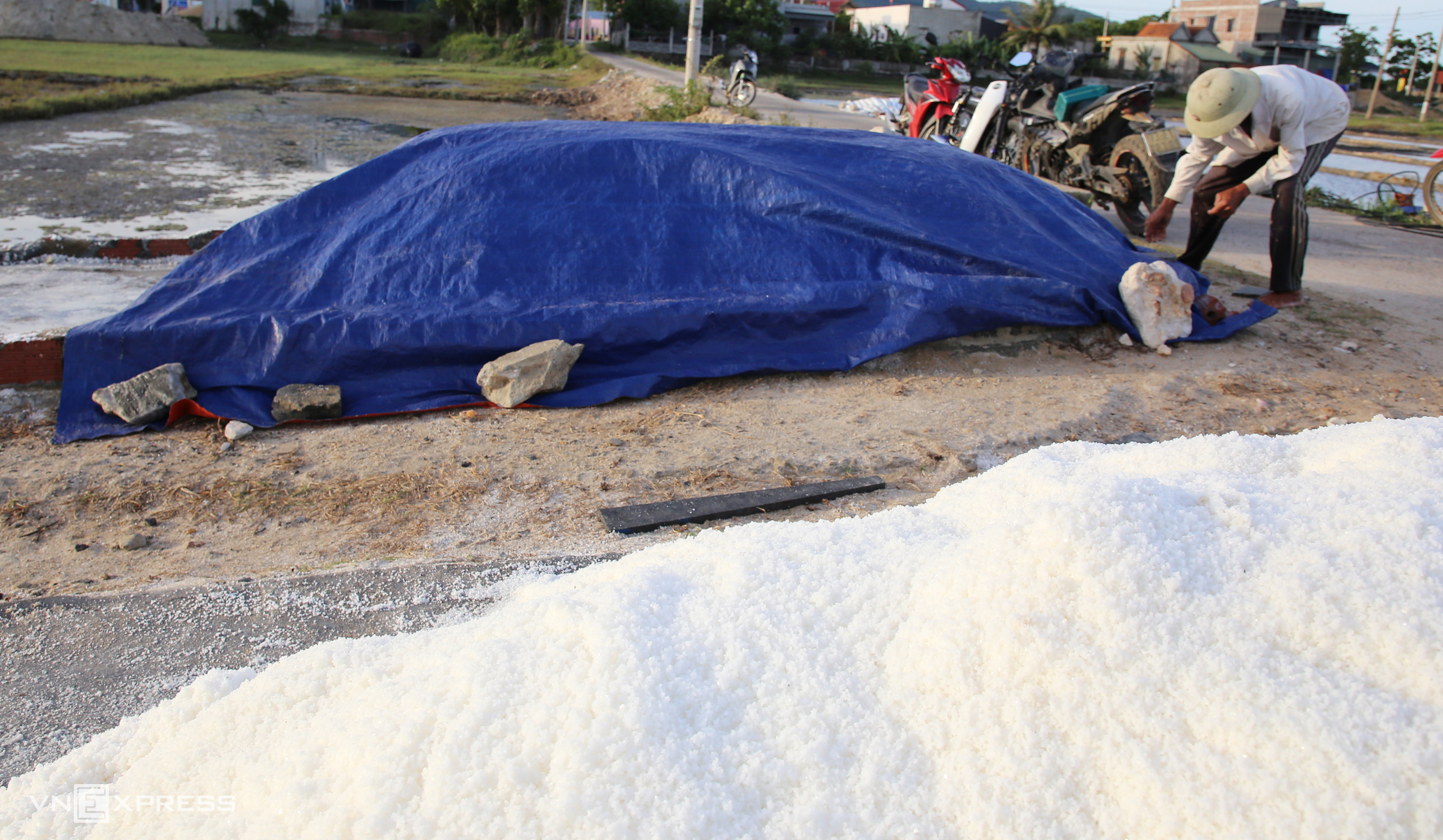 |
Salt is piled into large mounds on elevated ground by the roadside to drain before being covered with tarpaulins to protect it from rain. The next morning, when the salt grains are dry, traders arrive to purchase them.
Mr. Pham Ngoc Dong, Chairman of the Phu Trach Commune Farmers' Association, stated that to preserve the traditional craft, the commune has invested in a system of canals and pumps to channel water from the river to the fields. A concrete road across the fields was also constructed. On sunny days, residents produce 80 to 100 tons of salt, with an average yield of 1 to 1,2 tons/ha.
Dac Thanh