On August 3, during a group discussion on amending and supplementing the list of conditional investment and business sectors under the Investment Law, Ms. Nguyen Thi Thu Dung, Principal of Thai Binh Medical College, stated that aesthetic facilities not performing invasive services are currently not required to obtain an operating license from the Department of Health, unlike specialized aesthetic clinics.
However, many spas extend beyond regular care services, offering filler injections, thread lifts, using needles and radiofrequency devices, and even performing nose augmentations and liposuction for clients.
According to regulations on medical examination and treatment, procedures like botox and filler injections are only permitted at hospitals, specialized aesthetic clinics, or medical facilities with approved professional scopes.
Ms. Dung believes that because beauty care is not yet a conditional business, practitioners only need a certificate, while inspection and supervision remain limited. Consequently, spas can blur the lines between invasive and non-invasive services, creating a significant legal loophole.
Without adding business conditions, regulatory agencies lack grounds for inspection, and practitioners receive inadequate training. Many incidents have occurred due to anesthetic use leading to shock or infections from unsanitary procedures.
The representative urged the government to research management mechanisms for beauty care services, especially for invasive aesthetic procedures that pose many risks.
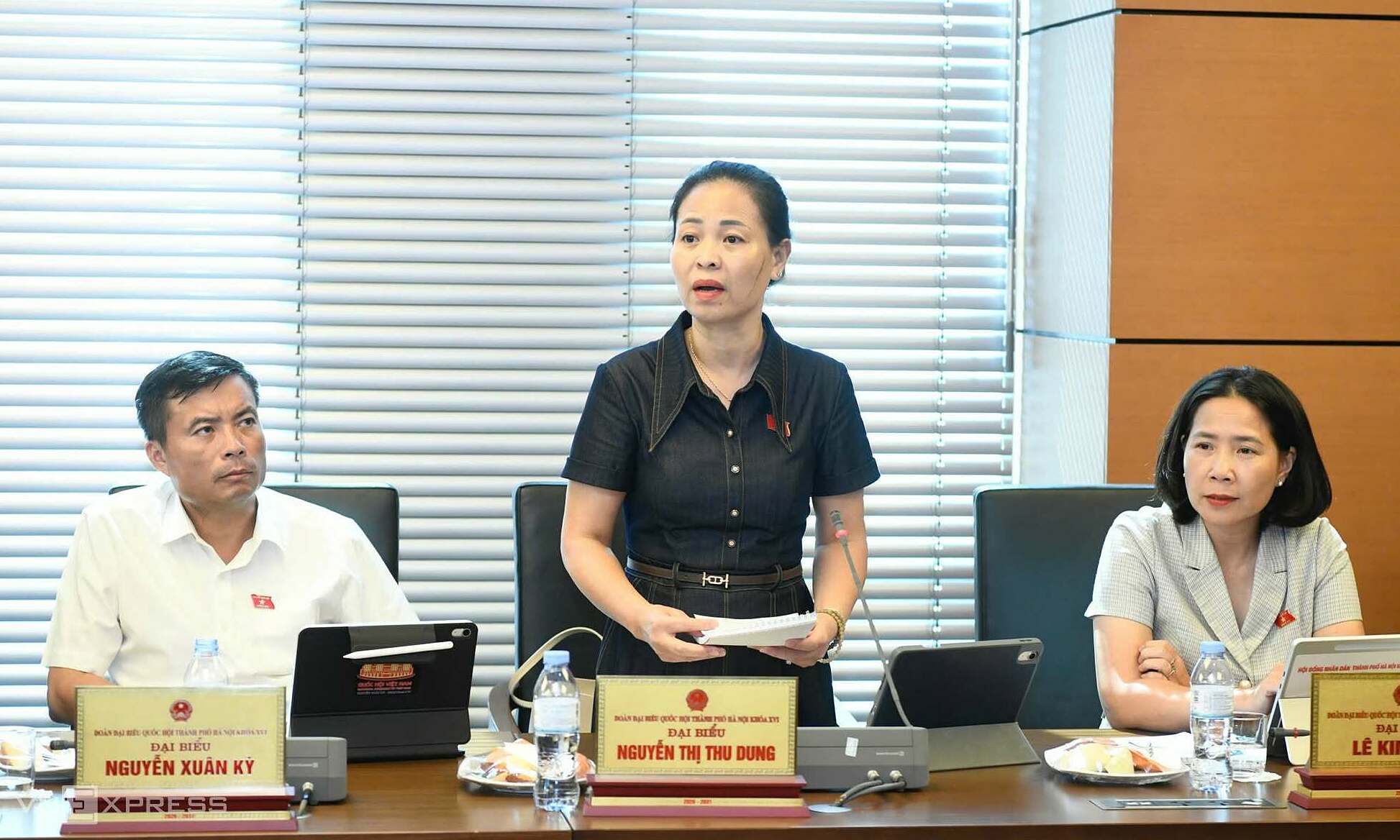 |
Representative Nguyen Thi Thu Dung speaks at a group session. *Photo: Hoang Phong* |
Caution urged as clean water business conditions may be removed
Representative Tran Hoang Ngan, from the Ho Chi Minh City delegation, proposed reconsidering the removal of clean water business from the list of conditional investment and business sectors.
He agreed with the policy of shifting from pre-inspection to post-inspection but argued that clean water directly impacts health. "If an incident occurs with drinking water, post-inspection will be a step behind," he stated.
Vo Hoang Ngan, Deputy Head of the Ho Chi Minh City National Assembly delegation, also recommended a thorough review of areas related to national defense, security, health, resources, and community interests, including clean water, gas business, unmanned aircraft, seaports, maritime transport, and minerals.
According to him, the drafting agency must assess the effectiveness of alternative management measures to avoid negative impacts on the economy, society, national defense, and security.
Previously, the Economic and Financial Committee noted that some sectors proposed for removal from conditional business status carry high risks. If incidents or violations occur, the consequences could be severe and difficult to remedy. The verification agency recommended changing management methods only after clarifying the feasibility of alternative mechanisms, establishing an appropriate roadmap, and ensuring no gaps in state management.
Son Ha